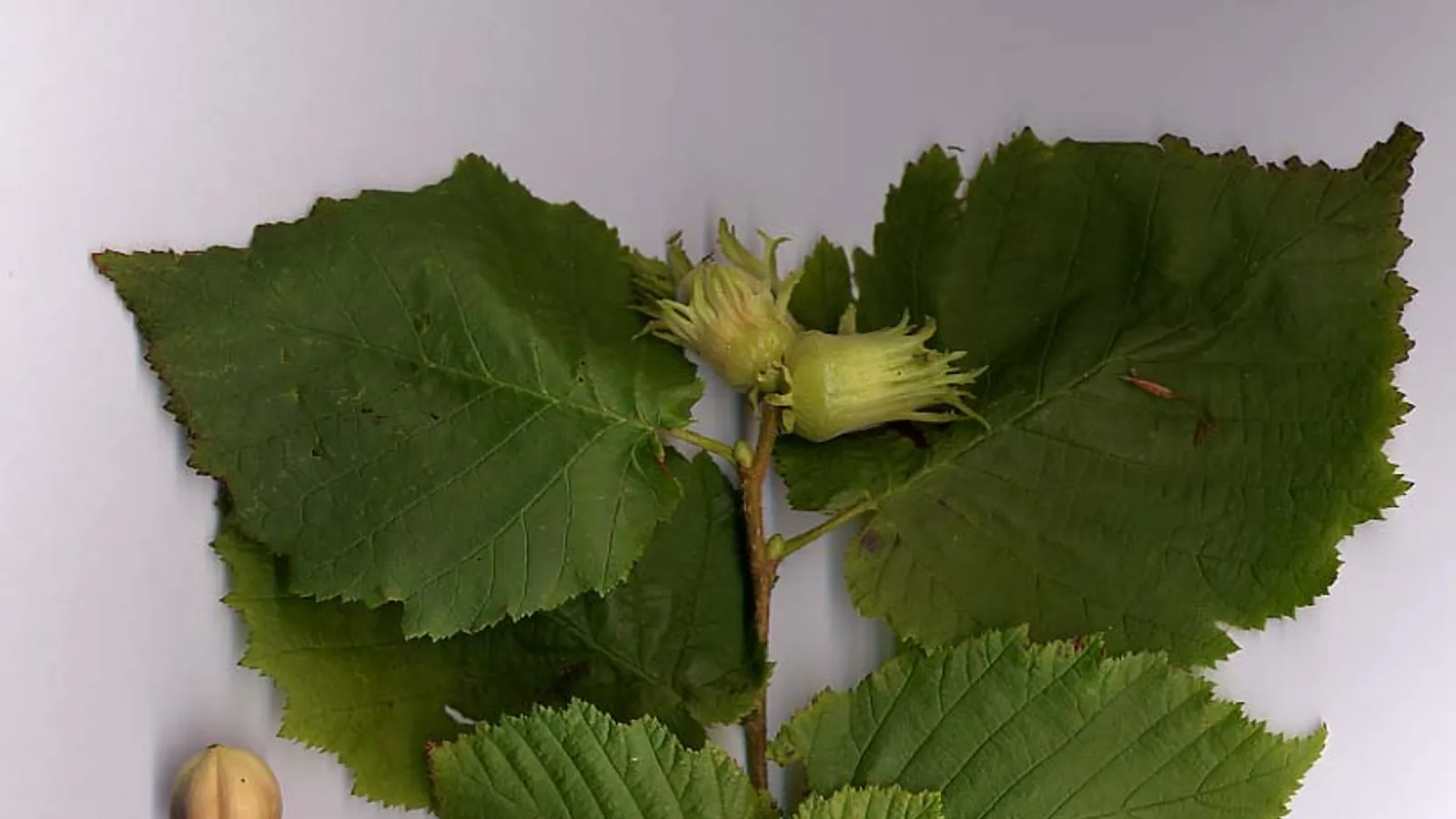

Hazel (Corylus avellana)
Contents
TL;DR
- established A Mesolithic pit at Staosnaig on the Isle of Colonsay contained hundreds of thousands of burned hazelnut shells dated to around 6000 BC, with pollen analysis showing the surrounding hazel trees were cut down at the same time — evidence of a single, concentrated year's harvest that represents one of only a handful of comparable Mesolithic hazelnut concentrations found anywhere, remarkable for such a small island — a specific, documented archaeological find this article states directly rather than a vague claim that "hazelnuts were eaten in prehistoric Scotland."
- established Scotland's Atlantic hazelwoods, dwarf woodlands established roughly 11,000 years ago as the ice retreated, support crustose lichens of the Graphidion community that form thin, colourful crusts on young hazel stems, with some of these lichen species found nowhere else in the world — a specific, documented global uniqueness this article names directly rather than a vague reference to hazelwoods being "special."
- disputed Coppicing, the traditional cutting-back management that for centuries sustained large-scale hazelnut production in Britain, is actively recommended by some conservation bodies as a way to create open, wildflower-rich habitat for butterflies and ground-nesting birds, while other specialists warn that coppicing in Scotland's Atlantic hazelwood zones specifically destroys the ecological continuity that old-growth lichen communities depend on — this article states both positions directly rather than resolving them into a single universal recommendation, since the right answer genuinely depends on which habitat and which species are being managed for.
- established The hazel dormouse depends on hazel in two distinct, essential ways across its life cycle: spring leaves support the caterpillars that make up its primary diet, while autumn hazelnuts provide the fat reserves it needs to survive hibernation — a specific, documented dual dependency this article states directly rather than a vague claim that dormice "eat hazelnuts."
- established Irish tradition designated hazel the "Tree of Knowledge," while English folklore credited hazel rods with protective power against evil spirits and rheumatism, and the wood's genuine practical flexibility made it historically valuable for thatching spars, net stakes, water-divining sticks, and hurdles — a specific, documented combination of symbolic and practical value this article names directly rather than treating hazel's traditional importance as either purely mystical or purely utilitarian.
Key Facts
- Scientific name
- Corylus avellana
- Category
- Trees
- Typical lifespan
- ~80 years uncoppiced; coppiced stems to several centuries
- Key archaeological site
- Staosnaig, Isle of Colonsay (hazelnut pit, ~6000 BC)
- Atlantic hazelwood age
- ~11,000 years (since ice retreat)
- Key lichen community
- Graphidion (some species found nowhere else in the world)
- Key dependent mammal
- Hazel dormouse (leaves for caterpillar food; nuts for hibernation fat)
- Historical peak use
- Large-scale nut production until early 1900s
Scottish Impact Index (SI Score)
- Scottish Significance
- 8/10
- Ecological Persistence
- 9/10
- Ecological Importance
- 9/10
- Botanical Distinctiveness
- 7/10
- Conservation Significance
- 8/10
- Recognition
- 8/10
49/60
Ranked =19th of 45 in Flora
A Note on Claims and Evidence
Biology, reproduction, coppicing history, and wildlife-relationship details are drawn from the Woodland Trust's published assessment. Atlantic hazelwood ecology, Graphidion lichen uniqueness, and the specific coppicing-continuity tension are drawn from NatureScot's published habitat assessment. The Staosnaig, Colonsay archaeological find is drawn from published research coverage of the Mesolithic site.
Timeline
As the last ice retreats, Scotland's Atlantic hazelwoods begin to establish along the west coast's oceanic climate zone, becoming among the country's oldest surviving woodlands and developing a distinctive lichen community, including Graphidion crustose species found nowhere else in the world.
At Staosnaig on the Isle of Colonsay, Mesolithic inhabitants harvest and process a concentrated hazelnut crop, burning hundreds of thousands of shells in a single pit, with pollen evidence showing the surrounding hazel trees were cut down in the same period — one of only a handful of comparable Mesolithic hazelnut concentrations recorded anywhere, and a remarkable find for such a small island.
Deliberate coppicing of hazel begins in Britain, according to Richard Mabey, building on the shrub's natural habit of regrowing from the base.
Hazel undergoes large-scale nut production across Britain, managed through coppicing, a traditional cutting-back technique that also produces flexible wood historically used for thatching spars, net stakes, water-divining sticks, hurdles, and furniture.
Hazel becomes symbolically significant in Celtic tradition, designated the "Tree of Knowledge" in Ireland, while English folklore credits hazel rods with protective power against evil spirits and rheumatism.
Commercial-scale British hazelnut production declines sharply, with most hazelnuts now imported, though Kent continues cultivating cob nut varieties; meanwhile, conservation bodies increasingly promote coppicing as a tool for creating open, wildflower-rich habitat for butterflies and ground-nesting birds in suitable woodland contexts.
A genuine tension persists in hazel woodland management: coppicing is actively recommended in many contexts for its wildlife benefits, while specialists warn it is unsuitable within Scotland's Atlantic hazelwood zones specifically, where it destroys the ecological continuity that old-growth Graphidion and Lobarion lichen communities depend on.
Details
An archaeological find stated with its real documented scale
This article names the Staosnaig, Colonsay hazelnut pit with real specificity rather than a vague claim that "hazelnuts were eaten in prehistoric Scotland": hundreds of thousands of burned shells, dated to around 6000 BC, with pollen evidence showing the surrounding hazel trees were cut down in the same period, indicating a single, concentrated year's harvest. This article states that this find ranks among only a handful of comparable Mesolithic hazelnut concentrations recorded anywhere because it demonstrates a genuinely exceptional scale of organised resource use for such a small island, not an isolated curiosity.
A global lichen uniqueness named with its real specificity
This article states the ecological significance of Scotland's Atlantic hazelwoods precisely rather than a vague reference to them being "special": established roughly 11,000 years ago, these dwarf woodlands support crustose lichens of the Graphidion community, some of which are found nowhere else in the world. This article names this global uniqueness directly because it represents a genuinely exceptional conservation value, not a general claim of biodiversity shared with many other old woodlands.
A genuine management tension, stated without resolving it
This article treats the question of whether coppicing benefits or harms hazel woodland as a real, unresolved tension rather than offering a single universal answer: some conservation bodies actively recommend coppicing to create open, wildflower-rich habitat for butterflies and ground-nesting birds, while specialists focused on Scotland's Atlantic hazelwood zones warn that coppicing there destroys the ecological continuity that old-growth lichen communities specifically depend on. This article states both positions because the right management approach genuinely depends on which habitat and which dependent species are being prioritised, not because one view is simply mistaken.
A dormouse dependency explained through its real two-stage mechanism
This article names the hazel dormouse's relationship with hazel precisely rather than a vague claim that it "eats hazelnuts": spring leaves support the caterpillars that make up the dormouse's primary diet, while autumn hazelnuts provide the fat reserves essential for surviving hibernation. This article states this two-stage dependency directly because it clarifies that hazel sustains the dormouse across two distinct, essential phases of its annual cycle, not through a single food source.
A traditional value stated as both symbolic and genuinely practical
This article names hazel's traditional importance with real specificity rather than treating it as either purely mystical or purely utilitarian: Irish tradition designated it the "Tree of Knowledge" and English folklore credited hazel rods with protective power against evil spirits and rheumatism, while the wood's genuine flexibility made it historically valuable for thatching spars, net stakes, water-divining sticks, and hurdles. This article states both strands together because hazel's traditional significance combined real practical utility with symbolic meaning, not one at the expense of the other.
Hazel in Flora Britannica (1996)
established An early arrival. Richard Mabey, in Flora Britannica (1996), notes that hazel was one of the first trees to recolonise Britain after the last Ice Age, coming soon after birch, and was for a while the most abundant shrub. Because it does not tolerate deep shade, it retreated to cliffs, rocky ground and river-banks as the larger forest trees closed in, and spread again only when early people opened up the wildwood. This fits the Staosnaig evidence of a landscape where hazel was abundant and heavily used.
established Self-coppicing. Mabey describes hazel as "self-coppicing": when its stems are broken or stripped by animals, it sends up straight new shoots from the base. He suggests people used these before deliberate coppicing began some 4,000 years ago. The poles can be split lengthways and twisted or knotted without breaking, which made them the basic material of wattle hurdles, fencing and wattle-and-daub walls, and of the spars that peg down thatch.
traditional Nuts of wisdom. Mabey quotes an account of the early Irish legend of Connla's Well, over which hung nine hazels that bore flowers and fruit at once. Salmon ate the falling nuts, and each nut swallowed gave a salmon a bright spot. In Celtic legend, the account concludes, hazelnuts are always an emblem of concentrated wisdom: wisdom "in a nutshell". This is the background to the "Tree of Knowledge" tradition above.
established Customs of the nut harvest. Mabey records "Nutcrack Night", when stored nuts were first opened (15 November in Cleveland), and a custom in some parishes of cracking nuts noisily in church during the following Sunday's sermon. He lists the vernacular names halse, hezzel and ranger, and "lamb's-tails" for the catkins. His records of hazel customs are English and Irish; he gives nothing specifically Scottish.
Did You Know?
- Hazel is "self-coppicing": cut or broken stems send up new straight shoots from the base, a habit people exploited long before formal coppicing.
- In Irish legend, salmon that ate the nuts of nine sacred hazels at Connla's Well gained a bright spot for every nut.
- A Mesolithic pit on the Isle of Colonsay contained hundreds of thousands of burned hazelnut shells dated to around 6000 BC, evidence of a single concentrated year's harvest.
- Scotland's Atlantic hazelwoods are around 11,000 years old and host lichen species found nowhere else in the world.
- Conservationists disagree on coppicing: it's recommended for butterflies and ground-nesting birds in many woodlands, but can destroy the lichen continuity Atlantic hazelwoods depend on.
- Hazel dormice rely on hazel twice over — spring leaves feed the caterpillars that make up their diet, and autumn hazelnuts fuel hibernation.
- Irish tradition called hazel the "Tree of Knowledge."
- English folklore credited hazel rods with protective power against evil spirits and rheumatism.
- Hazel's flexible wood was historically used for thatching spars, net stakes, water-divining sticks, and hurdles.
- Most hazelnuts eaten in Britain today are imported, though Kent still grows cob nut varieties.
FAQ
1What was found at Staosnaig on Colonsay?
A Mesolithic pit containing hundreds of thousands of burned hazelnut shells, dated to around 6000 BC, representing a single concentrated year's harvest — one of only a handful of comparable finds anywhere.
2What makes Atlantic hazelwood so ecologically important?
It supports crustose lichens of the Graphidion community, some found nowhere else in the world, within woodlands around 11,000 years old.
3Is coppicing good or bad for hazel woodland?
It depends on the context — it's actively recommended in many woodlands to create open habitat for butterflies and ground-nesting birds, but is considered harmful within Scotland's Atlantic hazelwood zones, where it disrupts the old-growth continuity lichens depend on.
4How does the hazel dormouse depend on hazel?
In two distinct ways — spring leaves support the caterpillars it mainly eats, and autumn hazelnuts provide the fat reserves it needs for hibernation.
5What did Irish tradition call hazel?
The "Tree of Knowledge."
6What protective powers did English folklore attribute to hazel?
Hazel rods were believed to protect against evil spirits and rheumatism.
7What was hazel wood traditionally used for?
Thatching spars, net stakes, water-divining sticks, hurdles, and furniture, thanks to its genuine flexibility.
8Why was hazel so useful for building?
Its poles can be split lengthways and bent or even knotted without breaking, so they could be woven into wattle for hurdles, fences and wattle-and-daub walls, as Richard Mabey's Flora Britannica (1996) describes.
9When did hazel arrive in Britain after the Ice Age?
Soon after birch. Mabey notes it was for a time the most abundant shrub, before taller trees shaded it back.
10Are hazelnuts still commercially grown in Britain?
Only on a small scale — Kent continues growing cob nut varieties, but most hazelnuts eaten in Britain today are imported.
Sources and Further Reading
Primary/Institutional
Scholarly/Critical
- Plant Use in the Mesolithic: Evidence from Staosnaig, Isle of Colonsay, Scotland — ResearchGate
- Atlantic Hazel: Scotland's Special Woodlands — British Lichen Society
- Richard Mabey, Flora Britannica (Sinclair-Stevenson, 1996).
General
Caveats: Myths and Disputed Claims
- disputed This article does not present coppicing as universally beneficial or universally harmful to hazel woodland; its effect depends specifically on context, and specialists disagree on its appropriateness within Scotland's Atlantic hazelwood zones.
- Do not present the Connla's Well story as Scottish; it is an early Irish legend, recorded in an Irish topographical text.
- Clarification: This article does not treat the Staosnaig find as evidence of casual, everyday hazelnut gathering; the concentrated scale and single-season timing point specifically to organised, large-scale harvest and processing.
Card 018 · Flora