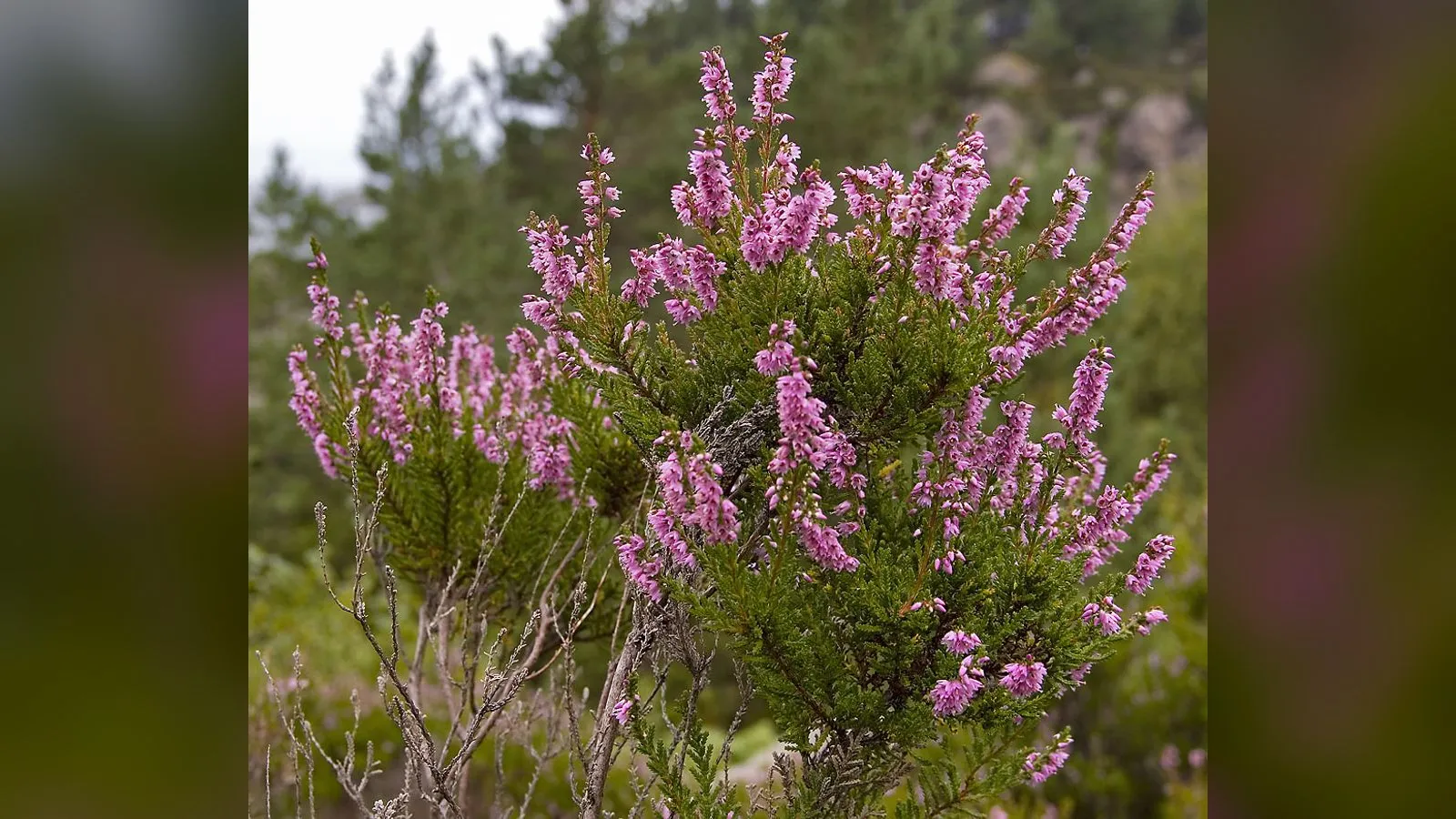

Heather (Calluna vulgaris)
Contents
TL;DR
- disputed Muirburn, the traditional practice of burning strips of old heather moorland on a 10-to-25-year rotation, is now genuinely contested: it creates the mosaic of different-aged heather that benefits red grouse and livestock, but burning releases vegetation carbon into the atmosphere and raises biodiversity concerns, while researchers simultaneously warn that without burning, accumulated vegetation could fuel larger, more intense wildfires releasing even greater carbon from both vegetation and underlying peat soils — this article states both sides of this tension directly rather than presenting muirburn as simply traditional or simply harmful.
- established Scottish muirburn is now subject to stricter legal oversight following the Wildlife Management and Muirburn (Scotland) Act, a specific, documented regulatory response to the practice's contested climate and biodiversity impacts this article names directly rather than treating muirburn as an unregulated traditional activity.
- established Among several competing origin stories, the most prominent Scottish legend attributes white heather's existence to Malvina, daughter of the Celtic bard Ossian, whose tears are said to have transformed purple heather to white after her betrothed Oscar died in battle, with Malvina declaring that the flower would bring good fortune to all who found it — a specific, documented legend this article states directly rather than presenting white heather's luck association as having no particular origin story.
- established White heather remains a living tradition rather than a purely historical one: brides still include it in wedding bouquets for luck, and it is traditionally given as a gift to new homeowners to be left on the hearth to ward off evil spirits — a specific, documented continuity of practice this article names directly rather than treating the plant's symbolic use as confined to the past.
- established This article treats heather (Calluna vulgaris, sometimes called ling) as ecologically and botanically distinct from bell heather (Erica cinerea), a separate species covered individually elsewhere in this series, even though both are commonly grouped together under the general term "heather" in everyday use.
Key Facts
- Scientific name
- Calluna vulgaris
- Also known as
- Ling
- Category
- Flora
- Key habitat
- Moorland, heathland
- Muirburn rotation
- 10–25 years, ~30m-wide strips
- Key current regulation
- Wildlife Management and Muirburn (Scotland) Act
- White heather legend
- Malvina, daughter of Ossian
- Modern use
- Wedding bouquets; housewarming gift (hearth-placed)
Scottish Impact Index (SI Score)
- Scottish Significance
- 10/10
- Ecological Persistence
- 10/10
- Ecological Importance
- 9/10
- Botanical Distinctiveness
- 9/10
- Conservation Significance
- 8/10
- Recognition
- 10/10
56/60
Ranked #4 of 45 in Flora
A Note on Claims and Evidence
Muirburn practice, purpose, and its current, genuinely contested climate and biodiversity tension are drawn from the James Hutton Institute's published research project assessment. White heather's legend, origin stories, and continuing wedding and housewarming traditions are drawn from published Scottish folklore history sources.
Timeline
Heather (Calluna vulgaris) establishes itself as the dominant plant of Scotland's moorland and heathland, with its purple flowering displays becoming a defining feature of the Highland landscape; white heather, a naturally occurring but genuinely rare variant, becomes associated in Scottish legend with good fortune, most prominently through the story of Malvina, daughter of the Celtic bard Ossian, whose tears are said to have turned purple heather white after the death of her betrothed Oscar in battle.
Muirburn, the controlled burning of strips of old heather on a 10-to-25-year rotation, becomes an established moorland management technique, creating a mosaic of different-aged heather intended to benefit red grouse populations and livestock grazing.
White heather continues to be sought out as a good-luck symbol, included in bridal bouquets and given as a housewarming gift traditionally placed on the hearth to ward off evil spirits.
Muirburn becomes a genuinely contested practice, with researchers documenting real tension between its traditional grouse- and livestock-management benefits and its carbon-release and biodiversity impacts, while also warning that halting burning altogether risks larger, more intense wildfires releasing greater carbon from both vegetation and peat soils; Scotland responds with the Wildlife Management and Muirburn (Scotland) Act, introducing stricter legal oversight of the practice.
Heather remains ecologically and culturally central to Scotland's uplands, its management through muirburn now subject to active research and regulation, while white heather's associated folklore and traditions continue to be practised in weddings and housewarming customs today.
Details
A genuine management controversy, stated without resolving it
This article presents muirburn as a real, currently contested practice rather than siding with either its defenders or its critics: it creates the mosaic of different-aged heather that benefits red grouse and livestock, but burning releases vegetation carbon and raises biodiversity concerns, while halting burning risks larger, more carbon-intensive wildfires. This article states both sides of this tension because current research genuinely holds both findings simultaneously, and presenting only one side would misrepresent an active, unresolved management debate.
A regulatory response named as a direct reaction to that controversy
This article states directly that Scottish muirburn is now subject to stricter legal oversight under the Wildlife Management and Muirburn (Scotland) Act, rather than treating the practice as an unregulated traditional activity. This article names this specific legislation because it represents a genuine, documented policy response to the practice's contested climate and biodiversity impacts, not an assumed absence of regulation.
A specific legend named rather than a vague "luck" association
This article names the most prominent Scottish legend behind white heather's good-luck association directly rather than presenting the tradition as having no particular origin story: Malvina, daughter of the Celtic bard Ossian, whose tears are said to have transformed purple heather to white after her betrothed Oscar died in battle, declaring the flower would bring good fortune to all who found it. This article states this specific story because it is the most prominent of several competing origin tales, not an arbitrary or unexplained folk belief.
A living tradition, not a historical relic
This article names white heather's continuing modern uses directly rather than treating its symbolic significance as confined to the past: brides still include it in wedding bouquets for luck, and it remains a traditional housewarming gift, left on the hearth to ward off evil spirits. This article states this ongoing practice because it demonstrates genuine cultural continuity, not a folklore tradition that has faded into purely historical interest.
A deliberate species distinction, named to avoid confusion
This article states directly that heather (Calluna vulgaris) is treated here as botanically distinct from bell heather (Erica cinerea), covered separately elsewhere in this series, even though both are commonly grouped together as "heather" in everyday language. This article names this distinction because conflating the two species would misrepresent their separate ecological identities, even where their common names and habitats overlap.
A working plant of the cleared moorland
traditional Richard Mabey's The Complete New Herbal (1988) uses heather as an example of a plant that underpinned a whole local economy. It records that on the poor moorlands of Scotland "that resulted from forest clearance", heather supplied roofing, fuel, rough ropes, beer, tea, dyes and food for sheep. The book's dye chart lists heather shoots, mordanted with alum, as a source of olive and yellow shades.
established The same herbal gives heather's chemistry as including arbutin, tannin, flavonoids, citric and fumaric acids and a volatile oil. Arbutin is the compound that also gives bearberry its herbal reputation. On that basis heather has a traditional use as a urinary antiseptic, and a folk reputation as a mild sedative and as a bath for rheumatic pains. These are herbal traditions rather than proven treatments, and the evidence for them is limited.
Heather in Flora Britannica
established Richard Mabey, in Flora Britannica (1996), points out that in a fully natural state heather is a less showy plant than the one that colours whole moors in August. It straggles through the understorey of northern pine and birch woods and flourishes in the open mainly on windswept cliffs and dunes and above the tree-line on Scottish mountains. The great sweeps of heather moor are, in his account, almost always the result of human activity: trees cleared from poor acid soil, then kept out by grazing animals or fire. That is the background to the muirburn debate above. His figures on heathland loss date from the mid-1990s and should be read as historical context.
established Mabey lists heather's domestic uses: fuel, fodder and animal bedding; a building material where timber was short, sometimes as the framework for wattle and daub; thatch, brooms and rope. He records that its roots were carved into knife handles, "particularly for the ceremonial Scottish dirk", and that the flowering tips give an orange dye, a sweet tea and beer. He adds that Scottish settlers took heather to America with them, so that a national symbol became naturalised far beyond its natural range.
shared A contributor told Flora Britannica that white heather is "considered very lucky, especially in Scotland", and that many bridal bouquets and celebration cakes carry a sprig. Mabey also notes that in Scotland people still sometimes put a sprig of heather under the bed, perhaps an echo of its old use as mattress stuffing, perhaps just for luck. This supports the living tradition described above. It does not confirm the Malvina legend or the housewarming custom, which the book does not mention.
traditional Peter Marren's appendix on Scottish plant names in the same book says heather is often called ling in Scotland and that its Gaelic name, fraoch, is "still used as the battle-cry of the MacDonalds".
Heather ale
shared Mabey describes heather ale as a drink of Highland legend, lost recipes and modern revival. Some enthusiasts claim the Picts brewed it thousands of years ago. The evidence he cites is archaeological: drinking vessels from a Neolithic settlement excavated on Rùm in 1985 carried a crust containing pollen of oats, barley, heather and meadowsweet, which the excavators took to be the residue of a fermented drink. That shows heather was used in an early brew. It does not show a continuous Pictish recipe.
traditional In his account, heather ale was once a staple drink of the Highlands, brewed by clan "yill wives" and drunk from cattle horns. He reports a suggestion that the first uisge-beatha may have been made by condensing alcohol from hot heather ale against stone walls. That is speculation, not evidence. He says the tradition declined across the Highlands during the wars with the English and the Clearances but was kept up in the Hebrides and Orkney.
established When Thomas Pennant visited Islay in 1774, he found islanders brewing ale from "the tops of young heath, mixed with a third part of malt and a few hops". Mabey thought such brewing may have survived in isolated places into the nineteenth century.
established The commercial revival came from a Glasgow home-brewer, Bruce Williams. Mabey records that in 1993 a woman gave Williams a recipe in Gaelic, said to have been handed down through ten generations, and that in 1994 he launched leann fraoch (heather ale). Williams told Flora Britannica that his heather came chiefly from Argyll, picked in July and August around Oban and Connel and between Tyndrum and Loch Awe. He noted that cropping only the flowering tips did not seem to harm the plants. The claim of a ten-generation recipe is the family's story and cannot be checked.
Did You Know?
- Heather roots were carved into knife handles, notably for the ceremonial Scottish dirk, according to Richard Mabey's Flora Britannica (1996).
- In 1774 Thomas Pennant found Islay islanders brewing ale from young heather tops mixed with a third part of malt.
- A crust inside Neolithic drinking vessels excavated on Rùm in 1985 held heather pollen, which the excavators linked to a fermented drink.
- Scottish settlers took heather to North America, where it became naturalised.
- Mabey found sea-lavender being sold in a Buckinghamshire shopping precinct as "lucky white heather".
- In Scotland, heather was once used for thatch, fuel, rope, ale, tea, dye and sheep fodder, according to Richard Mabey's The Complete New Herbal (1988).
- Muirburn, the traditional burning of heather moorland, is genuinely contested: it benefits grouse and livestock but releases carbon, while not burning risks even larger, more carbon-intensive wildfires.
- Scotland introduced stricter legal oversight of muirburn through the Wildlife Management and Muirburn (Scotland) Act.
- The most prominent Scottish legend behind white heather's lucky reputation involves Malvina, daughter of the bard Ossian, whose tears are said to have turned purple heather white.
- White heather is still used in bridal bouquets today, and traditionally given as a housewarming gift placed on the hearth.
- Heather (Calluna vulgaris) and bell heather (Erica cinerea) are different species, despite both commonly being called "heather."
- Heather, also known as ling, is the dominant plant across much of Scotland's moorland and heathland.
FAQ
1Is muirburn good or bad for the environment?
It's genuinely contested — burning creates habitat benefiting grouse and livestock but releases carbon, while researchers also warn that not burning risks larger, more carbon-intensive wildfires.
2Is muirburn still legal in Scotland?
Yes, but it's now subject to stricter legal oversight under the Wildlife Management and Muirburn (Scotland) Act.
3Why is white heather considered lucky?
Several legends exist, the most prominent involving Malvina, daughter of the bard Ossian, whose tears are said to have turned purple heather white after her betrothed died in battle; she declared the flower would bring good fortune.
4Is white heather still used today?
Yes — brides still include it in wedding bouquets for luck, and it's traditionally given as a housewarming gift placed on the hearth.
5Are heather and bell heather the same plant?
No — they're different species, Calluna vulgaris and Erica cinerea respectively, despite both commonly being called "heather."
6What is heather also known as?
Ling.
7How often is muirburn typically carried out?
On a rotation of 10 to 25 years, in strips around 30 metres wide.
8What was heather used for in the past?
Richard Mabey's The Complete New Herbal (1988) lists roofing, fuel, rough ropes, beer, tea, dyes and sheep fodder. Its shoots give olive and yellow dyes with an alum mordant.
9Is heather ale an ancient Pictish drink?
Not provably. Pollen in Neolithic vessels from Rùm shows heather went into an early fermented drink, and Thomas Pennant recorded heather ale on Islay in 1774. The modern commercial version dates from 1994. A continuous Pictish recipe is legend.
10What is heather called in Gaelic?
Fraoch. Peter Marren's appendix in Flora Britannica (1996) says it is still the MacDonalds' battle-cry.
11Was heather always the natural cover of the Scottish moors?
Largely not. Richard Mabey's Flora Britannica (1996) explains that open heather moor is mostly the result of tree clearance followed by grazing or burning. In a natural state heather grows under pine and birch and above the tree-line.
12Is heather a medicinal plant?
It has a traditional herbal use as a urinary antiseptic because it contains arbutin. That is a herbal tradition, not a proven treatment, and nothing here is health advice.
Sources and Further Reading
Primary/Institutional
- Managing heather moorlands: burning and cutting — James Hutton Institute
- The Legend of White Heather — White Heather Whisky
Scholarly/Critical
- The burning of heather moorland for red grouse — ResearchGate
- The impact of moorland cutting and prescribed burning on early changes in above-ground carbon stocks, plant litter decomposition and soil properties — Ecological Solutions and Evidence (Wiley)
- Richard Mabey (ed.), The Complete New Herbal (Elm Tree Books, 1988).
Specialist
- Richard Mabey, Flora Britannica (Sinclair-Stevenson, 1996), including Peter Marren's appendix on Scottish vernacular plant names.
General
Caveats: Myths and Disputed Claims
- disputed This article does not present muirburn as simply beneficial or simply harmful; current research genuinely documents both real management benefits and real carbon and biodiversity costs, alongside a wildfire-risk trade-off if burning stops.
- Clarification: This article does not conflate heather (Calluna vulgaris) with bell heather (Erica cinerea); though both share the common name "heather," they are treated as separate species.
- Do not read heather's traditional herbal uses as proven medicine. Its reputation as a urinary antiseptic rests on its arbutin content and on herbal tradition, the evidence is limited, and nothing in this article is health advice.
- Do not present heather ale as an unbroken Pictish recipe. The Rùm pollen evidence shows an early heather brew, not a continuous tradition, and the ten-generation recipe behind the modern revival is a family story.
Card 034 · Flora