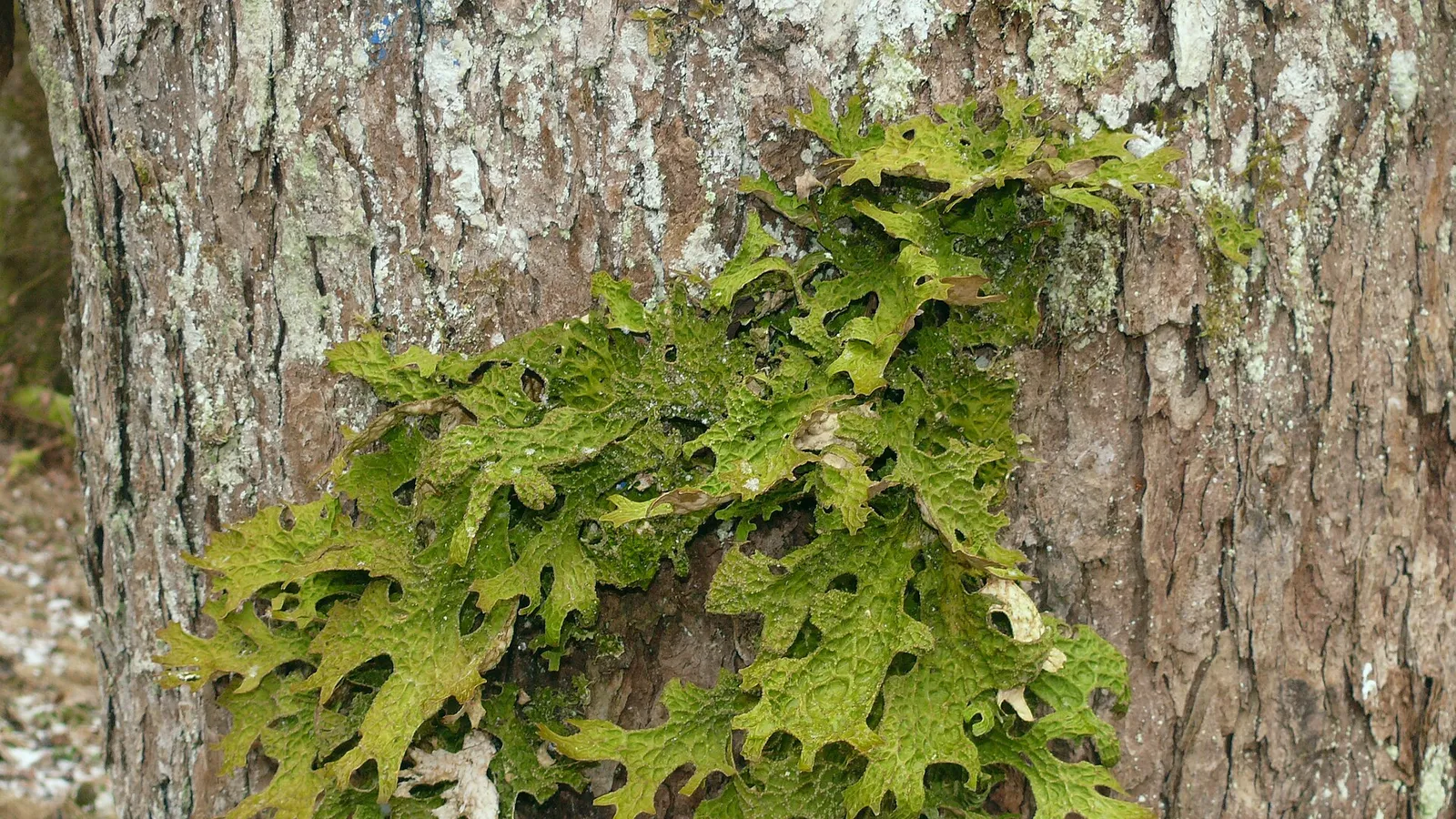

Lungwort Lichen (Lobaria pulmonaria)
Contents
TL;DR
- established Tree lungwort is not a single organism but a genuine three-way symbiosis: an ascomycete fungus living together with both a green alga and a nitrogen-fixing cyanobacterium, with the fungal partner providing structure and protection while the cyanobacterium fixes atmospheric nitrogen the lichen can use — a specific, documented biological partnership this article states directly rather than a vague claim that lichen is "part fungus, part plant."
- established Once common and widespread across the UK, growing on oak, ash, and elm, tree lungwort has suffered a severe, documented historical range collapse and is now restricted to the Scottish Highlands, with only scattered outposts remaining in North Wales, Pembrokeshire, Dartmoor, and the New Forest — this article states this collapse directly rather than presenting the lichen's current Highland stronghold as its original or typical distribution.
- established Tree lungwort's cyanobacterial partner is particularly vulnerable to acid rain, because reduced soil and bark pH inhibits the nitrogen-fixing enzymes the lichen depends on, making the species a genuine, documented indicator of sustained clean air as well as of old, undisturbed woodland — a specific, documented dual-vulnerability mechanism this article names directly rather than a vague claim that the lichen "needs a healthy environment."
- established Tree lungwort typically does not begin sexual reproduction until around 25 years of age, relying predominantly on vegetative propagation through wind- and rain-dispersed fragments, a specific, documented slow-maturing life cycle this article states directly because it clarifies why the species struggles to recolonise woodland once lost from an area.
- established Historically, tree lungwort was used medicinally for lung ailments including asthma, under the doctrine of signatures, a traditional belief that a plant's physical resemblance to a body part indicated its medicinal use for that part, reflecting the lichen's visibly lung-like, lobed appearance — this article states both the practice and its basis directly rather than presenting the historical medicinal use as having no stated rationale.
Key Facts
- Scientific name
- Lobaria pulmonaria
- Category
- Flora (lichen)
- Also known as
- Tree lungwort, lung lichen
- Symbiotic partners
- Ascomycete fungus + green alga + cyanobacterium (Nostoc)
- Age to sexual maturity
- ~25 years
- Current UK stronghold
- Scottish Highlands (scattered outposts elsewhere)
- Key threat
- Acid rain (inhibits nitrogen-fixing enzyme activity)
- Conservation status
- Endangered across much of lowland Europe
Scottish Impact Index (SI Score)
- Scottish Significance
- 9/10
- Ecological Persistence
- 7/10
- Ecological Importance
- 10/10
- Botanical Distinctiveness
- 10/10
- Conservation Significance
- 10/10
- Recognition
- 5/10
51/60
Ranked =9th of 45 in Flora
A Note on Claims and Evidence
Biology, the three-way symbiotic partnership, nitrogen-fixation mechanism, acid-rain vulnerability, reproductive life cycle, and doctrine-of-signatures medicinal history are drawn from Wikipedia's published research record. The species' historical UK range, its documented collapse, and its current Scottish Highlands stronghold are drawn from the Woodland Trust's published assessment of lungwort lichens.
Timeline
Tree lungwort grows commonly and widely across the UK, including on oak, ash, and elm trees, its three-way symbiosis of fungus, green alga, and nitrogen-fixing cyanobacterium thriving in the clean air and undisturbed, humid woodland conditions available across much of the country, including Scotland's Atlantic temperate rainforest; historically, its visibly lung-like, lobed appearance leads to its traditional medicinal use for respiratory ailments including asthma, under the doctrine of signatures, documented in Gerard's 1597 herbal.
Industrial forestry and, critically, acid rain cause severe, documented decline across the species' former UK range, the acid rain specifically inhibiting the nitrogen-fixing enzymes of the lichen's cyanobacterial partner, since lichens containing a blue-green algal component are particularly susceptible to this effect.
Individual tree lungwort thalli typically do not begin sexual reproduction until around 25 years of age, relying predominantly on vegetative propagation through wind- and rain-dispersed fragments, a slow-maturing life cycle that limits how readily the species can recolonise woodland once lost.
Tree lungwort, once common and widespread across the UK, is now restricted to the Scottish Highlands, with only scattered outposts remaining in North Wales, Pembrokeshire, Dartmoor, and the New Forest, considered endangered across much of lowland Europe, its continued presence in Scotland's Atlantic rainforest serving as a genuine, documented indicator of both old, undisturbed woodland and sustained clean air.
Details
A three-way partnership explained through its real biological structure
This article names tree lungwort's biology with real specificity rather than a vague claim that lichen is "part fungus, part plant": it is a genuine three-way symbiosis of an ascomycete fungus, a green alga, and a nitrogen-fixing cyanobacterium, with the fungal partner providing structure and protection while the cyanobacterium fixes atmospheric nitrogen the lichen can use. This article states this specific structure because it is the real, documented biological partnership underlying the species, not a simplified two-organism description.
A historical range collapse stated directly, not minimised
This article states plainly that tree lungwort was once common and widespread across the UK, growing on oak, ash, and elm, and that it has since suffered a severe, documented collapse, now restricted to the Scottish Highlands with only scattered outposts remaining elsewhere in Britain. This article names this collapse directly because presenting the species' current Highland stronghold without its documented historical range would understate the real scale of its decline.
A dual vulnerability explained through its real chemical mechanism
This article names the specific mechanism behind tree lungwort's sensitivity to pollution rather than a vague claim that the lichen "needs a healthy environment": its cyanobacterial partner is particularly vulnerable to acid rain, because reduced pH inhibits the nitrogen-fixing enzymes the lichen depends on. This article states this specific mechanism because it clarifies why the species functions as a genuine indicator of both old woodland and sustained clean air, not an indicator of habitat age alone.
A slow life cycle named to explain a real ecological constraint
This article states directly that tree lungwort typically does not begin sexual reproduction until around 25 years of age, relying predominantly on vegetative propagation through wind- and rain-dispersed fragments. This article names this specific life cycle because it clarifies a real, documented ecological constraint: the species struggles to recolonise woodland once lost from an area, making its continued presence dependent on long-term habitat continuity rather than rapid natural recovery.
A traditional medicinal use named with its real stated rationale
This article names tree lungwort's historical use for lung ailments, including asthma, directly, stating the doctrine of signatures as its documented basis: the belief that a plant's physical resemblance to a body part indicated its medicinal use for that part, reflecting the lichen's visibly lung-like, lobed appearance. This article states this specific historical rationale because it clarifies why the lichen was used medicinally, rather than presenting the practice as an unexplained historical curiosity.
Did You Know?
- Tree lungwort isn't one organism — it's a genuine three-way partnership between a fungus, a green alga, and a nitrogen-fixing cyanobacterium.
- Once common and widespread across the UK, it has suffered such severe decline that it's now mostly restricted to the Scottish Highlands.
- Its cyanobacterial partner is especially vulnerable to acid rain, which inhibits the enzymes it needs to fix nitrogen — making the lichen a genuine indicator of clean air.
- Individual lichens typically don't reproduce sexually until around 25 years old, relying mostly on fragments spread by wind and rain instead.
- Its lung-like, lobed appearance led to historical use treating asthma and other lung ailments, under the old "doctrine of signatures" belief.
- The lichen is considered endangered across much of lowland Europe.
- Tree lungwort thrives in Scotland's Atlantic temperate rainforest, one of its last strongholds in Britain.
FAQ
1Is lungwort lichen a plant?
No — it's a genuine three-way symbiosis between a fungus, a green alga, and a nitrogen-fixing cyanobacterium.
2Why is tree lungwort now mostly found in Scotland?
It once grew widely across the UK but has suffered severe decline from industrial forestry and acid rain, now surviving mainly in the Scottish Highlands with only scattered outposts elsewhere.
3Why is tree lungwort considered an indicator species?
Its cyanobacterial partner is especially sensitive to acid rain, so its presence indicates both old, undisturbed woodland and genuinely clean air.
4How quickly can tree lungwort recolonise an area?
Slowly — individual lichens typically don't reproduce sexually until around 25 years old, relying mostly on fragment dispersal instead.
5Was tree lungwort really used as medicine?
Yes — historically for lung ailments like asthma, based on the doctrine of signatures, the belief that its lung-like appearance indicated its medicinal use.
6Is tree lungwort endangered?
It's considered endangered across much of lowland Europe, though it remains present in parts of Scotland's Atlantic rainforest.
7What does tree lungwort need to survive?
Old, undisturbed, humid woodland combined with sustained clean air — both are required, since acid rain specifically damages its nitrogen-fixing partner.
Sources and Further Reading
Primary/Institutional
Scholarly/Critical
- Lobaria pulmonaria (L.) Hoffm.: The Multifaceted Suitability of the Lung Lichen to Monitor Forest Ecosystems — MDPI
- Tree lungwort — Natural England publications
General
Caveats: Myths and Disputed Claims
- Clarification: This article does not present the Scottish Highlands as tree lungwort's original or typical range; the species was once common and widespread across the UK and has suffered a severe, documented historical collapse.
- Note: This article does not describe tree lungwort as indicating woodland age alone; its cyanobacterial partner's specific sensitivity to acid rain makes it an indicator of sustained clean air as well.
Card 042 · Flora