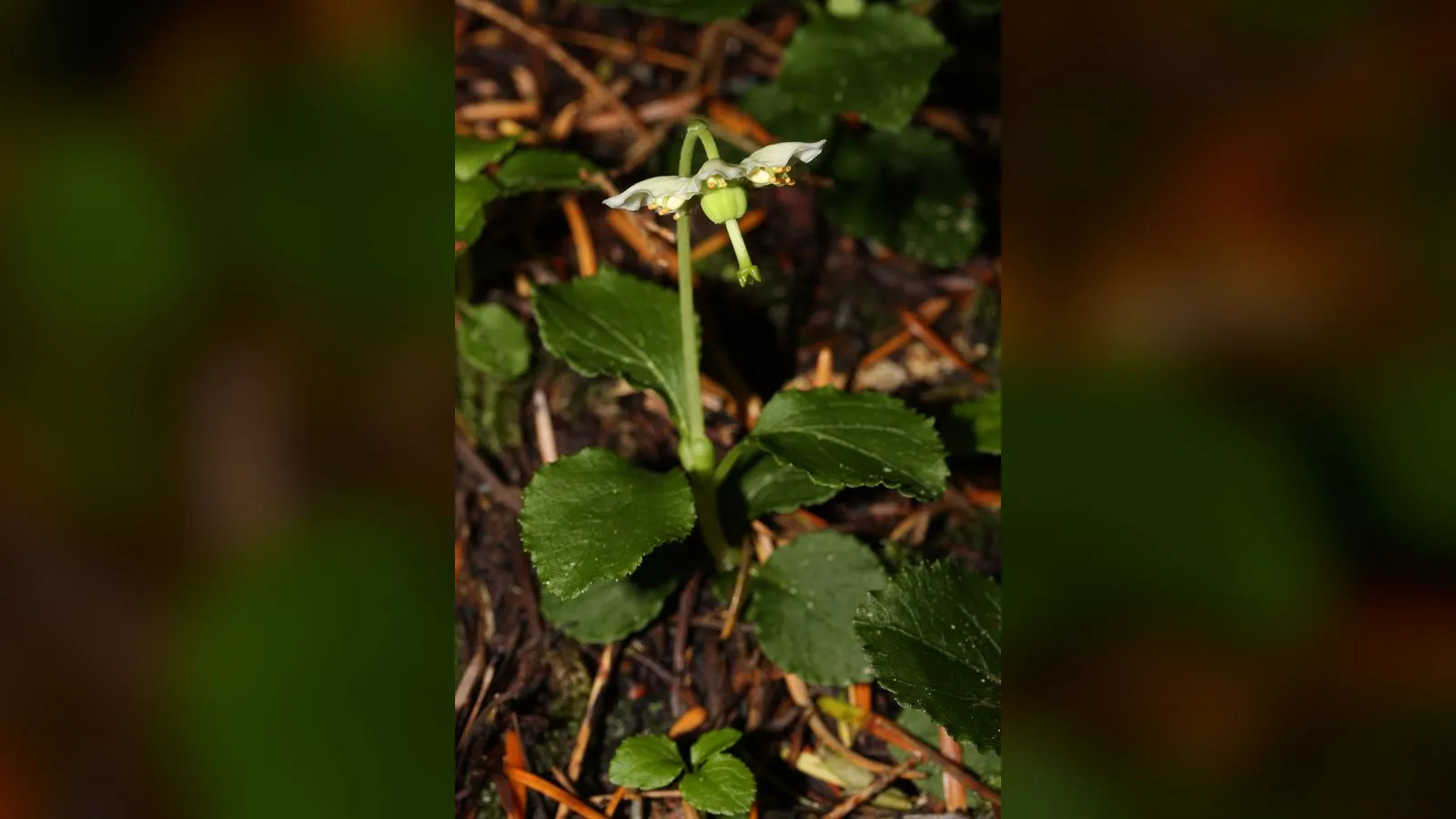

One-flowered Wintergreen (Moneses uniflora)
Contents
TL;DR
- established One-flowered wintergreen is critically endangered in the UK, with only seven remaining populations, every one of them in Scotland, and the species has lost approximately half its UK population over the past 50 years — a specific, documented scale of rarity and decline this article states directly rather than a vague claim of scarceness.
- established The species is a partial mycoheterotroph, meaning it supplements its own photosynthesis by extracting sugars and minerals from soil fungi, with specific fungal species likely necessary simply for its seeds to germinate at all — a specific, documented biological mechanism this article names directly rather than a vague reference to "fungal associations."
- disputed Conservationists themselves describe the plant's habitat requirements as genuinely confusing, since it appears in small patches only a few tens of metres across with no easily definable shared habitat preference, yet recent findings show it recovering rapidly following cattle grazing, rhododendron removal, and forestry track disturbance — this article states this combination directly rather than resolving it into a simple rule, since a species recovering after ground disturbance runs counter to the more familiar pattern in which disturbance harms rare woodland plants, and this article does not generalise this specific finding to other species.
- established In autumn 2023, Plantlife carried out the UK's first translocation project for this species, moving 109 individual plants from Roseisle Forest and Old Grantown Wood to RSPB Abernethy in the Cairngorms National Park, achieving a survival rate of over 70% within the first nine months — a specific, quantified, and genuinely promising recent conservation result this article states with its real figures.
- established Twelve plants from the translocation were separately sent to the Royal Botanic Garden Edinburgh for dedicated fungal research, reflecting the recognition that understanding the species' specific fungal partnerships is essential to any long-term recovery strategy — a specific, documented research effort this article names directly.
Key Facts
- Scientific name
- Moneses uniflora
- Category
- Pinewood
- UK status
- Critically endangered; 7 remaining populations, all in Scotland
- Population decline (50 years)
- ~50%
- Cairngorms share of Scottish population
- ~10%
- 2023 translocation survival rate (9 months)
- 70%+
- Plants translocated (2023)
- 109
Scottish Impact Index (SI Score)
- Scottish Significance
- 9/10
- Ecological Persistence
- 4/10
- Ecological Importance
- 6/10
- Botanical Distinctiveness
- 10/10
- Conservation Significance
- 10/10
- Recognition
- 5/10
44/60
Ranked =33rd of 45 in Flora
A Note on Claims and Evidence
Population figures, decline rate, and the species' documented "confusing" lack of clear habitat preference are drawn from Plantlife's published assessment. The partial-mycoheterotrophy mechanism, translocation figures, survival rate, and fungal research detail are drawn directly from Plantlife's and the Strathspey Herald's reporting on the 2023 Abernethy translocation project.
Timeline
One-flowered wintergreen establishes itself in scattered, small patches across Scotland's pine woodlands, never common, with no easily definable shared habitat preference across its known sites.
The UK population declines by approximately half, leaving only seven remaining populations, all in Scotland, with roughly 10% of the Scottish total found within the Cairngorms and the remainder sparsely distributed across the Highlands.
Studies identify the species as a partial mycoheterotroph, dependent on soil fungi for a supplementary nutrient source and likely requiring specific fungal partners simply to germinate, while separate observations find the species recovering rapidly following cattle grazing, rhododendron removal, and forestry track disturbance at some sites.
Plantlife carries out the UK's first translocation project for the species, moving 109 individual plants from Roseisle Forest and Old Grantown Wood to RSPB Abernethy in the Cairngorms National Park, in partnership with RSPB Scotland, the Royal Botanic Garden Edinburgh, NatureScot, Forestry and Land Scotland, and the Cairngorms National Park Authority.
The translocated population shows a survival rate exceeding 70%, while twelve separately collected plants undergo dedicated fungal research at the Royal Botanic Garden Edinburgh.
Future translocations are planned to increase genetic diversity across the species' remaining populations and rescue plants from sites under threat, building on the early success of the Abernethy project.
Details
A rarity and decline stated with their real documented scale
This article names one-flowered wintergreen's UK status with real figures rather than a vague claim of scarceness: critically endangered, with only seven remaining populations, all in Scotland, and a decline of approximately half the UK population over the past 50 years. This article states these specific numbers directly because they represent one of the most severe documented declines of any Scottish native plant.
A nutritional strategy named with its real mechanism
This article states the species' dependency on soil fungi precisely rather than a vague reference to "fungal associations": as a partial mycoheterotroph, it supplements its own photosynthesis by extracting sugars and minerals from fungi in the soil, with specific fungal species likely necessary simply for seed germination to occur. This article names this mechanism directly because it clarifies why the species cannot be straightforwardly cultivated or transplanted without the right fungal partners already present.
A genuinely counterintuitive finding, stated without overgeneralising
This article treats directly, rather than smoothing into a simple rule, a real tension in current understanding: conservationists themselves describe the species' habitat requirements as confusing, since it occurs in small patches with no easily definable shared preference, yet it has been observed recovering rapidly following cattle grazing, rhododendron removal, and forestry track disturbance. This article states this combination because it runs counter to the more familiar pattern in which ground disturbance harms rare woodland plants, and this article does not extend this specific, site-level finding into a general claim that disturbance benefits rare plants more broadly — the mechanism behind this particular species' response to disturbance is not fully understood.
A translocation project credited with its real, measured result
This article presents the 2023 Abernethy translocation with its actual figures: 109 individual plants moved from two source sites, achieving a survival rate exceeding 70% within the first nine months. This article states this specific result directly because it represents a genuinely measured early conservation success, the UK's first attempt at translocating this species, rather than an unverified claim of progress.
A research effort matched to the species' real underlying vulnerability
This article names the decision to send twelve plants from the translocation to the Royal Botanic Garden Edinburgh for dedicated fungal research directly, because it reflects a genuine recognition that understanding the species' specific fungal partnerships, not just moving plants to new sites, is essential to any durable long-term recovery strategy.
Did You Know?
- One-flowered wintergreen is critically endangered in the UK, with only seven remaining populations, all of them in Scotland.
- The UK population has fallen by roughly half over the past 50 years.
- The species partly feeds on fungi in the soil, supplementing its own photosynthesis, and likely needs specific fungal partners simply to germinate.
- Conservationists describe its habitat requirements as genuinely confusing, since it occurs in patches just a few tens of metres across with no clear shared pattern.
- It has been found recovering rapidly after cattle grazing, rhododendron removal, and forestry track disturbance at some sites.
- In 2023, Plantlife carried out the UK's first translocation of the species, moving 109 plants to RSPB Abernethy.
- Within nine months, more than 70% of the translocated plants had survived.
FAQ
1How rare is one-flowered wintergreen?
Extremely — it's critically endangered in the UK, with only seven remaining populations, all in Scotland, following a roughly 50% decline over the past 50 years.
2Why is it called a "confusing" plant?
Conservationists themselves say its habitat requirements aren't well understood — it occurs in small patches with no easily definable shared preference across sites.
3Does the plant rely on fungi to survive?
Yes — it's a partial mycoheterotroph, supplementing photosynthesis with sugars and minerals from soil fungi, and likely needs specific fungal partners just to germinate.
4Does disturbance help or harm this species?
Counterintuitively, it has been observed recovering rapidly after disturbance such as cattle grazing, rhododendron removal, and forestry track work — though this finding is specific to this species and not a general rule for rare plants.
5What was the 2023 translocation project?
Plantlife's first-ever translocation of this species, moving 109 plants to RSPB Abernethy, achieving over 70% survival within nine months.
6Where did the translocated plants come from?
Roseisle Forest and Old Grantown Wood.
7Is further research planned?
Yes — twelve plants were sent to the Royal Botanic Garden Edinburgh for dedicated fungal research, and future translocations aim to increase genetic diversity across the species' populations.
8Where is the species found in Scotland?
Scattered across the Highlands, with roughly 10% of the Scottish population found within the Cairngorms National Park.
Sources and Further Reading
Primary/Institutional
- Saving Wintergreen, A Confusing Wee Flower — Plantlife
- Renewed hopes for future of one of UK's rarest plants after strath success — Strathspey Herald
Scholarly/Critical
- One-flowered Wintergreen — Plantlife species page
- Can we protect threatened Scottish arctic-alpine higher plants? — Botanical Journal of Scotland (Taylor & Francis)
General
Caveats: Myths and Disputed Claims
- Clarification: This article does not generalise the species' documented recovery after ground disturbance into a claim that disturbance benefits rare plants more broadly; this is a site-level finding specific to this species, whose underlying mechanism is not fully understood.
- Note: This article does not describe the species' habitat requirements as well understood; conservationists themselves describe them as genuinely confusing, with no easily definable shared pattern across known sites.
Card 008 · Flora