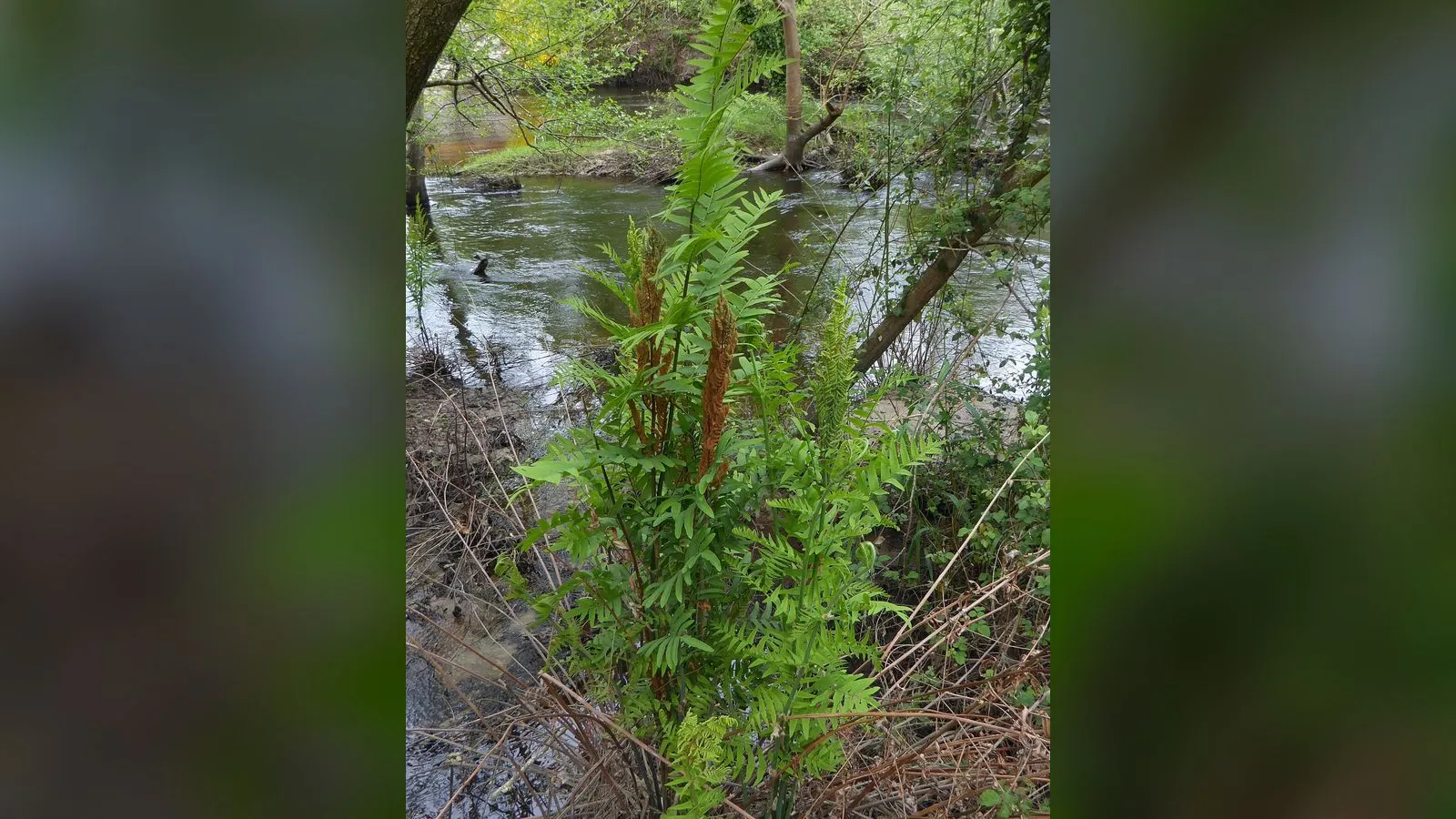

Royal Fern (Osmunda regalis)
Contents
TL;DR
- established Royal fern's wild populations suffered real, documented decline during the Victorian era, driven by two separate pressures: heavy collection for ornamental gardens during the mid-19th-century "pteridomania" fern craze, and harvesting of its roots to produce osmunda fibre, a growing medium used in orchid cultivation — this article names both specific causes directly rather than attributing the species' historical decline to habitat loss alone.
- established Osmunda, the genus royal fern belongs to, has a fossil record stretching back to the Paleocene epoch, tens of millions of years ago, making royal fern part of a genuinely ancient fern lineage, a specific, documented evolutionary age this article states directly rather than a vague claim that ferns in general are "ancient plants."
- established Royal fern is Britain's largest native fern, with fronds that can reach up to 120cm in typical growth and exceptionally as much as 400cm, growing from a stout, woody, trunk-like base built up over years of interwoven roots — a specific, documented physical scale this article names directly rather than a vague claim that the plant is "large."
- established The young, unfurling shoots of royal fern, known in some places as fiddleheads, have historically been eaten as food, and its roots produce osmunda fibre, a specialist growing medium still used today in cultivated orchid growing, a specific, documented dual practical use this article states directly rather than treating the plant's traditional uses as purely ornamental.
- established Within Britain, royal fern is found predominantly in western regions, including northwestern Scotland, extending down through Cornwall and the Isles of Scilly, with further scattered populations in Northern Ireland, the Isle of Man, and parts of southern England — a specific, documented distribution this article states directly rather than treating the species as evenly spread across the UK.
Key Facts
- Scientific name
- Osmunda regalis
- Category
- Flora
- Height
- Over 1.5m
- Frond length
- Up to 120cm typically; exceptionally up to 400cm
- Genus fossil record
- Dates to the Paleocene (tens of millions of years ago)
- Key habitat
- Bogs, wet woodland, ditches, riverbanks
- UK distribution
- Predominantly western: NW Scotland, Cornwall, Isles of Scilly
- Historical decline drivers
- Victorian ornamental collecting; osmunda-fibre harvesting; habitat loss
A Note on Claims and Evidence
Biology, evolutionary/fossil history, frond and size measurements, traditional food and orchid-fibre uses, and general distribution are drawn from Wikipedia's published research record. UK and Scottish distribution and the specific drivers of the species' Victorian-era decline are drawn from the Wildlife Trusts' published species account. The wider Victorian "pteridomania" fern-collecting craze and its documented impact on vulnerable British fern species is drawn from the published historical record on the phenomenon.
Timeline
The genus Osmunda, to which royal fern belongs, is already present in the fossil record by the Paleocene epoch, part of a genuinely ancient fern lineage long predating most of the flowering plants now found alongside it.
Royal fern establishes itself in bogs, wet woodland, ditches, and riverbanks across western Britain, including northwestern Scotland, Cornwall, and the Isles of Scilly, growing a stout, woody, trunk-like base over years of accumulated interwoven roots, its young shoots historically eaten as fiddleheads in some places.
The Victorian "pteridomania" fern-collecting craze, coined as a term by Charles Kingsley in 1855 and peaking from the 1850s to the 1890s, drives heavy collection of British ferns for ornamental gardens and decorative use; royal fern's wild populations suffer real, documented decline during this period, driven both by this ornamental collecting and by separate harvesting of its roots to produce osmunda fibre, a growing medium for orchid cultivation.
Osmunda fibre remains in specialist horticultural use as an orchid-growing medium, even as royal fern's wild populations continue to face pressure from wetland drainage and habitat loss alongside the lingering effects of historical overcollection.
Royal fern remains Britain's largest native fern, found predominantly in western regions including northwestern Scotland, its ancient evolutionary lineage, documented Victorian-era decline, and continuing practical and horticultural uses all part of the current record.
Details
A historical decline explained through its two real, separate causes
This article names the specific pressures behind royal fern's Victorian-era population decline rather than attributing it to habitat loss alone: heavy collection for ornamental gardens during the mid-19th-century pteridomania fern craze, and separate harvesting of its roots to produce osmunda fibre, a growing medium for orchid cultivation. This article states both causes directly because treating the decline as driven by habitat change alone would omit the real, documented human collecting pressure the species specifically faced.
An evolutionary age stated with its real documented timescale
This article names royal fern's evolutionary history with real specificity rather than a vague claim that ferns in general are "ancient plants": its genus, Osmunda, has a fossil record dating to the Paleocene epoch, tens of millions of years ago. This article states this specific timescale because it represents a genuinely documented, measured evolutionary age, not a general impression of ferns as an old plant group.
A physical scale stated with its real documented extremes
This article names royal fern's size with real specificity rather than a vague claim that the plant is "large": as Britain's largest native fern, its fronds typically reach up to 120cm but can exceptionally grow as much as 400cm, rising from a stout, woody, trunk-like base built up over years of interwoven roots. This article states these specific figures because they represent genuinely measured botanical extremes, not a general impression of the plant's stature.
A dual practical use named beyond ornamental value
This article names royal fern's practical historical uses directly rather than treating the species as purely ornamental: its young shoots, known in some places as fiddleheads, have historically been eaten as food, and its roots produce osmunda fibre, a specialist growing medium still used today in cultivated orchid growing. This article states both uses because they represent genuine, documented practical applications distinct from the species' Victorian-era ornamental garden appeal.
A UK distribution stated honestly as uneven
This article names royal fern's British distribution with real specificity rather than treating the species as evenly spread across the UK: it is found predominantly in western regions, including northwestern Scotland, Cornwall, and the Isles of Scilly, with further scattered populations in Northern Ireland, the Isle of Man, and parts of southern England. This article states this uneven pattern because it reflects a genuine, documented geographic distribution, not a species found uniformly across Britain.
A 1990s view from Flora Britannica
shared Richard Mabey, in Flora Britannica (1996), calls royal fern "one of the most frequently plundered by Victorian collectors". That supports the collecting pressure described above. In his introduction to the ferns, however, he adds that despite the plunder it is doubtful whether any fern species was made even locally extinct. The two views are compatible: collecting thinned wild populations without, on his reading, wiping out the species anywhere. The osmunda-fibre trade is not mentioned in the book.
established Mabey gives the fern's height as occasionally up to ten feet, about three metres, in fens and wet woods. That is within the range of the frond figures above. He reports that by the mid-1990s the fern was making something of a comeback in the West Country, escaping from ornamental lakes and shrubberies where it had been planted a century earlier, and that it was plentiful in the fens around the Norfolk Broads. His account has no Scottish records or local names, so it adds nothing specific to the fern's history in Scotland. His status remarks date from 1996; current distribution should be taken from recent atlas data.
Did You Know?
- Richard Mabey's Flora Britannica (1996) records royal fern escaping from Victorian garden plantings and recolonising West Country woods and riverbanks.
- Royal fern is Britain's largest native fern, with fronds that can exceptionally reach up to 4 metres long.
- Its genus, Osmunda, has a fossil record dating back to the Paleocene epoch, tens of millions of years ago.
- Victorian collectors drove real, documented decline in wild royal fern populations, both for ornamental gardens and by harvesting its roots to make osmunda fibre, an orchid-growing medium.
- Osmunda fibre is still used today as a specialist growing medium for cultivated orchids.
- The plant's young shoots, called fiddleheads in some places, were historically eaten as food.
- In the UK, royal fern is found predominantly in western regions, including northwestern Scotland, Cornwall, and the Isles of Scilly.
- Royal fern grows a stout, woody, trunk-like base built up over years of interwoven roots.
FAQ
1Why did royal fern populations decline historically?
Two real, documented causes: heavy Victorian-era collection for ornamental gardens, and separate harvesting of its roots to produce osmunda fibre, an orchid-growing medium.
2How old is royal fern's evolutionary lineage?
Its genus, Osmunda, has a fossil record dating back to the Paleocene epoch, tens of millions of years ago.
3How big does royal fern get?
It's Britain's largest native fern, with fronds typically up to 120cm and exceptionally as much as 400cm long.
4Is osmunda fibre still used today?
Yes — it remains a specialist growing medium used in cultivated orchid growing.
5Was royal fern ever eaten?
Yes — its young, unfurling shoots, known as fiddleheads in some places, were historically eaten as food.
6Where does royal fern grow in Scotland?
Predominantly in northwestern Scotland, within its wider western-UK distribution that also includes Cornwall and the Isles of Scilly.
7What habitat does royal fern need?
Moisture-rich ground including bogs, wet woodland, ditches, and riverbanks.
8Did Victorian collectors make royal fern extinct anywhere?
Richard Mabey's Flora Britannica (1996) names it among the most plundered ferns but doubts that any fern was made even locally extinct by collecting.
Sources and Further Reading
Primary/Institutional
Specialist
- Richard Mabey, Flora Britannica (Sinclair-Stevenson, 1996).
Scholarly/Critical
- Pteridomania — Wikipedia
- Restoring a fern wiped out by collectors and botanists — Royal Botanic Garden Edinburgh
General
Caveats: Myths and Disputed Claims
- Clarification: This article does not attribute royal fern's historical decline to habitat loss alone; Victorian-era ornamental collecting and osmunda-fibre harvesting were separate, documented contributing pressures.
- Note: This article does not treat royal fern's traditional uses as purely ornamental; its shoots were historically eaten as food, and its roots remain in specialist horticultural use today.
- Do not claim Victorian collectors wiped royal fern out of particular places without a specific record. Mabey doubted collecting made any fern locally extinct.
Card 045 · Flora