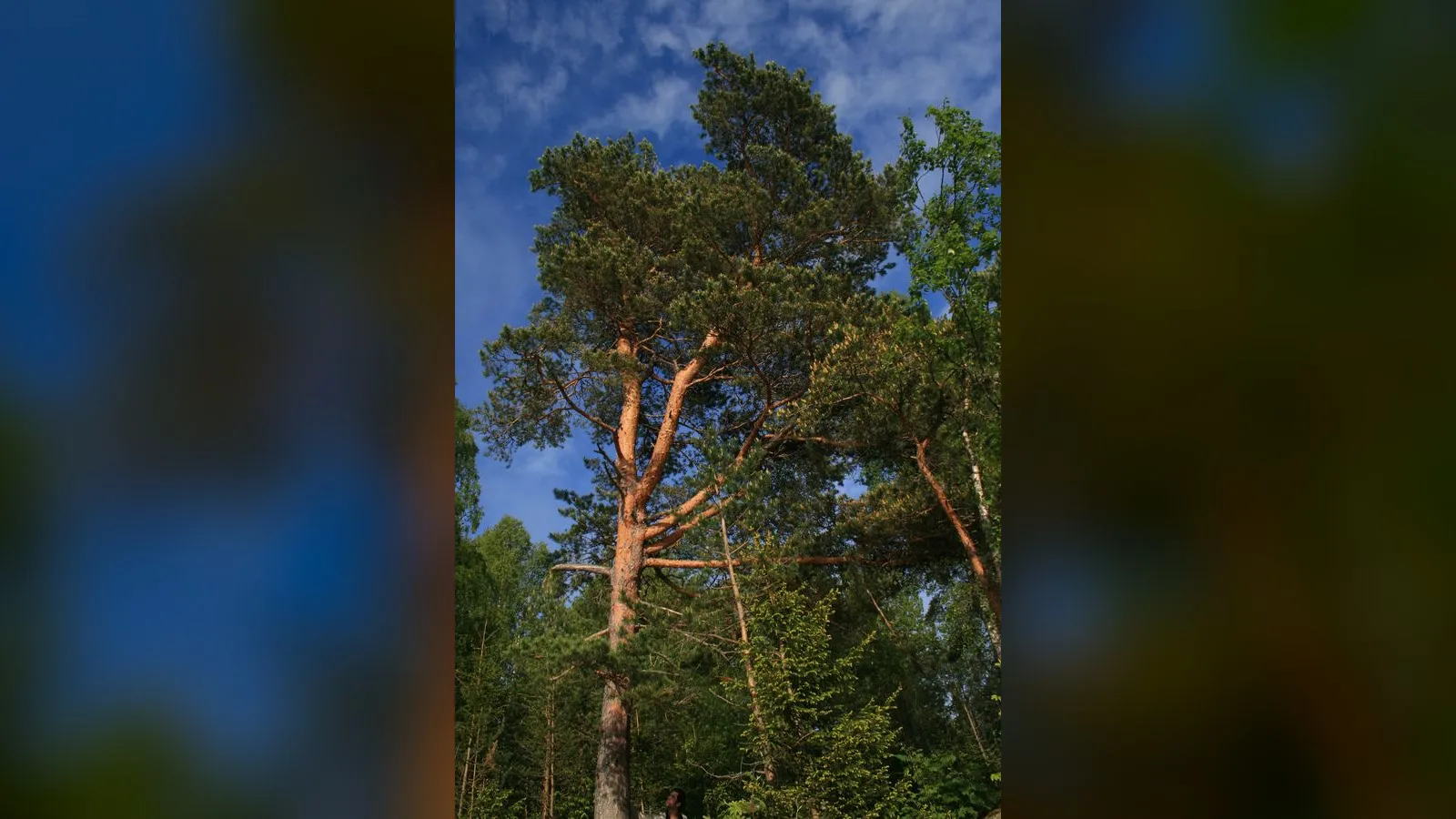

Scots Pine (Pinus sylvestris)
Contents
TL;DR
- established Scots pine is Britain's only native pine species, arriving as the last Ice Age ended and forming part of the great boreal forest belt that extends across the Northern Hemisphere — a specific, documented native status this article states directly rather than a vague claim of being "a Scottish tree."
- established Individual Scots pines typically live around 250 years, with some specimens exceeding 500 years and reaching heights up to 30 metres and girths exceeding six metres — a specific, documented scale and longevity this article states with its real figures rather than a vague description of a large, long-lived tree.
- established Scotland's native pinewoods once covered an estimated 15,000 square kilometres but have been reduced to roughly 180 square kilometres today, a loss driven over centuries by timber harvesting, deer overgrazing, and commercial exploitation — a severe, specific historical collapse this article states at its full documented scale rather than treating today's surviving pinewoods as simply how the landscape has always looked.
- established A comprehensive 2017 assessment, the first of its kind in 60 years, surveyed 72 of the 84 remaining native pinewood fragments across the Highlands using over 1,200 sample plots, finding Scots pine in serious decline at a quarter of plots, with high deer populations affecting roughly two-thirds of sites and non-native conifers, chiefly Sitka spruce planted from the 1950s onward, present in a third of plots — a specific, quantified recent picture this article states directly rather than assuming the historical decline has simply stopped.
- established Only 11% of remaining pinewood sites exceed 500 hectares, meaning most surviving fragments are small and isolated — a specific, documented fragmentation problem this article names directly, because small, disconnected woodland fragments support less biodiversity and have less resilience than large, continuous forest, independent of any further loss of total area.
Key Facts
- Scientific name
- Pinus sylvestris
- Category
- Trees
- Status
- National tree of Scotland; Britain's only native pine
- Typical lifespan
- ~250 years (some 500+)
- Maximum height
- Up to 30m
- Historical native pinewood extent
- ~15,000 km²
- Current native pinewood extent
- ~180 km²
- Sites in serious decline (2017 survey)
- 25% of surveyed plots
Scottish Impact Index (SI Score)
- Scottish Significance
- 10/10
- Ecological Persistence
- 9/10
- Ecological Importance
- 10/10
- Botanical Distinctiveness
- 10/10
- Conservation Significance
- 10/10
- Recognition
- 10/10
59/60
Ranked =1st of 45 in Flora
A Note on Claims and Evidence
Physical characteristics, lifespan, and native status details are drawn from published Countryfile and forestry sources. Historical pinewood extent figures are drawn from the same sources and are broadly consistent with Trees for Life's more recent comprehensive survey findings. The 2017 assessment's methodology and specific findings — survey scale, deer impact, non-native conifer presence, and fragmentation figures — are drawn directly from Trees for Life's published reporting on that study.
Timeline
Scots pine establishes itself in Scotland as the ice retreats, becoming Britain's only native pine species and the foundation of what would become the Caledonian Forest.
Native Scots pine woodland covers an estimated 15,000 square kilometres of Scotland.
Sustained timber harvesting, deer overgrazing, and commercial exploitation progressively reduce this extent.
Highland pinewoods are cut for charcoal for lowland ironworks, and later for timber during the Napoleonic Wars, as summarised by Richard Mabey.
Non-native conifer plantations, chiefly Sitka spruce, are established across parts of the Highlands, including areas adjacent to or within remaining native pinewood fragments.
Little more than 25,000 acres of native pinewood is estimated to remain, according to Flora Britannica.
A Forestry Commission survey suggests a larger area of natural pinewood, though it counts woods self-sown from nineteenth-century plantations.
Richard Mabey's Flora Britannica notes that the tree has "barely a vestige" of folklore left in Scotland.
Native pinewood has been reduced to roughly 180 square kilometres, a small fraction of its historical range, now surviving as 84 recognised fragments.
Trees for Life publishes the first comprehensive assessment of Scotland's native pinewoods in 60 years, surveying 72 of the 84 remaining fragments across more than 1,200 sample plots, finding Scots pine in serious decline at a quarter of plots, deer impact at roughly two-thirds of sites, non-native conifers present at a third, and only 11% of sites exceeding 500 hectares.
Restoration efforts, including at Glen Affric, demonstrate recovery is achievable with coordinated deer management, non-native conifer removal, and long-term funding, while calls continue for pinewoods to be allowed to migrate upslope as the climate warms.
Details
A native status stated with its real specificity
This article names Scots pine's native status precisely rather than a vague claim of Scottishness: it is Britain's only native pine species, arriving as the last Ice Age ended, and forms part of the broader boreal forest belt spanning the Northern Hemisphere. This article states this directly because it reflects the tree's genuine, singular taxonomic status among British conifers, not merely strong cultural association.
A scale and longevity stated with real figures
This article presents Scots pine's physical character with its actual documented figures: a typical lifespan around 250 years, with some individuals exceeding 500, reaching heights up to 30 metres and girths exceeding six metres in the largest Scottish specimens. This article states these numbers directly because they convey the genuine scale of mature individual trees more precisely than a general description of size and age.
A historical collapse stated at its full documented scale
This article presents Scotland's pinewood decline with its real figures rather than treating today's landscape as simply natural: from an estimated 15,000 square kilometres historically to roughly 180 square kilometres today, a loss sustained over centuries through timber harvesting, deer overgrazing, and commercial exploitation. This article states these figures directly because the open moorland now covering much of the Highlands is, in significant part, the legacy of this documented deforestation, not an unaltered natural baseline.
A recent, quantified assessment, not an assumption that decline has stopped
This article credits the 2017 Trees for Life assessment with its real methodology and findings: 72 of 84 remaining fragments surveyed across more than 1,200 sample plots, finding serious decline at a quarter of plots, deer impact at roughly two-thirds, and non-native conifers present at a third. This article states these specific figures directly because they represent current, measured evidence that pressure on Scotland's surviving pinewoods is ongoing, not a historical problem that has since been resolved.
A fragmentation problem distinct from total area loss
This article names a specific, separate problem from the headline area figures: only 11% of remaining pinewood sites exceed 500 hectares, meaning most surviving fragments are small and isolated from one another. This article states this directly because fragmentation carries its own documented biodiversity and resilience costs, distinct from and additional to the simple total area lost — even if total pinewood area were to stabilise, a landscape of small, disconnected fragments would remain more vulnerable than a smaller number of large, connected woods.
The tree in Flora Britannica (1996)
established A Scottish tree with little Scottish folklore. Richard Mabey, in Flora Britannica (1996), opens his entry with a paradox. There are Scots pines all over Scotland, he writes, but "barely a vestige of surviving folklore", while in England, where the tree had not been native for thousands of years, planted pines carry a thick layer of stories. He blames history: the exploitation of "the Old Wood of Caledon" largely removed the tree from everyday Scottish life. He also notes that the Scottish native pines had been given the status of an endemic subspecies, scotica. His further remark that the tree lacked even an indigenous name is overstated, since Gaelic has long had giuthas for pine.
established Mabey's account of the decline. He describes a medieval forest of pine and birch stretching across most of the Highlands "from Perth to Ullapool". From the late seventeenth century it was cut for charcoal for lowland ironworks, then for timber during the Napoleonic Wars. Regeneration was then blocked by sheep after the Clearances and later by deer. By the 1970s, he reports, little more than 25,000 acres (about 100 km²) were thought to remain, much of it in small clumps. He adds that the 1994 Forestry Commission survey suggested a larger area, though not strictly comparable because it included woods self-sown from nineteenth-century plantations. These are 1990s figures. The current extent and condition of the pinewoods are given above from the 2017 Trees for Life assessment.
established What a fenced pinewood looks like. Mabey describes the conditions inside deer fences as a glimpse of the old boreal forest: dead trunks still standing, self-sown saplings, a thick understorey of bilberry and heather, and air "tangy with the scent of pine resin and juniper". His photographs show a great dead pine in Glen Strathfarrar and native pines on Beinn Eighe, both presented as typical of natural pinewood.
established Small domestic uses. Mabey records pine cones, sometimes called "dead apples", used to forecast the weather and as kindling. The resin that hardens on the trunk was the source of an antiseptic oil and was occasionally chewed as a rough-and-ready remedy for sore throats; that is a traditional use, not advice. He suggests that pine shoots may have been the conifer bittering in old Scottish recipes for "spruce beer", though he notes that true spruce could have been imported from Scandinavia.
traditional Pines as signals in England. Most of the folklore Mabey collected comes from England and Wales, where clumps of Scots pine are said to have been planted to mark drove roads and farms offering grazing and shelter for the night. One Oxfordshire contributor passed on a theory that farm pines were planted by Jacobite supporters who had moved south, as a sign of a safe house for Jacobite farmers. Mabey reports this as a local theory, not as established history.
Did You Know?
- Richard Mabey found "barely a vestige" of Scots pine folklore in Scotland in 1996, but a wealth of it in England, where the tree had long been planted rather than native.
- One English tradition holds that farmhouse pines in Oxfordshire marked safe houses for Jacobite sympathisers, a theory Mabey records but does not endorse.
- Scots pine is Britain's only native pine species, arriving as the last Ice Age ended.
- Individual trees typically live around 250 years, with some exceeding 500 years and growing to 30 metres tall.
- Scotland's native pinewood has been reduced from an estimated 15,000 square kilometres historically to roughly 180 square kilometres today.
- A 2017 study, the first comprehensive assessment in 60 years, found Scots pine in serious decline at a quarter of surveyed plots.
- High deer populations affect roughly two-thirds of surveyed pinewood sites.
- Non-native Sitka spruce, planted from the 1950s onward, is present in a third of surveyed plots.
- Only 11% of surviving pinewood fragments exceed 500 hectares in size.
FAQ
1Is Scots pine really Britain's only native pine?
Yes — it's the sole pine species native to the British Isles, arriving as the last Ice Age ended.
2How long do Scots pines live?
Typically around 250 years, with some specimens exceeding 500 years.
3How much of Scotland's native pinewood remains?
Roughly 180 square kilometres, down from an estimated 15,000 square kilometres historically — a small fraction of its original extent.
4Is the decline continuing today?
Yes — a 2017 assessment found Scots pine in serious decline at a quarter of surveyed plots, with deer and non-native conifers identified as major ongoing pressures.
5Are deer a problem for pinewoods?
Yes — high deer populations affect roughly two-thirds of surveyed sites, damaging regenerating young trees and vegetation.
6Do non-native trees threaten Scots pine?
Yes — non-native conifers, chiefly Sitka spruce planted from the 1950s onward, are present in a third of surveyed plots and can gradually crowd out native pine.
7Is pinewood fragmentation a separate issue from total area loss?
Yes — only 11% of remaining sites exceed 500 hectares, meaning most surviving fragments are small and isolated, a distinct vulnerability from overall area decline.
8Can Scotland's pinewoods recover?
Yes — sites like Glen Affric demonstrate recovery is achievable with coordinated deer management, non-native conifer removal, and sustained long-term funding.
9Why is there so little Scots pine folklore in Scotland?
Richard Mabey, in Flora Britannica (1996), argued that the destruction of the old pinewoods largely removed the tree from everyday Scottish life, while planted pines in England gathered stories about drove roads and waymarks.
10What did people use Scots pine for, apart from timber?
Mabey records cones used for weather forecasting and kindling, resin as a source of antiseptic oil and an old chewing remedy for sore throats, and shoots possibly used to bitter old Scottish "spruce beer". These are traditional uses, not recommendations.
Sources and Further Reading
Primary/Institutional
- Scotland's 'ice age' pinewoods on knife-edge, says first major study in 60 years — Trees for Life / Wild Scotland
- Scots Pine — Forestry and Land Scotland
Scholarly/Critical
- Caledonian Pinewood Recovery Project — Trees for Life
- Understanding the Genetic Legacy of Past Caledonian Forest Decline — Scottish Forestry Trust
- Richard Mabey, Flora Britannica (Sinclair-Stevenson, 1996).
General
Caveats: Myths and Disputed Claims
- Clarification: This article does not treat Scotland's current open moorland landscape as an unaltered natural baseline; it is, in significant part, the documented legacy of centuries of pinewood loss.
- Do not take Flora Britannica's 1970s figure of about 25,000 acres as the current extent of native pinewood; it is a dated estimate, superseded by later surveys.
- Do not repeat the claim that Scots pine has no indigenous Scottish name; Gaelic calls it giuthas.
- Do not treat the Jacobite "safe house" pines of Oxfordshire as established history; it is a local theory.
- Note: This article does not assume pinewood decline ended with the loss of historical extent; a 2017 assessment found Scots pine in serious decline at a quarter of plots within the surviving fragments themselves.
Card 005 · Flora