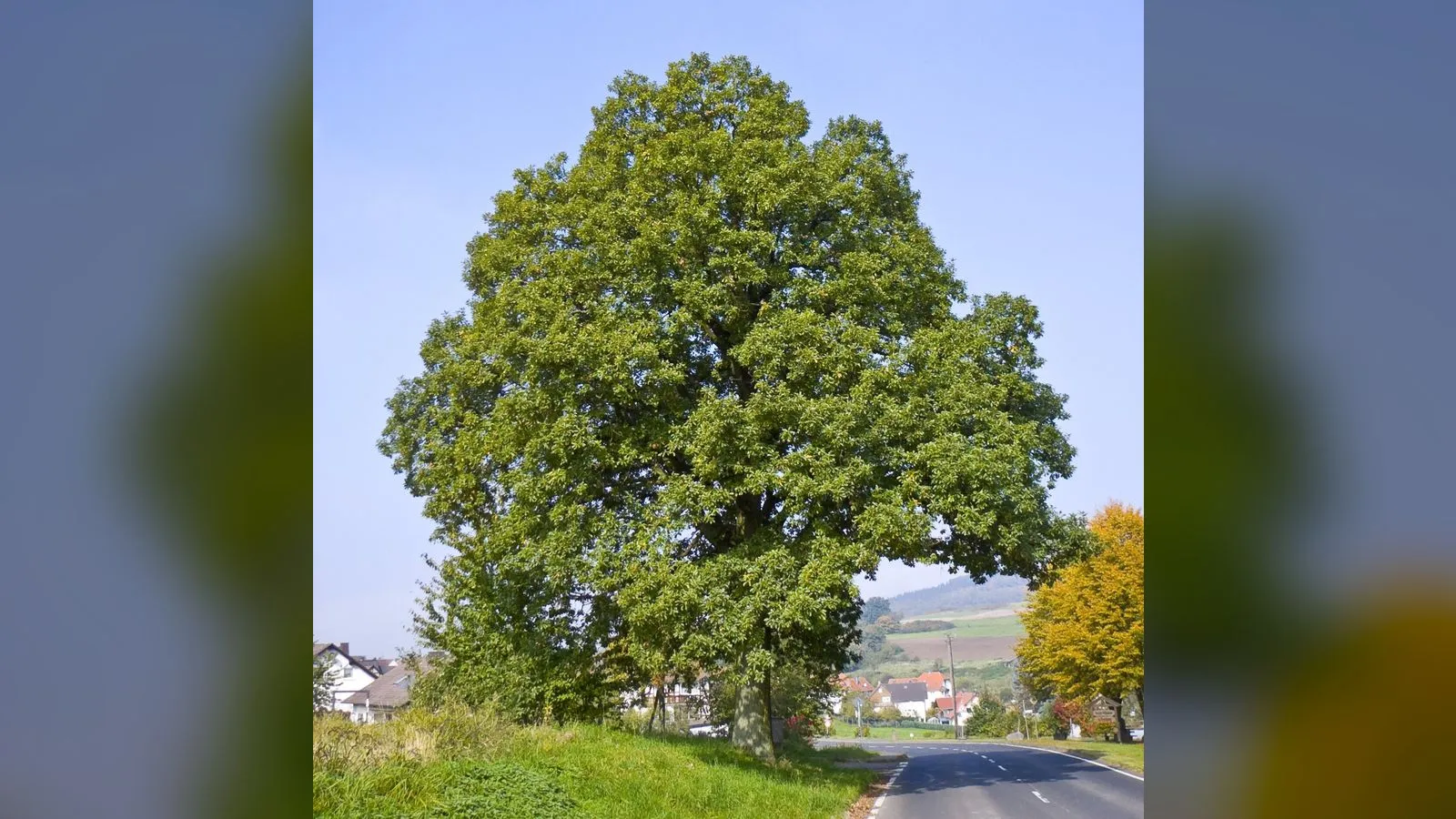

Sessile Oak (Quercus petraea)
Contents
TL;DR
- established Scotland's western oakwoods, dominated by sessile oak alongside downy birch and ash, form part of what scientists call the Celtic rainforest, a genuine temperate rainforest supporting an assemblage of mosses, liverworts, and lichens that Scottish Natural Heritage's own scientific advisory committee has described as "a lichenologists' Mecca" — a specific, documented ecological designation this article states directly rather than a vague claim that Scottish oakwoods are "biodiverse."
- established Oak trees support an exceptional range of specialised epiphytic life, with over 300 lichen species and 65 bryophyte species recorded growing on oak trunks and branches, conditions made possible by the small temperature variation, high humidity, and heavy rainfall characteristic of Scotland's west coast — a specific, documented scale of biodiversity this article names directly rather than a vague reference to oaks "hosting lichen."
- established Individual sessile oaks are known to reach 1,000 years of age, though some of the oldest surviving specimens achieved this extended lifespan through historical coppicing, meaning repeated cutting and regrowth from the same root base rather than a single continuously growing trunk — a specific, documented distinction this article states directly rather than implying every ancient oak has stood unaltered for a millennium.
- established Scotland's Atlantic oakwoods were historically coppiced on a working cycle for charcoal production, leather tanning, and bobbin-making, an industrial use that continued through the mid-1800s before these woodlands shifted primarily to their current conservation and research role — a specific, documented economic history this article names directly rather than treating ancient oakwoods as having always existed purely as untouched wilderness.
- established Scotland's surviving Atlantic oakwood fragments remain under active, documented pressure today, with ongoing management required to control invasive Rhododendron ponticum, excessive grazing by sheep and deer, and competition from non-native plantation trees — a specific, documented set of current threats this article states plainly rather than treating these fragments as a secured, static conservation success.
Key Facts
- Scientific name
- Quercus petraea
- Category
- Trees
- Maximum height (Scotland)
- Up to 30m
- Maximum recorded age
- Up to 1,000 years (some via historical coppicing)
- Lichen species on oak
- 300+
- Bryophyte species on oak
- 65
- Key Scottish sites
- Loch Maree, Loch Sunart, Loch Lomond, Taynish Peninsula (Argyll)
- Historical industrial use
- Coppicing for charcoal, tanning, bobbin-making (to mid-1800s)
Scottish Impact Index (SI Score)
- Scottish Significance
- 9/10
- Ecological Persistence
- 9/10
- Ecological Importance
- 10/10
- Botanical Distinctiveness
- 8/10
- Conservation Significance
- 10/10
- Recognition
- 8/10
54/60
Ranked =5th of 45 in Flora
A Note on Claims and Evidence
Biology, Scottish distribution, and biodiversity species-count details are drawn from Trees for Life's published assessment. Celtic rainforest ecology, geographic extent, historical coppicing industry, and current conservation threats are drawn from the published Wikipedia-summarised research record on Scotland's Celtic rainforest.
Timeline
Sessile oak establishes itself as the dominant tree of Scotland's western oakwoods, predominating in the north and west typically below 300m elevation, forming forests alongside downy birch and ash that scientists now recognise as a genuine temperate rainforest, with notable populations in glens such as Moriston and Strathfarrar and at the Taynish Peninsula in Argyll.
Atlantic oakwoods are managed on a coppicing cycle specifically for charcoal production, leather tanning, and bobbin-making, an industrial relationship that shapes the structure and age profile of many surviving oakwoods today, including individual trees whose extended ages reflect repeated cutting and regrowth rather than a single continuously growing trunk.
The oldest coins found hammered into the Isle Maree wishing tree, an oak on Loch Maree, date from this decade.
The Isle Maree oak is dead, reputedly from copper poisoning by the coins.
Industrial coppicing largely ends, and surviving Atlantic oakwood fragments shift primarily toward conservation and research roles, recognised internationally for their unique assemblage of mosses, liverworts, lichens, and ferns.
Protected fragments require active, continued management to address invasive Rhododendron ponticum, excessive grazing pressure from sheep and deer, and competition from non-native plantation trees, reflecting real, current threats rather than a settled conservation outcome.
Scotland's surviving sessile oak-dominated Celtic rainforest fragments remain internationally significant for epiphytic biodiversity, hosting over 300 lichen species and 65 bryophyte species on oak alone, while requiring sustained conservation effort to persist.
Details
A rainforest designation stated with its real scientific basis
This article names Scotland's western oakwoods as a genuine temperate rainforest rather than a vague claim of general biodiversity: Scottish Natural Heritage's own scientific advisory committee has described the region as "a lichenologists' Mecca," a designation reflecting the small temperature variation, high humidity, and heavy rainfall that create ideal conditions for rare moss, liverwort, and lichen communities. This article states this specific characterisation directly because it is a genuine scientific and conservation designation, not a loose descriptive flourish.
A biodiversity scale stated with its real documented figures
This article names the biodiversity supported by oak trees with real precision rather than a vague reference to oaks "hosting lichen": over 300 lichen species and 65 bryophyte species are recorded on oak trunks and branches alone. This article states these figures directly because they demonstrate a genuinely exceptional, measured scale of epiphytic biodiversity, not a general impression that old trees tend to host moss and lichen.
An age record clarified with its real underlying cause
This article states directly that while individual sessile oaks are known to reach 1,000 years of age, some of the oldest surviving specimens achieved this through historical coppicing — repeated cutting and regrowth from the same root base — rather than a single continuously growing trunk. This article names this distinction because presenting every ancient oak as an unaltered millennium-old tree would misrepresent how coppice management actually extends a tree's effective lifespan.
A working industrial history named rather than assumed away
This article states plainly that Scotland's Atlantic oakwoods were historically coppiced on a working cycle for charcoal production, leather tanning, and bobbin-making, continuing through the mid-1800s before shifting primarily to conservation and research use. This article names this economic history directly because treating these woodlands as having always existed purely as untouched wilderness would misrepresent their real, working past.
A conservation status stated honestly as ongoing, not secured
This article names the real, current threats facing Scotland's surviving Atlantic oakwood fragments rather than treating their protected status as a finished outcome: invasive Rhododendron ponticum, excessive grazing pressure from sheep and deer, and competition from non-native plantation trees all require active, ongoing management. This article states these specific pressures because protected status alone does not describe a secured, static conservation success.
The sessile oak in Flora Britannica (1996)
established The wildwood oak. Richard Mabey, in Flora Britannica (1996), explains the name: the sessile oak's acorns sit directly on the twigs, without the stalks (peduncles) of the pedunculate oak. He describes it as commonest in the north and west, and found chiefly in semi-natural woodland. It grows well under its own shade and often forms dense single-species woods, but rarely colonises land outside woods. The pedunculate oak does the opposite and was much more widely planted, for its heavier acorn crops (food for pigs) and its angled timbers. Mabey concludes that the sessile oak seems largely confined to the areas it occupied in the wildwood, a relict distribution. That is one reason Scotland's western oakwoods are so valuable: they are the tree's own country, not plantations.
established Coppice, iron and bark. Mabey notes that in the north and west the sessile oakwoods were largely kept going by coppicing, with the wood used for iron-smelting and the bark for tanning. This matches the working history described above and adds iron-smelting charcoal to the list.
established A sparse culture. Mabey finds the folklore of the sessile oak "very sparse", echoing what he calls its inferior economic role, and notes that carvings of its leaves in churches are rare. He records that its leaves are downy underneath, which can give them a silvery sheen, and that hybrids between the two native oaks are often commoner than either parent where both grow.
established The wishing tree of Isle Maree. Loch Maree, one of the key oakwood sites above, holds what a contributor to Flora Britannica called perhaps "the most celebrated" tree in Scotland. On Isle Maree a slender oak stood beside a holy well where rag offerings were once hung. Later, visitors hammered coins edgewise into the trunk and made a silent wish. The oldest coins examined dated from the 1870s, and the contributor thought the custom may have taken hold after Queen Victoria's visit. The oak was dead by 1927, killed, it was believed, by copper poisoning, and its remains still bore their coat of pennies in the 1990s, with more coins hammered into two nearby oaks. The site lies within a circular stone dyke, and a curse is said to fall on anyone who removes anything from the island. The contributor did not say which oak species the tree was.
traditional The oak of Errol. A member of an old Scottish family told Flora Britannica of the Perthshire Hays, whose fortunes were linked in tradition to the mistletoe on the oak of Errol. Cutting a limb from the oak was one of the two unluckiest deeds a Hay could do, and the belief was attributed to Thomas the Rhymer. This is family tradition, recorded as such.
Did You Know?
- The Isle Maree wishing tree on Loch Maree was an oak studded with coins; it was dead by 1927, reputedly poisoned by the copper.
- "Sessile" means unstalked: the sessile oak's acorns sit directly on the twigs.
- Richard Mabey described the sessile oak as a relic of the wildwood, largely confined to the areas where it grew before people began planting oaks.
- Scotland's western oakwoods are a genuine temperate rainforest, described by Scottish Natural Heritage's scientific advisory committee as "a lichenologists' Mecca."
- Oak trees host over 300 lichen species and 65 bryophyte species on their trunks and branches alone.
- Individual sessile oaks can reach 1,000 years old, though some of the oldest achieved this through historical coppicing rather than continuous unbroken growth.
- Scotland's Atlantic oakwoods were historically coppiced for charcoal, leather tanning, and bobbin-making, continuing through the mid-1800s.
- Key surviving fragments include sites around Loch Maree, Loch Sunart, Loch Lomond, and the Taynish Peninsula in Argyll.
- Today's oakwood fragments require active management against invasive rhododendron, overgrazing, and non-native plantation competition.
- Sessile oak is distinguished from pedunculate oak by its longer leaf stalk (petiole), 1-2cm in length.
FAQ
1What makes Scotland's oakwoods a "rainforest"?
The combination of small temperature variation, high humidity, and heavy west-coast rainfall creates conditions supporting an exceptional assemblage of mosses, liverworts, and lichens — recognised scientifically as a genuine temperate rainforest.
2How biodiverse are Scottish oakwoods?
Very — over 300 lichen species and 65 bryophyte species are recorded on oak trunks and branches alone.
3Are all ancient sessile oaks continuously grown from a single trunk?
Not necessarily — while individuals can reach 1,000 years old, some of the oldest surviving specimens achieved this through historical coppicing, repeated cutting and regrowth from the same root base.
4Were Scotland's oakwoods always untouched wilderness?
No — they were historically managed on a working coppice cycle for charcoal production, leather tanning, and bobbin-making, continuing through the mid-1800s.
5Where can these oakwoods still be found?
Fragments survive around Loch Maree, Loch Sunart, Loch Lomond, and notably the Taynish Peninsula in Argyll.
6Are Scotland's oakwoods currently secure?
No — surviving fragments face ongoing threats from invasive Rhododendron ponticum, overgrazing by sheep and deer, and competition from non-native plantation trees, requiring active management.
7How is sessile oak distinguished from pedunculate oak?
By its leaf stalk (petiole), which is 1-2cm long, compared with pedunculate oak's much shorter stalk.
8How tall can sessile oak grow in Scotland?
Up to around 30 metres.
9Why is it called "sessile"?
Because its acorns are unstalked, sitting directly on the twigs, unlike the pedunculate oak's acorns, which hang on stalks.
10What is the Isle Maree wishing tree?
An oak on an island in Loch Maree, Wester Ross, into which visitors hammered coins while making a wish. Richard Mabey's Flora Britannica (1996) records that it was dead by 1927 and still bore its pennies in the 1990s.
11Why are western Scottish oakwoods mostly sessile oak?
Sessile oak regenerates well under its own shade in semi-natural woods, while pedunculate oak was the tree people planted. Mabey describes the sessile oak's range as largely a relic of the original wildwood.
Sources and Further Reading
Primary/Institutional
Scholarly/Critical
- The trade-off between photosynthetic rate and thallus moisture-demand explains lichen habitat association with the temperate rainforest — Oecologia (Springer)
- The Status of the Pedunculate and Sessile Oaks in Britain — J. E. Cousens, Watsonia (BSBI)
- Richard Mabey, Flora Britannica (Sinclair-Stevenson, 1996).
General
Caveats: Myths and Disputed Claims
- Clarification: This article does not present every 1,000-year-old sessile oak as a single continuously grown trunk; some of the oldest specimens reached this age through historical coppicing.
- Do not assume the Isle Maree wishing tree was a sessile oak; the record does not name the species.
- Note: This article does not treat Scotland's Atlantic oakwoods as having always existed as untouched wilderness; they were historically a working, managed resource for charcoal, tanning, and bobbin production.
Card 017 · Flora