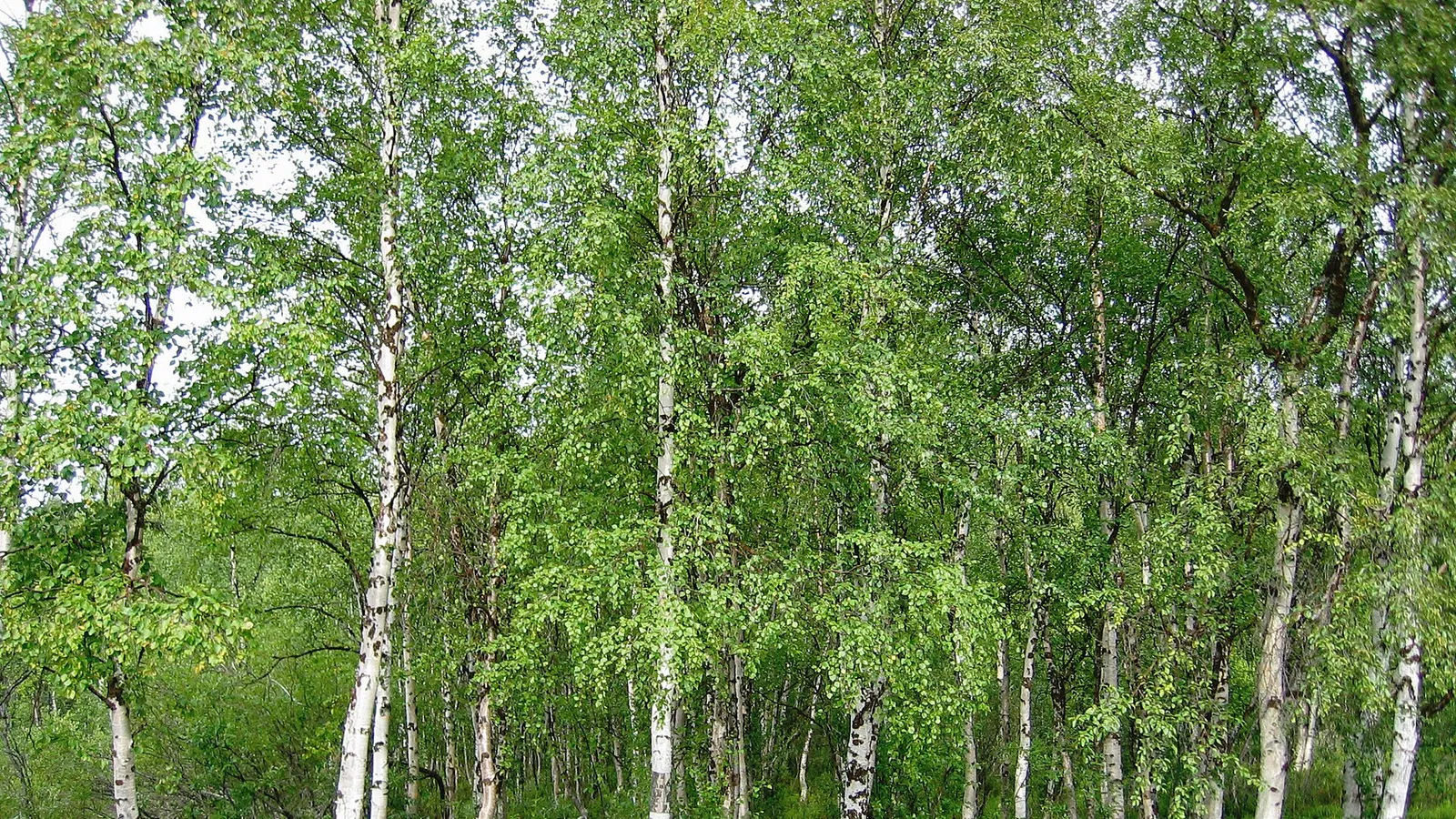

Silver Birch (Betula pendula)
Contents
TL;DR
- established Silver birch is the most common native tree in Scotland and supports 334 species of invertebrate that feed directly on it, a figure exceeded only by oak and willow among native Scottish trees — a specific, documented scale of biodiversity support this article states directly rather than a vague claim that birch is "good for wildlife."
- established As a genuine pioneer species, silver birch improves soil by producing between 3 and 4 tonnes of leaf litter per hectare every year, and typically prepares ground that is eventually colonised by slower-growing species such as oak and Scots pine — a specific, documented ecological mechanism this article names directly rather than a vague reference to birch "coming first."
- established Birch sap has long been tapped and fermented into birch wine in the Scottish Highlands (the claim that this began with the Druids is traditional, not documented), a tradition that continues in practice today, while the bark was historically used for tanning leather and, dried and twisted into rope form, as a candle substitute — a specific, documented continuity of traditional use this article states directly rather than treating these as purely historical curiosities.
- established In Celtic tradition, birch was known as Beithe, the first tree of the Ogham alphabet, symbolising renewal and purification, and bundles of birch twigs were used during Samhain specifically to drive out the spirits of the old year — a specific, documented ritual use this article names directly rather than a vague claim that birch was "sacred."
- established The birch besom carries a genuine double identity in folklore: gardeners used it to ritually "purify" gardens, while the same object became the iconic witch's broomstick — a specific, documented duality this article states directly rather than presenting the broom symbolism as a simple, single-meaning folk motif.
Key Facts
- Scientific name
- Betula pendula
- Category
- Trees
- UK status
- Most common native tree in Scotland
- Typical lifespan
- 60–90 years (some to 150)
- Maximum height
- Up to 30m
- Invertebrate species supported
- 334 (second only to oak and willow)
- Annual leaf litter
- 3–4 tonnes per hectare
- Ogham name
- Beithe (first letter of the Ogham alphabet)
Scottish Impact Index (SI Score)
- Scottish Significance
- 9/10
- Ecological Persistence
- 10/10
- Ecological Importance
- 9/10
- Botanical Distinctiveness
- 7/10
- Conservation Significance
- 7/10
- Recognition
- 9/10
51/60
Ranked =9th of 45 in Flora
A Note on Claims and Evidence
Biology, pioneer-species ecology, invertebrate diversity figures, and distribution details are drawn from Trees for Life's published assessment. Folklore, ritual, and traditional-use details, including Beltane, Samhain, and sap-wine traditions, are drawn directly from Trees for Life's published mythology and folklore record.
Timeline
Silver birch establishes itself as a fast-growing pioneer species across Scotland, readily colonising open ground and becoming, over time, the most common native tree in the country, favouring well-drained, drier soils with a concentration in the east.
Birch becomes known as Beithe, the first tree of the Ogham alphabet, symbolising renewal and purification; fertility goddesses including Frigga and Freya become strongly associated with the tree, and Highland folklore holds that herding barren cattle with a birch stick could restore fertility.
Birch and oak wood are used to construct Beltane fires, with a birch tree, sometimes a living one, serving as maypole during the festival; separately, bundles of birch twigs are used during Samhain specifically to drive out the spirits of the old year.
Birch bark is used for tanning leather and, dried and twisted into rope form, as a candle substitute, while sap tapped in spring is fermented into birch wine and recommended medicinally for skin ailments; folklore holds that Druids made the sap into a cordial for spring equinox celebrations.
J. C. Loudon describes the great Scottish birchwoods and the Highlanders' use of birch for almost everything, from houses and ploughs to rope and candles.
Richard Mabey's Flora Britannica records birch as the favoured fuel for smoking haddock and birch-sap wine as a growing Deeside speciality.
The birch besom develops a genuine double role in folklore and practice: used by gardeners to ritually "purify" gardens while becoming the iconic image of the witch's broomstick.
Birch wine production continues to be practised in the Highlands today, while the tree's ecological role as Scotland's most common native species and a critical pioneer in Caledonian Forest recovery remains central to ongoing woodland regeneration efforts.
Details
A biodiversity contribution stated with its real documented scale
This article names silver birch's support for invertebrate life with real specificity rather than a vague claim that it is "good for wildlife": 334 species of invertebrate feed directly on the tree, a figure exceeded only by oak and willow among native Scottish trees. This article states this precise figure because it demonstrates birch's genuine, measurable ecological significance, not an assumed or generic benefit shared equally by all native trees.
A pioneer role explained through its real soil-building mechanism
This article names the specific mechanism behind silver birch's status as a pioneer species rather than a vague reference to birch "coming first": it produces between 3 and 4 tonnes of leaf litter per hectare each year, improving soil through nutrient cycling and preparing ground that is eventually colonised by slower-growing species such as oak and Scots pine. This article states this quantified process because it clarifies that birch's pioneering role is an active, measurable ecological contribution to forest succession, not simply a matter of arriving first.
A traditional use stated as a living practice, not a historical curiosity
This article states directly that birch sap tapping and fermentation into birch wine, a Highland tradition that folklore traces to the Druids, continues to be practised today, alongside the historical use of bark for tanning leather and as a candle substitute. This article names this continuity because treating these uses as purely historical would understate a genuine, surviving thread of Highland tradition.
A ritual role named with its real specific practices
This article states birch's place in Celtic tradition precisely rather than a vague claim that the tree was "sacred": known as Beithe, the first tree of the Ogham alphabet and a symbol of renewal and purification, with bundles of birch twigs used during Samhain specifically to drive out the spirits of the old year, and birch or living birch trees used as Beltane maypoles. This article names these specific practices because they represent genuinely documented ritual uses, not a general impression of reverence.
A folk symbol with a genuine double meaning
This article states directly that the birch besom carried two distinct, coexisting meanings in folklore rather than a single simple symbolism: gardeners used it to ritually "purify" gardens, while the same object became the iconic witch's broomstick. This article names this duality because it reflects a real complexity in how the same traditional object was understood across different contexts, not a single uniform folk belief.
A tree of many practical uses
traditional Richard Mabey's The Complete New Herbal (1988) describes birch as "immensely useful to northern peoples". It records wheels, hoops for casks, brooms and switches made from the wood, and sap used in wine or vinegar and as a sweetener. The book's dye chart lists birch leaves, mordanted with alum, as a source of yellow.
traditional The same herbal records that birch sap, preserved with cloves and cinnamon, was once taken for skin complaints, rheumatism and gout, and that birch-leaf tea has a long herbal reputation as a diuretic. It names the young leaves' constituents as including saponins, the flavonoid hyperoside, tannins and vitamin C. These are traditional uses, and the evidence for them as treatments is limited. The book also notes that the "sweet birch oil" sold commercially comes from the North American black birch (Betula lenta), not from Scotland's native birches.
The Highland birch in Flora Britannica (1996)
established "Birk" in the landscape. Richard Mabey, in Flora Britannica (1996), notes that birch, usually as the prefix "birk", is the commonest place-name element in Scotland. He calls birchwoods one of Scotland's "signature" plant communities and illustrates them with the ancient birches of Glen Strathfarrar. He also observes that where competition is light, as in parts of the Highlands, birch forms pure woods even though individual trees rarely live beyond about 80 years.
established A tree the Highlanders made everything from. Mabey quotes the Victorian writer J. C. Loudon on the great Scottish birchwoods of the 1840s: "The Highlanders of Scotland make everything of it." Loudon lists houses, beds, chairs, tables, dishes and spoons, mills, carts, ploughs, harrows, gates and ropes. Birch branches fuelled whisky stills, the spray smoked hams and herrings, the bark tanned leather and, twisted into a rope, served instead of candles, and leafy spray was used for thatch and for bedding when heather was scarce. This 1840s account is the source behind the bark and candle uses described above.
established Birch in the 1990s. Mabey found the tradition much reduced but not gone. Birch was still the favoured fuel for smoking haddock, and birch-sap wine was "an increasingly popular speciality of Deeside". He also recorded a revival of interest among foresters, who had begun to see birch as an alternative to exotic conifers on poor moorland because it improves the soil rather than acidifying it.
traditional A birch and a crow. A contributor from south-west Scotland told Flora Britannica of a man near Balmaclellan who asked to be buried upright in a basket beside a birch tree, promising to return as a crow to keep an eye on things. A lone crow, the contributor added, does come to sit in the tree.
established A note on the name. Mabey points out that the adjective "silver" for birch is fairly recent. It does not appear in any edition of John Evelyn's Sylva, and seems to have first appeared in a poem by Tennyson. He also describes the northern form of downy birch (subspecies tortuosa), largely confined to the uplands of the north, whose young leaves carry a resinous coating with a balsamic scent after spring rain.
Did You Know?
- "Birk" is the commonest place-name element in Scotland, according to Richard Mabey's Flora Britannica.
- J. C. Loudon wrote in the 1840s that Highlanders made houses, furniture, spoons, ploughs and even rope from birch.
- The adjective "silver" for birch seems to have been popularised by Tennyson; John Evelyn never used it.
- Birch leaves give a yellow dye with an alum mordant, and its wood was used for wheels, cask hoops and brooms.
- Silver birch is Scotland's most common native tree.
- It supports 334 species of invertebrate, a figure exceeded only by oak and willow among native Scottish trees.
- As a pioneer species, it produces 3–4 tonnes of leaf litter per hectare every year, improving soil for the trees that eventually replace it.
- Birch wine, made from fermented spring sap, is a long-standing Highland tradition and is still made today, notably on Deeside.
- Birch bark was historically used for tanning leather and, twisted into rope, as a candle substitute.
- In Celtic tradition, birch was called Beithe, the first tree of the Ogham alphabet, symbolising renewal and purification.
- Bundles of birch twigs were used during Samhain specifically to drive out the spirits of the old year.
- The birch besom was used by gardeners to "purify" gardens while also becoming the iconic witch's broomstick.
FAQ
1Is silver birch really Scotland's most common native tree?
Yes — it holds that status, alongside being a key pioneer species in Caledonian Forest recovery.
2How many species depend on silver birch?
334 invertebrate species feed directly on it, a figure exceeded only by oak and willow among native Scottish trees.
3What does "pioneer species" mean for silver birch specifically?
It colonises open ground quickly and improves the soil through heavy annual leaf litter, preparing conditions that slower-growing trees like oak and Scots pine eventually succeed it in.
4Is birch wine still made in Scotland?
Yes. Tapping spring sap and fermenting it into birch wine is a Highland tradition that continues today; Richard Mabey described it in 1996 as an increasingly popular speciality of Deeside. Claims that it goes back to the Druids are traditional rather than documented.
5Why are so many Scottish places named after birch?
Birch was the dominant tree over much of upland Scotland. Mabey notes that "birk" is the commonest place-name element in the country.
6Why is it called "silver" birch?
From the satin sheen of its papery white bark. According to Mabey the adjective is fairly recent and seems to have first appeared in a poem by Tennyson.
7What was birch bark traditionally used for?
Tanning leather, and, when dried and twisted into rope form, as a candle substitute.
8Was birch used as a medicine?
Yes, in herbal tradition. Birch sap and leaf tea were used for rheumatism, gout and as a diuretic. These are traditional uses rather than proven treatments, and nothing here is health advice.
9What does "Beithe" mean?
It's birch's name in the Ogham alphabet, where it holds the position of the first letter, symbolising renewal and purification.
10Why is the birch besom linked to both gardening and witches?
It carried a genuine double meaning in folklore — used by gardeners to ritually "purify" gardens, while becoming the iconic image of the witch's broomstick.
11What role did birch play in Beltane and Samhain?
Birch and oak wood built Beltane fires, with a birch tree sometimes serving as a living maypole, while bundles of birch twigs were used at Samhain to drive out the spirits of the old year.
Sources and Further Reading
Primary/Institutional
- Birch facts and information — Trees for Life
- Silver Birch (Betula pendula) — British Trees, Woodland Trust
Scholarly/Critical
- Birch mythology and folklore — Trees for Life
- Silver Birch — Scottish Wildlife Trust
- Richard Mabey (ed.), The Complete New Herbal (Elm Tree Books, 1988).
- Richard Mabey, Flora Britannica (Sinclair-Stevenson, 1996).
General
Caveats: Myths and Disputed Claims
- Clarification: This article does not present the birch besom's symbolism as a single uniform folk belief; it carried a genuine double meaning, used both for garden "purification" and as the iconic witch's broomstick.
- Note: This article does not treat birch wine-making or bark-use traditions as purely historical; birch wine production specifically continues to be practised in the Highlands today.
- Do not state as fact that Highland birch wine dates from the Druids; the documented record of birch use is much later, notably J. C. Loudon's account of the 1840s.
- Do not read birch's herbal reputation as proof of medical effect. Older herbals, including The Complete New Herbal (1988), make strong claims for birch-leaf tea, but these rest on tradition and limited evidence.
Card 013 · Flora