
Sphagnum Mosses (Sphagnum spp.)
Contents
TL;DR
- established Sphagnum mosses can absorb up to twenty times their own weight in water, and as the plant material gradually decays in waterlogged, low-oxygen conditions, it accumulates as peat at an average rate of just 1mm per year, making sphagnum the literal foundation on which Scotland's peat bogs are built — a specific, documented mechanism and rate this article states directly rather than a vague claim that moss "turns into peat."
- established Scotland's peatlands store an estimated 27.5 million tonnes of carbon on National Trust for Scotland upland properties alone, equivalent to roughly a third of Scotland's annual greenhouse gas emissions, while an estimated 80% of UK peatlands overall have been degraded by drainage, afforestation, burning, and peat extraction — this article states both the scale of carbon stored and the scale of documented damage directly, rather than presenting peatland carbon storage without its genuine, ongoing degradation problem.
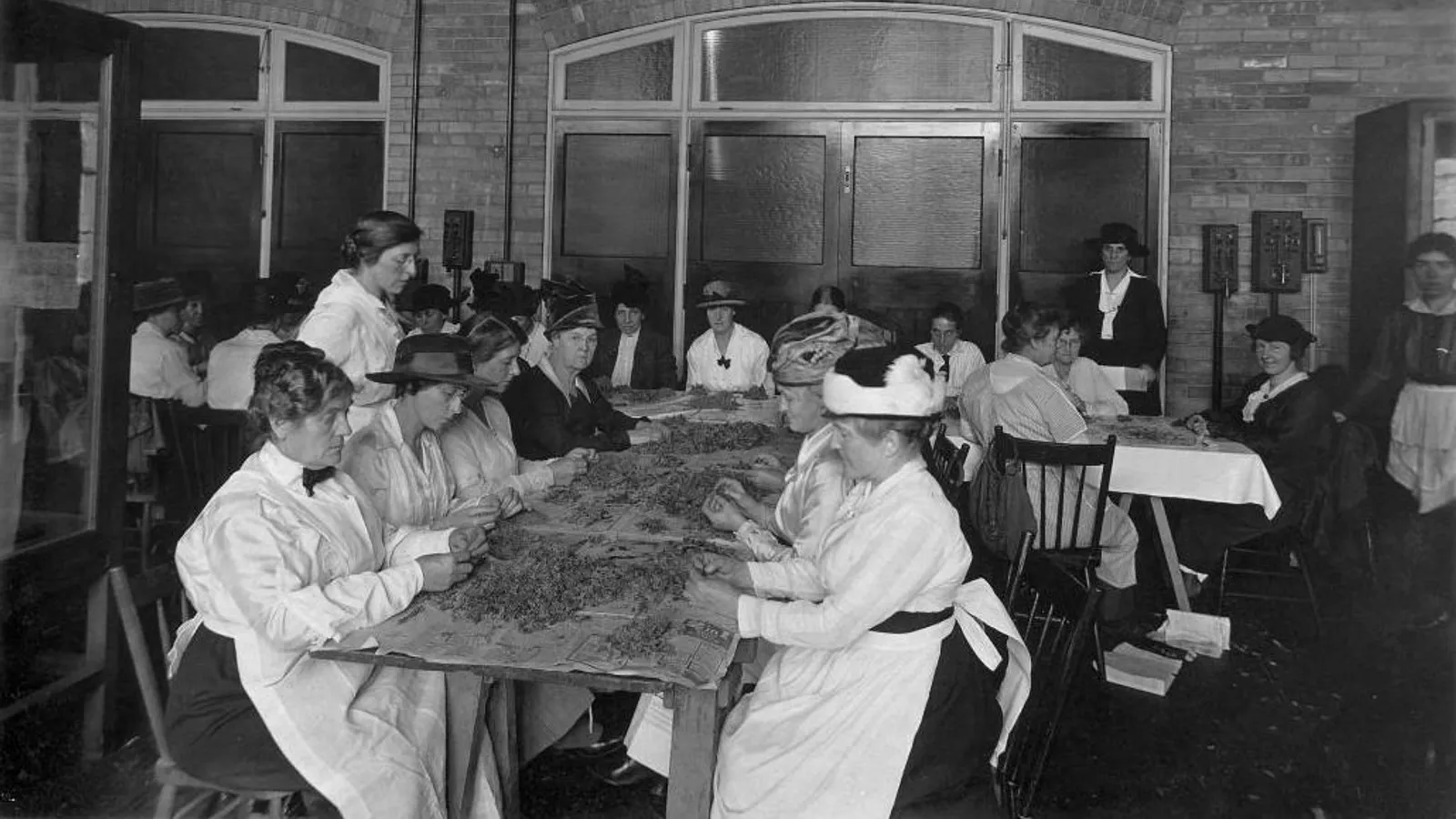
- established During the First World War, sphagnum moss dressings absorbed more than twice as much blood and fluid as cotton wool, and contained a compound called sphagnan that inhibits nitrogen uptake by decomposer bacteria, giving the moss genuine antiseptic properties that helped prevent the sepsis that killed many wounded soldiers — a specific, documented biochemical mechanism this article names directly rather than a vague claim that moss "was used for bandages."
- established Following trials championed by army surgeon Charles Cathcart from 1915, sphagnum moss became the standard field dressing issued to all UK and Imperial land forces, collected through a nationwide programme stretching from Bodmin Moor to Shetland — a specific, documented scale of wartime mobilisation this article states directly, naming the individual responsible rather than treating the practice as having emerged anonymously.
- established Scotland holds around 12% of the world's globally rare blanket bog habitat, a specific, documented share of a genuinely scarce habitat type this article states directly rather than a vague claim that Scotland has "a lot of peatland."
Key Facts
- Scientific name
- Sphagnum spp. (genus)
- Category
- Flora
- Water absorption
- Up to 20x own weight
- Peat accumulation rate
- ~1mm/year
- Carbon stored (NTS upland properties)
- ~27.5 million tonnes
- UK peatland degraded
- ~80% (drainage, afforestation, burning, extraction)
- Scotland's share of world blanket bog
- ~12%
- Key antiseptic compound
- Sphagnan
Scottish Impact Index (SI Score)
- Scottish Significance
- 10/10
- Ecological Persistence
- 10/10
- Ecological Importance
- 10/10
- Botanical Distinctiveness
- 10/10
- Conservation Significance
- 10/10
- Recognition
- 9/10
59/60
Ranked =1st of 45 in Flora
A Note on Claims and Evidence
Biology, water-absorption capacity, peat-formation rate, carbon storage figures, and the current scale of UK peatland degradation are drawn from the National Trust for Scotland's published peatland assessment. The World War I wound-dressing history, including the sphagnan antiseptic mechanism and Charles Cathcart's role in its adoption, is drawn from the published historical record on bog moss in wartime medicine.
Timeline
Sphagnum mosses, able to absorb up to twenty times their own weight in water, establish themselves across Scotland's waterlogged uplands, their slow decay in low-oxygen, waterlogged conditions accumulating as peat at an average rate of around 1mm per year, building the deep peat deposits that define Scotland's bog landscapes, including roughly 12% of the world's globally rare blanket bog habitat.
The anaerobic, acidic conditions sphagnum-built peat creates give Scotland's bogs an exceptional capacity for preservation, yielding discoveries including ancient wood, artefacts, and human remains, some showing evidence of violent deaths.
Army surgeon Charles Cathcart champions trials of sphagnum moss as a wound dressing, recalling historical precedent for its use, finding that it absorbs more than twice as much blood and fluid as cotton wool and contains a compound, sphagnan, that inhibits nitrogen uptake by decomposer bacteria, giving it genuine antiseptic properties against the sepsis that was killing large numbers of wounded soldiers.
Following Cathcart's trials, sphagnum moss becomes the standard field dressing issued to all UK and Imperial land forces, collected through a nationwide programme stretching from Bodmin Moor to the far north of Shetland, helping treat the enormous casualty numbers of battles such as the Somme.
Scotland's peatlands are recognised as storing substantial carbon, an estimated 27.5 million tonnes on National Trust for Scotland upland properties alone, equivalent to roughly a third of Scotland's annual greenhouse gas emissions, even as an estimated 80% of UK peatlands overall remain degraded by historical drainage, afforestation, burning, and peat extraction.
Sphagnum moss remains both the active, ongoing foundation of Scotland's peat bog ecosystems and a documented historical life-saver, its carbon-storage significance now central to climate policy and active peatland restoration work, even as the scale of past degradation remains a real, unresolved problem.
Details
A peat-building mechanism explained through its real process and rate
This article names the mechanism behind sphagnum's role in peat formation precisely rather than a vague claim that moss "turns into peat": the plant can absorb up to twenty times its own weight in water, and as it gradually decays in the waterlogged, low-oxygen conditions it creates, it accumulates as peat at an average rate of around 1mm per year. This article states this specific rate because it clarifies that Scotland's deep peat deposits represent millennia of slow, measurable accumulation, not a vague or rapid process.
A carbon-storage figure stated alongside its real, undiminished damage problem
This article names Scotland's peatland carbon storage with real specificity, an estimated 27.5 million tonnes on National Trust for Scotland upland properties alone, equivalent to roughly a third of Scotland's annual greenhouse gas emissions, while stating directly that an estimated 80% of UK peatlands overall have been degraded by drainage, afforestation, burning, and peat extraction. This article states both figures together because presenting peatland carbon storage without its genuine, documented degradation problem would understate the real scale of damage still affecting this carbon reservoir.
A wartime medical use explained through its real biochemical mechanism
This article names the specific reason sphagnum moss outperformed cotton as a wound dressing rather than a vague claim that moss "was used for bandages": it absorbed more than twice as much blood and fluid as cotton wool, and contained a compound called sphagnan that inhibits nitrogen uptake by decomposer bacteria, giving it genuine antiseptic properties against sepsis. This article states this specific biochemical mechanism because it is the real, documented reason behind the moss's wartime medical significance, not an assumed general usefulness.
A wartime mobilisation named with its real scale and named figure
This article states directly that sphagnum moss became the standard field dressing for all UK and Imperial land forces following trials championed by army surgeon Charles Cathcart from 1915, collected through a nationwide programme stretching from Bodmin Moor to Shetland. This article names Cathcart specifically and states the programme's real geographic scale because this represents a genuine, documented historical mobilisation, not an anonymous or vague wartime practice.
A habitat rarity named with its real documented share
This article states directly that Scotland holds around 12% of the world's globally rare blanket bog habitat, rather than a vague claim that Scotland has "a lot of peatland." This article names this specific share because it clarifies that Scotland's peatlands represent a genuinely scarce habitat type on a global scale, not merely an abundant local landscape feature.
An explanation that has changed over time
established Richard Mabey's The Complete New Herbal (1988) treats sphagnum as a plant whose structure was turned directly to human use. Its huge capacity to hold water led to its use in wound dressings, which the book says goes back to ancient times as well as to the Great War. In 1988 the herbal put the moss's healing reputation down to "the antibiotic action of associated microorganisms". Later research has pointed instead to the chemistry of the moss itself, including sphagnan. The shift is a reminder that the wartime results were well documented before anyone agreed on why the moss worked. The same book gives sphagnum moss peat a pH of about 3.5 to 4, far more acid than sedge peat at about 5.5, which helps explain why bogs preserve so well.
Did You Know?
- Sphagnum moss peat is strongly acid, with a pH of about 3.5 to 4 according to Richard Mabey's The Complete New Herbal (1988).
- Sphagnum moss can absorb up to twenty times its own weight in water.
- Scotland's peat bogs are built from the slow decay of sphagnum moss, accumulating at an average rate of just 1mm per year.
- National Trust for Scotland upland properties alone store an estimated 27.5 million tonnes of carbon in peat, roughly a third of Scotland's annual greenhouse gas emissions.
- Despite that, an estimated 80% of UK peatlands have been degraded by drainage, afforestation, burning, and peat extraction.
- During World War I, sphagnum moss dressings absorbed more than twice as much blood and fluid as cotton wool and contained a natural antiseptic compound, sphagnan.
- Sphagnum moss became the standard field dressing for all UK and Imperial land forces in WWI, collected in a nationwide programme from Bodmin Moor to Shetland.
- Scotland holds around 12% of the world's globally rare blanket bog habitat.
- The anaerobic conditions sphagnum-built peat creates have preserved ancient wood, artefacts, and human remains, some showing evidence of violent deaths.
FAQ
1How does sphagnum moss actually make peat?
As it absorbs water and gradually decays in waterlogged, low-oxygen conditions, it accumulates as peat at an average rate of around 1mm per year.
2How much carbon do Scotland's peatlands store?
National Trust for Scotland upland properties alone store an estimated 27.5 million tonnes, roughly a third of Scotland's annual greenhouse gas emissions.
3Are Scotland's peatlands in good condition?
Not entirely — an estimated 80% of UK peatlands overall have been degraded by drainage, afforestation, burning, and peat extraction.
4Why was sphagnum moss used for wound dressings in WWI?
It absorbed more than twice as much fluid as cotton wool and contained a natural antiseptic compound, sphagnan, that helped prevent sepsis.
5Who championed sphagnum moss as a wartime dressing?
Army surgeon Charles Cathcart, from 1915, after which it became the standard dressing for all UK and Imperial land forces.
6Has the explanation for sphagnum's antiseptic effect always been the same?
No. Richard Mabey's The Complete New Herbal (1988) attributed it to microorganisms living with the moss. More recent work points to compounds in the moss itself, such as sphagnan.
7How rare is Scotland's blanket bog habitat?
Genuinely rare globally — Scotland holds around 12% of the world's total.
8Why do peat bogs preserve ancient remains so well?
Their anaerobic, acidic, sphagnum-built conditions prevent normal decay, preserving wood, artefacts, and even human remains for thousands of years.
Sources and Further Reading
Primary/Institutional
- Peat bogs: windows to the past, preserving the future — National Trust for Scotland
- Peatland and Carbon — NatureScot
Scholarly/Critical
- War and peat: how bog moss helped save thousands of lives in World War I — The Conversation
- Concerning the wound-healing properties of Sphagnum holocellulose: The Maillard reaction in pharmacology — ResearchGate
- Richard Mabey (ed.), The Complete New Herbal (Elm Tree Books, 1988).
General
Caveats: Myths and Disputed Claims
- Clarification: This article does not present Scotland's peatland carbon storage as an unqualified success story; an estimated 80% of UK peatlands remain degraded by historical drainage, afforestation, burning, and extraction.
- Note: This article does not describe sphagnum's wartime medical use as a vague folk remedy; it names the specific antiseptic compound, sphagnan, and the documented absorbency advantage over cotton wool.
- Do not treat sphagnum's wartime record as a reason to dress wounds with wild moss today. Gathered moss is not sterile, and this article is not medical advice.
Card 041 · Flora