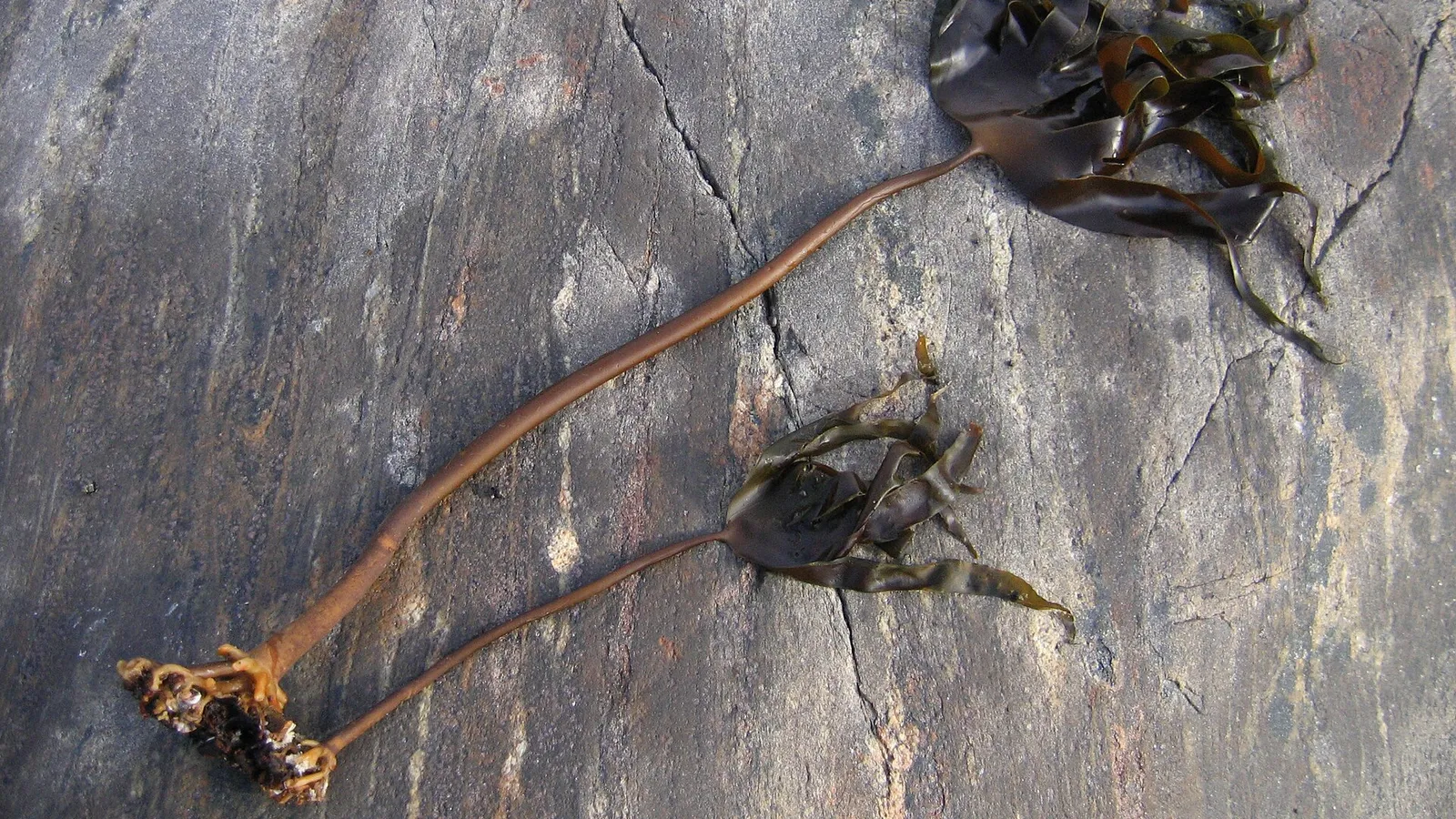

Tangle/Cuvie Kelp (Laminaria hyperborea)
Contents
TL;DR
- established A single tangle/cuvie kelp holdfast, the root-like structure anchoring the plant to bedrock, has been documented to host more than 389 separate invertebrate species, including amphipods, copepods, and small crustaceans, making kelp forests one of the most biodiverse habitats along Scotland's coast — a specific, documented figure this article states directly rather than a vague claim that kelp "supports marine life."
- established At its early 19th-century peak, Scotland's kelp-burning industry, which produced alkaline ash rich in sodium carbonate and potash for glass, soap, and textile manufacture, employed an estimated 50,000 people across coastal regions, particularly Orkney, the Outer Hebrides, and the west coast, making it one of the most economically important activities in these areas — a specific, documented economic scale this article states directly rather than a vague reference to a "traditional industry."
- established The Scottish kelp industry's collapse in the 1820s and 1830s, triggered when cheap alkali imports from Spain and North America flooded the market after the Napoleonic Wars ended, caused severe documented hardship in kelp-dependent communities including Uist and Lewis, where families faced destitution and emigration to North America increased — this article states this collapse and its direct human consequences plainly rather than treating the industry's decline as a minor economic footnote.
- established Scottish landowners encouraged, and in some cases mandated, their tenants to harvest and process kelp during the industry's peak, a documented labour arrangement this article names directly rather than presenting kelp harvesting as having been purely voluntary coastal tradition.
- established Under ideal conditions, tangle/cuvie kelp grows at a documented rate of up to 0.94cm per day during its peak growth period, while individual plants typically live 11 to 20 years in British waters, with potentially longer lifespans in more northern populations — a specific, documented growth rate and lifespan this article names directly rather than a vague claim that kelp "grows quickly."
Key Facts
- Scientific name
- Laminaria hyperborea
- Category
- Flora (seaweed)
- Max length
- Up to ~3.5m
- Peak growth rate
- Up to 0.94cm/day
- Lifespan
- 11–20 years (British waters)
- Holdfast biodiversity
- 389+ invertebrate species documented
- Historical industry peak employment
- ~50,000 people (early 19th century)
- Industry collapse period
- 1820s–1830s
Scottish Impact Index (SI Score)
- Scottish Significance
- 9/10
- Ecological Persistence
- 9/10
- Ecological Importance
- 10/10
- Botanical Distinctiveness
- 8/10
- Conservation Significance
- 8/10
- Recognition
- 9/10
53/60
Ranked #7 of 45 in Flora
A Note on Claims and Evidence
Biology, growth rate, lifespan, habitat requirements, and holdfast biodiversity figures are drawn from the Marine Life Information Network's (MarLIN) published species assessment. The Scottish kelp industry's economic scale, labour arrangements, Napoleonic Wars-era peak, and its collapse and consequences are drawn from the Scottish Seaweed Industry Association's published industry history.
Timeline
Tangle/cuvie kelp establishes dense underwater forests on bedrock and stable substrata along most coasts of Britain and Ireland, including Scotland, growing at up to 0.94cm per day during peak growth periods and living 11 to 20 years in British waters, its holdfast, blade, and stipe structures together supporting more than 389 documented invertebrate species.
Scotland's kelp-burning industry begins expanding, with coastal communities harvesting and burning large brown seaweed to produce alkaline ash rich in sodium carbonate and potash, used in glass, soap, and textile manufacture; landowners encourage, and in some cases mandate, their tenants to take part.
The Napoleonic Wars drive the industry to its peak, as British blockades prevent the importation of alkali-rich materials from Spain, with the industry employing an estimated 50,000 people across coastal Scotland, particularly Orkney, the Outer Hebrides, and the west coast.
Following the war's end, cheap alkali imports from Spain and North America begin flooding the market, triggering rapid decline in Scotland's kelp industry.
The Scottish kelp industry collapses, causing severe documented hardship in dependent communities including Uist and Lewis, where families face destitution and emigration to North America increases.
Tangle/cuvie kelp forests remain a foundational, biodiverse marine habitat along Scotland's coasts, continuing to support hundreds of documented invertebrate species, even as the historical industry that once depended on harvesting it collapsed nearly two centuries ago, leaving lasting economic and demographic consequences in the communities that relied on it.
Details
A biodiversity figure stated with its real documented scale
This article names tangle/cuvie kelp's ecological significance with real specificity rather than a vague claim that kelp "supports marine life": a single holdfast has been documented hosting more than 389 separate invertebrate species, including amphipods, copepods, and small crustaceans. This article states this specific figure because it represents a genuinely measured, documented biodiversity record, not a general impression of kelp forests' usefulness to marine life.
An industry's real economic scale, named directly
This article states the Scottish kelp industry's peak scale with real specificity rather than a vague reference to a "traditional industry": at its early 19th-century height, it employed an estimated 50,000 people across coastal Scotland, particularly Orkney, the Outer Hebrides, and the west coast, producing alkaline ash for glass, soap, and textile manufacture. This article names this specific figure because it represents a genuinely significant, documented historical economic activity, not an assumed minor coastal trade.
A collapse and its real human cost, not minimised
This article states plainly that the Scottish kelp industry's collapse in the 1820s and 1830s, triggered by cheap alkali imports flooding the market after the Napoleonic Wars, caused severe documented hardship in dependent communities including Uist and Lewis, where families faced destitution and emigration increased. This article names these direct human consequences because treating the industry's decline as a minor economic footnote would understate its real, documented impact on the communities that depended on it.
A labour arrangement named rather than assumed voluntary
This article states directly that Scottish landowners encouraged, and in some cases mandated, their tenants to harvest and process kelp during the industry's peak, rather than presenting kelp harvesting as having been purely voluntary coastal tradition. This article names this documented labour arrangement because it clarifies the real economic relationship between landowners and tenant communities behind the industry's historical scale.
A growth rate and lifespan stated with their real documented figures
This article names tangle/cuvie kelp's growth and longevity with real specificity rather than a vague claim that kelp "grows quickly": under ideal conditions it grows at up to 0.94cm per day during peak growth periods, while individual plants typically live 11 to 20 years in British waters. This article states these specific figures because they represent genuinely measured biological data, not a general impression of the species' growth habits.
Did You Know?
- A single tangle/cuvie kelp holdfast has been documented hosting more than 389 separate invertebrate species.
- At its early 19th-century peak, Scotland's kelp-burning industry employed an estimated 50,000 people across coastal regions.
- The industry boomed during the Napoleonic Wars, when British blockades cut off cheaper alkali imports from Spain.
- Its collapse in the 1820s–1830s caused real hardship in communities like Uist and Lewis, including increased emigration to North America.
- Scottish landowners encouraged, and sometimes mandated, their tenants to harvest and process kelp.
- Under ideal conditions, tangle/cuvie kelp can grow nearly a centimetre a day.
- Individual kelp plants typically live 11 to 20 years in British waters.
FAQ
1Why was kelp burned in Scotland historically?
To produce alkaline ash rich in sodium carbonate and potash, used in making glass, soap, and textiles.
2How big was Scotland's kelp industry at its peak?
It employed an estimated 50,000 people across coastal Scotland in the early 19th century, particularly in Orkney, the Outer Hebrides, and the west coast.
3Why did the kelp industry collapse?
Cheap alkali imports from Spain and North America flooded the market after the Napoleonic Wars ended, undercutting Scottish kelp ash in the 1820s and 1830s.
4What happened to communities that depended on kelp harvesting?
Many faced real hardship — families in places like Uist and Lewis faced destitution, and emigration to North America increased.
5Was kelp harvesting voluntary for tenants?
Not entirely — landowners encouraged, and in some cases mandated, their tenants to take part.
6How biodiverse are kelp forests?
Extremely — a single kelp holdfast has been documented hosting more than 389 invertebrate species.
7How fast does kelp grow, and how long does it live?
Up to 0.94cm per day under ideal conditions, with individual plants typically living 11 to 20 years in British waters.
Sources and Further Reading
Primary/Institutional
- History of Scottish Seaweed — Scottish Seaweed Industry Association
- Tangle or cuvie (Laminaria hyperborea) — MarLIN
Scholarly/Critical
- Threats and knowledge gaps for ecosystem services provided by kelp forests: a northeast Atlantic perspective — PMC
- Kelp harvesting — Scottish Parliament research briefing
General
Caveats: Myths and Disputed Claims
- Clarification: This article does not present historical Scottish kelp harvesting as purely voluntary coastal tradition; landowners encouraged, and in some cases mandated, tenant participation.
- Note: This article does not treat the kelp industry's collapse as a minor historical footnote; it caused documented, severe hardship, including destitution and increased emigration, in dependent communities.
Card 043 · Flora