
The Fortingall Yew (Taxus baccata)
Contents
TL;DR
- disputed The Fortingall Yew's age is genuinely uncertain and contested among experts: estimates range from as little as 1,500 to as much as 9,000 years, with Forestry and Land Scotland citing roughly 5,000 years, some researchers proposing 2,000–3,000 years, and others suggesting it may be a post-Roman Christian-era planting only around 1,500 years old — this article states this full range directly rather than presenting a single confident figure, since the tree's decayed, hollow heartwood makes precise dating genuinely impossible with current methods.
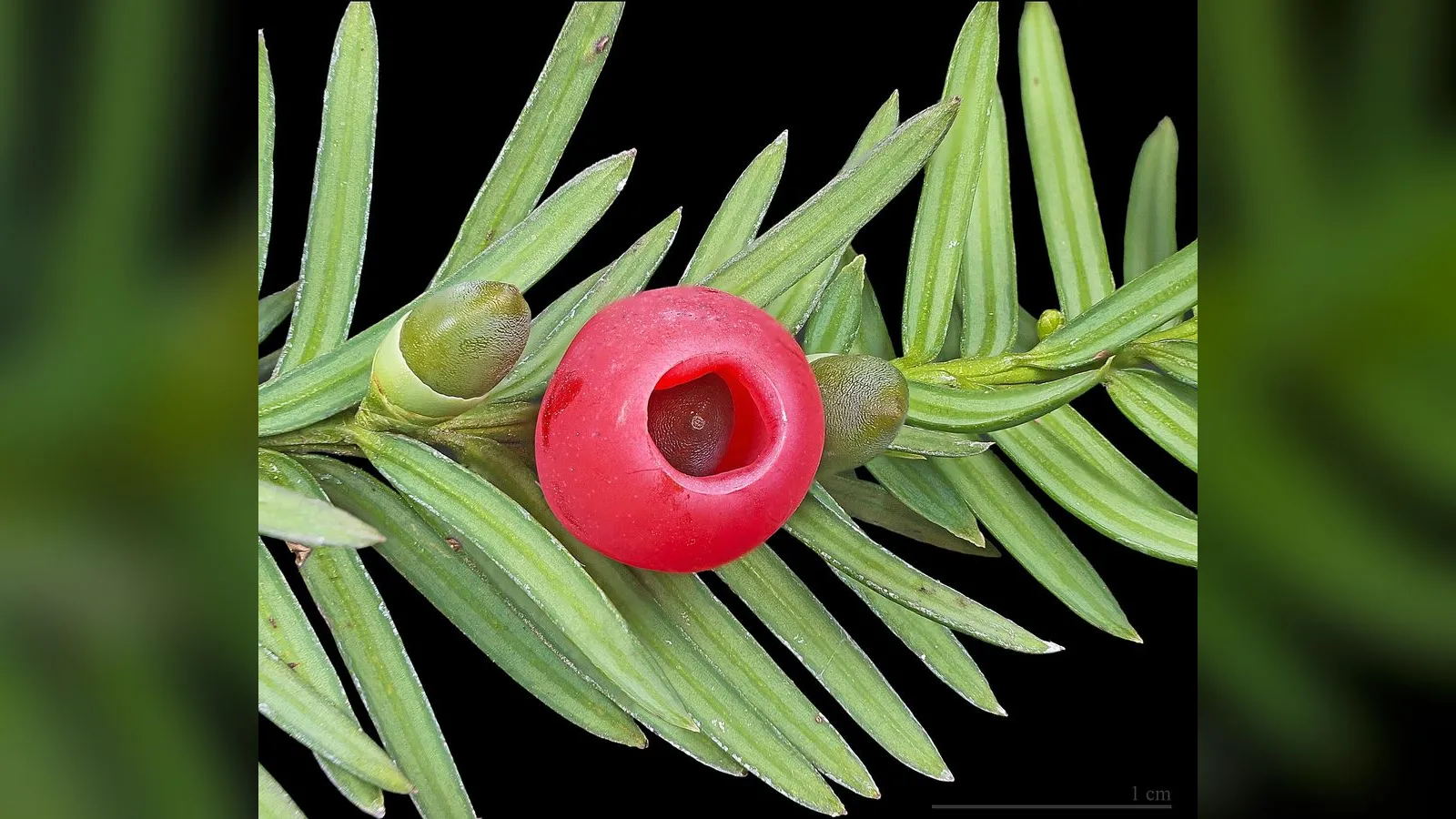
- established In 2015, scientists from the Royal Botanic Garden Edinburgh documented that a branch on this ancient tree, long male, had spontaneously changed sex and begun bearing a small cluster of berries — a genuinely rare physiological event occasionally noted in dioecious plants including yews, possibly triggered by environmental stress — a specific, documented discovery this article states directly rather than a vague claim that "scientists study the tree."
- established The berries produced by this sex-reversed branch were deliberately collected and preserved specifically to safeguard the tree's genetic material as part of an international project protecting yew genetic diversity, since ancient yews worldwide face real threats from felling and disease — a specific, documented conservation response this article names directly rather than treating the sex-change event as a curiosity alone.
- established Despite a protective wall erected around the tree in 1785, visitors have continued for centuries to remove pieces of the tree as souvenirs: an 1833 record describes large arms and masses of trunk being carried off to make drinking cups and curiosities, and in the present day tourists continue climbing the wall to break off twigs and branches or leave keepsakes such as beads and ribbons — this article states this ongoing damage plainly, as a documented and continuing threat rather than a historical episode now resolved.
- established An 1804 account records that local boys damaged the tree by kindling a Bealltuinn (Beltane) fire at its roots, showing that harm to the tree is not solely a modern tourism problem but has a documented history reaching back over two centuries — a specific, dated incident this article names directly rather than implying all historical damage was accidental or unavoidable.
Key Facts
- Species
- Taxus baccata (European yew)
- Category
- Trees (notable individual specimen)
- Location
- Fortingall churchyard, Perthshire
- Age estimates
- 1,500–9,000 years (genuinely disputed)
- Protective wall erected
- 1785
- Notable recent event
- 2015 sex-reversal and berry production
- Current threat
- Ongoing souvenir-taking/vandalism by visitors
Scottish Impact Index (SI Score)
- Scottish Significance
- 9/10
- Ecological Persistence
- 10/10
- Ecological Importance
- 7/10
- Botanical Distinctiveness
- 10/10
- Conservation Significance
- 8/10
- Recognition
- 10/10
54/60
Ranked =5th of 45 in Flora
A Note on Claims and Evidence
Age-estimate range, historical damage records, and the 1785 protective wall are drawn from the Fortingall Yew's published Wikipedia-summarised research record. The 2015 sex-reversal discovery, its possible stress-related cause, and the genetic preservation response are drawn directly from Royal Botanic Garden Edinburgh-sourced reporting. Modern tourist damage details are drawn from published contemporary reporting on the tree's condition.
Timeline
The Fortingall Yew begins growing in Perthshire at a date that remains genuinely contested among experts, with estimates ranging from roughly 1,500 to 9,000 years old depending on methodology and assumption, the tree's decayed, hollow heartwood making precise dating currently impossible.
Daines Barrington measures the girth at 52 feet; the tree is already a hollow ring of wooden pillars, as Richard Mabey records.
A protective low stone and iron wall is erected around the tree in an effort to preserve it from damage.
Local boys damage the tree by kindling a Bealltuinn fire at its roots, an early documented instance of harm to the tree predating modern tourism by close to two centuries.
Records describe large arms and masses of the trunk having been removed and carried off by visitors to make drinking cups and other curiosities, showing that souvenir-taking damage was already well underway by this period despite the protective wall.
Scientists from the Royal Botanic Garden Edinburgh document that a branch on the tree, long understood to be male, has spontaneously changed sex and begun bearing a small cluster of berries, a rare physiological event occasionally seen in dioecious plants including yews and possibly linked to environmental stress; the berries are collected and preserved as part of an international project protecting yew genetic diversity.
Concerns grow that ongoing tourist activity on and around the tree, including climbing the protective wall to break off twigs and branches or leave keepsakes such as beads and ribbons, poses a genuine, continuing threat to its survival.
The Fortingall Yew remains one of Britain's most notable ancient trees, its precise age still unresolved, its genetic material now partly safeguarded through seed preservation, and its physical condition still subject to ongoing visitor damage despite centuries of protective measures.
Details
An age claim stated honestly as genuinely disputed
This article presents the Fortingall Yew's age as a real, unresolved range rather than a single confident figure: estimates span from roughly 1,500 to 9,000 years, with different organisations and researchers favouring different figures within that range. This article states this full span directly because the tree's decayed, hollow heartwood makes precise ring-count dating currently impossible, and presenting any single number as settled fact would misrepresent genuine scientific uncertainty.
A rare biological event named with its real documented specificity
This article states the 2015 sex-reversal discovery precisely rather than a vague claim that "scientists study the tree": a branch long understood to be male spontaneously began bearing a small cluster of berries, a genuinely rare event occasionally noted in dioecious plants including yews, possibly triggered by environmental stress. This article names this specific finding because it represents a real, documented, and biologically unusual event, not a generic point of scientific interest.
A conservation response matched directly to the discovery
This article names the deliberate collection and preservation of the sex-reversed branch's berries directly, as part of an international project protecting yew genetic diversity in the face of real threats from felling and disease worldwide. This article states this specific response because it demonstrates that the sex-change event was treated as a genuine conservation opportunity, not simply an item of curiosity.
A damage history stated as ongoing, not resolved
This article names the Fortingall Yew's history of physical damage plainly and continuously rather than treating it as a settled historical episode: by 1833, large arms and masses of trunk had already been carried off as souvenirs despite the 1785 protective wall, and in the present day, visitors continue climbing that same wall to break off pieces or leave keepsakes. This article states this ongoing pattern because the tree's physical integrity remains a live, current concern, not a problem resolved by historical protective measures.
An early incident named to avoid implying modern tourism is the sole cause of harm
This article names the 1804 Bealltuinn fire-kindling incident directly, because it shows that harm to the tree has a documented history reaching back over two centuries, predating the modern tourism pressures the tree faces today. This article states this specific early incident because treating all historical damage as an unavoidable accident, or treating modern tourism as the tree's first real threat, would both misrepresent the tree's genuinely long history of human impact.
The Fortingall Yew in Flora Britannica (1996)
established Mabey's portrait. Richard Mabey, in Flora Britannica (1996), uses the Fortingall Yew to open his discussion of ancient churchyard yews. He places it "at the geographical heart of Scotland" and describes what survives as "living fragments of the shell of a stupendous yew". He notes that the churchyard has held a building for worship since at least pre-Reformation times, and that there are groups of ancient, possibly Druidical, stones nearby. When Daines Barrington measured it in 1769, the girth was 52 feet, but it was already a hollow ring of wooden pillars, "like a wood-henge".
traditional The legends. Mabey records that funeral processions reputedly passed through the hollow trunk, and repeats the legend that Pontius Pilate played under its branches as a boy, his father supposedly being a legionary stationed in Scotland. Both are local tradition. There is no evidence for the Pilate story.
shared Why the age cannot be settled. Mabey gives the guesses at Fortingall's age as 2,000 to 9,000 years, and his wider discussion explains why the range is so wide. After 400 or 500 years almost all yews begin to lose their heartwood and become hollow, so rings cannot be counted. Old yews also enter long periods of suspended growth: the Crowhurst yew in Surrey is recorded as gaining only nine inches of girth in about two and a half centuries. He notes that there was then no living heartwood from any British yew older than about 400 years. Allen Meredith's table linking girth to age, which would put the very largest yews at several thousand years, rests on extrapolation, and Mabey warns that it has little more solid evidence behind it than older guesses. This supports the cautious range given in this article.
shared A Scottish exception. Mabey's survey of ancient churchyard yews is overwhelmingly English and Welsh; he notes they are concentrated in south-east and central England, Wales and the Lake District, and quotes Gilbert White's remark that few were to be found in the north. That makes Fortingall unusual as well as old: a giant yew in a Highland churchyard, far from the main concentrations of ancient yews. Mabey also suggests that, because planting wild trees was rare before the Middle Ages, early holy sites were probably placed beside existing yews rather than the other way round, a theory that applies to Fortingall but cannot be proved there.
Did You Know?
- In 1769 Daines Barrington measured the Fortingall Yew's girth at 52 feet; it was already hollow.
- Tradition says funeral processions once passed through the tree's hollow trunk.
- A local legend claims Pontius Pilate played under the yew as a boy; there is no evidence for it.
- Most ancient churchyard yews are in England and Wales, which makes a giant yew in a Highland churchyard all the more unusual.
- The Fortingall Yew's age is genuinely disputed among experts, with estimates ranging from around 1,500 to 9,000 years.
- Its hollow, decayed heartwood makes precise age dating currently impossible.
- In 2015, a branch long thought to be male spontaneously changed sex and began producing berries — a rare event in yew trees, possibly triggered by stress.
- The berries from this sex-reversed branch were preserved as part of an international project protecting yew genetic diversity.
- A protective wall was built around the tree in 1785, but by 1833, visitors had already carried off large pieces of the trunk as souvenirs.
- As early as 1804, local boys damaged the tree by lighting a Beltane fire at its roots.
- Modern tourists continue climbing the tree's protective wall to break off twigs and branches or leave keepsakes such as beads and ribbons.
FAQ
1How old is the Fortingall Yew, really?
It's genuinely disputed — estimates range from around 1,500 to 9,000 years, and the tree's hollow, decayed heartwood makes precise dating currently impossible.
2Did the Fortingall Yew really change sex?
Yes — in 2015, a branch long understood to be male spontaneously began bearing berries, a rare event occasionally seen in dioecious plants including yews, possibly linked to environmental stress.
3What happened to the berries from the sex-reversed branch?
They were collected and preserved as part of an international project protecting yew genetic diversity, given real threats to ancient yews worldwide from felling and disease.
4Is the tree currently protected from damage?
A low protective wall was built in 1785, but it hasn't stopped ongoing damage — visitors have historically carried off pieces as souvenirs, and modern tourists still climb the wall to break off twigs or leave keepsakes.
5Is tourist damage a new problem?
No — by 1833, large arms and trunk sections had already been removed as souvenirs, and an 1804 account records boys damaging the tree with a Beltane fire at its roots.
6Where is the Fortingall Yew located?
In the churchyard of Fortingall, Perthshire.
7Why can't scientists just count the tree's rings to find its age?
Because its heartwood has decayed and the trunk is hollow, making a direct ring count impossible with current methods. Richard Mabey's Flora Britannica (1996) adds that old yews can go through long spells of almost no growth, so girth is also a poor guide to age.
8How big was the tree in the eighteenth century?
Daines Barrington measured its girth at 52 feet in 1769, by which time it was already a hollow ring of wooden pillars.
9Is it true that Pontius Pilate played under the Fortingall Yew?
It is a local legend, repeated by Mabey as such. There is no evidence for it.
10Did funerals really pass through the tree?
Tradition says funeral processions passed through the hollow trunk. Mabey records this as reputed, not documented.
Sources and Further Reading
Primary/Institutional
Scholarly/Critical
- Europe's oldest tree isn't transgender... it's actually intersex — PinkNews
- Tourists Are Picking Apart Britain's Oldest Tree — Mental Floss
- Richard Mabey, Flora Britannica (Sinclair-Stevenson, 1996).
General
Caveats: Myths and Disputed Claims
- disputed This article does not state a single confident age for the Fortingall Yew; expert estimates genuinely range from around 1,500 to 9,000 years, and the tree's decayed heartwood makes precise dating currently impossible.
- Do not repeat the legend that Pontius Pilate was born or played at Fortingall as history; it has no documentary support.
- Do not treat girth-based age tables as proof of great age; Flora Britannica stresses that yews can stop putting on girth for centuries.
- Clarification: This article does not treat the tree's damage history as resolved by the 1785 protective wall; souvenir-taking and physical damage have continued both historically and into the present day.
Card 019 · Flora