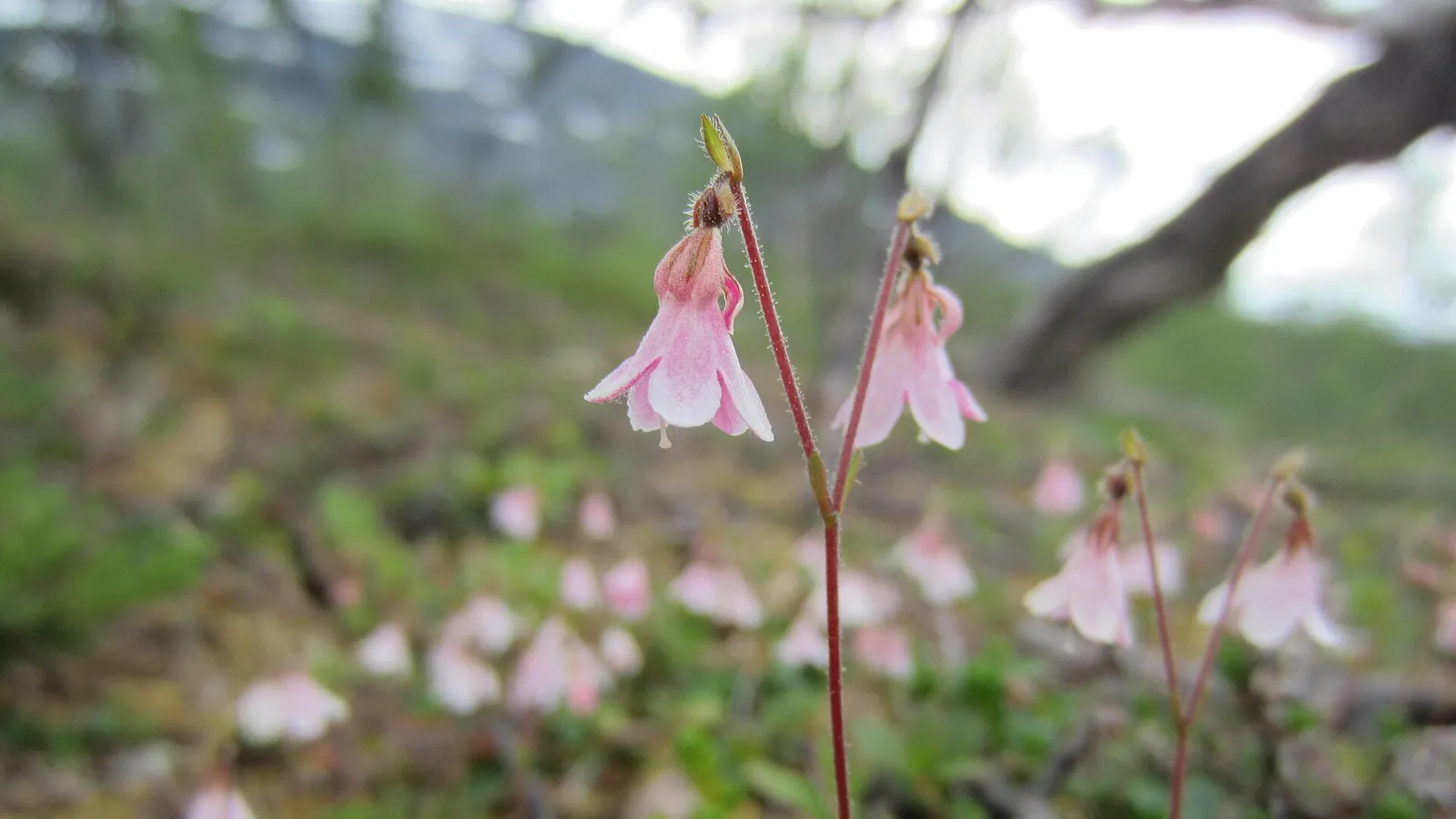

Twinflower (Linnaea borealis)
Contents
TL;DR
- established Twinflower's scientific name honours Carl Linnaeus, the 18th-century Swedish naturalist who developed the modern system of taxonomic classification, and who considered it his own favourite plant — a specific, documented namesake this article states directly rather than a vague claim of historical significance.
- established The species reproduces primarily through vegetative propagation via underground runners called stolons, meaning it typically occurs as clonal patches of genetically identical plants rather than through seed produced by cross-pollination — a specific, documented reproductive mechanism this article names directly because it is the central fact underlying the species' current conservation crisis.
- established Because isolated twinflower populations are usually single genetic clones, and because the plant generally cannot fertilise itself, surviving Highland populations frequently fail to set viable seed even when they flower abundantly, since there is no genetically distinct neighbour nearby for pollinating insects to visit — a precise, mechanistic explanation this article states directly rather than a vague reference to "pollination problems."
- established Records of twinflower's distribution in Scotland have fallen by 64% compared with pre-1970 figures, a severe, specific decline this article states at its full documented scale, driven by a combination of overgrazing, drought susceptibility, fire vulnerability, and the long-term loss of native pinewood habitat.
- established In direct response to the clonal-isolation problem, the North Highland Twinflower Project has, since 2018, deliberately planted cuttings from multiple separate Highland sites together in close proximity at locations such as Aigas, specifically so that the tiny flies that pollinate twinflower can move between genetically distinct individuals — with 72% of original cuttings surviving and flowering increasing year on year — a specific, documented conservation intervention this article states with its real figures.
Key Facts
- Scientific name
- Linnaea borealis
- Category
- Pinewood
- Named after
- Carl Linnaeus (18th-century taxonomist; his reported favourite plant)
- Reproduction
- Primarily clonal, via underground stolons
- UK conservation status
- Nationally Scarce; subject to a Biodiversity Action Plan
- Distribution decline (vs. pre-1970)
- 64%
- North Highland sites (approx.)
- ~50
- Aigas project cutting survival rate
- 72%
Scottish Impact Index (SI Score)
- Scottish Significance
- 9/10
- Ecological Persistence
- 5/10
- Ecological Importance
- 7/10
- Botanical Distinctiveness
- 9/10
- Conservation Significance
- 10/10
- Recognition
- 7/10
47/60
Ranked =24th of 45 in Flora
A Note on Claims and Evidence
Linnaeus connection, clonal reproduction mechanism, and national decline figures are drawn from Trees for Life's published assessment. The specific self-incompatibility and isolation mechanism, project methodology, and survival/flowering figures for the North Highland Twinflower Project are drawn directly from the Aigas Field Centre's own published project reporting.
Timeline
Carl Linnaeus names the genus Linnaea after himself, with twinflower reported as his personal favourite among all plants.
Twinflower is recorded more widely across Scotland's native pinewoods and related habitats, forming the baseline against which later decline is measured.
Records of the species' distribution fall by 64%, driven by overgrazing, drought susceptibility, fire vulnerability, and continued loss of native pinewood habitat, leaving surviving populations as small, isolated genetic clones with no cross-pollination between sites.
Twinflower is formally classified Nationally Scarce in the UK and becomes subject to a dedicated Biodiversity Action Plan, with conservation objectives set to make existing Scottish populations self-sustaining and to restore the species to five sites where it formerly occurred.
The North Highland Twinflower Project begins deliberately collecting cuttings from multiple separate Highland sites and planting them together in close clusters at suitable locations, including Aigas's pinewood, specifically to allow pollinating flies to move between genetically distinct individuals.
The Aigas population shows 72% survival of original cuttings, with flowering increasing year on year and ongoing monitoring for successful cross-pollination and natural seedling regeneration, which would open the door to future reintroduction at depleted sites.
Details
A namesake stated with its real documented basis
This article names twinflower's connection to Carl Linnaeus directly rather than a vague gesture at historical importance: the genus Linnaea honours the 18th-century Swedish naturalist who developed modern taxonomic classification, and the plant is reported as his own personal favourite. This article states this specific history because it is a genuine, documented part of the species' identity, not an incidental naming curiosity.
A reproductive mechanism at the centre of the conservation story
This article names twinflower's primary reproduction method with real precision: vegetative propagation through underground stolons, meaning populations typically exist as clonal patches of genetically identical plants rather than arising from cross-pollinated seed. This article states this mechanism directly because it is not an incidental botanical detail but the central fact explaining everything else about the species' current vulnerability.
A pollination failure explained mechanistically, not vaguely
This article states precisely why isolated twinflower populations often fail to reproduce successfully even while flowering normally: because each isolated population is generally a single genetic clone, and because the plant cannot usually fertilise itself, pollinating insects visiting these flowers have no genetically distinct neighbour to carry pollen to, so no viable seed results. This article names this specific self-incompatibility and isolation mechanism because it clarifies that the problem is not a shortage of flowers or pollinators, but a structural genetic barrier built into how isolated clonal populations are arranged across the landscape.
A decline stated at its real documented scale
This article presents twinflower's Scottish decline with its actual figure: a 64% fall in distribution records compared with pre-1970 levels. This article states this percentage directly because it represents a severe, specific, measured decline, not a general impression of rarity.
A conservation response engineered directly around the underlying mechanism
This article credits the North Highland Twinflower Project with its real, specific intervention: deliberately collecting cuttings from multiple separate Highland sites and planting them together in close clusters, so that pollinating flies can move between genetically distinct individuals, directly addressing the clonal-isolation problem rather than simply propagating more of the same single clone. This article states the project's real figures — 72% cutting survival at Aigas, with flowering increasing year on year — because they represent a genuinely measured, mechanism-targeted conservation success, not a general claim of "helping the species."
Did You Know?
- Twinflower is named after Carl Linnaeus, the father of modern taxonomy, who reportedly considered it his favourite plant.
- The species reproduces mainly by spreading underground runners, so entire populations are often a single genetic clone.
- Because isolated clonal populations generally cannot fertilise themselves, many Highland populations flower without ever producing viable seed.
- Twinflower's Scottish distribution has fallen by 64% compared with pre-1970 records.
- The North Highland Twinflower Project deliberately plants cuttings from different sites close together so pollinating flies can cross-fertilise them.
- Since 2018, 72% of cuttings planted at Aigas have survived, with flowering increasing each year.
- Conservation goals include restoring twinflower to five Scottish sites where it has been lost.
FAQ
1Why is twinflower called Linnaea borealis?
It's named after Carl Linnaeus, the 18th-century father of modern taxonomy, who reportedly considered it his favourite plant.
2Why does twinflower struggle to reproduce even where it survives?
Because it spreads mainly through underground runners, isolated populations are usually a single genetic clone, and the plant generally cannot fertilise itself — so pollinators have no genetically distinct neighbour to visit.
3How severe has the decline been?
Scotland's twinflower distribution has fallen by 64% compared with pre-1970 records.
4What's causing the decline?
Overgrazing, drought susceptibility, fire vulnerability, and continued loss of native pinewood habitat.
5What is being done to help the species?
The North Highland Twinflower Project plants cuttings from different sites together in clusters, so pollinating flies can move between genetically distinct plants and enable successful seed production.
6Has this conservation approach worked?
Early results are promising — 72% of original cuttings at Aigas have survived, with flowering increasing year on year.
7Is twinflower formally protected?
Yes — it's classified Nationally Scarce in the UK and is subject to a dedicated Biodiversity Action Plan.
8What is the long-term conservation goal?
To make existing Scottish populations self-sustaining and restore twinflower to five sites where it formerly occurred.
Sources and Further Reading
Primary/Institutional
- Twinflower facts and information — Trees for Life
- Aigas Twinflower Project Update — Aigas Field Centre
Scholarly/Critical
- Maintenance and recovery of rare clonal plants: the Case of the twinflower — Botanical Journal of Scotland (Taylor & Francis)
- Twinflower — Plantlife
General
Caveats: Myths and Disputed Claims
- Clarification: This article does not describe twinflower's reproductive problem as a pollinator shortage; the pollinating flies are present, but isolated clonal populations generally lack a genetically distinct neighbour for them to cross-pollinate with.
- Note: This article does not treat twinflower's flowering alone as evidence of a healthy, reproducing population; many populations flower reliably while still failing to set viable seed due to clonal isolation.
Card 006 · Flora