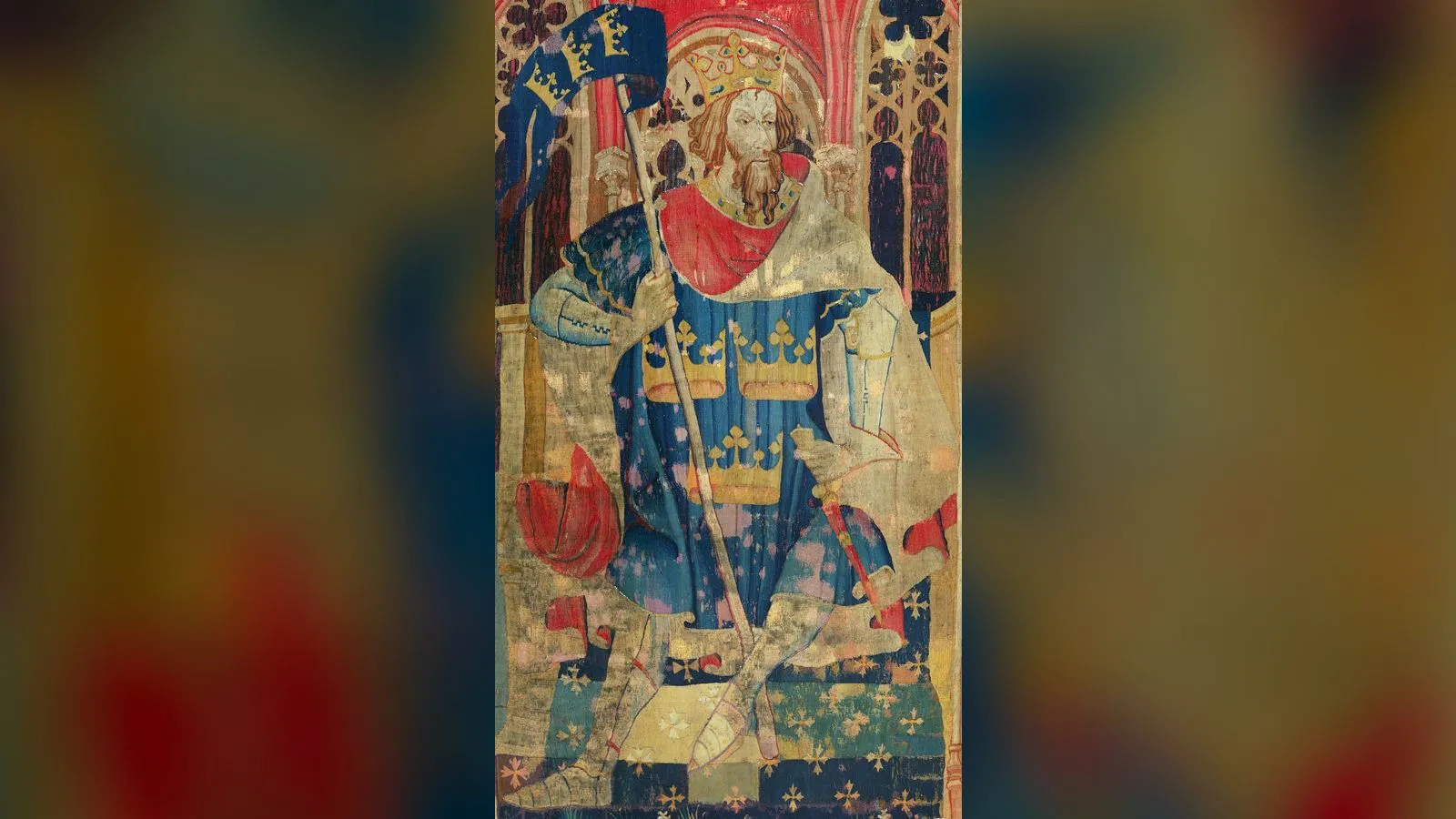

King Arthur in Scotland
Contents
Legend/Myth
A persistent popular claim holds that Scotland possesses a single, deep-rooted Arthurian tradition to rival Cornwall's or Wales's — even that Edinburgh's Arthur's Seat proves it. In fact, what Scotland has is a patchwork of separate, loosely connected local antiquarian claims, assembled from different centuries by different enthusiasts, several of which also compete with each other. There is no one "Scottish Arthur story"; there are several thin, independent threads.
TL;DR
- disputed No contemporary 5th–6th century source places a historical "Arthur" figure in Scotland, or anywhere else, with any certainty — because the earliest writers who might have recorded him (Gildas, writing close to the supposed period) say nothing about an Arthur at all, leaving centuries of silence before his name appears in later texts.
- disputed A minority scholarly theory identifies the shadowy 6th-century prince Artuir mac Áedáin of Dál Riata, associated with a hillfort near Falkirk, as a possible historical seed for the Arthur legend — because the name and approximate period match, but the identification remains circumstantial and is not the consensus view among Arthurian scholars.
- disputed The claim that Camelon, near Falkirk, is "Camelot" rests on 18th–19th century antiquarian wordplay on the place-name rather than on documentary or archaeological proof — because no medieval source calls Camelon by that name, and the resemblance is phonetic rather than historical.
- disputed Stirling's so-called "King Arthur's Round Table" earthwork (near the King's Knot) is more plausibly a later medieval or early modern garden/tournament feature than any genuine Arthurian survival — because comparable "Round Table" earthworks elsewhere in Britain have been linked to medieval chivalric tournament culture rather than to the historical period Arthur would have occupied.
- established The Eildon Hills near Melrose host a long-standing local legend that Arthur and his knights lie sleeping beneath the hills, ready to wake when summoned — because this specific "sleeping king" story is a well-attested local tradition in its own right, whatever its connection (or lack of one) to a historical Arthur.
Key Facts
- Type of Being/Legend/Figure
- Legendary hero-king — cluster of local Scottish Arthurian traditions
- Region
- Central Scotland and the Borders (Falkirk/Camelon, Stirling, the Eildon Hills near Melrose)
- First Attested
- Arthur legend generally from c. 9th century (Historia Brittonum); specific Scottish sites claimed from the 18th–19th centuries onward
- Category
- Hero Legend (Replacement card)
- SI Score
- 40/60
- Status Note
- Thin, patchwork tradition — honestly scored and presented as such, not a single deep-rooted legend
A Note on Claims and Evidence
Arthurian material anywhere in Britain sits on famously uncertain ground: Arthur may be a composite figure, a garbled memory of a real post-Roman warlord (or several), or largely a literary invention that only crystallised centuries after the period it claims to describe. Scotland's specific claims are, if anything, thinner than Wales's or Cornwall's, resting heavily on 18th- and 19th-century antiquarian enthusiasm for finding Arthur everywhere a plausible place-name or earthwork could be found. This card treats every Scottish Arthurian site as local legend-tradition, not established history, and is explicit where a claim is essentially modern invention dressed as ancient memory.
Timeline
Proposed floruit of Artuir mac Áedáin, a historical Dál Riatan prince sometimes floated as a possible real-world seed for later Arthur legend.
Gildas's De Excidio Britanniae, the nearest thing to a contemporary British source for this era, is written — and mentions no Arthur.
The Historia Brittonum, attributed to Nennius, gives the first substantial written account of Arthur's battles, establishing him in British tradition generally.
Geoffrey of Monmouth's Historia Regum Britanniae popularises Arthur across Britain and Europe, fuelling the explosion of later local Arthurian place-lore, Scotland included.
Stirling's burgh seal reads "Here stand the Britons, saved by their arms; here stand the Scots, saved by the cross", which suggests a local belief in Stirling's British past.
King David II tells the chronicler Jean Froissart that Stirling Castle is "Snowdon" (Snawdon), where King Arthur held court.
Dumbarton Castle is apparently identified as Castrum Arthuri, "Arthur's castle".
The Burgundian visitor Gilbert de Lannoy describes Stirling as a "very strong castle on a rock which King Arthur built, as they say".
A Stirling-based royal herald takes the title "Snawdoun Herald".
A visiting Scot tells the English antiquary William of Worcester that "King Arthur kept the Round Table in Stirling Castle, otherwise called Snowdonwest castle."
Antiquarians in central Scotland formalise Arthurian claims for local features — Camelon near Falkirk as "Camelot," and the Stirling earthwork as "King Arthur's Round Table." (Stirling's own Arthurian identity is medieval, not antiquarian; see above.)
The Eildon Hills "sleeping Arthur" legend near Melrose is recorded in its familiar form by regional folklorists, drawing on the widespread "sleeping hero" motif found attached to other British leaders and locations.
A minority of scholars propose Artuir mac Áedáin as a plausible historical figure behind the legend, reviving academic interest in a Scottish Arthurian connection without settling the question.
Details
The patchwork, not the legend
Unlike deeply rooted single-site traditions elsewhere in Britain, Scotland's Arthurian material is a cluster of separate claims from different eras and different motives: antiquarian place-name enthusiasm at Camelon and Stirling, a genuine local folk-tradition of sleeping warriors at the Eildon Hills, and a modern scholarly argument for a specific historical prince. These threads do not reinforce one another into a single coherent legend — they compete, and in places contradict each other about where "Arthur's Scotland" is even supposed to be.
Camelon and "Camelot"
Camelon, near Falkirk, sits on the site of a Roman fort. Antiquarian writers, charmed by the phonetic resemblance between "Camelon" and "Camelot," proposed the identification from the 18th century onward. There is no medieval document that calls the site Camelot, and no archaeological evidence connects the Roman-era remains to any Arthurian court. The resemblance is a coincidence of sound, elaborated into legend by writers eager to plant Arthur's capital on Scottish soil.
Stirling's "Round Table"
An earthwork near Stirling Castle, adjacent to the King's Knot gardens, has long been known locally as "King Arthur's Round Table." The more credible explanation offered by historians is considerably less romantic: comparable round or hexagonal earthworks elsewhere in Britain are tied to medieval and early modern garden design or to chivalric tournament culture — nobility re-enacting "Round Table" pageantry, a fashion documented as far back as Edward I's tournaments in the 1280s–90s, long after any historical Arthur. The Stirling earthwork most likely reflects this later tournament and garden tradition rather than any genuine trace of the 5th or 6th century.
The Eildon Hills: sleeping Arthur
The most durable and least contested piece of specifically Scottish Arthurian lore is the tradition, recorded by Borders folklorists, that Arthur and his knights lie in an enchanted sleep beneath the Eildon Hills near Melrose, guarded until the day Scotland (or Britain) needs them again. This is a genuine, locally attested legend in its own right — it is simply one example of the widespread "sleeping hero" motif attached to various leaders across British and European folklore (a very similar story is told of Arthur at Cadbury Castle in England, among other sites), rather than evidence that Arthur was ever specifically a Scottish figure.
Artuir mac Áedáin: the scholarly minority view
A small number of modern historians have proposed a different, more cautious case for a Scottish Arthur: not a legendary king, but Artuir mac Áedáin, a 6th-century prince of the Dál Riata kingdom straddling western Scotland and northern Ireland, associated in some readings with a base near Camelon. The timing and the name are suggestive, and some writers have floated the idea that the place-name "Camelon" could have been corrupted over centuries into both "Camelot" and "Camlann" (Arthur's legendary final battle site). This remains a minority position within Arthurian scholarship, not a settled identification, and should not be presented as though it resolves the Camelot/Camelon question in Scotland's favour.
Edinburgh's Arthur's Seat — a separate card, briefly noted
Edinburgh's Arthur's Seat, the dramatic hill overlooking the city, carries its own Arthurian name and legend and is treated as its own Locations card elsewhere in this series. Its naming is probably a later romantic or antiquarian attachment rather than ancient tradition, much like Camelon and the Stirling earthwork — but because it is covered in full on its own card, it is mentioned here only to note that it belongs to the same general pattern of Scottish places borrowing Arthur's name rather than preserving a genuine ancient memory of him.
Why this is scored, and told, as thin tradition
The curatorial judgment behind this card's modest score is deliberate: Scottish Arthurian material, taken individually, is weaker than comparable traditions in Wales, Cornwall, or the West Country of England. Honesty about that thinness — rather than inflating a patchwork of 18th–19th century antiquarian claims into "Scotland's Arthur" — is the point of including this card at all.
Arthur at the medieval Scottish court
It is often assumed that medieval Scots rejected Arthur because Geoffrey of Monmouth's British history was used by English kings to claim overlordship of the whole island. Steve Boardman shows that the picture is more complicated. John of Fordun (1371–87) did push back. He called Arthur illegitimate, held that the throne belonged rightfully to Mordred, and placed the northern limit of the British kingdom at the Forth. But the Scots-language writers aimed at a lay aristocratic audience revelled in Arthurian material. John Barbour's Bruce mentions Arthur's "gret valour". Andrew of Wyntoun defended the Arthurian poet "Huchown of the Awle Ryale" and expected his readers to know his work.
The Stewart kings were especially comfortable with the British past. Barbour also wrote a genealogy of the Stewarts that is now lost; Wyntoun and Bower both saw it. It reportedly traced the family's descent from Trojan and ancient British ancestors, at the same time as Fordun was dismissing Geoffrey of Monmouth. The crown actively promoted Stirling as Arthur's "Snowdon". David II said so to Froissart in 1365, a "Snawdoun Herald" existed by 1431, and in the 1470s a Scot told William of Worcester that the Round Table had been kept in Stirling Castle. Dumbarton was apparently called Castrum Arthuri in 1367.
Boardman also suggests, more speculatively, that when Robert, earl of Fife became the first Duke of Albany in 1398, he may have had in mind Fordun's "duke of the Britons of Albany", the British hero Fulgentius. Bower remarks that no one had held the title of duke since Fulgentius. Boardman's conclusion is that there was no comprehensive or popular Scottish rejection of the "Matter of Britain". The one place British material was kept out was the official history of Scottish kingship, which remained rooted in the Gaelic past.
Did You Know?
- Stirling's identification with King Arthur is medieval, not a modern antiquarian invention. In 1365 King David II told the chronicler Froissart that Stirling Castle was "Snowdon", where Arthur had held court (Boardman, 2002).
- The earliest near-contemporary British writer of the Arthurian period, Gildas, does not mention anyone named Arthur at all.
- "Camelot" at Camelon is essentially a pun on the place-name, first floated by 18th-century antiquarians rather than any medieval source.
- Stirling's "Round Table" earthwork may actually commemorate medieval tournament pageantry rather than any trace of a 5th- or 6th-century king.
- The "sleeping hero under a hill" story told of Arthur at the Eildon Hills is also told, with different heroes, at other sites across Britain and Europe.
- Edward I staged "Round Table" tournaments in the 1280s–90s, showing how fashionable Arthurian role-play had become among medieval nobility — centuries after any historical Arthur would have lived.
- A minority of historians propose Artuir mac Áedáin, a real 6th-century Dál Riatan prince, as a plausible seed for the later Arthur legend — but this is not the scholarly consensus.
- Edinburgh's Arthur's Seat, despite its name, is generally thought to be a later romantic attachment rather than genuine ancient Arthurian tradition.
- Scotland's Arthurian claims are scattered across central Scotland and the Borders rather than concentrated at one site, unlike the single dominant traditions found in Cornwall (Tintagel) or Glastonbury.
FAQ
1Was King Arthur Scottish?
There is no reliable evidence he was a specific historical figure from anywhere, Scotland included. A minority of scholars propose a Scottish-based prince, Artuir mac Áedáin, as one possible inspiration, but this is not settled.
2What is Camelon's claim to be Camelot?
It rests on the phonetic similarity between the names "Camelon" and "Camelot," proposed by antiquarians from the 18th century onward — there is no documentary or archaeological evidence for the identification.
3Is Stirling's "King Arthur's Round Table" really connected to Arthur?
Probably not directly. It more likely reflects later medieval or early modern tournament and garden traditions than any genuine survival from Arthur's supposed era.
4What is the Eildon Hills legend?
A local Borders tradition holds that Arthur and his knights sleep beneath the hills near Melrose, to wake when needed. It is a well-attested piece of local folklore in its own right, independent of whether a historical Arthur ever set foot there.
5Is Edinburgh's Arthur's Seat proof of a Scottish Arthur?
No — its name is most likely a later romantic or antiquarian attachment, similar to Camelon and Stirling, rather than ancient tradition. It is covered separately as its own card.
6Who was Artuir mac Áedáin?
A historical prince of the Dál Riata kingdom in the 6th century, proposed by some modern scholars as a possible real-world figure behind the later Arthur legend. The theory is plausible but not proven or widely accepted.
7Why is this card's score relatively modest?
Because, honestly assessed, Scotland's Arthurian material is a thin patchwork of separate local claims rather than one deep, continuous tradition — the score reflects that thinness rather than inflating it.
8Did Arthur fight any battles in Scotland?
No specific Scottish battle site for Arthur has credible historical support; proposed sites are antiquarian attributions, not documented events.
9Why does Scotland have so many competing Arthur sites?
Arthurian legend spread widely across Britain from the 12th century onward, and different regions and eras attached the name to local features — Scotland's claims largely emerged from 18th–19th century antiquarian enthusiasm.
10Is there a single "Scottish Arthur story"?
No — this card deliberately presents the material as a cluster of separate, independently sourced claims rather than a single coherent legend.
11Does this card replace other cards?
Yes — it replaces two earlier proposed cards, "The Stone of Destiny" and "The Sleeping Warriors of Arthur's Seat," consolidating scattered Scottish Arthurian material into one honestly scoped card.
12Where can I learn more about the wider Arthur legend?
General Arthurian scholarship (not specific to Scotland) covers the Historia Brittonum, Geoffrey of Monmouth, and the broader question of a possible historical Arthur in far more depth than any single regional claim can.
Sources and Further Reading
Primary/Institutional
- Historia Brittonum (attributed to Nennius, c. 828–829), the earliest substantial written source for Arthur's battles.
- Gildas, De Excidio et Conquestu Britanniae (c. 6th century), the nearest contemporary British source for the period, notable for its silence on Arthur.
Scholarly/Critical
- Steve Boardman, "Late Medieval Scotland and the Matter of Britain", in Edward J. Cowan and Richard J. Finlay (eds), Scottish History: The Power of the Past (Edinburgh University Press, 2002).
- Modern Arthurian scholarship assessing the Artuir mac Áedáin theory and the general weakness of place-name-based Arthurian identifications across Britain.
- Archaeological and historical assessment of "Round Table" earthworks (including Winchester's, radiocarbon-dated to the medieval tournament period) as a comparative framework for the Stirling site.
General
- General-audience Scottish folklore and heritage writing on Camelon, the Stirling earthwork, and the Eildon Hills sleeping-warriors tradition.
Caveats: Myths and Disputed Claims
- Earlier versions of this card dated the Stirling–Arthur association to 18th–19th-century antiquarians. That is true of the "Round Table" earthwork name and of Camelon, but Stirling's identity as Arthur's "Snowdon" is documented from 1365 and was promoted by the Scottish crown through the 15th century (Boardman, 2002). The medieval tradition still says nothing about a historical Arthur.
Every specific Scottish Arthurian site claim in this card — Camelon as Camelot, the Stirling earthwork as a genuine Arthurian relic, and any claim that Arthur was definitively Scottish — is antiquarian tradition or modern speculation, not established history. The Eildon Hills sleeping-warriors story is a genuine, well-attested local legend, but its connection to any historical Arthur is itself unproven; it should be understood as a "sleeping hero" folk motif rather than evidence of a real Scottish king. Edinburgh's Arthur's Seat is not centred in this card and carries its own, likely later, naming history, addressed on its separate Locations card.
Card 033 · Folklore