
Robert Kirk and the Secret Commonwealth
Contents
Legend/Myth
Robert Kirk is sometimes remembered only through the eerie story of his disappearance — "the minister the fairies took." This obscures the fact that he was a serious, highly literate Gaelic scholar whose actual book, written in the year before his death, is treated by modern folklorists as one of the single most important surviving documents on fairy belief anywhere in the British Isles.
TL;DR
- established Robert Kirk (1644–1692) was a real Church of Scotland minister, educated at St Andrews and Edinburgh, who served as minister of Balquhidder and then of Aberfoyle, and who produced the first complete Gaelic translation of the metrical psalms and oversaw the 1690 printing of the Gaelic Bible — because these works, their editions, and his ministerial appointments are documented in church and publication records.
- established In 1691 Kirk wrote The Secret Commonwealth of Elves, Fauns and Fairies, a serious ethnographic account of Highland fairy belief and second sight, intended partly to defend ordinary Highland folk from witchcraft accusations — because the manuscript survives and its stated purpose and content are documented, even though it was not published in Kirk's lifetime.
- established The book went unpublished for over a century after Kirk's death, finally appearing in print through Walter Scott in 1815 and in its fuller modern form, retitled, through Andrew Lang in 1893 — because this publication history is recorded in the surviving editions themselves.
- disputed Kirk died (or, in local tradition, "disappeared") at Doon Hill, the fairy hill beside his manse, on 14 May 1692 — because while his death is recorded, the specific legend that he was taken by the fairies as punishment for revealing their secrets is oral tradition, not a documented medical or forensic account of his death.
- disputed Local legend holds that Kirk's grave may not actually contain his body — because this claim rests on folk tradition surrounding his disappearance rather than on any exhumation or forensic record, and should be read as part of the legend, not as an established fact about the grave itself.
Key Facts
- Type of Being/Legend/Figure
- Real historical minister and folklorist who became the subject of his own legend
- Region
- Aberfoyle, Stirlingshire (Doon Hill)
- First Attested
- Biography documented 1644–1692; The Secret Commonwealth written 1691, first published 1815
- Category
- Seers and Wizards (Replacement card)
- SI Score
- 48/60
- Status Note
- Documented minister and author; his death/disappearance carries a separate, later-attached fairy legend
A Note on Claims and Evidence
Robert Kirk is one of the clearest cases in this series of a real, well-documented person who became the subject of legend about his own death. His life, ministry, family, and scholarly works are recorded with reasonable clarity through church and publication records. The story that fairies took him from Doon Hill is oral folk tradition recorded by later folklorists, not a contemporary account of his death — and this card is careful to state exactly where the documented biography ends and the legend about his disappearance begins.
Timeline
Robert Kirk is born in Aberfoyle, the seventh and youngest son of James Kirk, a local minister.
Kirk studies at the University of St Andrews and earns his master's degree from the University of Edinburgh.
Kirk becomes minister of Balquhidder.
Kirk's first wife, Isobel Campbell, dies; he later remarries, to Margaret Campbell of Fordie.
Kirk publishes Psalma Dhaibhidh an Meadrachd, the first complete translation of the metrical psalms into Gaelic.
Kirk becomes minister of Aberfoyle, a post he holds until his death.
Kirk travels to London to oversee the printing of the Gaelic Bible, a project financed by the scientist Robert Boyle.
The Gaelic Bible, An Biobla Naomhtha, is published.
Kirk writes The Secret Commonwealth of Elves, Fauns and Fairies, documenting Highland fairy belief, second sight, and related folk practice.
Kirk dies at Doon Hill, Aberfoyle — in local tradition, found lying on the fairy hill near his manse, which he was known to walk at night.
Walter Scott first publishes Kirk's manuscript in print.
Andrew Lang republishes the work in fuller form under the title The Secret Commonwealth of Elves, Fauns and Fairies, the title by which it is generally known today.
Details
The documented minister and scholar
Robert Kirk's career was that of a serious Gaelic-speaking churchman and linguist, not primarily an occultist. Educated at St Andrews and Edinburgh, he served first as minister of Balquhidder and then, from 1685 until his death, as minister of Aberfoyle in Stirlingshire. His scholarly reputation rests substantially on his Gaelic-language work: he produced the first complete translation of the metrical psalms into Gaelic in 1684, and in 1689 travelled to London to oversee the printing of a full Gaelic Bible, a project supported financially by the eminent scientist Robert Boyle — placing Kirk within serious contemporary intellectual and religious networks, not at their margins.
The Secret Commonwealth
In 1691, the year before his death, Kirk wrote The Secret Commonwealth of Elves, Fauns and Fairies, drawing on his position as a Gaelic-speaking minister embedded in Highland communities to compile detailed accounts of local belief in fairies, second sight, ghosts, and related phenomena. Kirk describes fairies as being "of a middle nature between Man and Angel," possessed of "light changeable bodies" able to "appear or disappear at pleasure" — a careful, descriptive, almost anthropological tone rather than a credulous or sensational one. Part of his stated purpose was protective: by treating fairy belief and second sight as a coherent, explicable folk tradition rather than straightforward witchcraft, he hoped to shield ordinary Highland people from prosecution by Presbyterian church courts increasingly inclined to treat such belief as diabolical.
Kirk did not live to see the work published. The manuscript circulated privately and was not printed until 1815, when Walter Scott brought it into print; a fuller version, under the now-familiar title, followed from Andrew Lang in 1893. Modern folklorists and scholars — among them Stewart Sanderson and Marina Warner — have described it as one of the single most significant surviving works on fairy belief and second sight produced anywhere in the British Isles, precisely because of the seriousness and detail with which Kirk approached material that most contemporaries dismissed or feared.
Doon Hill and the legend of his taking
Kirk died on 14 May 1692. Local tradition holds that he was found lying on Doon Hill, the fairy-associated hill immediately beside his manse at Aberfoyle, which folklorist Stewart Sanderson records he had a habit of walking upon in his nightgown on summer evenings. Out of this circumstance grew the enduring local legend: that the fairies, angered at Kirk for revealing their secrets in his book, took him into their world rather than allowing him to simply die — a story structurally similar to wider Germanic and British folklore in which the departed are said to be carried off to an otherworld rather than to an ordinary grave.
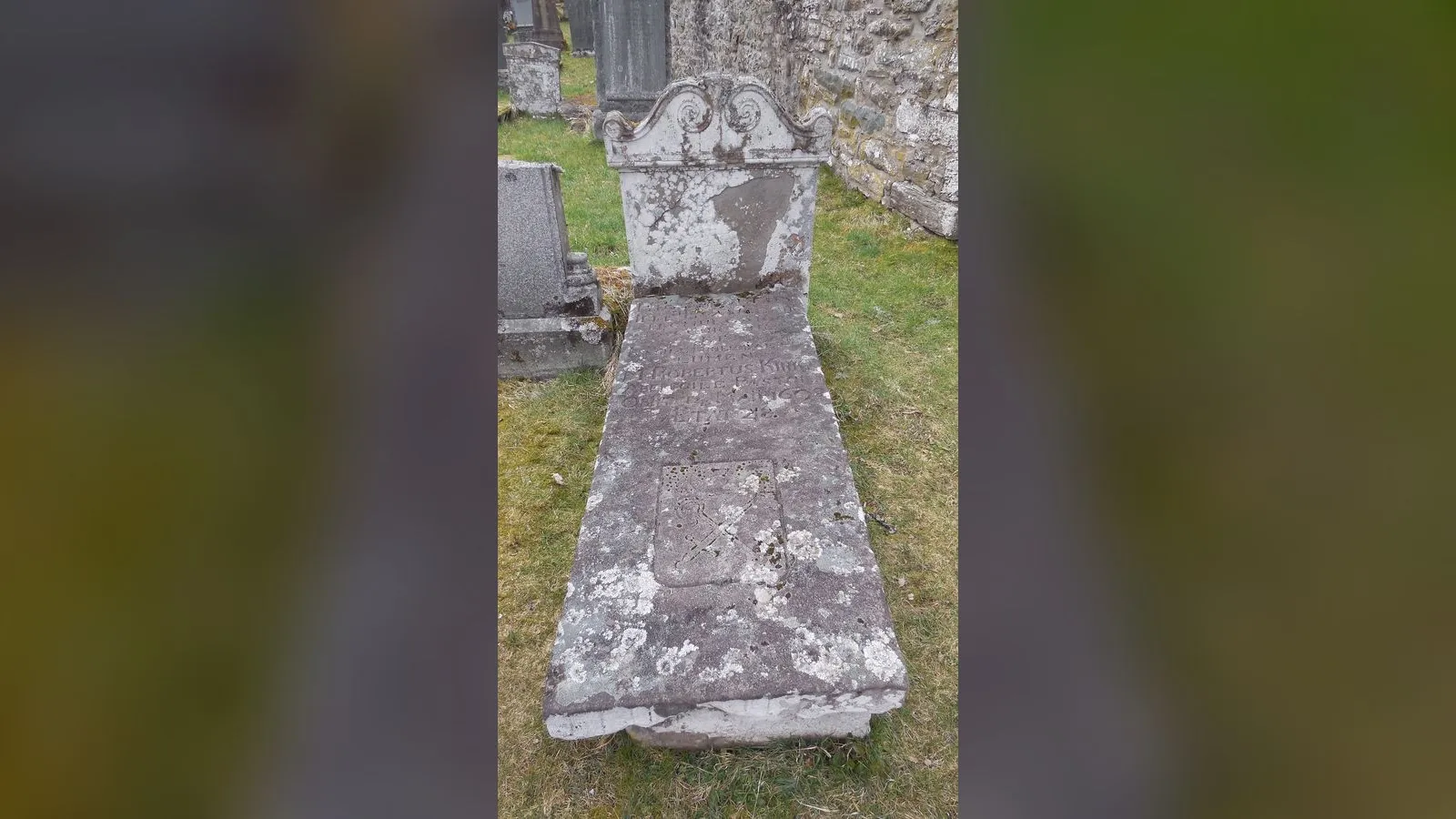
Kirk's grave in Aberfoyle churchyard bears an inscription honouring him as an "illustrious and accurate publisher of the Gospel" and a "luminary of the Gaelic language" — language that speaks to his documented scholarly achievement. Yet popular legend, Sanderson notes, has long questioned whether his ashes, or even his body, actually lie in that grave at all — a claim resting entirely on oral tradition rather than any exhumation or forensic record, and presented here explicitly as legend rather than fact.
"The most important Scottish book about the otherworld"
Editorial curation for this series treats The Secret Commonwealth as arguably the single most significant primary document in the whole "Seers and Wizards" group — not a legend about fairies, but a documented 17th-century attempt by an educated insider to describe fairy belief systematically. This distinguishes Kirk sharply from the Brahan Seer, whose very historical existence is contested, and places him closer to Martin Martin as a serious contemporary ethnographer of Highland belief, even as Kirk's own death then generated a legend of exactly the kind his book sought to document.
Relationship to neighbouring cards
Robert Kirk sits within this series' "Seers and Wizards" group. His book is a key documentary source for the separate Second Sight card, which covers the broader an dà-shealladh belief system rather than any one individual; this card instead centres on Kirk himself, his documented biography, and the specific legend of his own disappearance at Doon Hill. It replaces an earlier proposed card on "The Lavellan," judged to have less depth and significance for the series than Kirk's combination of real scholarly achievement and personal legend.
Kirk's Bible in the Highlands
established Kirk's Bible was not a new translation but a transcription of Bishop Bedell's Irish Bible, printed in the Irish type that few Highlanders could read, into ordinary Roman letters. According to the historical geographer Charles Withers, in Gaelic in Scotland 1698–1981 (1984), Kirk completed the work in about a year and a half, and the edition appeared on 1 April 1690. Distributing it fell largely to James Kirkwood after Kirk's death in 1692, and it was slow: by 1698 about 1,770 Bibles had reached the Highlands. Kirkwood's lists of the parishes that were to receive them are the earliest detailed record of where Gaelic was spoken in Scotland.
Did You Know?
- Robert Kirk produced the first complete Gaelic translation of the metrical psalms, published in 1684.
- His 1690 Gaelic Bible project was financed by Robert Boyle, one of the most important scientists of the age.
- The Secret Commonwealth was written in 1691, the year before Kirk's death, but was not published until 1815 — over a century later.
- Walter Scott was responsible for the book's first printed appearance; Andrew Lang's 1893 edition gave it the title by which it is best known today.
- Folklorists have called The Secret Commonwealth one of the most important surviving works on fairy belief and second sight anywhere in the British Isles.
- Kirk reportedly had a habit of walking at night on Doon Hill, the fairy hill beside his manse — the very place he was found when he died.
- Local legend claims Kirk's grave may not contain his actual body, a claim resting purely on oral tradition rather than any physical investigation.
- Kirk's gravestone inscription honours his real, documented achievements as a translator and Gaelic scholar, in contrast to the folkloric legend of his fairy abduction.
FAQ
1Who was Robert Kirk?
A real Church of Scotland minister (1644–1692) who served at Balquhidder and then Aberfoyle, and who wrote an important early ethnographic study of Highland fairy belief.
2What is The Secret Commonwealth?
A 1691 manuscript by Kirk describing Highland beliefs about fairies, second sight, and related folk practice, first published in 1815 and now considered a major primary source on the subject.
3Did the fairies really take Robert Kirk?
That is local legend, not a documented fact. What is recorded is that he died at Doon Hill in 1692; the "taken by the fairies" explanation is oral tradition that grew up around his death.
4Why did Kirk write about fairies?
Partly as a serious scholarly/ethnographic project, and partly, by his own apparent intent, to protect ordinary Highland people from being prosecuted for witchcraft by treating fairy belief as explicable folk tradition rather than straightforward diabolism.
5Why wasn't the book published during his lifetime?
It isn't fully clear; the manuscript circulated privately after his death in 1692 and did not appear in print until Walter Scott published it in 1815.
6Is Kirk's grave really empty?
There is no forensic or exhumation evidence either way — the claim that his body is not in the grave is part of the local legend, not an established fact.
7How does Kirk relate to the Second Sight card in this series?
Kirk's book is one of the most important documented sources for Highland belief in second sight, but the Second Sight card covers that broader belief system, while this card focuses on Kirk himself and his personal legend.
8How does Kirk compare to the Brahan Seer?
Unlike the Brahan Seer, whose historical existence is genuinely disputed by scholars, Kirk's life and career are solidly documented — the uncertainty in his case concerns only the legend surrounding his death, not whether he existed.
9What does "Secret Commonwealth" mean?
It refers to Kirk's concept of fairies as a parallel, hidden society or "commonwealth" existing alongside the human world, with its own order and population.
10Who published the book, and when?
Walter Scott first published it in 1815; Andrew Lang produced a fuller edition in 1893 under the title now generally used.
11Was Kirk considered credible in his own time?
He was a respected, educated minister and Gaelic scholar; his fairy-belief manuscript circulated privately rather than being widely published or debated in his lifetime.
12What should readers take away from Kirk's story?
That a serious, scholarly investigation of folk belief can itself become folklore — Kirk set out to document a "secret commonwealth," and ended up, in local legend, becoming part of it.
Sources and Further Reading
Primary/Institutional
- Robert Kirk, The Secret Commonwealth of Elves, Fauns and Fairies (written 1691; first published by Walter Scott, 1815; fuller edition by Andrew Lang, 1893).
- Kirk's Gaelic translation of the metrical psalms (1684) and his oversight of the 1690 Gaelic Bible.
Scholarly/Critical
- Folklore scholarship (including assessments by Stewart Sanderson and Marina Warner) on the significance of The Secret Commonwealth within British and Gaelic fairy-belief studies.
- Charles W. J. Withers, Gaelic in Scotland 1698–1981: The Geographical History of a Language (John Donald, 1984; ebook Birlinn, 2021)
General
- General Scottish folklore and heritage writing on Doon Hill, Aberfoyle, and the legend of Kirk's disappearance.
Caveats: Myths and Disputed Claims
Kirk's biography, ministry, Gaelic scholarship, and authorship of The Secret Commonwealth are documented history. His death at Doon Hill in 1692 is recorded; the specific claim that fairies took him in retribution for revealing their secrets, and the further claim that his grave may not contain his body, are oral legend recorded by later folklorists, not forensic or contemporary fact, and are presented here explicitly as such.
Card 036 · Folklore