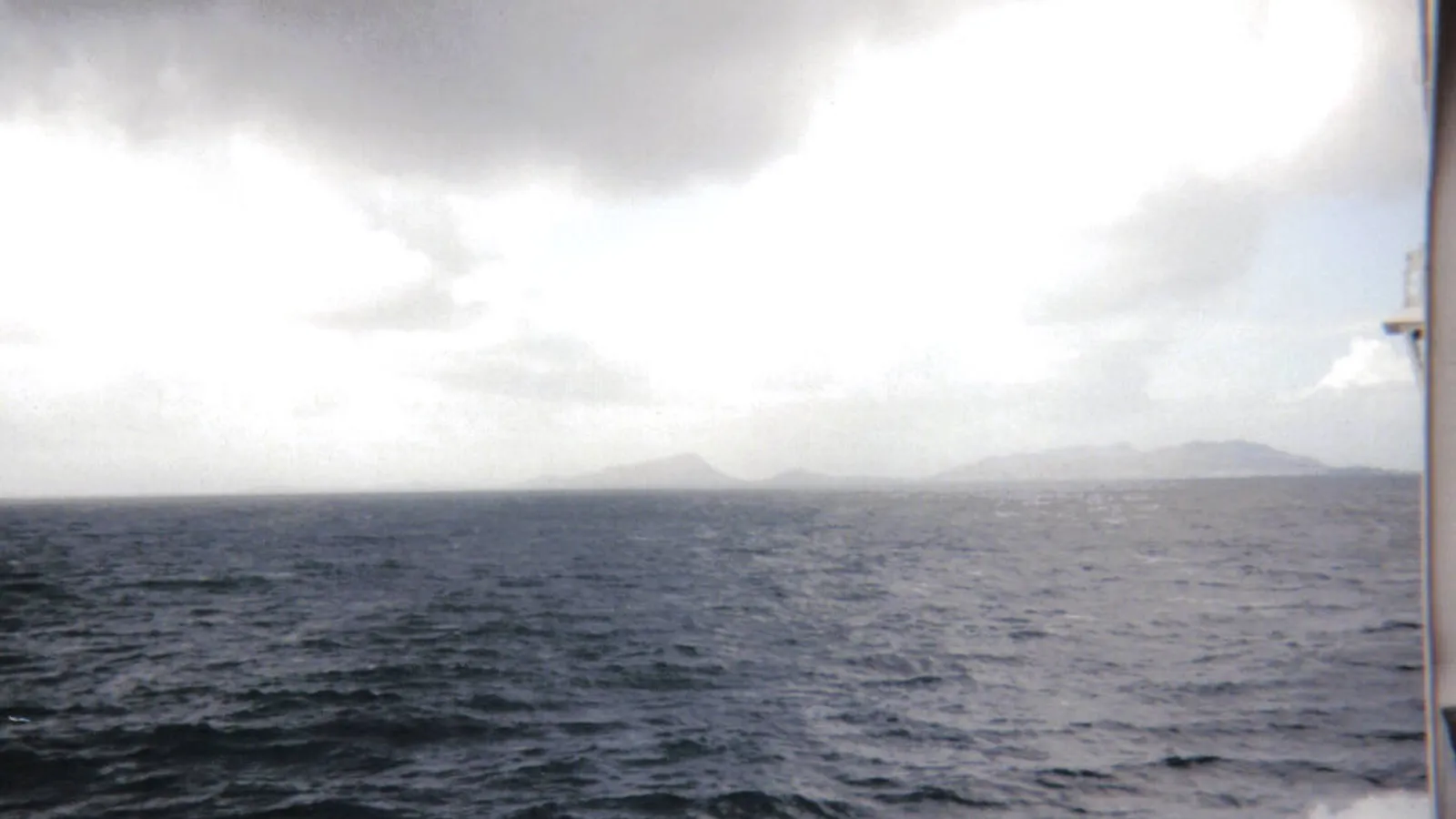

The Blue Men of the Minch
Contents
Legend or Myth?
A persistent misconception treats the Blue Men of the Minch as simply "sea fairies" or a generic Scottish water-spirit, interchangeable with mermaids or kelpies. They are neither. The Blue Men are a strikingly specific tradition: human-sized, blue-skinned beings confined almost uniquely to one stretch of sea — the Minch, between the Outer Hebrides and the Scottish mainland, particularly the waters around the Shiant Isles — who attack ships not by brute force alone but by challenging the skipper to finish a rhyming couplet. Fail the verse, and they try to sink you. This hyper-local geography and the verse-duel motif are what make the Blue Men distinctive, and this card treats the storm-making and verse-challenge lore together as a single tradition, rather than splitting the beings from their storm-lore into separate entries.
TL;DR
- established The Blue Men are attested as a geographically confined tradition specific to the Minch and the Shiant Isles, because folklorist Donald A. Mackenzie explicitly noted in his early 20th-century scholarship that such a narrow range is unusual for a spirit-belief and has no exact parallel elsewhere in Scotland.
- established The verse-challenge motif — a chief Blue Man reciting a rhyming couplet that the ship's skipper must complete correctly to survive — is recorded by name in collections going back to John Gregorson Campbell (1900), because this is one of the few Scottish sea-spirit motifs preserved as direct reported speech/verse rather than summary description.
- disputed The origin of the Blue Men is genuinely contested among folklorists: Mackenzie proposed marooned North African slaves brought by Vikings, historian Malcolm Archibald has floated a Tuareg ("blue men of the desert") connection, others suggest a Pictish or purely symbolic ("personification of the sea") origin — because no single written source settles the question and each theory rests on etymological or comparative argument rather than direct textual proof.
- disputed Whether the Blue Men's chief is properly identified with "Shony," a name associated elsewhere with Hebridean sea-offering customs, is uncertain, because the sources linking the two are later and interpretive rather than part of the original attested verse-challenge accounts.
- established The Blue Men are classed by scholars as a type of "storm kelpie" — a variant within the broader kelpie/water-spirit family rather than a wholly separate category — because this classification is used consistently in the folklore literature describing Hebridean sea-spirits.
Key Facts
- Type of Being/Legend
- Blue-skinned, human-sized storm spirits that challenge sailors in verse
- Region
- The Minch (the strait between the Outer Hebrides and the Scottish mainland), specifically the waters near the Shiant Isles, north of Skye
- First Attested
- Oral tradition recorded in print from around 1900; principal named sources John Gregorson Campbell (1900) and Donald A. Mackenzie, Wonder Tales from Scottish Myth and Legend (1917)
- Category
- Water Beings
- SI Score
- 48/60 (Narrative Reach 8, Depth of Tradition 8, Scottish Distinctiveness 10, Imaginative Force 9, Cultural Afterlife 6, Recognition 7)
- Status Note
- Merged card. This single entry replaces what had been planned as two separate cards — "The Blue Men" and a separate "Storm Lore" card — because the storm-making behaviour is inseparable from the Blue Men's identity in every recorded source; splitting them would have created an artificial duplicate. The storm material is retained in full within this card's text rather than dropped.
A Note on Claims and Evidence
This article draws primarily on two named early sources: John Gregorson Campbell's Superstitions of the Highlands and Islands of Scotland (1900), which records the physical description and the capture narrative, and Donald A. Mackenzie's Wonder Tales from Scottish Myth and Legend (1917) and later synthesis work, which preserves the verse-challenge exchange and proposes the most widely cited (though not proven) historical-origin theory. Later popular folklore writing repeats and elaborates these two accounts; where an origin theory is presented, this article attributes it to its named proponent rather than stating it as settled fact.
Timeline
John Brand, a Church of Scotland minister visiting Shetland, records an account some scholars connect to the wider "blue men" sea-spirit tradition, though the link to the Minch-specific beings is not direct.
John Gregorson Campbell publishes Superstitions of the Highlands and Islands of Scotland, recording the physical description of the Blue Men and the tale of sailors capturing one asleep on the water.
Donald A. Mackenzie publishes Wonder Tales from Scottish Myth and Legend, preserving the verse-challenge exchange between a ship's skipper and the Blue Men's chief, and proposing the "marooned Viking-era North African slaves" origin theory.
Writer Lewis Spence proposes an alternative "personification of the sea" interpretation; the "fallen angels" tradition (linking the Blue Men to fairies and to the Merry Dancers of the aurora as three branches of one fallen host) is also recorded in this period of Hebridean folklore collection.
Mackenzie's "marooned slaves" theory is revisited and discussed again in later scholarship and popular press, keeping the historical-origin debate alive.
The Blue Men remain primarily a folklore-reference and tourism-narrative figure around the Shiant Isles and the Minch, rather than a subject of major film or literary adaptation.
Details
The core tradition
The Blue Men of the Minch are described as roughly human in size and shape but unmistakably blue-skinned, with long grey faces; some accounts add grey arms or blue headgear, and at least one tradition mentions wings. They inhabit the stretch of sea between Lewis/Harris and the Scottish mainland known as the Minch, with their particular haunt the caves near the Shiant Isles — a notoriously treacherous passage nicknamed the "Current of Destruction" for its long record of wrecks. In fair weather the Blue Men are said to sleep or float just beneath the surface; but they can summon storms at will, and in rough weather they rise, swimming with their torsos out of the water, twisting and diving like porpoises, and roaring with laughter as ships founder. One recorded tale even describes sailors spotting a Blue Man asleep on the water and managing to capture and restrain him. On calm, clear nights, tradition holds that they come ashore or to the surface to play shinty among themselves.
The verse-challenge motif
The Blue Men's most distinctive behaviour, and the detail that most clearly separates them from generic "storm spirit" beliefs, is their habit of testing a ship's skipper in verse before attempting to sink his vessel. Their chief surfaces beside the ship and recites two lines of poetry; if the skipper cannot complete the rhyme with two further lines of comparable wit, the Blue Men set about capsizing the boat. Mackenzie's collection preserves an example exchange in which a quick-witted skipper's completed verse defeats the chief outright, and the Blue Men withdraw. In other tellings they instead board the vessel directly and demand tribute, threatening a storm if refused. This oral-duel structure — survival contingent on linguistic skill rather than strength or prayer — is unusual among Scottish sea-spirit beliefs and is one of the chief reasons folklorists treat the Blue Men as a distinctive rather than generic tradition.
Storm lore
Storm-making is not a separate strand of belief bolted onto the Blue Men but central to who they are: they are, in Mackenzie's words, a type of "storm kelpie," and their capacity to raise sudden, violent weather in the Minch is inseparable from the verse-challenge and the shipwreck narratives. This is why this card does not split "the beings" from "the storm lore" into two cards — in every recorded source, the storm is simply what the Blue Men do, not a separate folk-belief about weather that happens to feature them.
Regional confinement and what makes it distinctive
Donald A. Mackenzie observed that the Blue Men's extremely narrow geographic range — essentially one strait and one group of islands — is unusual for a spirit-belief; most Scottish supernatural traditions (the kelpie, the each-uisge, fairy belief generally) are found with local variation across wide areas, whereas no exact counterpart to the Blue Men is recorded elsewhere in Scotland or, as far as the sources establish, anywhere else. Even neighbouring Argyll, much closer culturally and geographically to the Hebrides than to Shetland or Orkney, has no equivalent tradition.
Relationship to neighbouring beings
The Blue Men are explicitly classed in the folklore literature as a type within the broader kelpie/storm-kelpie family, rather than as an unrelated species of being — but they are a highly specialised type, confined to salt water, humanoid rather than equine in form, and defined by the verse-challenge rather than by shapeshifting or seduction, which separates them sharply from the Each-Uisge (the Highland loch water-horse, covered in its own card in this series) and from general kelpie tradition (covered by the dedicated Kelpies & Water Horses card). One strand of tradition also links the Blue Men to the Merry Dancers (the aurora borealis, covered in its own card in this series): both are said in some tellings to be branches of a single "fallen angels" host that split on falling from heaven into land fairies, sea-dwelling Blue Men, and the sky-dancing Merry Dancers. This card notes that connection but does not duplicate the Merry Dancers' own material, which belongs to its dedicated entry.
Scholarly significance
The debate over the Blue Men's origin is a useful case study in how Scottish folklorists have handled geographically confined, unusually specific traditions. Mackenzie's "marooned North African slaves" theory (tied to Viking-era raiding and the Gaelic term fir ghorma, "blue men," used of Moors) and Malcolm Archibald's alternative Tuareg hypothesis both attempt to explain the tradition's unusual blue-skin detail and extreme localisation through real historical contact, while Lewis Spence's "personification of the sea" and the Pictish kayak-silhouette theory treat it as a purely symbolic or misperception-based belief. None of these is proven; what is well attested is the belief itself, recorded independently by multiple named collectors, and its unusually narrow, specific geography.
Did You Know?
- The Blue Men's chief haunt, the waters near the Shiant Isles, is nicknamed the "Current of Destruction" for its long history of shipwrecks.
- Surviving a Blue Men attack could depend on finishing a rhyming couplet correctly — one of the few Scottish sea-spirit beliefs built around a verbal duel rather than brute combat.
- One tale describes sailors finding a Blue Man asleep on the surface of the sea and managing to capture him.
- Folklorist Donald A. Mackenzie noted that the Blue Men's extremely narrow range — essentially one strait — has no real parallel elsewhere in Scottish or world folklore.
- The Gaelic term sometimes used for them, fir ghorma ("blue men"), is also historically used of Moors or North Africans, feeding one scholarly theory about their origin.
- On calm, clear nights the Blue Men were said to come up and play shinty among themselves.
- One tradition links the Blue Men to the Merry Dancers of the aurora borealis as two branches of a single fallen-angel host.
- Even neighbouring Argyll, much closer to the Hebrides than Orkney or Shetland, records no equivalent tradition — the Blue Men really do belong to the Minch alone.
FAQ
1What are the Blue Men of the Minch?
Human-sized, blue-skinned storm spirits said to inhabit the Minch strait between the Outer Hebrides and mainland Scotland, especially around the Shiant Isles.
2Why are they called "storm kelpies"?
Because folklorists classify them as a specialised type within the broader Scottish kelpie/water-spirit family, defined by their power to raise sudden storms.
3What is the verse-challenge they are known for?
Their chief recites two lines of poetry to a ship's skipper; if the skipper cannot complete the rhyme, the Blue Men try to capsize the vessel.
4Where exactly do they live?
Caves near the Shiant Isles, in a particularly dangerous stretch of the Minch nicknamed the "Current of Destruction."
5Who first recorded the Blue Men in writing?
John Gregorson Campbell (1900) and Donald A. Mackenzie (1917) are the key named early sources.
6Where does the "marooned slaves" origin theory come from?
Donald A. Mackenzie proposed it, linking the Gaelic term fir ghorma ("blue men," also used of Moors) to Viking-era raiding and captivity — it is a scholarly theory, not a documented historical event.
7Is this theory confirmed?
No. It remains one of several competing explanations, alongside a Tuareg-connection theory, a Pictish-kayak theory, and a purely symbolic "personification of the sea" theory.
8Are the Blue Men the same as mermaids or selkies?
No. They are distinct from both — human-sized and humanoid, not half-fish or seal-skinned, and defined by storm-making and the verse-duel rather than by shapeshifting into seals or having fish tails.
9Is there a link between the Blue Men and the Northern Lights?
Yes, in one strand of tradition: both the Blue Men and the Merry Dancers (the aurora) are said to be branches of a single fallen-angel host, though this is a secondary motif, not the Blue Men's core identity.
10Why does this card combine "the Blue Men" and "storm lore" into one entry?
Because storm-making is not a separate belief in the sources — it is simply what the Blue Men do. Treating them as two cards would have duplicated the same material.
11Can the Blue Men be found in the whole of the Hebrides?
No — their attested range is unusually narrow, essentially confined to the Minch and the Shiant Isles specifically, not the wider Hebridean archipelago.
12Do the Blue Men appear in modern popular culture?
Not extensively through major film or literary works; they remain chiefly a folklore-reference and local-tourism figure around the Shiant Isles today.
Sources and Further Reading
Primary/Institutional
- John Gregorson Campbell, Superstitions of the Highlands and Islands of Scotland (Glasgow: James MacLehose and Sons, 1900)
- Donald A. Mackenzie, Wonder Tales from Scottish Myth and Legend (1917)
Scholarly/Critical
- Donald A. Mackenzie, later synthesis scholarship on Hebridean sea-spirits (reprinted/discussed 2013)
- Malcolm Archibald, comparative folklore scholarship proposing the Tuareg-connection theory
- Lewis Spence, writing proposing a symbolic "personification of the sea" interpretation
General
- Hebridean mythology and folklore overview material, for general context on Minch sea-spirit belief
- Popular folklore and tourism writing on the Shiant Isles and the Minch
Caveats: Myths and Disputed Claims
The Blue Men's origin is genuinely unresolved, and readers should be cautious of any retelling that presents one explanation — marooned Viking-era captives, a Tuareg connection, a Pictish kayak-silhouette, or a purely symbolic "sea personification" — as established fact; each is a scholarly hypothesis, advanced by a named writer, resting on etymology or comparison rather than direct documentary proof. The identification of the Blue Men's chief with "Shony," a name tied elsewhere to Hebridean sea-offering customs, is a later interpretive link rather than part of the earliest recorded verse-challenge accounts, and should be flagged as such. Finally, the connection between the Blue Men and the Merry Dancers as "branches of one fallen host" is a secondary, decorative motif recorded in some tellings, not the core or universal account of either tradition, and this card does not treat it as more than that.
Card 002 · Folklore