
The Fairy Flag of Dunvegan
Contents
Legend/Myth
Popular retellings often present the Fairy Flag as pure fireside invention — a story clansfolk tell tourists. It isn't. Am Bratach Sìth is a real, physical relic: a fragment of ancient silk that has hung, or lain folded, in Dunvegan Castle for centuries, and whose cloth has been examined by textile historians. The myth is not the flag's existence — it is the claim that fairies wove it.
TL;DR
- established A genuine silk textile fragment, roughly 18 inches square, has been preserved by Clan MacLeod at Dunvegan Castle, Isle of Skye, for at least several centuries — because it survives as a physical object available for inspection, not merely as a story.
- established Textile analysis dates the silk itself to somewhere between the 4th and 7th centuries AD, with an origin likely in the Eastern Mediterranean or Near East (Syria or Rhodes have been proposed) — because weave and fibre analysis of surviving fragments point to an early, non-European manufacture, independent of any legend attached to it.
- disputed How the flag reached Skye is unresolved: candidate theories include a Crusades-era relic (possibly a saint's garment fragment) or an heirloom brought back by the Norse adventurer-king Harald Hardrada — because no documentary chain of ownership survives between the cloth's ancient origin and its first appearance in MacLeod hands.
- disputed The fairy-gift origin stories (a fairy lover, a fairy nursemaid, a defeated "Daughter of Thunder") are first recorded only in relatively late written sources — because, like most Highland fairy lore, they were transmitted orally for generations before being set down by 19th-century antiquarians, so no contemporary medieval account of a fairy encounter exists.
- disputed The claim that the flag turned the tide at the Battle of Trumpan/Waternish and at an earlier "Battle of the Spoiling Dyke" rests on clan tradition rather than independent battle records — because MacLeod clan history and ballad tradition are the primary carriers of these accounts, and they were written generations after the events they describe.
Key Facts
- Type of Being/Legend/Figure
- Clan talisman — relic object with fairy-origin legend
- Region
- Isle of Skye (Dunvegan Castle, Clan MacLeod)
- First Attested
- Textile dated 4th–7th century AD; clan tradition first fully recorded in writing in the 18th–19th centuries
- Category
- Hero Legend / Relic Legend
- SI Score
- 50/60
- Status Note
- Physical artifact: documented. Fairy origin and battle-winning power: traditional/legendary
A Note on Claims and Evidence
The Fairy Flag sits in an unusual evidentiary position: the object is real and physically examinable, which is rare for Highland legend. What is not documented is its early history — where it was made, how it crossed centuries and cultures to reach Dunvegan, and whether it ever flew over a battlefield. We separate the textile (documented, if imperfectly dated) from the stories explaining its powers and origin (oral tradition, recorded centuries after the fact). Clan MacLeod's own custodianship is not in question; the supernatural claims attached to that custodianship are presented here as legend, not history.
Timeline
Silk later known as the Fairy Flag is woven, probably in the Eastern Mediterranean or Near East.
Proposed routes of transmission to Scotland include a Crusader relic or a Norse heirloom via Harald Hardrada; no firm date survives.
The flag is said to have been unfurled to save the MacLeods at the Battle of Glendale/the "Battle of the Spoiling Dyke" against the MacDonalds.
The flag is associated with the Battle of Trumpan on Skye, where MacLeods are said to have defeated a MacDonald raiding party.
The fairy-origin legends are recorded in writing by antiquarians and clan historians, fixing the oral tradition in the form told today.
Dame Flora MacLeod, 28th Chief of Clan MacLeod, is reported to have offered — during the Second World War — to unfurl the flag from the cliffs of Dover to repel invasion, a sign of the legend's continuing cultural force.
The flag, faded, torn, and patched (partly from clansfolk historically snipping keepsakes from it), is preserved and displayed at Dunvegan Castle alongside other MacLeod heirlooms such as the Dunvegan Cup and Sir Rory Mor's Horn.
Details
The object itself
Am Bratach Sìth is a small, worn square of silk — roughly 18 inches (46 cm) a side — now faded to a pale, yellowish-beige. Faint red stitching survives in places, along with the ghost of small crosses and so-called "elf dots," decorative marks largely lost to deterioration and handling. It is not a battle standard in the heraldic sense of a large banner; it is closer to a relic-cloth, kept folded or framed rather than flown. Centuries of veneration have, ironically, damaged it: tradition holds that clan members once cut small pieces from the flag as keepsakes, accelerating the wear visible today.
Where the silk came from
Textile experts who have examined the Fairy Flag place its manufacture in late antiquity, broadly the 4th to 7th centuries AD, with a likely origin somewhere in the Eastern Mediterranean or Near East — candidates floated include Syria and Rhodes. This dating is one of the more remarkable features of the whole legend: whatever the fairy stories claim, the cloth really is extraordinarily old, and really did travel an immense distance to reach a castle on Skye.
How it made that journey is unknown. Two rival, non-supernatural theories compete with the fairy legends themselves. The first ties the flag to the Crusades: a MacLeod warrior, in this telling, might have acquired it in the Holy Land — possibly even a fragment of a saint's garment — centuries before the formal Crusading era, as a battlefield relic or diplomatic gift. The second looks north and east rather than south: it proposes that the 11th-century Norse king and sometime Byzantine mercenary Harald Hardrada, who served in the Varangian Guard at Constantinople, could have obtained Eastern silk during his travels, which then passed by inheritance or gift into the hands of the Norse-descended MacLeods. Neither theory has documentary proof; both are consistent with the silk's dating and the MacLeods' documented Norse ancestry through the Lordship of the Isles.
The fairy-origin legends
Clan tradition offers at least three variant stories of how the flag came to the MacLeods, and all involve the sìthichean — the fairies.
In the most often-told version, a MacLeod chief fell in love with, or married, a fairy woman. When the match could not endure — fairy brides in Highland tradition are rarely permitted to stay among mortals — she left him, but gave him the flag at their parting as a token, with the promise that it could be unfurled in the clan's direst need to summon supernatural aid.
A second version softens the romance into a nursemaid's kindness: an infant MacLeod heir, crying inconsolably, is comforted by a fairy woman who wraps him in the cloth; when she vanishes, the flag remains, imbued with her protective magic.
A third, darker variant ties the relic to the defeat of a hostile supernatural being sometimes called the "Daughter of Thunder," won by a MacLeod warrior on a quest — a story that borrows the shape of wider Gaelic hero-tales of combat with otherworldly foes.
Common to every version is the flag's rule of use: it may be unfurled only three times to invoke its power, after which it will either lose its magic or vanish back to the fairy realm entirely. Clan tradition holds that it has already been used twice — leaving, by the story's own logic, one invocation still in reserve.
Battles and later uses
Two clan battles are traditionally credited to the flag's intervention. In the first — variously dated to the late 15th or early 16th century and sometimes called the Battle of the Spoiling Dyke — the MacLeods, badly outnumbered by a MacDonald force, are said to have turned near-certain defeat into victory the moment the flag was unfurled; so many MacDonalds reportedly fell that the dead had to be buried beneath a collapsed dyke, giving the battle its name. In the second, associated with the Battle of Trumpan on Skye (traditionally 1580), the flag is again credited with rallying the MacLeods against a MacDonald raid.
Beyond battle, the flag has also been credited in clan lore with ending a cattle plague when waved over an ailing herd — a role closer to protective talisman than to weapon.
The legend's emotional pull endured into living memory. Dame Flora MacLeod, 28th Chief of Clan MacLeod, is reported to have offered, during the Second World War, to fly to the cliffs of Dover and unfurl the flag to repel a German invasion — a gesture less about literal belief in fairy magic than about the flag's symbolic weight as a guarantee of the clan's survival. A later, more whimsical thread of the tradition holds that some MacLeod airmen carried images of the flag as a personal talisman during the war.
Relationship to neighbouring cards
This card covers Am Bratach Sìth specifically, as a MacLeod clan relic and its attendant fairy legend. It should not be conflated with Scotland's broader fairy-lore cards covering the sìthichean generally, nor with other clan relic-objects elsewhere in the series; where those cards exist, this one treats only the Dunvegan flag and its documented physical and legendary history.
Did You Know?
- The Fairy Flag is one of the very few Highland fairy relics that survives as a physical, examinable object rather than only as a story.
- Textile dating places the silk's weaving centuries before the Highland clan system that would eventually treasure it — the cloth may be older than Scotland's medieval kingdom itself.
- Tradition says the flag can only be unfurled three times, and that two uses have already been spent.
- Clansfolk historically cut small pieces from the flag as keepsakes, which is part of why so little of the original textile survives intact today.
- The flag is kept alongside two other famous MacLeod heirlooms at Dunvegan: the Dunvegan Cup and Sir Rory Mor's Horn.
- One candidate theory for the silk's journey to Skye involves Harald Hardrada, the Norse king who served as a mercenary in the Byzantine emperor's Varangian Guard before his death at the Battle of Stamford Bridge in 1066.
- Dame Flora MacLeod's reported Second World War offer to unfurl the flag at Dover shows the legend still carried real symbolic force in the 20th century.
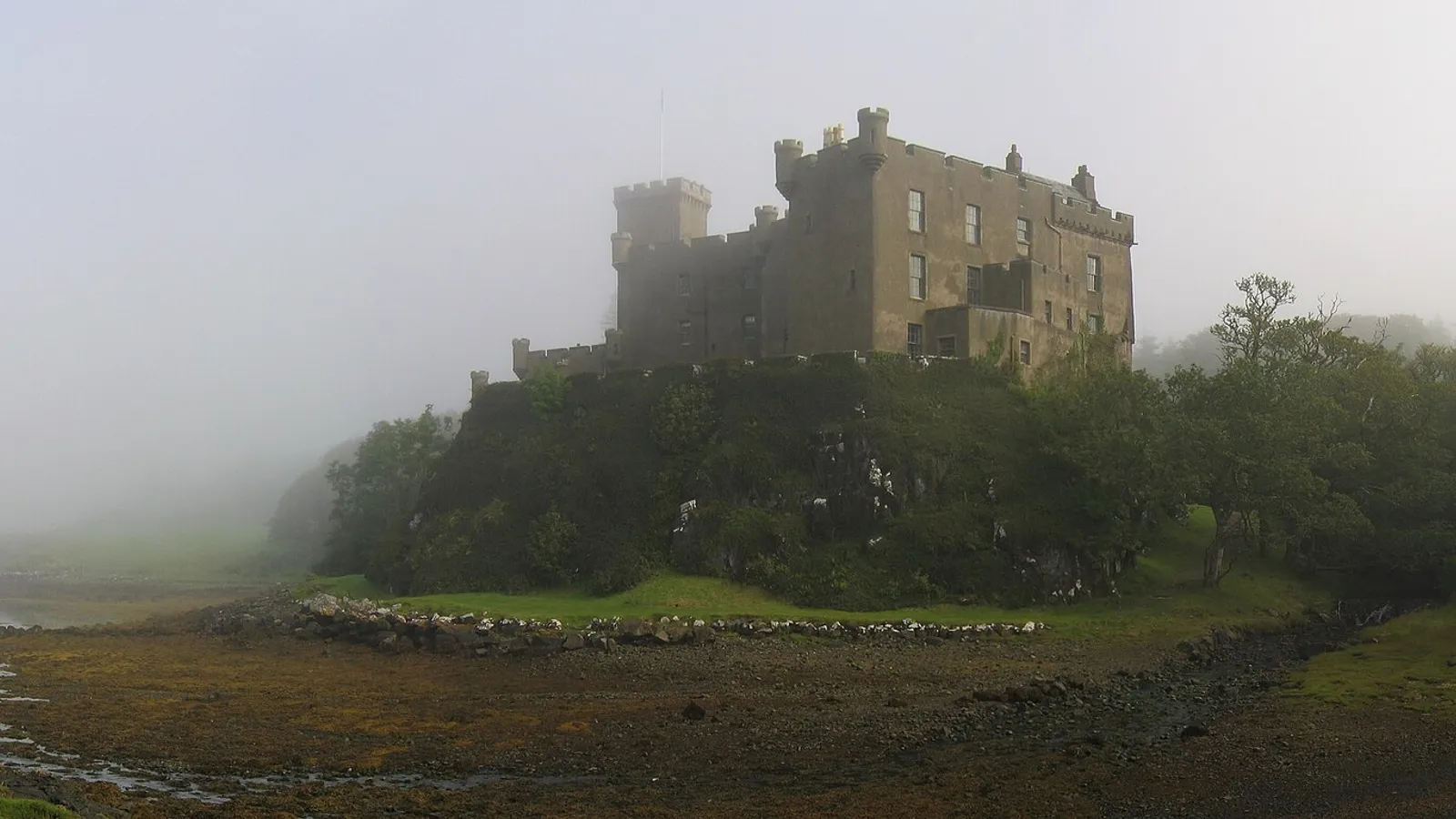
- Dunvegan Castle, where the flag is kept, is often cited as the oldest continuously inhabited castle in Scotland, home to the same clan for close to 800 years.
FAQ
1Is the Fairy Flag a real object, or just a story?
It is a real object: a small, aged silk textile preserved at Dunvegan Castle. The "fairy" part refers to the legendary explanation for its origin and powers, not to the cloth's physical existence.
2How old is the flag, really?
Textile analysis suggests the silk was woven somewhere between the 4th and 7th centuries AD — genuinely ancient, though that dating tells us about the cloth's manufacture, not when or how it reached the MacLeods.
3Did fairies actually give the flag to a MacLeod chief?
There is no independent evidence for a fairy encounter; this is oral legend, recorded in writing only in relatively modern times. What can be said is that the MacLeods have treated the flag as a sacred, protective talisman for a very long time.
4Where did the silk actually come from?
Most likely the Eastern Mediterranean or Near East, based on its weave and material. How it travelled to Skye is unresolved — leading theories point to either a Crusades-era relic or a Norse heirloom tied to Harald Hardrada.
5Was the flag really used to win battles?
Clan tradition credits it with victories at the Battle of Trumpan and an earlier clash sometimes called the Battle of the Spoiling Dyke, but these accounts come from MacLeod clan history and tradition rather than independent contemporary battle records.
6How many times can the flag be used?
Legend limits it to three uses, after which its power is said to end. Tradition holds two have already occurred.
7Why does the flag look so damaged?
Centuries of handling and, reportedly, clansfolk snipping small pieces off as personal keepsakes have left it torn, patched, and faded.
8Is this the same as the Stone of Scone or other Scottish relics?
No — it is a distinct MacLeod clan relic, unconnected to the Stone of Destiny or other national regalia.
9Can visitors see the flag today?
Yes, it is on display at Dunvegan Castle on Skye, Clan MacLeod's seat, alongside other historic clan heirlooms.
10Did the flag really almost get used in World War II?
According to tradition, Dame Flora MacLeod offered to unfurl it at Dover to help repel a feared German invasion — a story that illustrates the flag's enduring symbolic power rather than a documented military plan.
11Is the "Daughter of Thunder" story the main version of the legend?
No — it is one of at least three competing fairy-origin stories told about the flag; the fairy-lover and fairy-nursemaid versions are at least as commonly told.
12Are there other "fairy flag" legends in Scotland?
Fairy gifts and fairy tokens are a common motif across Highland folklore, but the Dunvegan flag is the most famous surviving physical example tied to a specific clan.
Sources and Further Reading
Primary/Institutional
- Clan MacLeod and Dunvegan Castle's own published visitor and heritage materials on the Fairy Flag and other clan heirlooms.
Scholarly/Critical
- Textile and folklore scholarship on the dating and probable Near Eastern/Eastern Mediterranean origin of the Dunvegan silk, and on comparable "fairy gift" motifs in Gaelic tradition.
General
- Popular Scottish heritage and folklore writing on the Fairy Flag, its battle legends, and the Dame Flora MacLeod wartime anecdote, as collected in general-audience accounts of Dunvegan Castle and Clan MacLeod history.
Caveats: Myths and Disputed Claims
The flag's physical existence, approximate silk dating, and MacLeod custodianship are the only elements here resting on examinable evidence. Its route to Scotland, the fairy-encounter stories, the "three uses" rule, and the specific battle interventions are all oral tradition first fixed in writing well after the events they describe, and should not be presented as documented history. The Dame Flora MacLeod/Dover anecdote, while often repeated, is also a later tradition rather than a verified wartime record.
Card 032 · Folklore