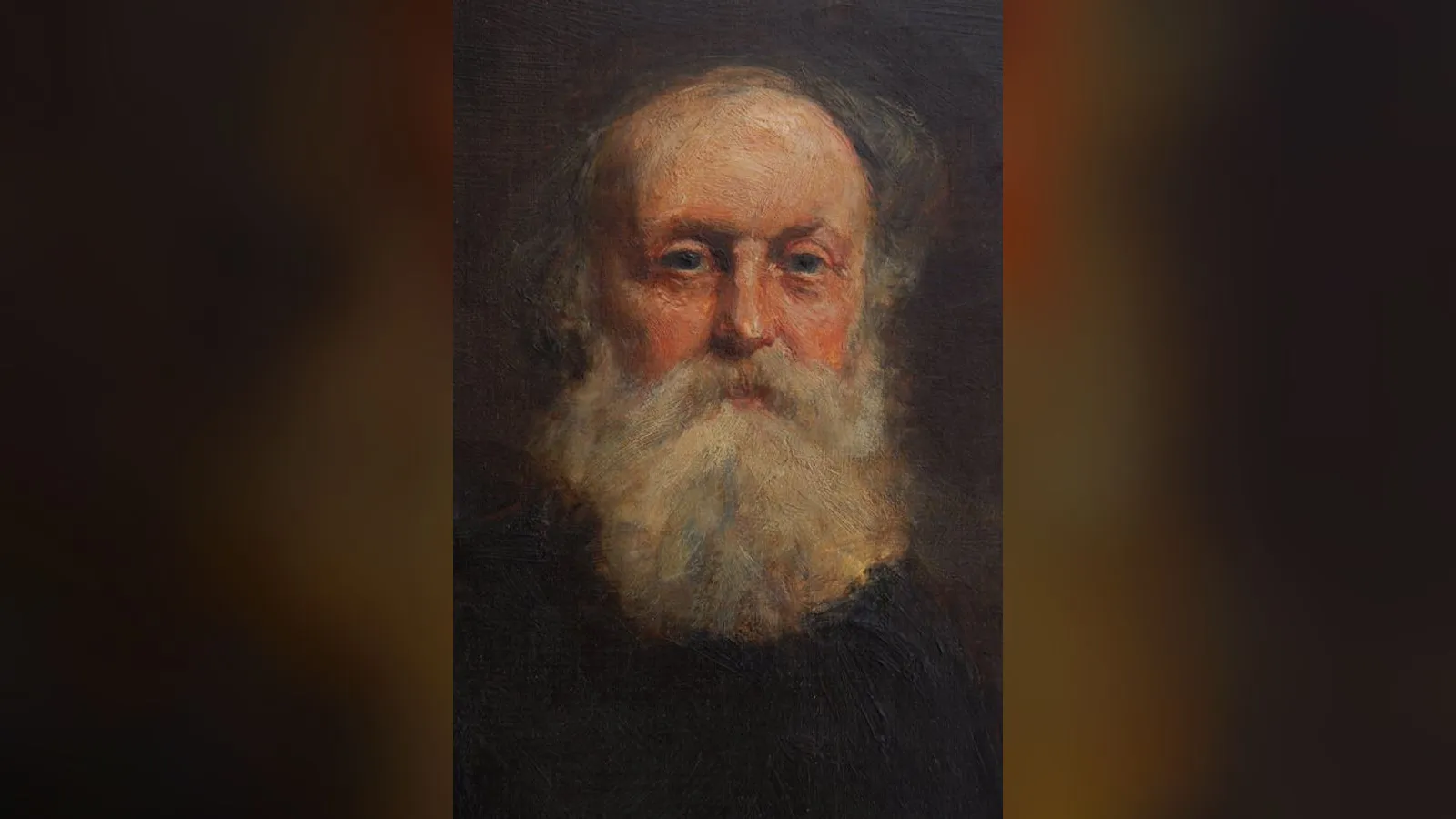

Alexander Carmichael (1832–1912)
Contents
TL;DR
- established Born on the Isle of Lismore and employed for most of his career as a Highland excise officer, Carmichael used the extensive travel his job required to spend roughly five decades collecting Gaelic oral folklore — charms, prayers, songs, and blended Christian and pre-Christian traditions — chiefly from Catholic communities in the southern Outer Hebrides, above all South Uist.
- established His life's work, Carmina Gadelica, was published in six volumes between 1900 and 1971 (the first two appearing in his lifetime, the rest compiled and published posthumously by his daughter, grandson, and later scholars) and remains the single most significant printed collection of Scottish Gaelic oral spiritual tradition.
- disputed Scholarly analysis of Carmichael's original field notebooks, beginning seriously with Hamish Robertson's 1976 study, found that he substantially reworked, polished, and in places altered much of the oral material he collected before publication — a genuine and significant scholarly controversy this article presents directly, consistent with house style's commitment to accuracy over an uncomplicated preservation narrative.
- Shared/Traditional. Leading Gaelic scholar John Lorne Campbell, while defending Carmichael's broader achievement, conceded that much of the first three volumes "must be taken as a literary and not as a literal presentation of Gaelic folklore" — a formulation this article treats as the closest thing to scholarly consensus on the material's status.
- established Carmichael also contributed written ethnographic testimony to the 1883 Napier Commission on crofting conditions, using Gaelic cultural material to argue for the sophistication and dignity of Highland communities at a time of widespread anti-Gaelic prejudice — a context this article presents as directly relevant to understanding his editorial choices, without using it to resolve the authenticity debate in his favour.
Key Facts
- Born
- Alasdair Gilleasbaig MacGilleMhìcheil, 1 December 1832, Taylochan, Isle of Lismore
- Died
- 6 June 1912, Barnton, Edinburgh
- Known for
- Carmina Gadelica (1900–1971), Scottish Gaelic folklore collection
- Career
- Scottish exciseman (tax collector)
- Key fieldwork area
- South Uist and the southern Outer Hebrides, 1864–1882
- Other works
- Popular Tales of the West Highlands contribution (1862); Napier Commission testimony (1883)
- Key scholarly critic
- Hamish Robertson, Scottish Gaelic Studies (1976)
Scottish Impact Index (SI Score)
- Global Influence
- 3/10
- Enduring Relevance
- 6/10
- Material Contribution
- 1/10
- Exceptional Achievement
- 5/10
- Lasting Legacy
- 4/10
- Recognition
- 1/10
20/60
Ranked =175th of 200 in Great Scots
A Note on Claims and Evidence
Carmichael's biography and the publication history of Carmina Gadelica are well documented and treated as Established. The question of how faithfully Carmichael's published texts reflect the oral material he originally recorded is a genuine, substantial scholarly controversy, examined directly by scholars including Hamish Robertson, John Lorne Campbell, and John MacInnes using Carmichael's own surviving field notebooks; this article tiers that question as Disputed and presents the range of serious scholarly positions rather than a single settled verdict.
Timeline
Born on the Isle of Lismore.
Joins the Scottish Excise service; repeatedly declines promotions that would have reduced his contact with Gaelic-speaking communities.
Begins collecting Highland folklore, local traditions, and oral material.
Contributes material to Popular Tales of the West Highlands.
Lives and works in South Uist and the southern Outer Hebrides, his most productive fieldwork period.
Submits written ethnographic testimony to the Napier Commission on crofting conditions, including traditional Gaelic rhymes and blessings.
Publishes the first two volumes of Carmina Gadelica in a limited edition of 300 copies, after rejection by Clarendon Press and a Glasgow publisher.
Publishes Deirdire and the Lay of the Children of Uisne.
Dies in Barnton, Edinburgh.
His daughter, Ella Carmichael, re-edits and republishes the first volumes.
His grandson, James Carmichael Watson, edits and publishes volumes III and IV.
Professor Angus Matheson produces volume V and co-edits volume VI.
Hamish Robertson publishes a scholarly article in Scottish Gaelic Studies presenting the first serious documented critique of Carmichael's editorial methods.
A one-volume English translation is published, with a preface by John MacInnes addressing the editorial controversy.
A complete reprint of all six volumes is published.
Details
A Highland excise officer with unusual access
Carmichael was born on Lismore in 1832 and spent his working life as a Scottish exciseman — a tax collector whose official travel duties took him extensively through Highland and island communities. He deliberately used this position to his scholarly advantage, declining multiple promotions that would have moved him away from Gaelic-speaking areas, and this article presents that career choice as a genuine, deliberate prioritisation of his collecting work over professional advancement. His most productive period came between 1864 and 1882, when he lived and raised his family in South Uist, whose Catholic communities had retained oral traditions — charms, prayers, and songs blending pre-Christian and Christian elements — that Protestant northern regions had, by that point, largely abandoned or suppressed as superstition.
Decades of collecting, and a landmark publication
Over roughly five decades, Carmichael assembled an immense body of Highland oral material, antiquarian notes, and natural history observations. His magnum opus, Carmina Gadelica ("The Hymns of the Gael"), was eventually published in six volumes between 1900 and 1971; only the first two appeared during his lifetime, after his initial proposal was rejected by Clarendon Press and a Glasgow publisher before being taken up by Walter Biggar Blaikie. The remaining volumes were compiled and published posthumously by his daughter Ella, his grandson James Carmichael Watson, and later scholars including Angus Matheson. Gaelic scholar Ronald Black has described the finished work as "a treasure house ... a marvellous and unrepeatable achievement," reflecting its enduring status as the single most significant printed collection of Scottish Gaelic oral spiritual tradition.
A genuine and substantial scholarly controversy
This article treats directly, rather than glossing over, a significant and well-documented controversy regarding how faithfully Carmichael's published texts represent the oral material he actually recorded. Serious scholarly scrutiny began with Hamish Robertson's 1976 article in Scottish Gaelic Studies, which examined Carmichael's surviving manuscript field notebooks and concluded that he had substantially reworked much of his material before publication, finding that "hardly one had not been touched up in some way, sometimes quite drastically." This was not a minor technical quibble: it represented a direct challenge to the assumption that Carmina Gadelica offered a literal, unmediated transcription of genuine oral tradition. Gaelic scholar John Lorne Campbell initially responded defensively to this critique but ultimately made a significant concession of his own, acknowledging that "much of the first three volumes of the Carmina must be taken as a literary and not as a literal presentation of Gaelic folklore" — language this article adopts as representing the most balanced available scholarly characterisation of the material's actual status, between the extremes of wholesale fabrication and exact transcription.
A balanced modern assessment
More recent scholarship, aided by the digitisation of Carmichael's original field notebooks through the Carmichael Watson Project, has allowed for closer evaluation of his editorial interventions. Dr John MacInnes, writing in a 1992 preface, offered an assessment this article treats as the most defensible current position: that Carmina Gadelica is "not a monumental exercise in literary fabrication nor, on the other hand, ... a transcript of ancient poems and spells reproduced exactly in the form in which they survived in oral tradition." This article presents Carmichael's editorial choices within their genuine historical context — a period of widespread anti-Gaelic prejudice in which he was, in part, consciously working to demonstrate the cultural sophistication and dignity of Highland oral tradition, including through his 1883 testimony to the Napier Commission on crofting conditions — without allowing that context to resolve the underlying authenticity question in his favour; the material remains invaluable as a record of nineteenth-century Gaelic culture, but not as an unmediated, literal transcript of it.
Did You Know?
- Carmichael repeatedly declined career promotions specifically to remain in postings that gave him access to Gaelic-speaking communities.
- His most productive collecting period came while based in South Uist, whose Catholic communities had preserved traditions that Protestant areas further north had largely abandoned.
- The first two volumes of Carmina Gadelica were rejected by two publishers before finally appearing in a limited 1900 edition of just 300 copies.
- Four of the six volumes of Carmina Gadelica were published after Carmichael's death, compiled by his daughter, grandson, and later scholars.
- A 1976 scholarly study of his original notebooks found that nearly all of his published material had been reworked to some degree, sometimes drastically.
- Even his defenders among Gaelic scholars have conceded that much of the collection should be read as literary rather than literal transcription.
- He also contributed ethnographic testimony to the 1883 Napier Commission investigating Highland crofting conditions.
- His original field notebooks have since been digitised, allowing modern scholars to directly compare his published texts against his source material.
FAQ
1What is Alexander Carmichael best known for?
Compiling Carmina Gadelica, the most significant printed collection of Scottish Gaelic oral spiritual tradition, published in six volumes between 1900 and 1971.
2What was his day job?
A Scottish exciseman (tax collector), a role whose travel requirements gave him access to the Gaelic-speaking communities he studied.
3Is Carmina Gadelica a literal transcription of oral tradition?
No — scholarly analysis of his original notebooks has found that Carmichael substantially reworked much of the material before publication; even sympathetic scholars describe parts of it as literary rather than literal.
4Who exposed this editorial reworking?
Scholar Hamish Robertson, in a 1976 article examining Carmichael's original field notebooks.
5Did Carmichael complete the full six-volume work himself?
No — only the first two volumes were published in his lifetime; the remaining four were compiled and published posthumously by his daughter, grandson, and later scholars.
6Did he do other notable work?
Yes — he submitted written ethnographic testimony to the 1883 Napier Commission on Highland crofting conditions.
7Where was he born and where did he die?
Born on the Isle of Lismore in 1832; died in Barnton, Edinburgh, in 1912.
8Is the collection still considered valuable despite the controversy?
Yes — scholars regard it as invaluable evidence of nineteenth-century Gaelic culture, provided it is read as a literary presentation rather than an unmediated transcript.
Sources and Further Reading
Caveats: Myths and Disputed Claims
- disputed Carmina Gadelica is sometimes presented uncritically as a faithful, word-for-word transcription of genuine Gaelic oral tradition. This article states directly, following Hamish Robertson's 1976 scholarship and subsequent scholarly discussion including John Lorne Campbell's own concession, that Carmichael substantially reworked much of his material, and that the collection is now generally regarded by scholars as a literary rather than strictly literal presentation of the oral tradition he recorded.
- Context, not excuse: Carmichael's editorial choices are sometimes explained by reference to the anti-Gaelic prejudice of his era and his wish to demonstrate Highland cultural sophistication. This article presents that context as genuinely relevant to understanding his motives, without treating it as resolving the separate scholarly question of the material's documentary reliability.
Card 168 · Great Scots