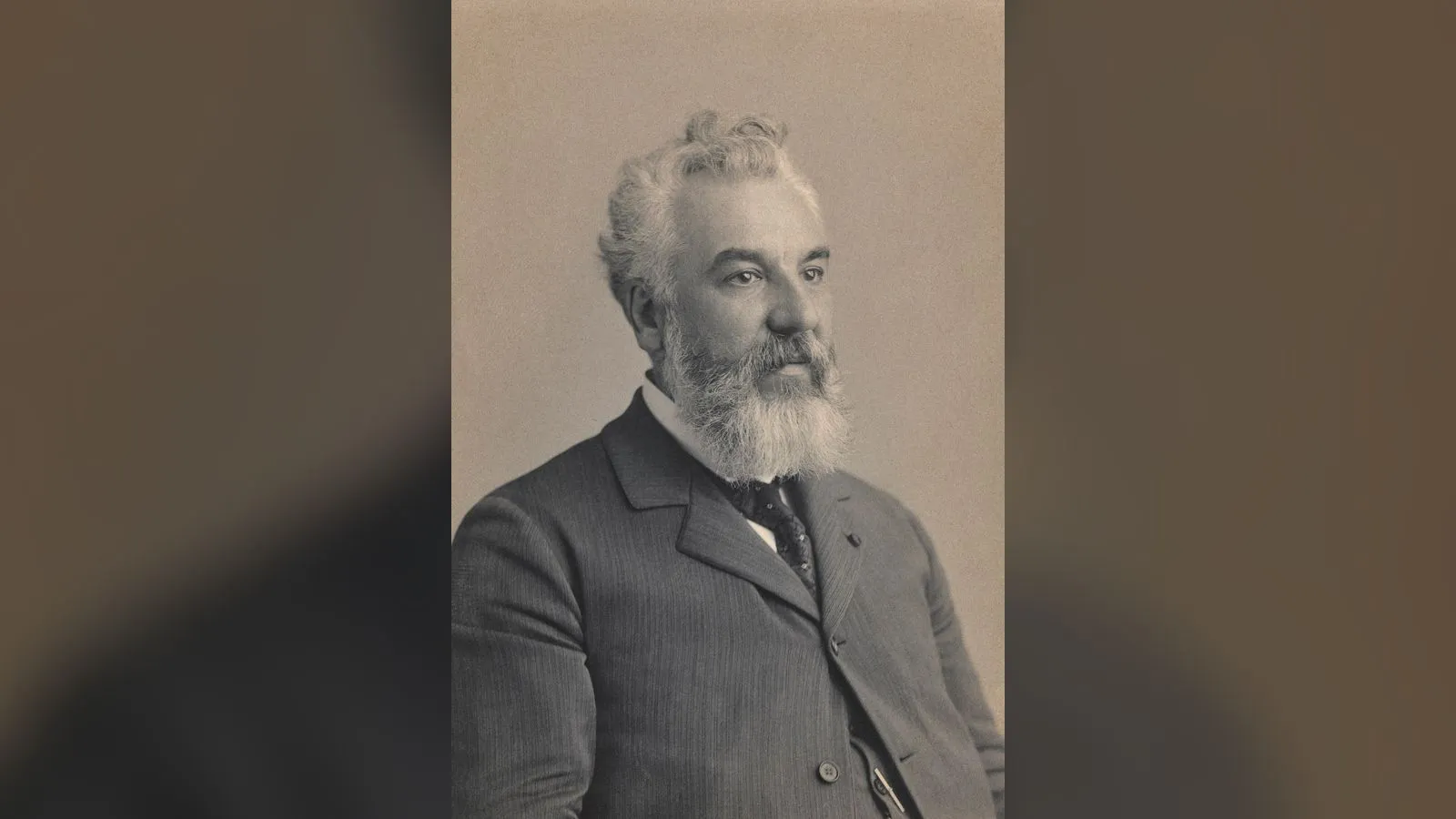

Alexander Graham Bell (1847–1922)
Contents
TL;DR
- established Born in Edinburgh, Bell is credited as the inventor of the telephone, receiving U.S. Patent No. 174,465 on 7 March 1876 and making the first successful voice transmission days later — "Mr. Watson—come here—I want to see you" — to his assistant Thomas Watson.
- disputed Bell's patent priority over rival inventor Elisha Gray, who filed a competing patent caveat on the very same day, has been genuinely contested by historians for over a century; courts consistently ruled in Bell's favour and this article treats him as the telephone's rightful patent holder, but serious, unresolved questions persist about whether Bell's lawyers improperly accessed details of Gray's filing — a controversy this article does not paper over.
- established Deeply shaped by his mother's and his wife's deafness, Bell devoted much of his career to deaf education, but became a controversial figure within the Deaf community for his strong advocacy of oralism (teaching speech and lip-reading) and his active opposition to sign language as deaf children's primary means of communication — a stance many Deaf advocates have long criticised as having caused lasting harm to Deaf culture and education.
- established Bell chaired the Eugenics Records Office's Board of Scientific Directors from 1910 and conducted research linking hereditary deafness to intermarriage between deaf people, a body of work this article treats directly as part of the eugenics movement, while also noting, accurately, that Bell explicitly opposed compulsory marriage-restriction laws and never advocated sterilisation in his own writings — a genuine, documented complexity rather than a simple villain-or-hero story.
- established Beyond the telephone, Bell made substantial further contributions across acoustics, aeronautics, and marine engineering, including the photophone — which he personally considered his greatest invention — and a hydrofoil watercraft that set a world water-speed record in 1919.
Key Facts
- Born
- 3 March 1847, Edinburgh, Scotland
- Died
- 2 August 1922, Beinn Bhreagh, Nova Scotia, Canada, aged 75
- Known for
- Invention of the telephone (1876)
- Education
- University of Edinburgh; University College London (did not complete degree)
- Spouse
- Mabel Hubbard (m. 1877), a former deaf pupil
- Other roles
- Second president of the National Geographic Society (1898–1903)
Scottish Impact Index (SI Score)
- Global Influence
- 10/10
- Enduring Relevance
- 10/10
- Material Contribution
- 10/10
- Exceptional Achievement
- 9/10
- Lasting Legacy
- 10/10
- Recognition
- 9/10
58/60
Ranked =3rd of 200 in Great Scots
A Note on Claims and Evidence
Bell's biography, telephone patent, and his wide range of later inventions are extensively documented and treated as Established. The Bell–Gray patent priority controversy is treated as genuinely Disputed: courts repeatedly found in Bell's favour over 587 legal challenges, but credible historical scholarship continues to raise serious, unresolved questions about the circumstances of his patent filing. His deaf-education advocacy and eugenics-era research are Established from his own extensive published writings and institutional roles, and are reported here with the documented nuance that he opposed coercive marriage and sterilisation laws even as he chaired a central eugenics-movement scientific body — a complexity this article preserves rather than resolves into a simpler narrative.
Timeline
Born in Edinburgh, Scotland, to Alexander Melville Bell, a renowned phonetician, and Eliza Grace Symonds, who was progressively deaf.
Emigrates with his family to Canada after his two brothers die of tuberculosis.
Moves to Boston to teach at a school for the deaf.
Opens his own "School of Vocal Physiology and Mechanics of Speech" in Boston; his pupils later include Helen Keller.
Receives U.S. Patent No. 174,465 for the telephone.
Achieves the first successful intelligible voice transmission, to assistant Thomas Watson.
Co-founds the Bell Telephone Company; marries Mabel Hubbard, a former deaf pupil and daughter of his financial backer.
Develops the photophone with Charles Sumner Tainter, transmitting speech on a beam of light — an invention he later called greater than the telephone.
Presents research to the National Academy of Sciences on patterns of hereditary deafness.
Establishes the American Association for the Promotion of the Teaching of Speech to the Deaf.
Serves as second president of the National Geographic Society, transforming the publication's visual format.
Becomes chairman of the Eugenics Records Office's Board of Scientific Directors.
His hydrofoil watercraft sets a world water-speed record of 70.86 mph.
Dies at his Nova Scotia estate, Beinn Bhreagh, aged 75, from complications of diabetes.
Details
A family built around speech and deafness
Bell was born in Edinburgh into a family deeply immersed in the science of speech: his father, Alexander Melville Bell, was a leading phonetician and developer of "Visible Speech," a notation system for representing spoken sounds visually, while his own mother, Eliza, was progressively deaf — a formative personal circumstance that shaped his lifelong interest in acoustics and deaf communication. He studied at the University of Edinburgh and University College London without completing a degree, and the family emigrated to Canada in 1870 after Bell's two brothers died of tuberculosis, a loss that significantly accelerated his own path into independent teaching and research.
From teaching the deaf to inventing the telephone
Bell built his early career as an educator of deaf pupils, first in Boston and then at his own school, where his students later included Helen Keller, who praised his dedication to breaking through what she called "inhuman silence." His acoustic research, conducted alongside this teaching career and with financial backing from Gardiner Greene Hubbard and Thomas Sanders, culminated in his telephone patent in March 1876 and, days later, the first successful transmission of intelligible speech to his assistant, Thomas Watson. The Bell Telephone Company, founded in 1877, grew rapidly, and Bell and his investors became substantially wealthy as the technology spread; by 1886, over 150,000 Americans owned telephones.
A genuinely contested patent
Bell's claim to sole credit for the telephone has never been entirely free of controversy, and this article does not present it as settled beyond question. Rival inventor Elisha Gray filed a competing patent caveat on the very same day as Bell's application, 14 February 1876, and later historical analysis has shown that the popular account of Bell simply beating Gray to the patent office by hours is an oversimplification — the actual sequence of filings and fee recordings that day has been disputed by historians for well over a century. More seriously, a patent examiner later gave a sworn 1886 affidavit alleging he had improperly shown Bell's lawyers details from Gray's caveat in exchange for payment, though this affidavit's credibility was itself later undermined by the examiner's own conflicting statements and personal circumstances. Courts consistently ruled in Bell's favour across 587 legal challenges to his patent, and this article treats him as the telephone's legitimate inventor on that basis — he had documented experimentation with the relevant liquid-transmitter principles dating back years before Gray's filing — but it also states plainly that credible historians continue to raise genuine, unresolved questions about whether Bell's legal team benefited from improperly obtained knowledge of Gray's work.
A controversial legacy in deaf education
Bell's personal connection to deafness — through both his mother and, from 1877, his wife Mabel, who had been deafened by scarlet fever in childhood — drove a lifelong commitment to deaf education that proved genuinely divisive within the Deaf community, both in his own time and since. He was a committed and vocal advocate of oralism, the teaching of speech and lip-reading to deaf children, and he actively opposed the use of sign language as deaf children's primary means of communication, believing oral methods would better enable their integration into the hearing world. This article states plainly that many Deaf advocates and historians have since identified Bell's influence as having caused real and lasting harm to Deaf culture and sign-language education, suppressing a communication method many in the Deaf community regard as both effective and central to Deaf identity — a serious criticism this article does not minimise simply because Bell's own stated intentions were framed as benevolent.
Eugenics: a documented and genuinely complicated record
Bell's research into hereditary deafness, including a widely cited 1883 paper examining intermarriage between deaf individuals, drew him into the emerging eugenics movement, and in 1910 he became chairman of the Eugenics Records Office's Board of Scientific Directors — a central institutional role within the American eugenics movement of the period, which this article reports directly rather than omitting. At the same time, an honest account of this record requires noting a genuine and documented nuance: Bell explicitly opposed government-enforced restrictions on marriage and is not known to have advocated for sterilisation policies in his own writings, setting him apart from some of the more coercive eugenicist positions common among his contemporaries in the same institutional circles. This article presents both halves of this record together, consistent with its commitment to accuracy over a simplified verdict in either direction.
Beyond the telephone
Bell's inventive range extended well past the device that made him famous. He regarded the photophone, developed with Charles Sumner Tainter in 1880 and capable of transmitting voice on a beam of light, as his greatest invention — a genuine conceptual forerunner of modern fibre-optic communication, decades ahead of its practical application. He also contributed significant work in aeronautics through the Aerial Experiment Association, developed an early metal detector, improved phonograph recording technology, and built a hydrofoil watercraft that set a world water-speed record of 70.86 mph in 1919. He served as the National Geographic Society's second president from 1898 to 1903, substantially reshaping the publication's visual, photography-driven format still recognisable today.
Death and legacy
Bell died at his Nova Scotia estate, Beinn Bhreagh, in August 1922, aged 75, from complications of diabetes; his wife Mabel's final words to him, "don't leave me," were met with his signed reply, "no," before he lost consciousness. In a widely reported tribute, every telephone on the North American continent was silenced during his funeral in his honour. He remains one of history's most consequential inventors, commemorated in the unit of sound measurement named for him, the decibel, and consistently ranked among the greatest figures in British, Canadian, and American history alike — a legacy this article presents in full, including the genuine controversies that accompany it.
Did You Know?
- Bell's first successful telephone call to his assistant, "Mr. Watson—come here—I want to see you," was reportedly prompted by Bell spilling acid on himself.
- He personally considered the photophone, which transmitted voice on a beam of light in 1880, a greater invention than the telephone itself.
- His hydrofoil watercraft set a world water-speed record of 70.86 mph in 1919.
- He adopted the middle name "Graham" at age eleven in honour of a family friend.
- He wrote for National Geographic under the pseudonym "H. A. Largelamb" — an anagram of his own name.
- His wife, Mabel, was a former pupil of his who had been deafened by scarlet fever as a child.
- He chaired the Eugenics Records Office's scientific board from 1910, while also explicitly opposing compulsory marriage-restriction laws.
- The patent examiner who handled his telephone application was later accused, in a disputed 1886 affidavit, of having improperly shown Bell's lawyers a rival inventor's filing.
FAQ
1Did Alexander Graham Bell really invent the telephone first?
Courts consistently ruled in his favour, and he holds the patent, but rival inventor Elisha Gray filed a competing claim the same day, and historians continue to debate whether Bell's legal team benefited from improperly obtained knowledge of Gray's work.
2Why is Bell controversial in the Deaf community?
He was a strong advocate of oralism (speech and lip-reading) and actively opposed sign language as deaf children's primary communication method, a stance many Deaf advocates say caused lasting harm to Deaf education and culture.
3Was Alexander Graham Bell involved in eugenics?
Yes — he chaired the Eugenics Records Office's Board of Scientific Directors from 1910, though he also explicitly opposed compulsory marriage-restriction laws and is not known to have advocated sterilisation.
4What did Bell consider his greatest invention?
The photophone, developed in 1880, which transmitted voice on a beam of light — he regarded it as a greater achievement than the telephone.
5Where was Alexander Graham Bell born?
Edinburgh, Scotland, in 1847.
6What other inventions is he known for?
Beyond the telephone and photophone, he contributed to early aeronautics, metal detection, phonograph recording, and a record-setting hydrofoil watercraft.
7Did he have a personal connection to deafness?
Yes — both his mother and his wife, Mabel, were deaf, which profoundly shaped his lifelong interest in acoustics and deaf education.
8How did he die?
He died in 1922 at his Nova Scotia estate from complications of diabetes, aged 75.
Sources and Further Reading
Primary/Institutional
Scholarly/Critical
- Elisha Gray and Alexander Bell telephone controversy — Wikipedia
- Alexander Graham Bell, Bell Telephone Patent — background on the patent dispute
General
Caveats: Myths and Disputed Claims
- Clarification: The popular account of Bell simply beating Elisha Gray to the patent office by a matter of hours oversimplifies a genuinely disputed historical sequence of filings; this article treats Bell's patent priority as Disputed rather than beyond question, while still reporting him as the telephone's legally recognised and historically credited inventor.
- Clarification: Bell's role in deaf education is sometimes presented purely as benevolent service. This article gives direct weight to the substantial, continuing criticism from Deaf advocates regarding his opposition to sign language, consistent with house style's commitment to accuracy over a purely celebratory account.
- Note: Bell's eugenics-era institutional role is reported alongside the accurate, documented fact that he opposed compulsory marriage-restriction laws and is not known to have advocated sterilisation — a genuine complexity this article preserves rather than simplifying in either direction.
Card 146 · Great Scots