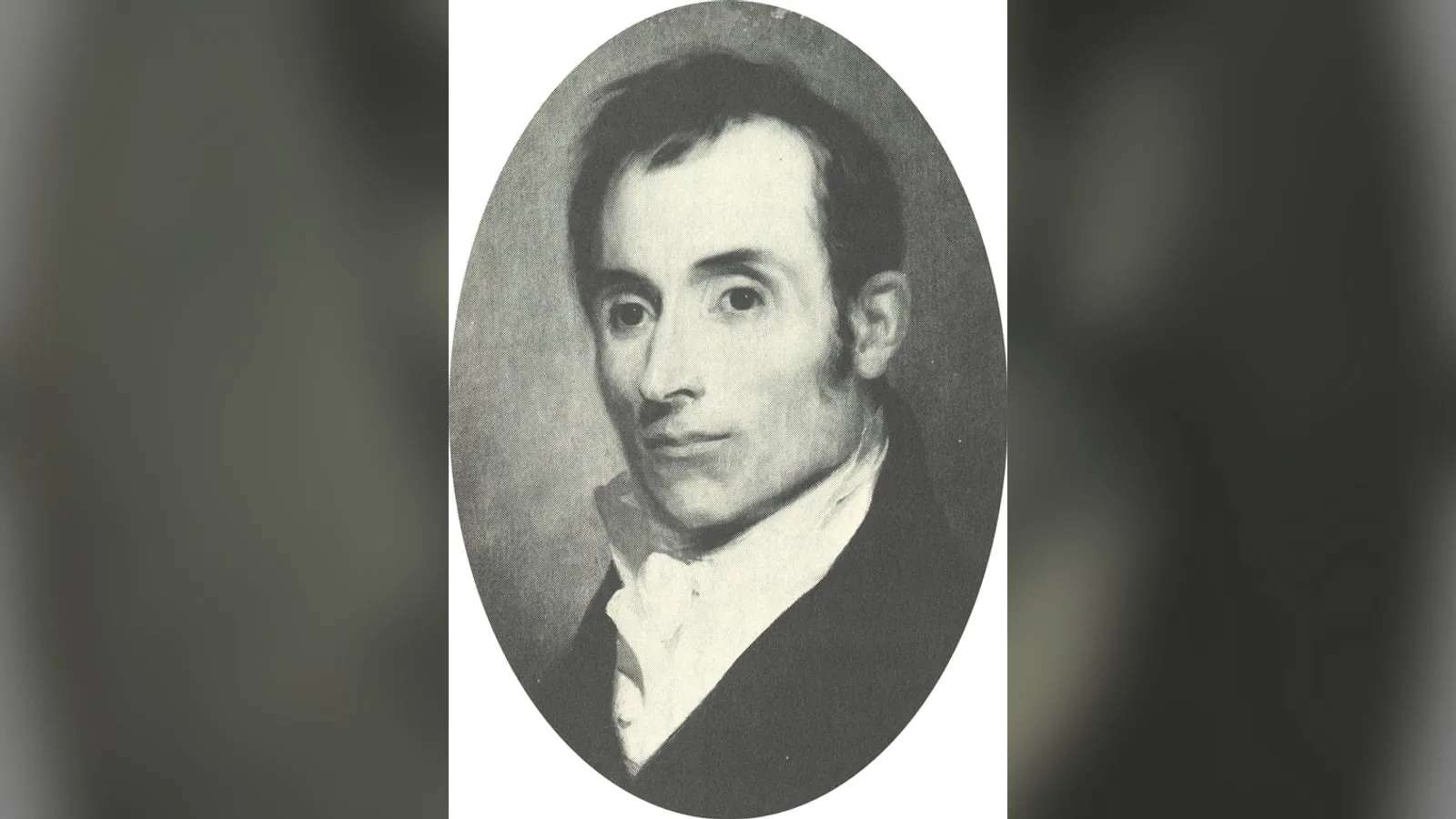

Alexander Wilson (1766–1813)
Contents
TL;DR
- established Born into poverty in Paisley and trained as a weaver with almost no formal education, Wilson emigrated to America in 1794 and went on to produce American Ornithology, a landmark nine-volume work describing 268 bird species, 26 of them previously undocumented — earning him lasting recognition as the "father of American ornithology."
- established Before his scientific career, Wilson was a working poet and satirist in Scotland whose 1792 poem attacking mill owner William Sharp led to a serious legal crisis: Wilson was convicted of libel, publicly imprisoned, and forced to burn copies of his own poems on the courthouse steps, after anonymously sending Sharp a blackmail letter — in his own handwriting — demanding five guineas not to publish it. This article treats this episode plainly as a genuine act of libel and attempted extortion, not merely as youthful literary mischief.
- established His emigration to America followed directly from this legal disgrace and the poverty it left him in, and some historians believe Scottish authorities may have deliberately encouraged his departure rather than pursue the case to its full, severe potential conclusion, which could have included transportation.
- established In America, Wilson rebuilt his life entirely as a schoolteacher before a chance friendship with the naturalist William Bartram redirected him toward ornithology, a field in which he had no formal training but pursued with extraordinary, self-taught dedication.
- established Wilson died in 1813, aged 47, worn down by overwork, chronic poverty, and dysentery, having completed seven of his planned nine volumes; his friend George Ord finished the remaining two after his death.
Key Facts
- Born
- 6 July 1766, Paisley, Scotland
- Died
- 23 August 1813, Philadelphia, Pennsylvania, aged 47
- Known for
- American Ornithology (1808–1814); "father of American ornithology"
- Early career
- Weaver; poet and satirist in Scotland
- Emigrated
- 1794, to Philadelphia
- Legacy
- Multiple bird species named for him, including Wilson's warbler, Wilson's plover, and Wilson's storm-petrel
Scottish Impact Index (SI Score)
- Global Influence
- 3/10
- Enduring Relevance
- 6/10
- Material Contribution
- 2/10
- Exceptional Achievement
- 6/10
- Lasting Legacy
- 4/10
- Recognition
- 1/10
22/60
Ranked =156th of 200 in Great Scots
A Note on Claims and Evidence
Wilson's biography, his Scottish legal troubles, and his American ornithological career are extensively documented in Scottish court records and American scientific and biographical sources, and are treated as Established. The 1792–93 libel and blackmail case against him, including the anonymous extortion letter later confirmed to be in his own handwriting, is documented in contemporary Paisley court records and reported here directly, consistent with house style's commitment to accuracy over a simplified, purely celebratory account of his path to scientific achievement.
Timeline
Born in Paisley, Scotland, to a family that had moved from smuggling into weaving and distilling.
Apprenticed to his brother-in-law as a weaver at age thirteen, having received minimal formal education.
Works as a journeyman weaver and itinerant peddler while writing poetry, influenced by Robert Burns and collaborating with poet Ebenezer Picken.
Publishes the popular poem "Watty and Meg"; writes the satirical poem "The Shark, or Lang Mills Detected," attacking mill owner William Sharp, and separately sends Sharp an anonymous blackmail letter demanding five guineas.
Convicted of libel; ordered to publicly beg pardon and imprisoned until payment of over £60 in damages, fines, and costs.
Imprisoned again in Paisley Tolbooth and forced to publicly burn copies of his satirical poems on the courthouse steps.
Emigrates to America with a nephew, aged 27, sailing from Belfast and settling near Philadelphia.
Writes to his father that America offers an asylum from the persecutions of Europe's governments.
Writes verse for the Newark Centinel; his song "My Landlady's Nose" is reprinted in New York.
Works as a schoolteacher at Milestown School in Bristol Township, Pennsylvania, and briefly in New Jersey.
Teaching at Gray's Ferry, meets naturalist William Bartram, who encourages his growing interest in ornithology.
Becomes a naturalised American citizen.
"Watty and Meg" is printed at Philadelphia.
Publishes American Ornithology in nine volumes, describing 268 bird species, 26 previously undocumented.
Dies in Philadelphia, aged 47, from dysentery compounded by overwork and chronic poverty, having completed seven volumes; his friend George Ord completes the final two.
Details
A hard Paisley childhood and an unlikely literary life
Wilson was born in 1766 in Paisley to a family whose fortunes had shifted from smuggling into weaving and distilling, and the economic disruption of the American Revolution left the family in real financial hardship. He received almost no formal education, was set to herding livestock as a child, and was apprenticed to his brother-in-law as a weaver at just thirteen. Despite this difficult start, Wilson developed a genuine passion for poetry while working as a journeyman weaver and itinerant peddler across Scotland, drawing inspiration from Robert Burns and collaborating with fellow poet Ebenezer Picken; his 1792 poem "Watty and Meg" achieved real popularity and was, for a time, mistakenly attributed to Burns himself.
A serious act of libel and attempted extortion
Wilson's literary career in Scotland came to an abrupt and disgraceful end through an episode this article does not minimise or romanticise as mere youthful rebelliousness. In 1792, Wilson wrote a satirical poem, "The Shark, or Lang Mills Detected," attacking local mill owner William Sharp and accusing him, through thinly veiled verse, of cheating the weavers in his employ. Separately — and far more seriously — Wilson sent Sharp an anonymous letter demanding five guineas, threatening to publish the poem if Sharp refused to pay; Wilson later admitted the letter was in his own handwriting, transforming what might have remained a literary dispute into a documented case of criminal extortion alongside libel. He was convicted, ordered to publicly beg pardon, and imprisoned until he paid more than £60 in damages, fines, and costs; in January 1793 he was imprisoned again, this time at the Paisley Tolbooth, and forced to publicly burn copies of his satirical poems on the courthouse steps as part of his punishment. Given the severity of the charges, which carried the potential for transportation to Botany Bay, some historians have suggested that Scottish authorities may have deliberately eased Wilson's path toward emigration rather than pursue the case to its harshest possible conclusion — a plausible reading of events this article notes without presenting it as certain.
A new life in America, and an unexpected calling
Wilson emigrated to America in May 1794 at 27, arriving in Philadelphia with a nephew and little money, his earlier literary ambitions in ruins. After struggling to find steady work as a weaver, he turned to schoolteaching, holding posts at Milestown School in Bristol Township, Pennsylvania, from 1796 to 1801, and briefly in New Jersey — a complete and deliberate reinvention of his life following his Scottish disgrace. The decisive turn in his story came while teaching at Gray's Ferry, where he formed a friendship with the eminent American naturalist William Bartram, whose encouragement redirected Wilson's restless intellectual energy toward the systematic study of North American birds, a field in which he had no formal training but pursued with the same self-taught determination that had once made him a working poet with no formal schooling.
Radical, refugee and Scots poet in America
shared A political exile as well as a disgraced one. The literary historian Andrew Hook, in Scotland and America (1975), places Wilson among the Scots who left for the United States during the government's campaign against reformers in 1793–94. Like Burns, Hook writes, Wilson had been an ardent supporter of the French Revolution and the rights of man, and his jail sentence for satirical poems on local figures left him longing for a freedom that had disappeared from his own country. Hook's short account does not mention the blackmail letter described above, and it dates the three-month sentence to May 1793, where the court narrative used here gives a conviction in 1792 and a further imprisonment in January 1793. Both readings can be true at once: Wilson's own conduct was criminal, and the political climate of 1793–94 shaped how he saw his departure.
established The voyage and after. Wilson sailed from Belfast in May 1794. In his first letter home from Philadelphia he described how a fellow passenger, a Dr Reynolds condemned by the Irish House of Lords, treated the whole ship to rum-grog, "which we drank to the confusion of despots" (as quoted by Hook). In November 1798 he wrote to his father that in America men of all nations found "an asylum from the narrow-hearted illiberal persecutions of their own Governments".
established Still a Scottish poet. Wilson kept writing verse in America. In September 1801 he reported that his pieces for the Newark Centinel had won him some reputation and that his song "My Landlady's Nose", in English, had been reprinted in a New York paper. "Watty and Meg", a Scots poem through and through, was printed at Philadelphia in 1805. In a letter of July 1802 he claimed that there was not an ignorant ploughman in Scotland who did not have a better taste for pastoral poetry "than most of the pretended literati of America". Hook uses the letter as an early example of the idea, later common in American writing, of Scotland as a land of poetry and song.
American Ornithology: a landmark scientific achievement
Wilson's resulting project, American Ornithology, published in nine volumes between 1808 and 1814, described 268 bird species, 26 of them previously undocumented by science — an extraordinary achievement for a self-taught naturalist working largely without institutional support, funded and sustained through Wilson's own relentless personal effort, including extensive solo travel across the American wilderness to observe and collect specimens. Engraver Alexander Lawson produced the majority of the hand-coloured copper-plate illustrations that accompanied the text, and the completed work is widely credited with directly inspiring the next generation of American bird illustrators, most notably John James Audubon.
Death from overwork, and a completed legacy
Wilson's relentless personal commitment to the project came at a severe physical cost: he died in Philadelphia in August 1813, aged just 47, from dysentery compounded by years of overwork and chronic poverty, having completed seven of his planned nine volumes. His close friend George Ord took on the task of completing the final two volumes after his death, ensuring the full project reached publication. Wilson was buried in the cemetery of Philadelphia's Gloria Dei Church, and his legacy endures today across American ornithology: multiple bird species bear his name, including Wilson's warbler, Wilson's plover, and Wilson's storm-petrel, and the Wilson Ornithological Society and its Wilson Journal of Ornithology continue to commemorate his foundational contribution to the field.
Did You Know?
- Wilson's popular 1792 poem "Watty and Meg" was, for a time, mistakenly attributed to Robert Burns.
- He was imprisoned and forced to publicly burn copies of his own poems on the Paisley Tolbooth courthouse steps as punishment for libel.
- The blackmail letter at the centre of his 1792 legal case was later confirmed to be in his own handwriting.
- He had almost no formal education and was working as a shepherd and weaver's apprentice by age thirteen.
- His formative scientific friendship with naturalist William Bartram began while Wilson was working as a lowly schoolteacher.
- American Ornithology described 268 bird species, 26 of which had never before been documented.
- He died from dysentery brought on by years of overwork and chronic poverty, having completed seven of his nine planned volumes.
- Multiple North American bird species carry his name today, including Wilson's warbler and Wilson's storm-petrel.
- On his voyage from Belfast in 1794 the passengers drank "to the confusion of despots".
FAQ
1What is Alexander Wilson best known for?
His nine-volume American Ornithology (1808–1814), which earned him lasting recognition as the "father of American ornithology."
2Why did Wilson leave Scotland?
Following a serious 1792 legal case in which he was convicted of libel and attempted extortion over a satirical poem and an anonymous blackmail letter he sent to a mill owner, resulting in public imprisonment and financial ruin.
3Did Wilson have formal scientific training?
No — he was almost entirely self-taught, having received minimal formal education and originally working as a weaver before a friendship with naturalist William Bartram redirected him toward ornithology.
4How did Wilson die?
He died in 1813, aged 47, from dysentery compounded by years of overwork and chronic poverty, before completing his full planned body of work.
5Did he finish his major work?
Not entirely — he completed seven of nine planned volumes before his death; his friend George Ord completed the final two.
6What was the "Shark" poem controversy?
A 1792 satirical poem attacking mill owner William Sharp, combined with a separate anonymous blackmail letter demanding payment, which together led to Wilson's conviction for libel and attempted extortion.
7Was Wilson a political refugee?
Partly. The literary historian Andrew Hook counts him among the Scots who left during the repression of reformers in 1793–94, and Wilson himself described America as an asylum from persecution. His conviction, however, was for libel and attempted extortion, not for political activity as such.
8Did Wilson keep writing poetry in America?
Yes. He wrote verse for the Newark Centinel around 1801, and "Watty and Meg" was printed at Philadelphia in 1805.
9Are any species named after him?
Yes — including Wilson's warbler, Wilson's plover, and Wilson's storm-petrel, among others.
10Where was he born?
Paisley, Scotland, in 1766, into a family experiencing real economic hardship.
Sources and Further Reading
Primary/Institutional
Scholarly/Critical
- Andrew Hook, Scotland and America: A Study of Cultural Relations, 1750–1835 (Blackie, 1975), chapter 5 and appendix, drawing on Alexander B. Grosart (ed.), The Poems and Literary Prose of Alexander Wilson (Paisley, 1876)
- A Scottish Contemporary of Burns: Alexander Wilson (1766–1813), Poet and Ornithologist — Electric Scotland
General
Caveats: Myths and Disputed Claims
- Clarification: Wilson's Scottish legal troubles are sometimes romanticised as simple poetic rebellion against an unfair mill owner. This article states plainly that his conduct included a documented act of anonymous blackmail in his own handwriting, alongside the libel itself, consistent with house style's commitment to accuracy over a flattering simplification.
- shared Dates of the Paisley sentences. Andrew Hook (1975) gives a three-month jail sentence in May 1793; the account used here gives a conviction in 1792 and a further imprisonment in January 1793. Until the Paisley court records are checked, do not give a single date as settled.
- Note: The suggestion that Scottish authorities deliberately eased Wilson's path to emigration rather than pursue harsher punishment is a plausible historical reading supported by some historians, but it is not conclusively documented, and this article presents it as a reasonable inference rather than settled fact.
Card 151 · Great Scots