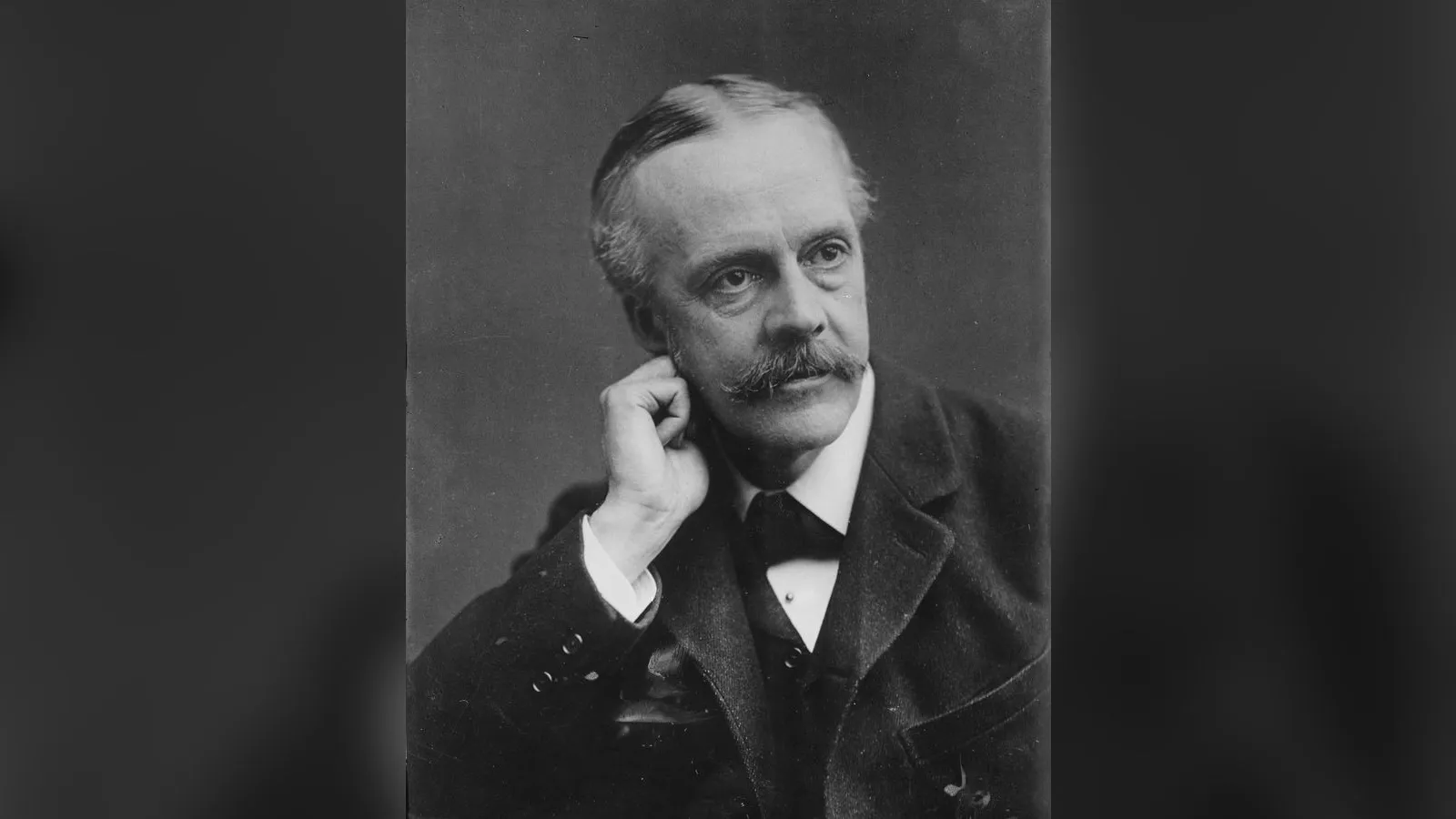

Alice Blanche Balfour (1850–1936)
Contents
TL;DR
- established Born into one of Scotland's most politically prominent families — her brother Arthur Balfour served as Prime Minister of the United Kingdom — Alice Blanche Balfour built a genuinely substantial independent scientific reputation as an entomologist, scientific illustrator, and naturalist, assembling a Scottish moth collection of more than 10,000 specimens now held by National Museums Scotland.
- established In 1894–95, Balfour undertook and documented an arduous roughly 1,200-mile journey by ox-wagon across southern Africa, publishing the resulting account, Twelve Hundred Miles in a Waggon, as a substantive travel narrative in its own right rather than a passing diversion from her scientific work.
- established Balfour's scientific interests extended into genetics, specifically the inheritance of coat patterns in zebras, and she maintained a sustained scientific correspondence with James Cossar Ewart, Professor of Zoology at Edinburgh University, on cross-breeding zebras with horses as a potential response to tsetse-fly disease affecting African livestock — a genuinely applied, practically motivated line of research.
- established Her elder brother, zoologist Francis Maitland Balfour, achieved outstanding early scientific distinction, becoming a Fellow of the Royal Society at just 27, before dying in an Alpine mountaineering accident in 1882 at age 30 — a family loss this article notes directly, since it removed one of the era's most promising biologists at the height of his career.
- established Balfour was elected a Fellow of the Royal Entomological Society in 1916, formal recognition of a scientific career built largely outside, rather than through, the conventional academic institutions generally closed to women of her era.
Key Facts
- Born
- 20 October 1850, Whittingehame House, East Lothian
- Died
- 12 June 1936, Whittingehame House, aged 85
- Known for
- Entomology, scientific illustration, and her 1894–95 African journey
- Key publication
- Twelve Hundred Miles in a Waggon (1895)
- Scientific honour
- Fellow, Royal Entomological Society (1916)
- Family
- Sister of Arthur Balfour, UK Prime Minister (1902–1905)
- Collection legacy
- Over 10,000 Scottish moth specimens, National Museums Scotland
Scottish Impact Index (SI Score)
- Global Influence
- 1/10
- Enduring Relevance
- 4/10
- Material Contribution
- 1/10
- Exceptional Achievement
- 3/10
- Lasting Legacy
- 1/10
- Recognition
- 1/10
11/60
Ranked #200 of 200 in Great Scots
A Note on Claims and Evidence
Balfour's biography, her scientific work and collections, her published travel account, and her family background are reasonably well documented in National Museums Scotland records, scholarly articles on women in natural history, and her own published writing, and are treated as Established throughout this article.
Timeline
Born at Whittingehame House, East Lothian, to James Maitland Balfour and Lady Blanche Gascoyne-Cecil.
Develops a lifelong interest in entomology, later extending into genetics.
Her brother, zoologist Francis Maitland Balfour, dies in an Alpine mountaineering accident at age 30, shortly after being elected a Fellow of the Royal Society.
Undertakes an approximately 1,200-mile journey by ox-wagon across southern Africa, alongside companions including Albert Grey (later 4th Earl Grey) and H. W. Fitzwilliam.
Publishes Twelve Hundred Miles in a Waggon, her account of the journey.
Her brother, Arthur Balfour, serves as Prime Minister of the United Kingdom.
Assembles an extensive collection of Scottish moths, exceeding 10,000 specimens, with accompanying catalogues and notebooks; corresponds with Professor James Cossar Ewart on zebra-horse crossbreeding research.
Elected a Fellow of the Royal Entomological Society.
Dies at Whittingehame House, aged 85.
Details
A scientific career built alongside, not within, prominent political fame
This article presents Balfour's independent scientific standing directly, rather than treating her primarily as a footnote to her more famous brother. Born into the Balfour family — her brother Arthur Balfour served as Prime Minister from 1902 to 1905 — Alice built her own substantial reputation as an entomologist, scientific illustrator, and naturalist, assembling a collection of more than 10,000 Scottish moth specimens, complete with detailed catalogues and notebooks, now held by National Museums Scotland and still used in research on changing Scottish moth distributions. Her 1916 election as a Fellow of the Royal Entomological Society represented formal professional recognition at a time when women's access to conventional scientific institutions remained seriously restricted.
A family shadowed by early scientific loss
This article notes directly a significant and often overlooked family context for Balfour's own scientific pursuits: her elder brother, Francis Maitland Balfour, was an outstanding zoologist who became a Fellow of the Royal Society at just 27 for his embryological research, before dying in a mountaineering accident in the Alps in 1882 at the age of 30 — a loss that removed one of the era's most promising biologists at the height of his career. This article includes this family loss as meaningful context rather than incidental detail, since it situates Alice's own sustained, serious scientific interests within a family where original biological research was already a genuinely significant, and tragically interrupted, pursuit.
A substantial journey, not a footnote
Balfour's 1894–95 journey of roughly 1,200 miles by ox-wagon across southern Africa, documented in her 1895 book Twelve Hundred Miles in a Waggon, is presented in this article as a genuinely arduous and substantive undertaking in its own right, not a brief aristocratic excursion. Undertaken with companions including Albert Grey, later 4th Earl Grey, the journey and its resulting published account reflect sustained physical endurance and careful documentary observation, consistent with the serious naturalist's eye she brought to her entomological work at home.
Genetics research with a practical purpose
Beyond entomology, Balfour's scientific interests extended into genetics, specifically investigating the inheritance of coat patterns in zebras. This article presents her sustained correspondence with James Cossar Ewart, Professor of Zoology at Edinburgh University, on the prospect of cross-breeding zebras with horses as a response to tsetse-fly-related disease affecting African livestock, as evidence of genuinely applied scientific thinking connecting her African travel experience directly to a practical agricultural and veterinary problem, rather than treating her zebra interest as a quirky aside.
Did You Know?
- Balfour's moth collection, exceeding 10,000 specimens, is still used today by National Museums Scotland to study changing Scottish moth distributions.
- Her brother Francis Maitland Balfour became a Fellow of the Royal Society at just 27, before dying in an Alpine mountaineering accident at 30.
- Her other brother, Arthur Balfour, served as UK Prime Minister from 1902 to 1905.
- Her roughly 1,200-mile ox-wagon journey across southern Africa in 1894–95 was undertaken alongside Albert Grey, later 4th Earl Grey.
- She corresponded with a university zoology professor about cross-breeding zebras and horses to address a livestock disease problem.
- She was elected a Fellow of the Royal Entomological Society in 1916, at a time when formal scientific recognition for women remained rare.
- She lived her entire life connected to Whittingehame House, East Lothian, where she was both born and died.
FAQ
1What is Alice Blanche Balfour best known for?
Her work as an entomologist and naturalist, including a major Scottish moth collection, and her documented 1894–95 journey across southern Africa by ox-wagon.
2Was she related to a Prime Minister?
Yes — her brother, Arthur Balfour, served as UK Prime Minister from 1902 to 1905.
3What happened to her other brother?
Francis Maitland Balfour, an outstanding zoologist, died in an Alpine mountaineering accident in 1882 at age 30, shortly after becoming a Fellow of the Royal Society.
4What was "Twelve Hundred Miles in a Waggon"?
Her 1895 published account of an arduous ox-wagon journey of roughly 1,200 miles across southern Africa.
5What did her genetics research involve?
Investigating the inheritance of zebra coat patterns and corresponding on the prospect of zebra-horse crossbreeding to address a livestock disease problem.
6Did she receive formal scientific recognition?
Yes — she was elected a Fellow of the Royal Entomological Society in 1916.
7Where did she live?
Whittingehame House, East Lothian, where she was both born and died.
8When did she die?
12 June 1936, aged 85.
Sources and Further Reading
Primary/Institutional
- Alice Blanche Balfour — Wikipedia
- 8 women in Scotland who shaped the history of science — National Museums Scotland
- Miss Alice Balfour — Nature
Scholarly/Critical
- "Behind folding shutters in Whittingehame House": Alice Blanche Balfour (1850–1936) and amateur natural history — D. L. Opitz, Archives of Natural History
- Francis Maitland Balfour — Wikipedia
General
Caveats: Myths and Disputed Claims
- Clarification: Balfour is sometimes remembered chiefly as the sister of Prime Minister Arthur Balfour. This article presents her substantial independent scientific and literary achievements directly, as significant in their own right rather than incidental to her family's political prominence.
- Note: This article's description of her journey as covering "roughly 1,200 miles" reflects the title and general description of her own published account; exact mileage for a 19th-century overland wagon journey of this kind should be treated as an approximate, period-reported figure rather than a precisely surveyed distance.
Card 194 · Great Scots