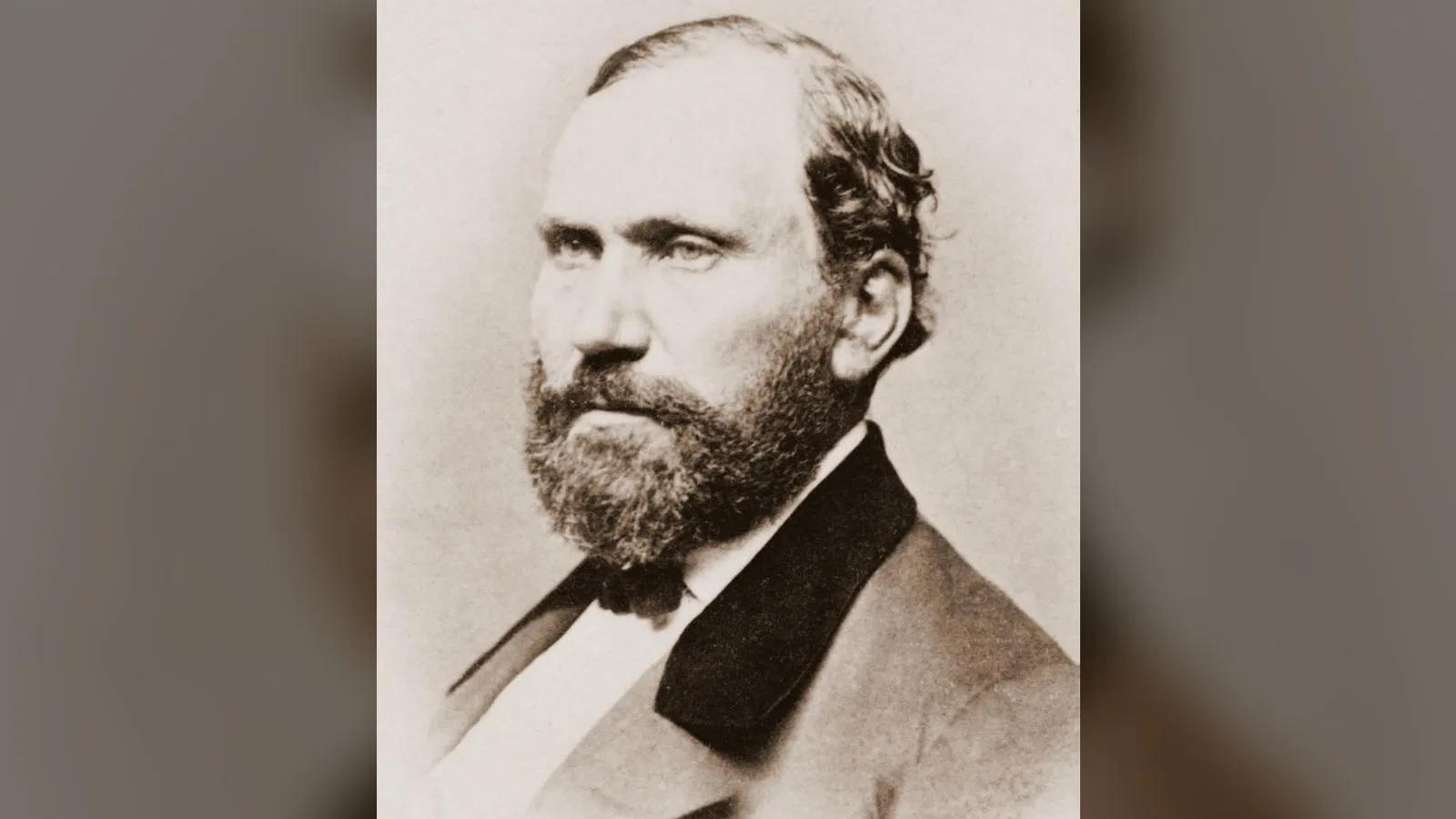

Allan Pinkerton (1819–1884)
Contents
TL;DR
- established Born in the Gorbals district of Glasgow, Pinkerton founded the Pinkerton National Detective Agency in Chicago, pioneering many of the investigative methods that underpin modern detective work, including the employment of Kate Warne, the first known female detective in the United States.
- established He claimed to have uncovered and foiled an 1861 assassination plot against president-elect Abraham Lincoln in Baltimore — an episode historians generally accept occurred in some real form, though the full extent of the threat, as presented by Pinkerton himself, has long been debated by historians given his own role in publicising it.
- established During the Civil War, he headed Union intelligence operations for General George B. McClellan, but his consistently inflated estimates of Confederate troop strength are now regarded by historians as having significantly contributed to McClellan's excessive battlefield caution — a serious professional failing this article does not pass over in deference to Pinkerton's wider reputation.
- established Before emigrating, Pinkerton was an active participant in Scotland's Chartist movement for political and electoral reform, and he was an early American abolitionist whose Chicago home served as a station on the Underground Railroad — a record that sits in genuine, documented tension with the strikebreaking work his detective agency became associated with later in his life and, more extensively, after his death.
- established Pinkerton's agency became notorious for aggressive strikebreaking and anti-labour operations, beginning during his own lifetime with the 1877 Great Railroad Strike and continuing after his 1884 death, most infamously in the deadly 1892 Homestead strike — a legacy so controversial it led directly to the U.S. Anti-Pinkerton Act of 1893, which restricts the federal government's use of such agencies to this day. This article reports that legacy directly rather than allowing his detective-agency innovations to stand without this context.
Key Facts
- Born
- 21 August 1819, Gorbals, Glasgow, Scotland
- Died
- 1 July 1884, Chicago, Illinois, aged 64
- Known for
- Founding the Pinkerton National Detective Agency; Union intelligence chief during the Civil War
- Agency founded
- 1850 (as the North-Western Police Agency)
- Notable hire
- Kate Warne (1856), first known female detective in U.S. history
- Legislative legacy
- U.S. Anti-Pinkerton Act of 1893, restricting federal use of private detective agencies
Scottish Impact Index (SI Score)
- Global Influence
- 5/10
- Enduring Relevance
- 7/10
- Material Contribution
- 4/10
- Exceptional Achievement
- 6/10
- Lasting Legacy
- 5/10
- Recognition
- 4/10
31/60
Ranked =84th of 200 in Great Scots
A Note on Claims and Evidence
Pinkerton's biography, the founding and early operations of his detective agency, and his Civil War intelligence role are extensively documented and treated as Established. The precise scale of the 1861 Baltimore assassination plot is Established as a real episode but is reported with appropriate caution regarding Pinkerton's own self-promotional account of it, since he was its principal source. His agency's strikebreaking activities, both during his lifetime and after his death, including the 1892 Homestead strike — which occurred after Pinkerton died and was carried out by the agency under his sons' leadership — are Established from extensive historical and legislative record and are reported here as directly relevant to his agency's documented legacy.
Timeline
Born in the Gorbals area of Glasgow, Scotland.
Emigrates from Scotland to North America with his wife, Joan, following involvement in the Chartist political reform movement; a shipwreck diverts the couple toward Chicago rather than their originally intended Canadian destination.
While working as a cooper near Dundee, Illinois, stumbles upon a group of counterfeiters and reports them, launching his detective career.
Appointed Chicago's first police detective.
Co-founds the North-Western Police Agency with attorney Edward Rucker, the forerunner of the Pinkerton National Detective Agency.
Gains national attention for solving train robberies and other high-profile cases; his Chicago home serves as a station on the Underground Railroad.
Hires Kate Warne, the first known female detective in American history.
Claims to uncover and foil an assassination plot against president-elect Abraham Lincoln in Baltimore.
Serves as head of Union intelligence operations under General George B. McClellan during the Civil War.
His agency is engaged in strikebreaking operations during the Great Railroad Strike.
Dies in Chicago, aged 64.
The Pinkerton agency, now under his sons' leadership, is involved in the deadly Homestead strike, in which armed Pinkerton agents clash violently with striking steelworkers.
The U.S. Congress passes the Anti-Pinkerton Act, restricting the federal government's use of private detective agencies in response to the agency's labour-conflict role.
Details
From Glasgow radicalism to a new life in Chicago
Pinkerton was born in Glasgow's Gorbals district in 1819 and, as a young man, became an active participant in Scotland's Chartist movement, which campaigned for expanded electoral rights and political reform. His involvement with the movement placed him at genuine personal risk, and around 1842 he emigrated to North America with his wife, Joan, to escape the threat of arrest or retaliation connected to his Chartist activity — a radical, reform-minded beginning this article keeps in view because it sits in real tension with the strikebreaking reputation his later detective agency acquired. A shipwreck diverted the couple from their intended destination in Canada, and they eventually settled in Chicago.
An accidental detective
Pinkerton initially worked as a cooper, a barrel maker, and it was in this capacity, around 1844, that he stumbled upon a group of counterfeiters while gathering wood near Dundee, Illinois, and reported them to the authorities — the episode that launched his unexpected detective career. He was appointed Chicago's first police detective in 1849, and in 1850 co-founded the North-Western Police Agency with attorney Edward Rucker, which evolved into the Pinkerton National Detective Agency. The agency's early reputation was built on cases including a widely publicised grave-robbing investigation and a series of train-robbery cases through the 1850s, and it is credited with genuine investigative innovations, including, in 1856, the hiring of Kate Warne, the first known female detective in American history — a notably progressive step for the era.
Abolitionism and the Underground Railroad
Alongside his detective work, Pinkerton was an active and early American abolitionist. His Chicago home served as a documented station on the Underground Railroad, helping enslaved people escape to freedom — a serious moral commitment this article notes directly, both because it is a genuine part of his record and because it stands in real, documented contrast with the labour-suppression activities his agency later became known for, making his overall legacy considerably more complicated than either reputation alone would suggest.
The Baltimore Plot and a flawed intelligence record
Pinkerton's most famous individual claim to historical significance came in February 1861, when he said he had uncovered and personally helped foil an assassination plot against president-elect Abraham Lincoln as Lincoln's train passed through Baltimore. Most historians accept that some genuine threat existed, though the full scale of the plot as Pinkerton himself presented and publicised it has long been treated with some caution by historians, given that Pinkerton was its principal source and had an obvious interest in promoting his own role. His subsequent service as head of Union intelligence under General George B. McClellan during the Civil War produced a more clearly documented professional failing: his consistent overestimation of Confederate troop numbers is now widely regarded by historians as having significantly contributed to McClellan's excessive battlefield caution, with one assessment describing Pinkerton's intelligence work as among the poorest provided to any Civil War general — a serious shortcoming this article states directly rather than allowing his Lincoln-protection fame to stand unqualified.
A legacy transformed by labour conflict
Later in Pinkerton's own lifetime, his agency became engaged in strikebreaking work, including during the 1877 Great Railroad Strike, a shift that sat uneasily alongside his earlier radical and abolitionist history. After his death in 1884, the agency, under the leadership of his sons, moved much further and more notoriously in this direction, most infamously during the 1892 Homestead strike at Andrew Carnegie's steelworks in Pennsylvania, where armed Pinkerton agents clashed violently with striking steelworkers in a confrontation that left multiple people dead on both sides. This article reports this post-mortem chapter of the Pinkerton agency's history directly, because it is the dominant reason "Pinkerton" became, and in many quarters remains, a byword for aggressive strikebreaking and anti-labour violence in American history — a legacy so significant that it directly produced the U.S. Anti-Pinkerton Act of 1893, which still restricts the federal government's ability to employ private detective agencies of this kind.
Did You Know?
- Pinkerton's agency logo, an unblinking eye above the slogan "We Never Sleep," is widely credited as the origin of the term "private eye."
- His Chicago home served as a documented station on the Underground Railroad, helping enslaved people escape to freedom.
- He hired Kate Warne in 1856, the first known female detective in American history.
- His historians-criticised Civil War intelligence work, consistently overestimating Confederate troop numbers, significantly shaped General McClellan's excessively cautious battlefield decisions.
- Before emigrating, he was an active participant in Scotland's Chartist movement for political reform.
- The 1892 Homestead strike, the Pinkerton agency's most infamous and deadly labour confrontation, occurred eight years after Pinkerton's own death, under his sons' leadership.
- The agency's labour-conflict legacy directly led to the 1893 U.S. Anti-Pinkerton Act, still in force today.
- He was appointed Chicago's first police detective after accidentally uncovering a counterfeiting operation while working as a barrel maker.
FAQ
1What is Allan Pinkerton best known for?
Founding the Pinkerton National Detective Agency and his claimed role in foiling an 1861 assassination plot against Abraham Lincoln.
2Did Pinkerton's own agency carry out the Homestead strike violence?
The agency did, but under his sons' leadership — the 1892 Homestead strike occurred eight years after Allan Pinkerton's own 1884 death.
3Was Pinkerton an abolitionist?
Yes — his Chicago home served as a documented station on the Underground Railroad, a record that contrasts sharply with his agency's later anti-labour reputation.
4How reliable was his Civil War intelligence work?
Not very, by most historical assessments — his consistent overestimation of Confederate troop strength is considered to have significantly contributed to General McClellan's excessive caution.
5Why was the Anti-Pinkerton Act passed?
In 1893, in direct response to the Pinkerton agency's aggressive strikebreaking role in labour disputes, including the deadly 1892 Homestead strike; the Act restricts federal use of such private agencies.
6Where was Pinkerton born?
In the Gorbals area of Glasgow, Scotland, in 1819.
7Did Pinkerton actually foil the 1861 Lincoln assassination plot?
Historians generally accept some genuine threat existed, but the full scale of the plot as Pinkerton himself presented it has long been treated with some caution, given he was its principal and self-interested source.
8Why did he leave Scotland?
He had been an active participant in the Chartist movement for political reform and emigrated around 1842 to avoid the risk of arrest or retaliation connected to that activity.
Sources and Further Reading
Primary/Institutional
Scholarly/Critical
General
Caveats: Myths and Disputed Claims
- Clarification: Pinkerton's agency is sometimes remembered primarily, or solely, for its detective innovations and Lincoln connection. This article gives equal, direct weight to the agency's strikebreaking legacy, including the 1892 Homestead strike, consistent with house style's commitment to accuracy over a purely celebratory account.
- Clarification: The Homestead strike occurred in 1892, eight years after Allan Pinkerton's own death in 1884, and was carried out under his sons' leadership of the agency — this article is careful not to attribute that specific, later episode to Pinkerton's own personal direction, while treating it as a direct and legitimate part of his agency's overall legacy.
- Note: The scale and exact details of the 1861 Baltimore assassination plot against Lincoln remain debated by historians, given that Pinkerton himself was the primary source for the account and had a clear interest in publicising his own role.
Card 145 · Great Scots