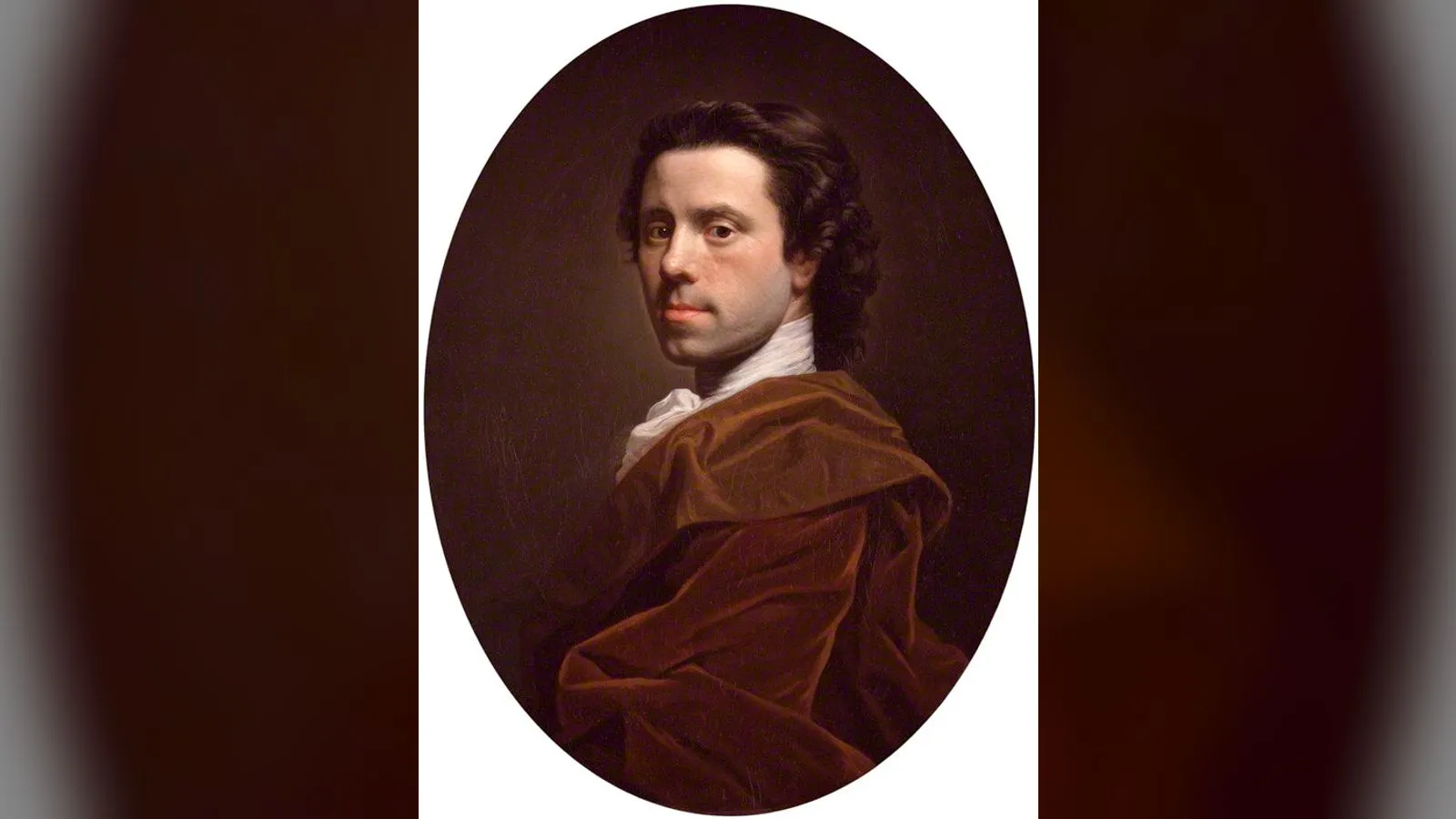

Allan Ramsay (1713–1784)
Contents
TL;DR
- established Allan Ramsay was a leading 18th-century portrait painter — the son of the celebrated poet Allan Ramsay — who became Principal Painter in Ordinary to King George III in 1761, one of the most prestigious artistic appointments in Britain.
- established He was a genuine Enlightenment intellectual as well as a painter, publishing essays on aesthetics and politics, maintaining friendships with figures including the philosopher David Hume, and earning the admiration of Samuel Johnson, who said, "I love Ramsay. You will not find a man in whose conversation there is more instruction, more information, and more elegance, than in Ramsay's."
- established His royal appointment generated such overwhelming demand for portraits — commissioned by the King as gifts for ambassadors and colonial governors — that he relied on a studio of assistants, including David Martin and Philip Reinagle, to meet the volume of work.
- established He trained formally in both London and Italy, studying under established masters in Rome and Naples, giving him a genuinely cosmopolitan European artistic education unusual for a Scottish painter of his generation.
- established His later life was marked by a career-ending arm injury around 1770–73 and a decline following his second wife Margaret's death in 1782; he died at Dover in 1784 while travelling to Italy seeking better health, leaving around fifty royal portraits unfinished.
Key Facts
- Born
- 13 October 1713, Edinburgh
- Died
- 10 August 1784 (aged 70), Dover, Kent
- Category
- Culture / Art
- Known for
- Portraiture; Principal Painter in Ordinary to King George III; Enlightenment essays
- Father
- Allan Ramsay, poet, author of The Gentle Shepherd
- Training
- London (under Hans Hysing); French Academy, Rome; study in Naples
- Royal appointment
- Principal Painter in Ordinary to George III (from 1761)
Scottish Impact Index (SI Score)
- Global Influence
- 4/10
- Enduring Relevance
- 7/10
- Material Contribution
- 3/10
- Exceptional Achievement
- 6/10
- Lasting Legacy
- 4/10
- Recognition
- 3/10
27/60
Ranked =118th of 200 in Great Scots
A Note on Claims and Evidence
Ramsay's biography, training, royal appointment, and major writings are well documented through institutional and art-historical sources and are treated here as established. Some scholarly discussion exists around the political dimensions and potential symbolic readings of specific portraits, including his images of Queen Charlotte; this article notes that such interpretive debate exists without asserting a settled reading of any individual work.
Timeline
Born in Edinburgh, eldest son of the poet Allan Ramsay.
Trains in London under Swedish painter Hans Hysing and at the St Martin's Lane Academy.
Studies in Italy, enrolling at the French Academy in Rome and training under Francesco Solimena and Francesco Fernandi in Naples.
Returns to Britain, initially settling in Edinburgh.
Paints influential early portraits, including Duncan Forbes of Culloden and Archibald Campbell, 3rd Duke of Argyll.
His first wife, Anne Bayne, dies after childbirth; none of their three children survive to adulthood.
Marries Margaret Lindsay in Edinburgh's Canongate Kirk.
Paints his portrait of philosopher David Hume.
Travels extensively through Italy with Margaret, studying old masters and archaeological sites.
Anonymously publishes A Dialogue on Taste, arguing for the superiority of Greek over Roman artistic achievement.
Appointed Principal Painter in Ordinary to King George III, generating enormous demand for royal portraits.
Gradually withdraws from painting due to declining health, including an arm injury.
Publishes Letters on the Present Disturbances in Great Britain and her American Provinces.
Publishes Observations on the Riot Act.
Margaret Lindsay, his second wife, dies.
Dies at Dover, Kent, aged 70, while travelling to Italy for his health, leaving around fifty royal portraits unfinished for his assistant Philip Reinagle to complete.
Details
Son of a famous poet, trained across Europe
Allan Ramsay was born in Edinburgh in 1713, the eldest son of the poet Allan Ramsay, author of the pastoral comedy The Gentle Shepherd and a leading figure in the early Scottish literary revival — meaning the painter Ramsay grew up in a household already deeply engaged with the Scottish intellectual and cultural life that would shape his own later career. From the age of twenty he pursued a genuinely international artistic education, training in London under the Swedish painter Hans Hysing and at the St Martin's Lane Academy from 1733 to 1736, before travelling to Italy for three further years of study, enrolling at the French Academy in Rome and training under established masters Francesco Solimena and Francesco Fernandi in Naples. This combination of Scottish intellectual upbringing and sustained European academic training gave Ramsay a technical and classical grounding considerably more cosmopolitan than many of his British contemporaries.
Early success and the move to London
Returning to Britain in 1738, Ramsay settled first in Edinburgh, where influential early commissions, including portraits of Duncan Forbes of Culloden and Archibald Campbell, 3rd Duke of Argyll — the latter later reproduced on Royal Bank of Scotland banknotes — established his reputation as a portraitist of real skill and sophistication. He subsequently relocated to London, working for patrons including Francis Egerton, 3rd Duke of Bridgewater, steadily building the professional standing that would culminate in his royal appointment.
Principal Painter to the King, and a studio built to cope with royal demand
In 1761, Ramsay reached the pinnacle of his profession, succeeding John Shackleton as Principal Painter in Ordinary to King George III — one of the most prestigious positions available to a painter working in Britain. The practical consequence of this appointment was an overwhelming volume of work: King George commissioned so many royal portraits, intended as diplomatic and ceremonial gifts for ambassadors and colonial governors across the British Empire, that Ramsay could not have produced them single-handedly, and relied on a studio of skilled assistants, including the painters David Martin and Philip Reinagle, to help meet demand — a genuinely industrial scale of royal portrait production that reflects both Ramsay's standing and the practical realities of supplying portraiture across an expanding global administration.
A genuine Enlightenment intellectual, not merely a court painter
Ramsay's significance extends well beyond his technical skill with a brush. He was a serious and engaged participant in Enlightenment intellectual life, publishing A Dialogue on Taste anonymously in 1755, a substantive contribution to contemporary debates over aesthetics that argued for the superiority of Greek over Roman artistic achievement — a genuine scholarly intervention, not a vanity project by a painter dabbling in writing. He maintained real intellectual friendships with major figures of his era, notably the philosopher David Hume, whom he painted in 1754, and his conversational and literary gifts were admired by contemporaries of real standing: Samuel Johnson, rarely effusive in his praise of others, said of him, "I love Ramsay. You will not find a man in whose conversation there is more instruction, more information, and more elegance, than in Ramsay's" — a striking tribute from one of the era's most demanding literary minds.
A late turn to political writing
As his painting career wound down from around 1770, hampered by declining health and an arm injury that limited his physical capacity to paint, Ramsay turned increasingly to political and literary essays, publishing Letters on the Present Disturbances in Great Britain and her American Provinces (1777), engaging directly with the crisis of the American Revolution, and Observations on the Riot Act (1781), addressing contemporary debates over public order and civil unrest. This later body of writing confirms that Ramsay's intellectual engagement was not confined to aesthetic theory but extended into live contemporary political controversy, reinforcing his standing as a genuine Enlightenment figure rather than simply a highly accomplished technician.
Personal losses and a late search for recovery
Ramsay's personal life was marked by real loss alongside professional success. His first wife, Anne Bayne, died in 1743 following childbirth, with none of their three children surviving to adulthood. He married again in 1752, to Margaret Lindsay, with whom he had three children who did survive — Amelia, Charlotte, and John — and the couple travelled extensively together through Italy between 1754 and 1757, studying old masters and classical sites while Ramsay continued to take portrait commissions from British Grand Tourists abroad. Margaret's death in 1782 was a further significant blow to a man whose health was already declining, and Ramsay set out for Italy seeking a recovery that never came, dying at Dover, Kent, on 10 August 1784, at the age of 70, leaving around fifty unfinished royal portraits for his assistant Philip Reinagle to complete after his death — a telling final image of just how much royal portrait production had depended on Ramsay's studio system by the end of his career.
Did You Know?
- Allan Ramsay the painter was the son of Allan Ramsay the poet, author of The Gentle Shepherd.
- He trained formally in both London and Italy, studying under masters in Rome and Naples — an unusually cosmopolitan education for a Scottish painter of his generation.
- As King George III's Principal Painter, demand for royal portraits was so overwhelming that Ramsay relied on a studio of assistants to keep up.
- Samuel Johnson said he loved Ramsay's conversation above almost anyone else's.
- He published a scholarly essay on aesthetics, arguing for Greek artistic superiority over Roman, anonymously in 1755.
- He wrote serious political essays on the American Revolution and the Riot Act in his later years.
- His portrait of the Duke of Argyll was later reproduced on Royal Bank of Scotland banknotes.
- He died in 1784 while travelling to Italy seeking recovery from ill health, leaving around fifty royal portraits unfinished.
FAQ
1What is Allan Ramsay (the painter) best known for?
His portraiture, especially his role as Principal Painter in Ordinary to King George III from 1761, and his substantial body of essays as an Enlightenment intellectual.
2Is this the same Allan Ramsay as the poet?
No — this Allan Ramsay (1713–1784) was the son of the poet Allan Ramsay, author of The Gentle Shepherd.
3Where did Allan Ramsay train as a painter?
In London, under Hans Hysing and at the St Martin's Lane Academy, and then in Italy, at the French Academy in Rome and under masters in Naples.
4What was Allan Ramsay's royal appointment?
Principal Painter in Ordinary to King George III, from 1761, making him responsible for producing official royal portraits used as diplomatic gifts.
5Was Allan Ramsay just a painter, or did he write as well?
Both — he published essays on aesthetics (A Dialogue on Taste, 1755) and on contemporary politics, including the American Revolution and the Riot Act, in his later years.
6Who were Allan Ramsay's notable friends?
The philosopher David Hume, whom he painted in 1754, and the writer Samuel Johnson, who greatly admired his conversation.
7How did Allan Ramsay's career end?
A declining arm injury forced him to largely give up painting around 1770–73; he increasingly turned to writing until his death in 1784.
8How did Allan Ramsay die?
He died at Dover, Kent, in 1784, aged 70, while travelling to Italy seeking better health following the death of his wife Margaret in 1782.
9Did Allan Ramsay have assistants?
Yes — the volume of royal portrait commissions required a studio of assistants, including painters David Martin and Philip Reinagle.
Sources and Further Reading
Institutional
- National Galleries of Scotland, artist profile for Allan Ramsay
- Art UK, "Ramsay, Allan, 1713–1784," collection and biographical records
- Royal Collection Trust, records relating to Ramsay's role as Principal Painter to George III
Scholarly / Critical
- Alastair Smart, Allan Ramsay: Painter, Essayist and Man of the Enlightenment (Yale University Press)
- Scholarly discussion of Ramsay's portraiture and Enlightenment intellectual context
General
- Wikipedia, "Allan Ramsay (artist)" (overview, cross-checked against institutional sources above)
- Britannica, "Allan Ramsay (Scottish painter)"
- The Scotsman, "Art reviews: Allan Ramsay — Edinburgh and Glasgow"
Caveats: Myths and Disputed Claims
- Myth: Allan Ramsay the painter is the same person as the poet Allan Ramsay. Reality: They were father and son — the poet (c. 1686–1758) and the painter (1713–1784) are distinct figures frequently confused due to the shared name.
- Clarify: Ramsay's standing as "Principal Painter" did not mean he personally painted every royal portrait bearing his studio's attribution; the scale of royal demand meant significant studio involvement from assistants was standard practice.
- Note: Some scholarly discussion exists around the symbolic or political readings of specific Ramsay portraits, including of Queen Charlotte; this article does not assert a settled interpretation of any individual work's intended meaning.
Card 110 · Great Scots