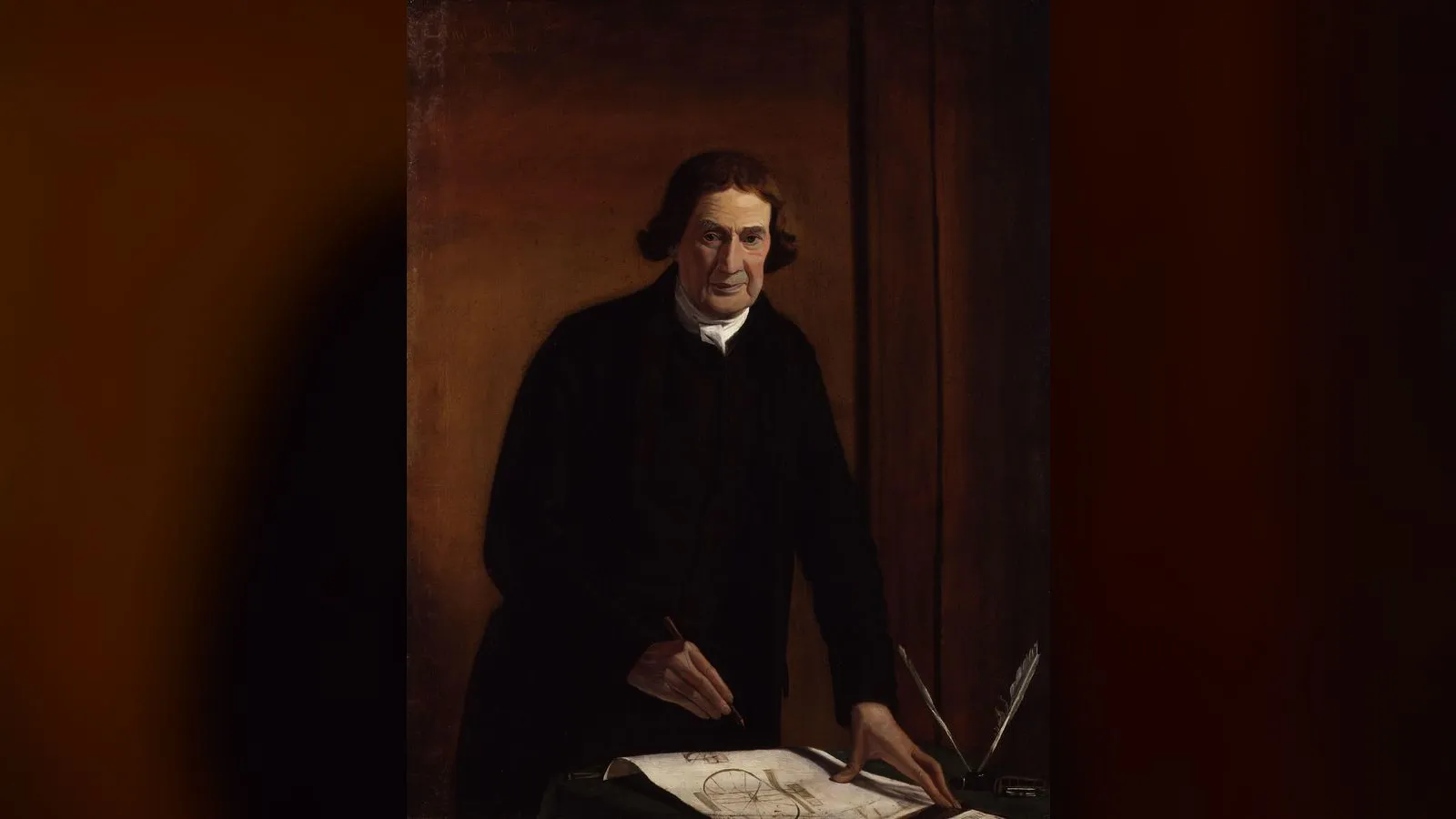

Andrew Meikle (1719–1811): The Threshing Machine and the Price of Invention
Contents
TL;DR
- Established/Documented: Andrew Meikle, a millwright at Houston Mill in East Lothian, developed the first genuinely effective mechanical threshing machine, patented in 1788 — a device that mechanised one of agriculture's most labour-intensive tasks and became a foundational technology of the British Agricultural Revolution.
- Established/Documented: Meikle's patent was effectively worthless in practice. He had publicly demonstrated the machine before securing protection, which invalidated any Scottish patent coverage, and competing millwrights built and sold hundreds of unlicensed copies with no penalty.
- Established/Documented: Despite his invention's enormous and lasting commercial and agricultural impact, Meikle died in genuine financial hardship, having been rescued from poverty only by a £1,500 charitable subscription organised in 1809 by Sir John Sinclair, President of the Board of Agriculture.
- disputed Meikle is sometimes credited as the sole originator of the mechanical thresher, but the historical record shows a longer lineage of prior attempts — including a 1734 patent by Michael Menzies and a claimed earlier rotary thresher by Michael Stirling — that Meikle built on, refined, and, crucially, made work reliably for the first time.
- Established/Documented: The labour displacement caused by Meikle's machine, though welcomed in labour-short Scotland, became a genuine source of rural unrest in southern England a generation later, directly implicated in the 1830 "Captain Swing" riots in which displaced agricultural workers destroyed threshing machines and farm buildings.
Key Facts
- Born
- 5 May 1719, East Lothian, Scotland
- Died
- 27 November 1811, Houston Mill, near East Linton, East Lothian (aged 92)
- Occupation
- Millwright
- Known for
- Inventing the first practical mechanical threshing machine (patented 1788); windmill spring sails (c.1772)
- Key achievement
- Mechanising grain threshing, a foundational technology of the British Agricultural Revolution, still reflected in the design of modern combine harvesters
- Notable relationships
- Father James Meikle (winnowing machine pioneer); son George Meikle (business partner in commercialising the thresher); inspired the young John Rennie the Elder toward civil engineering; supported financially by Sir John Sinclair
- Legacy
- Inducted into the Scottish Engineering Hall of Fame (2011); the drum-and-beater principle of his thresher underlies modern combine harvester technology
Scottish Impact Index (SI Score)
- Global Influence
- 6/10
- Enduring Relevance
- 8/10
- Material Contribution
- 7/10
- Exceptional Achievement
- 7/10
- Lasting Legacy
- 6/10
- Recognition
- 2/10
36/60
Ranked =52nd of 200 in Great Scots
A Note on Claims and Evidence
This article tiers its claims by evidential strength. Established/Documented claims rest on multiple independent sources, patent records, or well-corroborated contemporary accounts. Shared/Traditional claims are widely repeated but rest on thinner or single-source evidence. disputed claims involve genuine conflict between sources or priority questions that historians have not definitively settled. Meikle's story combines a clear, well-documented technical achievement with an equally well-documented story of commercial failure and a grim underside — the human cost of the labour displacement his machine caused — both of which this piece gives full weight rather than treating as footnotes to an otherwise triumphant tale.
Timeline
Born in East Lothian, son of millwright James Meikle, himself credited with an early winnowing machine around 1711.
Trains and works as a millwright, eventually establishing himself at Houston Mill, East Linton, on the Phantassie estate.
Develops spring sails for windmills — shutter-controlled sails operable by lever, replacing dangerous canvas designs, improving safety in storms. Around this period, the young John Rennie the Elder works alongside Meikle, later crediting him with inspiring his own engineering career.
Builds his first experimental threshing machine, reportedly drawing on an earlier 1734 patent design by Michael Menzies; early prototypes fail.
Designs the Dumfries Old Town Mill (later home to the Robert Burns Centre).
After roughly a decade of failed prototypes, conceives the effective drum-and-fixed-beater mechanism, reportedly influenced by his familiarity with flax-scutching (fibre-beating) machinery.
Publicly demonstrates the completed water-powered threshing machine at Knowes Mill, Haddingtonshire.
Secures English patent (No. 1645) for the machine; Scottish patent protection is unavailable because of the prior public demonstration.
Establishes a factory with his son George to manufacture and sell the machines commercially.
Competing millwrights, exploiting the patent's practical unenforceability, build and sell hundreds of unlicensed copies across Britain; Meikle receives no meaningful royalty income from the invention's widespread adoption.
Sir John Sinclair, President of the Board of Agriculture, organises a £1,500 subscription among Meikle's supporters and admirers to relieve his poverty.
Dies at Houston Mill, aged 92; buried at Prestonkirk kirkyard near East Linton.
Nearly two decades after Meikle's death, the "Captain Swing" riots break out in southern England, in which displaced agricultural labourers destroy threshing machines (by then widely copied descendants of Meikle's design) and burn farm buildings in protest against mechanisation-driven unemployment.
Posthumously inducted as one of the seven inaugural members of the Scottish Engineering Hall of Fame.
Details
A Family of "Ingenious Mechanics"
Andrew Meikle's own tombstone inscription describes him as descended "from a race of ingenious mechanics," and the claim is not empty commemorative flattery. His father, James Meikle, is credited with an early winnowing machine around 1711 — a device for separating grain from chaff using a current of air, at a time when such mechanical aids to farm labour were viewed with genuine public suspicion. In parts of Scotland, winnowing machines (sometimes called "fanners") attracted real religious and social unease, since deliberately "raising wind" carried uncomfortable associations with older folk beliefs about witchcraft; some contemporaries reportedly regarded the machines as ungodly for that reason. Whatever resistance the elder Meikle faced, his son inherited both the mechanical aptitude and, eventually, a far larger and more consequential engineering problem to solve.
Andrew Meikle established himself as a millwright at Houston Mill on the Phantassie estate near East Linton, East Lothian, where he would remain based for the rest of his working life. He built a solid local reputation for mechanical skill, designing mills — including, in 1781, the Dumfries Old Town Mill, which today houses the Robert Burns Centre — and developing, around 1772, an important but now less-remembered innovation: spring sails for windmills, which replaced the traditional canvas sail coverings with hinged, lever-operated shutters. This allowed a windmill's sails to be reefed quickly and safely in a sudden storm, reducing the real risk of mill damage or destruction that canvas designs posed. It was solid, useful engineering, and it was enough to attract the attention of a talented young man named John Rennie, who worked alongside or under Meikle in the 1770s and would later credit him as a formative influence on his own path toward becoming one of Britain's foremost civil engineers (see the Rennie entry in this series).
The Long Road to the Threshing Machine
The task of separating grain from its husk and straw — threshing — had for centuries been done by hand, using a flail, in a process that was punishingly slow, physically exhausting, and wasteful, since manual flailing bruised and damaged a meaningful proportion of the grain. Mechanising this process was not a new idea by the time Meikle turned to it seriously. A Scottish patent for a mechanical thresher had been granted to Michael Menzies as early as 1734, and Meikle's own first attempt, begun around 1778, is reported to have drawn on that earlier design. It did not work well. He tried other approaches too, including one modelled on a Northumberland design, with similarly limited success.
The problem, as Meikle eventually diagnosed it through nearly a decade of failed prototypes, was that earlier designs tried to rub or scrape grain free of the husk, which was both inefficient and damaging. His breakthrough, arrived at around 1787, was to instead beat the grain loose using a rapidly revolving drum fitted with rigid, fixed iron beaters (sometimes called "scutchers"), turning at well over 200 revolutions per minute, striking the crop against the curved wall of a surrounding concave housing as sheaves were fed through grooved feed rollers. The beater mechanism is thought to have been inspired by flax-scutching machinery used in the linen industry, a technology with which Meikle, as a working millwright in a textile-adjacent economy, would have been directly familiar. It was, in effect, a lateral transfer of an established mechanical principle from one industry to an entirely different agricultural problem — and it worked.
Demonstration, Patent, and a Fatal Legal Oversight
On 14 February 1788, Meikle publicly demonstrated his completed, water-powered threshing machine at Knowes Mill in Haddingtonshire. The demonstration succeeded in every practical sense: the machine worked, and worked well, doing in hours what flail-threshing by hand took days or weeks to accomplish. Meikle secured an English patent (No. 1645) later that year.
But the public demonstration itself proved to be a critical, and ultimately ruinous, legal misstep. Because the machine had already been shown publicly before formal protection was secured, Meikle was unable to obtain equivalent patent protection in Scotland — precisely the market where his invention would see its earliest and heaviest adoption. This was not a minor technicality. It meant that from the very beginning, Meikle's most important and valuable invention lacked meaningful legal protection in the country where it mattered most.
Piracy, Commercial Failure, and Poverty
In 1789, Meikle and his son George established a factory to manufacture and sell the threshing machines commercially, and initial demand from farmers — eager for a device that could dramatically cut labour costs and threshing time — was strong. But the patent's practical unenforceability was quickly and ruthlessly exploited. Competing millwrights across Britain built and sold what one assessment describes as "hundreds" of unlicensed copies of Meikle's design, paying him nothing. Even prominent contemporaries joined in undermining his claim: Sir Francis Kinloch reportedly dismissed Meikle's work as unoriginal, asserting his own claim to the idea. Neither Meikle nor the legal system of the time meaningfully enforced what patent rights he did hold, and the piracy proceeded largely unchecked.
The result was a genuinely stark and well-documented irony: a machine that transformed British agriculture, saved enormous amounts of labour, and became foundational to the mechanisation of farming — invented by a man who profited from it hardly at all. By 1809, Meikle's financial position had deteriorated to the point that Sir John Sinclair, President of the Board of Agriculture and a prominent agricultural improver, organised a subscription among Meikle's friends and admirers, raising £1,500 for his relief. This was, in substance, a charitable annuity extended to an elderly man whose invention had generated fortunes for others while leaving him dependent on the goodwill of supporters in his final years — a pattern this series has now documented in more than one Scottish engineering pioneer's life (see also the entries on William Symington and Henry Bell), and one worth stating plainly rather than glossing over in favour of a tidier success narrative.
Death and Immediate Legacy
Andrew Meikle died at Houston Mill on 27 November 1811, at the considerable age of 92, and was buried at Prestonkirk kirkyard near East Linton. The pace of adoption of his invention did not slow after his death — if anything, it accelerated, as threshing machines based directly or loosely on his drum-and-beater principle spread rapidly across British and, eventually, international agriculture. The fundamental engineering principle he devised — a rotating drum with fixed beaters striking grain against a concave surface — remains recognisable in the threshing mechanisms of modern combine harvesters, making Meikle's design one of the most technologically durable agricultural inventions of the era.
The Human Cost: Mechanisation and the Swing Riots
Meikle's machine's success is inseparable from a harder, less comfortable part of its history, and this article treats that history with the same weight as the engineering achievement itself rather than as an afterthought. In Scotland and northern England, where industrialisation had already drawn much of the available agricultural labour force away to factories and cities, the threshing machine was broadly welcomed as a practical solution to genuine labour shortages. In southern England, where no such labour shortage existed, the calculus was very different: threshing had long provided crucial winter employment and income for farm labourers in the otherwise slow agricultural off-season, and mechanisation directly displaced that work.
This tension came to a head in 1830, nearly two decades after Meikle's death, in what became known as the "Captain Swing" riots — a wave of rural unrest across southern and eastern England in which displaced and impoverished agricultural workers, protesting wage cuts and unemployment driven substantially by mechanisation, destroyed threshing machines (by then far removed, commercially and legally, from any benefit to Meikle himself) and burned farm buildings and hayricks. The riots reflected a genuine and serious social cost of agricultural mechanisation, borne overwhelmingly by rural labourers rather than by the landowners and absentee investors who captured most of its economic benefit. It would be inaccurate, and inconsistent with this series' editorial standard, to celebrate Meikle's invention as an unambiguous triumph of Scottish ingenuity without also naming the real human disruption it set in motion, even though that disruption played out mostly after Meikle's own lifetime and far from his control.
Did You Know?
- Andrew Meikle's father, James Meikle, is credited with an early winnowing machine around 1711 — and such machines reportedly drew religious suspicion in parts of Scotland, since deliberately creating wind was uncomfortably associated with older witchcraft folklore.
- Meikle spent roughly a decade, from 1778 to 1787, failing repeatedly before arriving at the beater-drum design that finally worked.
- The key insight behind Meikle's successful design — beating rather than rubbing the grain loose — is thought to have been borrowed from flax-scutching machinery used in the linen industry, a genuine cross-industry transfer of engineering ideas.
- Meikle's public demonstration of his machine in February 1788, intended to showcase his achievement, backfired legally: it invalidated his ability to secure Scottish patent protection, the very market where the machine would be adopted fastest.
- Competing millwrights built and sold hundreds of unlicensed copies of Meikle's design with no penalty, while Meikle himself struggled financially for the rest of his life.
- The young engineer John Rennie the Elder worked alongside Meikle in the 1770s and later credited him as an inspiration for his own distinguished career in civil engineering.
- Meikle was rescued from poverty in 1809, two years before his death, by a £1,500 charitable subscription organised by Sir John Sinclair — essentially an act of public charity rather than earned reward for his invention.
- The basic drum-and-beater principle Meikle devised is still recognisable in the threshing mechanism of modern combine harvesters, over two centuries later.
Frequently Asked Questions
1Did Andrew Meikle invent the threshing machine from scratch?
Not entirely. Earlier mechanical threshing attempts existed, including a 1734 patented design by Michael Menzies, and other claimed prior inventors such as Michael Stirling are recorded, though with thinner documentation. Meikle's genuine achievement was developing, after roughly a decade of failed prototypes, the first design — a revolving drum with fixed beaters — that worked reliably and could be commercially manufactured.
2Did Meikle make money from his invention?
Very little, relative to its impact. His 1788 patent was effectively undermined by his own public demonstration of the machine, which invalidated Scottish patent protection. Competing millwrights built and sold hundreds of unlicensed copies, and Meikle received no meaningful royalty income. By 1809 he was poor enough to require a £1,500 charitable subscription organised by Sir John Sinclair to support him in old age.
3Why couldn't Meikle enforce his patent?
His public demonstration of the machine at Knowes Mill in February 1788 took place before full legal protection was secured, which specifically invalidated Scottish patent coverage. Since Scotland was where the machine's adoption was fastest, this single decision had outsized financial consequences for him.
4What was Meikle's other major invention?
Around 1772, Meikle developed spring sails for windmills — lever-operated shutters that replaced dangerous canvas sail coverings, allowing windmill sails to be reefed quickly and safely during storms. It was a meaningful, if less famous, engineering contribution in its own right.
5What is the connection between Andrew Meikle and John Rennie?
The young John Rennie the Elder worked alongside or under Meikle in the 1770s, before going on to become one of Britain's most prominent civil engineers. Rennie later credited Meikle with inspiring his own career path.
6Is there any truth to claims that someone else invented the threshing machine before Meikle?
There are documented prior claims and patents, including Michael Menzies' 1734 patent, which Meikle's own early prototypes drew on. A separate claim, attributed to farmer Michael Stirling, holds that he built a working rotary thresher as early as 1758, though this rests only on a sworn statement from Stirling's son rather than independent contemporary documentation, and is treated here as unverified rather than established.
7What was the social impact of the threshing machine?
It was genuinely mixed. In labour-short Scotland and northern England, it was broadly welcomed as solving a real workforce problem. In southern England, where threshing had provided crucial winter income for agricultural labourers, mechanisation contributed directly to unemployment and rural poverty, a tension that erupted in the 1830 "Captain Swing" riots, in which threshing machines were destroyed by protesting labourers.
8Did Meikle live to see the Swing Riots?
No. Meikle died in 1811, nearly two decades before the 1830 riots, which occurred after his machine's design (via its many unlicensed derivatives) had spread widely across English agriculture.
9How is Andrew Meikle remembered today?
He was inducted as one of the seven inaugural members of the Scottish Engineering Hall of Fame in 2011. His fundamental drum-and-beater threshing principle remains recognisable in the design of modern combine harvesters.
10Where did Andrew Meikle live and work?
He was based at Houston Mill, on the Phantassie estate near East Linton, East Lothian, for essentially his entire working life, and died there in 1811.
Sources and Further Reading
Primary / Institutional
- English Patent No. 1645 (1788), granted to Andrew Meikle for his threshing machine
- Scottish Engineering Hall of Fame: Andrew Meikle
Scholarly / Reference
- Wikipedia: "Andrew Meikle"
- Wikipedia: "Threshing machine"
- Britannica: "Andrew Meikle"
- EBSCO Research Starters: "Meikle's Drum Thresher"
- Graces Guide: "Andrew Meikle"
General / Popular
Caveats: Myths and Disputed Claims
- "Meikle invented the threshing machine entirely from nothing." Untrue. Earlier mechanical thresher designs existed, including Michael Menzies' 1734 patent, which influenced Meikle's own early (and unsuccessful) prototypes. Meikle's real achievement was the drum-and-fixed-beater mechanism that, after years of failed attempts, finally made mechanical threshing reliable and commercially viable.
- The Michael Stirling prior-invention claim. A claim exists that farmer Michael Stirling built a working rotary thresher as early as 1758 and used it on his farm for decades. This rests solely on a sworn statement by Stirling's son to a minister, with no independent contemporary documentation, and should be treated as an unverified claim rather than an established fact.
- "Meikle grew wealthy from his invention." The opposite is true and well documented. His patent was undermined by his own pre-protection public demonstration, competitors built and sold hundreds of unlicensed copies, and Meikle required a £1,500 charitable subscription in 1809 to avoid poverty in old age.
- The unqualified "triumph of mechanisation" narrative. Some popular tellings present Meikle's invention purely as a celebrated agricultural breakthrough. The fuller picture includes genuine, serious social harm: the threshing machine's spread directly displaced agricultural labourers, particularly in southern England, and was a documented driver of the 1830 Captain Swing riots. This article treats that harm as part of the invention's real historical legacy, not a separate or minimized footnote.
Card 068 · Great Scots