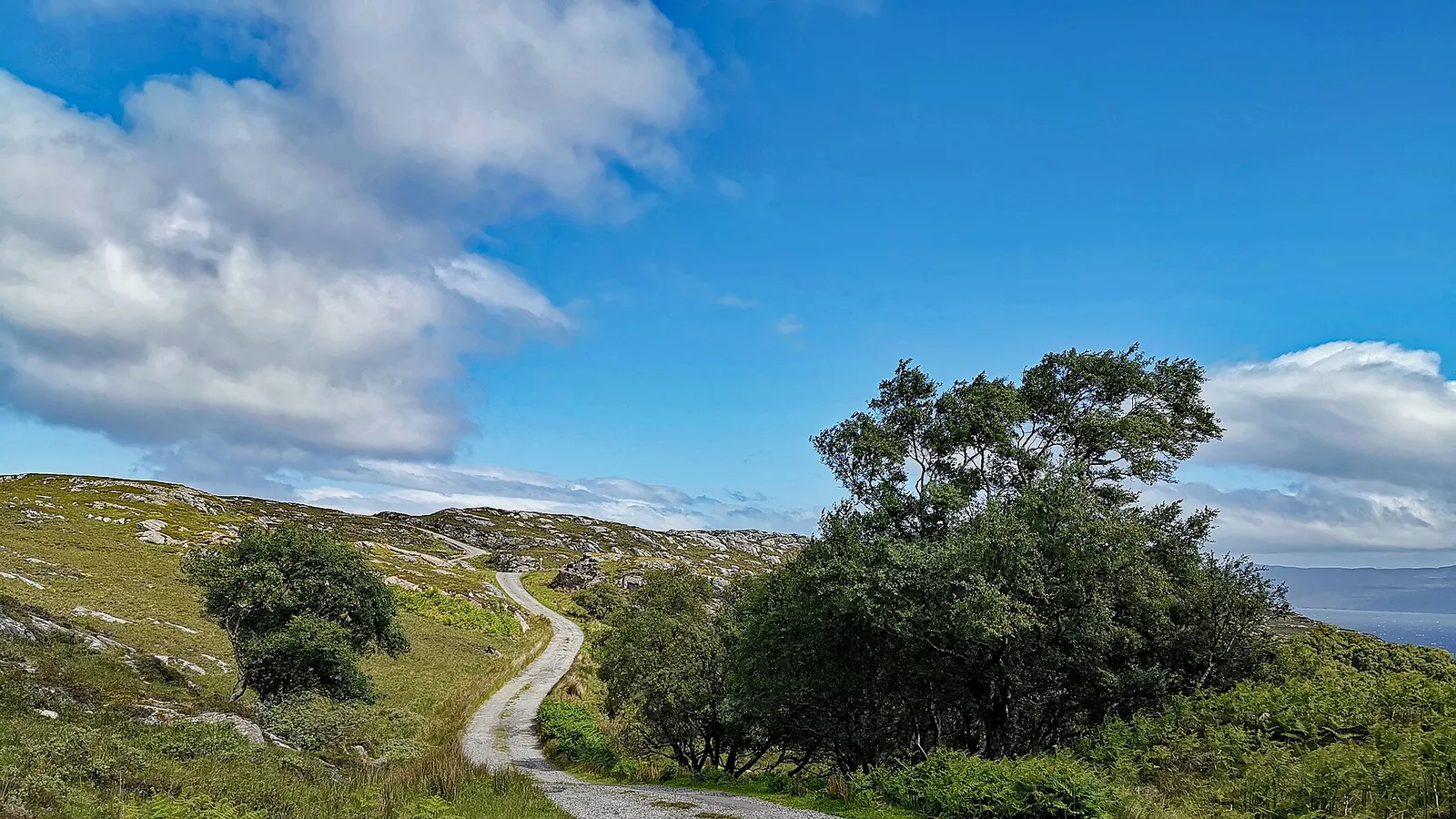

Calum MacLeod of Raasay (1911–1988)
Contents
TL;DR
- established Born in Glasgow but raised from infancy on the island of Raasay, Calum MacLeod spent his life working as a crofter, part-time postman, and assistant keeper of the Rona lighthouse, in the depopulated and increasingly isolated northern part of the island.
- established After decades of unsuccessful petitioning for the local council to build a proper road connecting the remote northern settlements to the rest of Raasay, MacLeod resolved, around 1964, to build the road himself — a nearly two-mile single-handed construction project this article presents without exaggeration, since the documented facts of the undertaking are themselves already extraordinary.
- established Working largely alone with a pick, shovel, and wheelbarrow, consulting a self-taught engineering manual, and receiving only limited official blasting assistance, MacLeod built roughly 1¾ miles of road between Brochel Castle and Arnish over approximately a decade, completing the project around 1974 — a feat of individual persistence this article treats as the defining, unembellished fact of his life.
- established The council only formally adopted and surfaced the road years after MacLeod had already completed it himself, by which point he and his wife were the last remaining residents of Arnish — a detail this article preserves directly as a pointed irony rather than softening, since it illustrates precisely how limited institutional support for the depopulated north of the island had become.
- established MacLeod's story was later told in Roger Hutchinson's 2006 book Calum's Road, and has since been adapted into a stage play, a BBC Radio 4 drama, and referenced in Scottish folk music; he died in 1988, having received a British Empire Medal citation that, pointedly, credited him only for maintaining supplies to the Rona light rather than for the road itself.
Key Facts
- Born
- Malcolm "Calum" MacLeod, 15 November 1911, Glasgow
- Died
- 26 January 1988
- Known for
- Single-handedly building "Calum's Road," Raasay, c. 1964–1974
- Road length
- Approximately 1¾ miles (2.8 km), Brochel Castle to Arnish
- Other work
- Crofter; part-time postman; Local Assistant Keeper, Rona Lighthouse
- Honour
- British Empire Medal (citation credited lighthouse supply work, not the road)
- Key source
- Calum's Road by Roger Hutchinson (2006)
Scottish Impact Index (SI Score)
- Global Influence
- 2/10
- Enduring Relevance
- 6/10
- Material Contribution
- 1/10
- Exceptional Achievement
- 3/10
- Lasting Legacy
- 2/10
- Recognition
- 2/10
16/60
Ranked =190th of 200 in Great Scots
A Note on Claims and Evidence
MacLeod's biography, his road-building project, its timeline, and its eventual adoption by the local council are extensively documented, including in Roger Hutchinson's book-length account and contemporary institutional records, and are treated as Established throughout this article.
Timeline
Born Malcolm "Calum" MacLeod in Glasgow.
Relocates with his mother to a croft in northern Raasay, adjacent to his grandfather's property, at the outbreak of the First World War.
Attends Torran school under teacher James Mackinnon.
Works with his brother Charles over three winters constructing a track between Torran and Fladda for the local council.
Petitions, alongside other northern Raasay residents, for the council to build a proper road; applications for funding are repeatedly unsuccessful.
Purchases a practical engineering manual and begins building the road himself.
Builds approximately 1¾ miles of road single-handedly, using primarily a pick, shovel, and wheelbarrow, with limited official assistance for blasting work.
Completes the road.
The local council formally adopts and surfaces the completed road.
Dies.
Roger Hutchinson publishes Calum's Road.
MacLeod's own Gaelic writings are posthumously published by his daughter as Fàsachadh An-Iochdmhor Ratharsair: The Cruel Clearance of Raasay.
David Harrower's stage adaptation of Calum's Road, produced by the National Theatre of Scotland and Communicado Theatre Company, tours Scotland.
BBC Radio 4 broadcasts a dramatisation of the story, starring Ian McDiarmid.
Details
A childhood shaped by depopulation
Calum MacLeod was born in Glasgow in 1911 but moved as a young child to a croft in the northern part of the island of Raasay, where he spent the rest of his life. The north of the island had, over previous generations, suffered significant depopulation — a long legacy of clearance and emigration that left its remaining communities increasingly isolated and underserved by comparison with the rest of Raasay — and this article presents that depopulation directly as the essential backdrop against which MacLeod's later road-building must be understood, rather than a vague scene-setting detail. He worked throughout his life as a crofter, as a part-time postman serving the island's north end, and as the Local Assistant Keeper of the Rona Lighthouse, a role that placed him, like many islanders of his generation, in a position of genuine practical self-reliance.
Decades of official failure
For many years, MacLeod and his neighbours petitioned local authorities for a proper road connecting the remote northern settlements, including his own home at Arnish, to the rest of Raasay — petitions that were repeatedly unsuccessful despite the genuine hardship caused by the lack of road access. This article states plainly that this prolonged institutional failure to provide basic infrastructure to a small, depopulated community is itself a significant part of the story, not merely a prelude to MacLeod's individual achievement; his eventual decision to build the road himself, around 1964, followed real and sustained official inaction rather than impatience with a project already underway.
Building the road alone
Beginning around 1964, and working largely by himself over approximately a decade, MacLeod constructed roughly 1¾ miles of road between Brochel Castle and his home at Arnish, equipped chiefly with a pick, a shovel, and a wheelbarrow, having taught himself the rudiments of road engineering from a manual he purchased for the purpose. The Department of Agriculture's Engineering Department did eventually provide limited assistance — funding of £1,900 along with blasting equipment, explosives, and specialist personnel for certain sections — but the overwhelming bulk of the manual labour, spread across roughly a decade, was MacLeod's own. This article presents this achievement with its full, literal scale rather than treating it as folkloric exaggeration, since the documented facts of a single crofter building nearly two miles of usable road largely by hand over ten years are already remarkable without embellishment.
A pointed irony: official adoption, after the fact
The local council did not formally adopt and surface the road until years after MacLeod had already completed it entirely through his own efforts — by which point he and his wife, Lexie, were the sole remaining residents of Arnish, the depopulation that had originally prompted his project having continued regardless of the road's existence. This article preserves this detail directly, since it illustrates with particular clarity both the severity of the institutional neglect MacLeod had faced and the limits of what even his extraordinary achievement could reverse in terms of the north of the island's declining population.
Recognition, in a pointedly incomplete form
MacLeod received a British Empire Medal, but its official citation recognised him specifically "for maintaining supplies to the Rona light" rather than for constructing the road — a citation this article notes directly reflected an unwillingness, or inability, on the part of the honours system to formally credit an action that had itself been a twenty-year point of conflict with the same local authorities. He continued writing throughout his life, corresponding extensively with newspapers and authorities and publishing Gaelic-language articles in the periodical Gairm; a posthumous collection of his writings on the depopulation of Raasay was published by his daughter in 2007. He died in January 1988.
A story that outgrew the island
MacLeod's story reached a much wider audience through Roger Hutchinson's 2006 book Calum's Road, which has since been adapted into a stage play by David Harrower, produced by the National Theatre of Scotland and Communicado Theatre Company and toured in 2011 and 2013, and dramatised for BBC Radio 4 in 2013 with Ian McDiarmid in the lead role. The story has also been referenced in Scottish folk and Gaelic music, including by the band Capercaillie and in Runrig's song "Wall of China/One Man." A cairn near Brochel Castle commemorates his achievement on the island itself.
Did You Know?
- MacLeod was born in Glasgow, not on Raasay, moving to the island as a young child.
- He built roughly 1¾ miles of road largely alone, using mainly a pick, shovel, and wheelbarrow.
- He taught himself the basics of road engineering from a manual he bought for the purpose.
- The road took him approximately a decade to complete, from around 1964 to 1974.
- The local council only adopted and surfaced the road years after he had already finished it himself.
- By the time the road was adopted, MacLeod and his wife were the last remaining residents of Arnish.
- His British Empire Medal citation credited him only for lighthouse supply work, not for the road.
- His story has been adapted into a book, a stage play, and a BBC Radio 4 drama.
FAQ
1What is Calum MacLeod best known for?
Single-handedly building nearly two miles of road connecting the remote north of the island of Raasay to the rest of the island, after decades of failed petitions to local authorities.
2How long did the road take to build?
Approximately ten years, from around 1964 to around 1974.
3Did he have any help?
Mostly not — he worked largely alone with basic hand tools, though the Department of Agriculture's Engineering Department did provide some funding and blasting assistance for certain sections.
4Why did he build the road himself?
Because decades of petitioning the local council for a proper road to the depopulated north of Raasay had been unsuccessful.
5Did the council recognise his achievement?
Only belatedly — the council adopted and surfaced the road years after MacLeod had already completed it, and his British Empire Medal citation credited him for lighthouse work rather than the road itself.
6Where was he born?
Glasgow, though he moved to Raasay as a young child and spent the rest of his life there.
7Is there a book about him?
Yes — Roger Hutchinson's 2006 book Calum's Road, which has since been adapted into a stage play and a BBC Radio 4 drama.
8When did he die?
26 January 1988.
Sources and Further Reading
Primary/Institutional
Scholarly/Critical
- Calum's Road, by Roger Hutchinson — review
- 'My dad built Calum's Road so I could come home to Raasay from Portree' — Press and Journal
General
Caveats: Myths and Disputed Claims
- Clarification: MacLeod's road-building achievement is sometimes retold in simplified or embellished folk-legend form. This article relies on the documented account, chiefly as established by Roger Hutchinson's researched book, and presents the project's real, already-remarkable scale (roughly 1¾ miles, built largely single-handedly over about a decade) rather than any further-exaggerated popular version.
- Note: A planned film adaptation of MacLeod's story, for which HandMade Films acquired rights, has not, as far as current sourcing indicates, been produced; this article does not treat a film adaptation as a completed or confirmed fact.
Card 166 · Great Scots