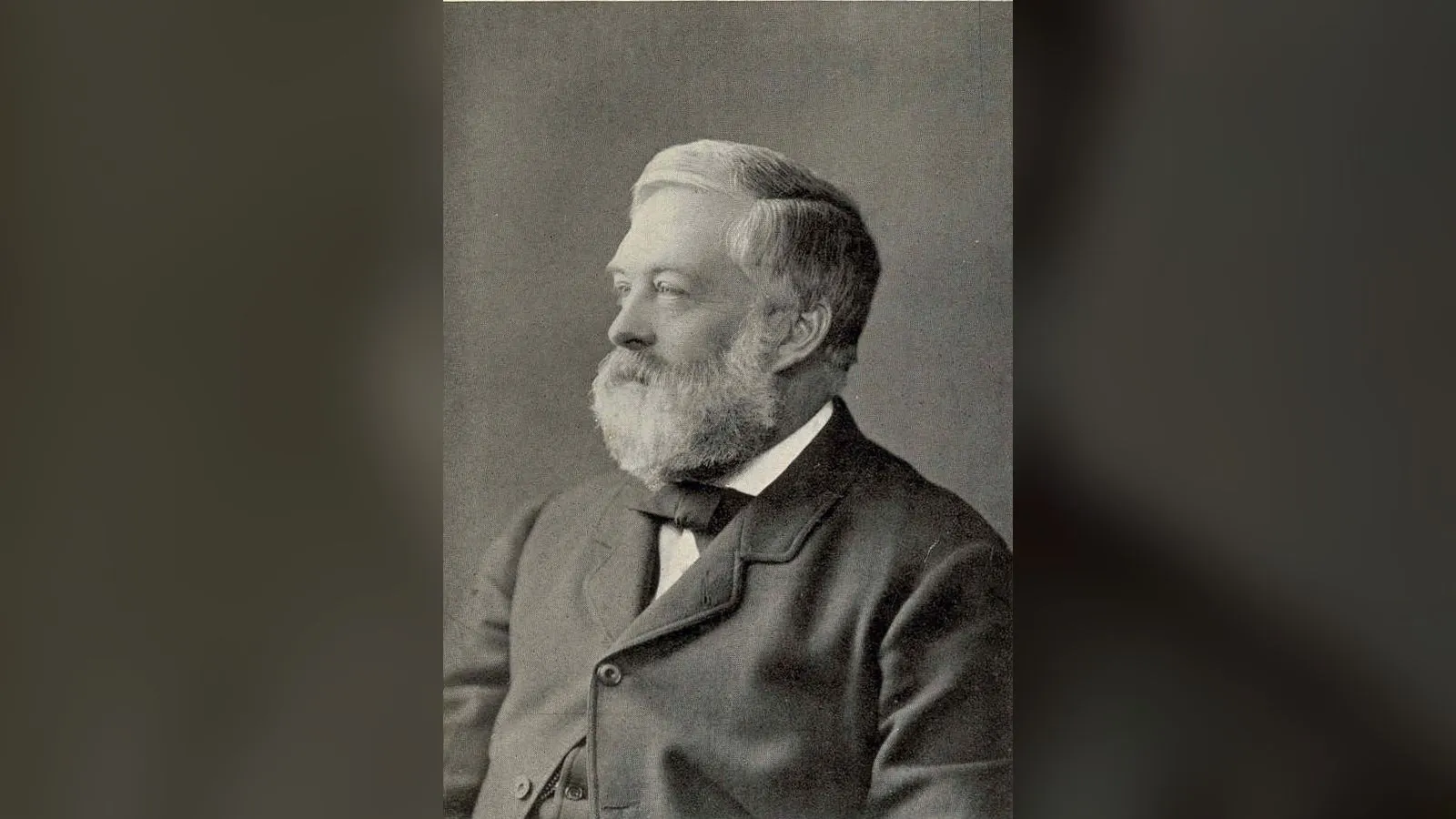

Charles Wyville Thomson (1830–1882)
Contents
TL;DR
- Established/Documented. Thomson's dredging work in the late 1860s directly disproved the long-accepted "azoic theory" — the belief that no life could exist below about 300 fathoms — by recovering living marine organisms from depths of over 2,000 fathoms, fundamentally changing what scientists believed the deep ocean contained.
- Established/Documented. As chief scientist of the HMS Challenger expedition (1872–1876), Thomson led what is very widely regarded as the founding voyage of oceanography as a scientific discipline — a four-year, near-circumnavigating survey that gathered data still referenced by oceanographers today.
- Established/Documented. Thomson did not live to see the full scientific output of his own expedition completed — ill health forced him to step back from the enormous task of processing the Challenger's results, and it was his colleague John Murray who saw the full 50-volume report series through to completion, thirteen years after the voyage ended and more than a decade after Thomson's death.
- Shared/Traditional, worth precision. Thomson is often credited simply as "the founder of oceanography." A fairer framing credits him as the central figure who proved deep-sea life existed and who led the expedition that established the field — while crediting John Murray's substantial, separate contribution to completing and shaping the science that followed.
Key Facts
- Born
- 5 March 1830, Bonsyde, Linlithgow, Scotland
- Died
- 10 March 1882, Bonsyde (aged 52)
- Education
- Medicine, University of Edinburgh (did not complete a medical career)
- Key posts
- Professor of Natural History, Queen's University Belfast; Professor of Natural History, University of Edinburgh (from 1870)
- Landmark achievement
- Chief scientist, HMS Challenger expedition (1872–1876)
- Major works
- The Depths of the Sea (1873); The Voyage of the Challenger: The Atlantic (1877)
- Honours
- Fellow of the Royal Society; knighted following the Challenger expedition
- Legacy
- Wyville Thomson Ridge, North Atlantic, named in his honour
Scottish Impact Index (SI Score)
- Global Influence
- 6/10
- Enduring Relevance
- 8/10
- Material Contribution
- 3/10
- Exceptional Achievement
- 8/10
- Lasting Legacy
- 6/10
- Recognition
- 2/10
33/60
Ranked =74th of 200 in Great Scots
How This Article Handles the Evidence
Thomson's career divides cleanly into two phases that this article treats with equal weight: the earlier dredging work that overturned a specific, widely held scientific assumption about the deep ocean, and the Challenger expedition itself, whose sheer scale meant its full scientific output could not be completed within Thomson's own working lifetime. This article is explicit about that second point — it would be easy to credit Thomson alone with "founding oceanography," but the full realisation of the expedition's scientific legacy depended on John Murray's later work, and this article names that division of labour rather than flattening it into a single-hero account.
Timeline
Born at Bonsyde, near Linlithgow, son of an East India Company surgeon.
Studies medicine at the University of Edinburgh, but shifts toward natural science; joins the Botanical Society of Edinburgh in 1847.
Appointed to a professorship in botany at Aberdeen.
Moves to Queen's College Cork as Professor of Natural History.
Appointed Professor of Mineralogy and Geology at Queen's University of Belfast.
Persuades the Royal Navy to provide HMS Lightning and HMS Porcupine for dedicated deep-sea dredging expeditions, inspired partly by earlier Norwegian dredging work by Michael Sars.
Recovers living marine organisms from depths of over 2,000 fathoms, directly disproving Edward Forbes's long-standing "azoic theory."
Elected a Fellow of the Royal Society.
Appointed Professor of Natural History at the University of Edinburgh.
Selected as chief scientist of the HMS Challenger expedition, which departs in December on a global, nearly four-year scientific circumnavigation.
Publishes The Depths of the Sea, summarising his earlier dredging findings, while the Challenger expedition is already underway.
HMS Challenger returns to Britain, having sailed roughly 68,900 nautical miles and gathered an unprecedented body of oceanographic, biological, and geological data.
Publishes The Voyage of the Challenger: The Atlantic, a preliminary account of the expedition's Atlantic findings; knighted in recognition of his leadership of the expedition.
Serves as Vice President of the Royal Society of Edinburgh.
Health declining under the strain of managing the Challenger's enormous volume of scientific results, Thomson ceases his university teaching duties.
Dies at Bonsyde on 10 March, aged 52.
The full 50-volume Report on the Scientific Results of the Voyage of H.M.S. Challenger, completed under the direction of Thomson's colleague John Murray, is finally finished — thirteen years after Thomson's death.
Details
From medicine to marine biology
Charles Wyville Thomson was born in 1830 near Linlithgow, the son of a surgeon who had served with the East India Company. He began studying medicine at the University of Edinburgh but drifted toward natural science instead, joining Edinburgh's Botanical Society as a teenager and beginning a career path defined by a sequence of academic natural history posts rather than clinical medicine — botany at Aberdeen, natural history at Queen's College Cork, and finally mineralogy and geology at Queen's University Belfast, before eventually returning to Edinburgh in 1870 to take up the university's natural history chair. Among his later Edinburgh students was Arthur Conan Doyle, a detail sometimes noted as a point of interest connecting Thomson to one of Scotland's most famous literary figures, though there is no evidence Thomson had any direct influence on Doyle's later writing.
Disproving the "azoic theory"
Established/Documented, and the essential scientific foundation for everything that followed in Thomson's career: in the mid-19th century, the naturalist Edward Forbes had proposed, based on his own dredging work in the Aegean Sea in the early 1840s, that marine life grew progressively sparser with depth and effectively ceased to exist altogether below roughly 300 fathoms (about 550 metres) — the so-called "azoic theory," or azoic hypothesis. This was a widely accepted scientific assumption for a generation.
Thomson, drawing inspiration partly from the Norwegian naturalist Michael Sars's own dredging discoveries, persuaded the Royal Navy to provide vessels — HMS Lightning in 1868 and HMS Porcupine in 1869 — for dedicated deep-sea dredging expeditions specifically designed to test Forbes's theory. The results were unambiguous: Thomson's dredges recovered living marine organisms from depths exceeding 2,000 fathoms — many times deeper than Forbes's proposed azoic boundary — definitively disproving the theory and demonstrating that a rich, previously unknown ecosystem existed in the deep ocean. This body of work, summarised in his 1873 book The Depths of the Sea, is what established Thomson's scientific reputation and directly set the stage for the much larger expedition that would follow.
The HMS Challenger expedition
Thomson's Lightning and Porcupine results led directly to his selection as chief scientist for the most ambitious oceanographic undertaking yet attempted: the voyage of HMS Challenger, which set sail in December 1872 and did not return until 1876, having covered roughly 68,900 nautical miles across the Atlantic, Pacific, and Southern Oceans. Under Thomson's scientific direction, the expedition systematically sampled ocean depths, temperatures, currents, seafloor sediments, and marine life across a scale and rigour never previously attempted, producing findings that identified thousands of new marine species and laid down oceanographic and bathymetric data that remained scientifically valuable for generations afterward.
Established/Documented, and very widely agreed among historians of science: the Challenger expedition is generally regarded as the single voyage that founded oceanography as a distinct, rigorous scientific discipline, rather than a loose extension of natural history or geography. Thomson's role as its chief scientist is the central achievement of his career and the primary basis for his historical reputation.
An expedition whose full legacy outlived its leader
Established/Documented, and an important corrective to a simplified "Thomson founded oceanography single-handedly" narrative: the sheer volume of material the Challenger expedition brought home was so enormous that processing, analysing, and publishing it into a complete scientific record took decades, not years. Thomson published an initial account, The Voyage of the Challenger: The Atlantic, in 1877 — the year he was also knighted for his leadership of the expedition — but the strain of managing the ongoing analysis of the expedition's full results took a serious toll on his health. He was forced to give up his university teaching duties in 1879, and he died in 1882, only 52 years old, with the complete scientific report still far from finished.
It fell to his colleague John Murray to take over direction of the project and see it through to completion: the full Report on the Scientific Results of the Voyage of H.M.S. Challenger eventually ran to fifty volumes, finally completed in 1895 — thirteen years after Thomson's death. This article credits both men according to their actual, documented roles: Thomson as the expedition's chief scientist and the driving intellectual force behind both the voyage itself and the earlier discoveries that made it possible, and Murray as the essential figure who ensured that the expedition's scientific legacy was actually completed and published in full, a substantial and separate achievement in its own right.
Death and legacy
Thomson died at Bonsyde, near where he had been born, in March 1882, aged just 52 — his relatively early death widely attributed by biographers to the sustained physical and mental strain of managing the Challenger expedition's results in the years after the voyage's return. His legacy is commemorated today in the Wyville Thomson Ridge, an undersea ridge in the North Atlantic between Scotland and the Faroe Islands, and more broadly in his standing as the figure who both proved the deep ocean was inhabited and who led the single expedition most credited with establishing oceanography as a rigorous modern science.
Did You Know
- Before Thomson's work, the accepted scientific view held that no life at all could exist below about 300 fathoms in the ocean — a theory his own dredging expeditions directly disproved.
- He recovered living organisms from depths of more than 2,000 fathoms — nearly seven times deeper than the "azoic" limit that had been widely accepted.
- The HMS Challenger expedition he led covered roughly 68,900 nautical miles over almost four years — one of the most ambitious scientific voyages of the 19th century.
- He taught Arthur Conan Doyle as a student at Edinburgh, though there's no evidence this shaped Doyle's later fiction.
- The full scientific report of the Challenger expedition eventually ran to fifty volumes — a project so large it wasn't finished until 1895, thirteen years after Thomson's own death.
- He was knighted in 1877 in recognition of his leadership of the expedition.
- An undersea ridge in the North Atlantic, the Wyville Thomson Ridge, still bears his name today.
- The strain of managing the Challenger expedition's results is widely believed to have contributed directly to his relatively early death at 52.
Frequently Asked Questions
1Did Charles Wyville Thomson discover deep-sea life?
More precisely, he proved conclusively that it existed at all, by recovering living organisms from depths that the previously accepted "azoic theory" held to be completely lifeless — a landmark scientific finding that reshaped understanding of the ocean.
2Was Thomson really the "founder of oceanography"?
He's very widely credited with this, and the HMS Challenger expedition he led is generally regarded by historians of science as the founding voyage of oceanography as a distinct discipline. It's worth being precise, though, that he did not live to complete the expedition's full scientific output — that task was finished by his colleague John Murray over a decade after Thomson's death.
3What was the azoic theory, and who proposed it?
It was the theory, proposed by naturalist Edward Forbes in the 1840s based on his own dredging in the Aegean Sea, that ocean life became progressively sparser with depth and disappeared entirely below roughly 300 fathoms. Thomson's later dredging work directly and conclusively disproved it.
4Did Thomson complete the Challenger expedition's scientific reports himself?
No — declining health forced him to step back from the project in 1879, and he died in 1882 with the work still far from finished. His colleague John Murray took over and saw the full 50-volume report through to completion in 1895.
5How did leading the Challenger expedition affect Thomson's health?
Severely, according to his biographers — the scale of managing and analysing the expedition's enormous volume of scientific data took a serious physical and mental toll, forcing him to give up his university teaching duties in 1879, three years before his death at 52.
6What is the Wyville Thomson Ridge?
An undersea ridge in the North Atlantic, between Scotland and the Faroe Islands, named in his honour as a lasting marker of his contribution to marine science.
Sources and Further Reading
Primary/Institutional
- Charles Wyville Thomson, The Depths of the Sea (1873)
- Charles Wyville Thomson, The Voyage of the Challenger: The Atlantic (1877)
- Charles Wyville Thomson (1830–1882) — HMS Challenger official history site
- Sir Charles Wyville Thomson — University of Edinburgh
Scholarly
General
Caveats: Myths and Disputed Claims
- "Thomson founded oceanography single-handedly." This article credits him as the expedition's central scientific leader while explicitly naming John Murray's essential, separate role in completing the expedition's full published scientific legacy after Thomson's death.
- The precise vessels and depths associated with his disproof of the azoic theory are given here based on the best-corroborated figures found (HMS Lightning and Porcupine, 1868–69, depths over 2,000 fathoms); minor figures vary slightly between secondary sources.
- The direct medical cause of Thomson's early death is not something this article states as definitively established beyond what biographers generally attribute it to — the severe strain of the Challenger report project — rather than a specific diagnosed condition.
Card 040 · Great Scots