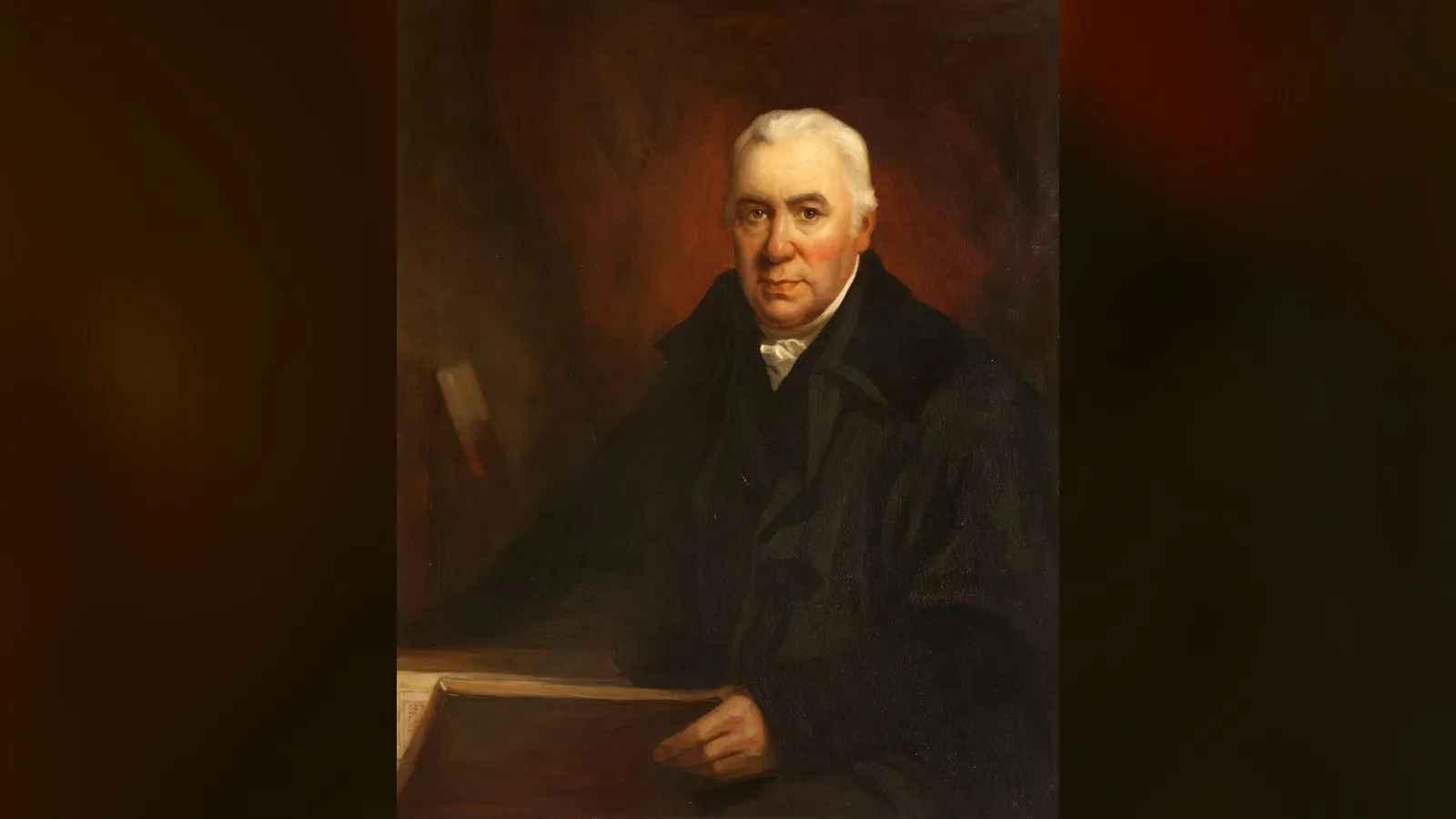

Daniel Rutherford (1749–1819)
Contents
TL;DR
- Established/Documented. Rutherford is generally credited as the first to isolate nitrogen, describing it in his 1772 Edinburgh MD thesis as "noxious air" or "mephitic air" — a substance that neither supported a flame nor sustained animal life.
- Established/Documented, and a genuinely important qualifying fact. Rutherford didn't understand nitrogen as we do today — his interpretation was framed entirely within the now-discredited phlogiston theory, and it took Antoine Lavoisier's later oxygen-based chemistry to properly recontextualise what he had actually found.
- Shared/Traditional, worth precision. Rutherford is usually given primary credit for nitrogen's discovery, but he was working in the same narrow window as several other chemists — notably Carl Wilhelm Scheele and Henry Cavendish — who arrived at closely related findings at nearly the same time; this article treats the credit as reasonably but not uniquely his.
- Established/Documented, and a nice human detail: Rutherford was the uncle of novelist Sir Walter Scott, through his sister Anne Rutherford, Scott's mother — a direct family link between one of chemistry's quieter foundational discoveries and one of the giants of Scottish literature.
Key Facts
- Born
- 3 November 1749, Edinburgh
- Died
- 15 November 1819, Edinburgh (aged 70)
- Family
- Son of physician John Rutherford; uncle of novelist Sir Walter Scott
- Education
- University of Edinburgh, medicine, under Joseph Black and William Cullen; MD, 1772
- Landmark work
- MD thesis "De Aere Mephitico" (1772), describing the isolation of nitrogen
- Later career
- Professor of Botany and Regius Keeper of the Royal Botanic Garden Edinburgh (1786–1819)
- Other roles
- President, Royal College of Physicians of Edinburgh (1796–98); founding member, Royal Society of Edinburgh (1783)
Scottish Impact Index (SI Score)
- Global Influence
- 5/10
- Enduring Relevance
- 8/10
- Material Contribution
- 3/10
- Exceptional Achievement
- 7/10
- Lasting Legacy
- 5/10
- Recognition
- 2/10
30/60
Ranked =93rd of 200 in Great Scots
How This Article Handles the Evidence
Rutherford's case is a good example of how scientific discovery rarely arrives as a single clean moment credited to one person alone. This article gives him the credit generally assigned to him by the historical record — being first to publish a clear isolation and description of nitrogen — while being explicit that closely related, near-simultaneous work by other chemists exists, and that Rutherford's own theoretical framework for understanding what he'd found (phlogiston theory) was itself superseded within his own lifetime.
Timeline
Born in Edinburgh, son of physician John Rutherford and Anne Mackay.
Studies medicine at the University of Edinburgh under Joseph Black and William Cullen.
Submits his MD thesis, "De Aere Mephitico" ("On Mephitic Air"), describing his isolation of what we now call nitrogen; awarded his medical degree.
Travels to France and Italy following his graduation.
Establishes a private medical practice in Edinburgh.
Practises medicine in Edinburgh and contributes to clinical teaching at the medical school, including delivering clinical lectures at the Royal Infirmary alongside Andrew Duncan and Francis Home.
Founding member of the Royal Society of Edinburgh.
Appointed Professor of Botany at the University of Edinburgh and fifth Regius Keeper of the Royal Botanic Garden Edinburgh, also becoming King's Botanist in Scotland; marries Harriet Mitchelson the same year.
Publishes a botanical compilation on plant characteristics.
Serves as President of the Royal College of Physicians of Edinburgh.
Moves to 20 Picardy Place, Edinburgh.
Dies suddenly in Edinburgh on 15 November, aged 70.
Details
A medical education among Edinburgh's finest
Daniel Rutherford was born in Edinburgh in 1749 to physician John Rutherford and Anne Mackay, growing up in a family already embedded in the city's medical establishment. He studied medicine at the University of Edinburgh under two of the most significant scientific teachers of the era — William Cullen and, crucially for his own future discovery, Joseph Black, whose own pioneering work on "fixed air" (carbon dioxide) provided both the experimental method and the conceptual framework Rutherford would build directly on in his own research (see this series' article on Joseph Black for the fuller context). This teacher-student line, running from Cullen through Black to Rutherford, is itself a clear illustration of how concentrated and interconnected Edinburgh's scientific community was during this period.
Isolating nitrogen: "noxious air"
Established/Documented, and the central achievement of Rutherford's career: Rutherford's 1772 medical doctoral thesis, submitted under the Latin title "De Aere Mephitico," described a careful and methodical set of experiments. Working from Black's own techniques for identifying and measuring distinct gases, Rutherford sealed a mouse inside a confined volume of air until the animal died, then further burned a candle within the same air until it too was extinguished, then ignited phosphorus within it until that too would no longer burn, and finally passed the remaining air through a solution capable of absorbing carbon dioxide. What remained after all of this — a gas that supported neither flame nor animal life, and was distinct from the carbon dioxide Black had already identified — Rutherford termed "noxious air" or "mephitic air." This is, in substance, the first clear scientific isolation and description of what would later be named nitrogen, one of the most fundamental discoveries in the early history of modern chemistry, arrived at through a 22-year-old medical student's doctoral research.
An interpretation built on a theory later abandoned
Established/Documented, and an important qualification to state directly rather than letting modern readers assume Rutherford understood nitrogen as we do: Rutherford's own interpretation of his findings was framed entirely within phlogiston theory — the then-dominant chemical framework holding that combustible materials contained a fire-like substance, "phlogiston," released during burning. Within that framework, Rutherford and his mentor Black understood the residual gas as ordinary air that had become "saturated" with phlogiston released by the burning candle, phosphorus, and the respiring mouse, and was consequently no longer able to support further combustion or respiration.
This was a reasonable, careful interpretation within the available theoretical toolkit of 1772 — but phlogiston theory itself was overturned within Rutherford's own lifetime, when Antoine Lavoisier's oxygen-based understanding of combustion and respiration, developed through the 1770s and 1780s, provided the correct modern explanation: the residual gas Rutherford had isolated was not "phlogisticated air" but rather air from which oxygen had been removed, leaving predominantly nitrogen. Rutherford's experimental work and his resulting isolation of the gas itself stand as sound and significant regardless of this later theoretical correction — but this article is explicit that the concept he used to explain his own findings was subsequently discarded by the science he helped build toward.
Not quite alone: near-simultaneous discovery
Shared/Traditional, and worth stating with appropriate nuance rather than treating Rutherford's priority as uncontested: Rutherford is generally credited, including in most standard chemistry histories, as the first to isolate and publish a description of nitrogen, on the strength of his 1772 thesis. However, he was working in very close proximity, in time, to other chemists pursuing closely related lines of investigation: the Swedish chemist Carl Wilhelm Scheele and the English chemist and physicist Henry Cavendish both conducted closely related work identifying and characterising what amounted to the same gas at nearly the same period. The exact question of precise priority — who identified what, and precisely when, and how independently each researcher's work should be understood relative to the others' — is a matter historians of chemistry continue to discuss with some nuance, rather than a single, uncontested fact. This article presents Rutherford's credit as reasonably and conventionally given, on the strength of his clearly documented and dated 1772 publication, while noting that he was not working in isolation from a broader contemporary scientific effort converging on the same discovery.
A second career in botany
Following several years of active medical practice in Edinburgh, including real contributions to clinical teaching at the medical school, Rutherford's career took a significant turn in 1786, when he was appointed Professor of Botany at the University of Edinburgh and the fifth Regius Keeper of the Royal Botanic Garden Edinburgh — a position he would hold for the remaining 33 years of his life, alongside the role of King's Botanist in Scotland. This represents a genuinely substantial second career distinct from the chemical discovery for which he's primarily remembered today; he published botanical scholarship, including a 1793 compilation on plant characteristics, and by most accounts built a serious and sustained institutional legacy in Scottish botanical science quite separate from his early work on gases. He was also a founding member of the Royal Society of Edinburgh in 1783 and served as President of the Royal College of Physicians of Edinburgh from 1796 to 1798, reflecting continued standing within the city's medical establishment throughout his later career.
Family: an uncle to Walter Scott
Established/Documented, and a detail worth including for the direct connection it draws between two very different strands of Scottish achievement: Rutherford's sister, Anne Rutherford, married Walter Scott the elder, and their son was the future novelist and poet Sir Walter Scott — meaning Daniel Rutherford was Walter Scott's maternal uncle. This is a small but genuine thread connecting the scientific and literary output of Enlightenment and post-Enlightenment Edinburgh through a single family.
Death and legacy
Rutherford died suddenly in Edinburgh in November 1819, aged 70, having spent the final decades of his career as a respected botanist and physician following his earlier chemical discovery. His modern legacy rests almost entirely on the 1772 nitrogen work, and it's fair to note — as this article's TL;DR states — that his name is considerably less widely known today than many contemporaries working in related fields, in part because nitrogen's discovery is sometimes presented in broader chemistry histories as a shared or contested achievement among several near-simultaneous researchers rather than Rutherford's alone. Nonetheless, the clear, dated, methodical account in his own 1772 thesis remains the conventional reference point historians of chemistry use when crediting the gas's discovery, and his subsequent, quite separate, three-decade career in Scottish botanical science stands as a substantial achievement in its own right.
Did You Know
- Daniel Rutherford's father, John Rutherford, reportedly let the quack James Graham try electrical treatment on the weak leg of his young grandson Walter Scott.
- Daniel Rutherford discovered nitrogen as part of his medical doctoral thesis — not as a professional chemist, but as a 22-year-old medical student.
- His method involved sealing a mouse, then a burning candle, then burning phosphorus, inside the same container of air, to strip out everything that supported life or combustion.
- He interpreted his own discovery using phlogiston theory — a scientific framework that was itself overturned within his own lifetime.
- He wasn't working entirely alone — other chemists, including Carl Wilhelm Scheele and Henry Cavendish, were pursuing closely related discoveries at almost exactly the same time.
- He spent the final 33 years of his career not as a chemist but as Professor of Botany and Keeper of the Royal Botanic Garden Edinburgh.
- He was the uncle of novelist Sir Walter Scott, through his sister Anne.
- He studied directly under Joseph Black, whose earlier discovery of carbon dioxide provided the experimental techniques Rutherford built on for his own nitrogen research.
- He was a founding member of the Royal Society of Edinburgh in 1783.
Frequently Asked Questions
1Did Daniel Rutherford really discover nitrogen?
He is generally credited as the first to isolate and clearly describe it, in his 1772 medical thesis — though other chemists, including Carl Wilhelm Scheele and Henry Cavendish, were working on closely related discoveries at nearly the same time, so this article treats his priority as conventionally, rather than uniquely, established.
2Did Rutherford understand what nitrogen actually was?
Not in the modern sense. He interpreted his discovery through phlogiston theory, a framework that was later overturned by Antoine Lavoisier's oxygen-based chemistry. His experimental isolation of the gas was sound; his theoretical explanation for it was not.
3What was his experimental method?
He sealed a mouse in a confined volume of air until it died, then burned a candle in the same air until it went out, then burned phosphorus in it too, and finally passed the remaining gas through a solution that absorbed carbon dioxide — leaving behind the gas he called "noxious air," now known as nitrogen.
4Was chemistry his whole career?
No — after some years in medical practice, he spent the last 33 years of his career as Professor of Botany and Keeper of the Royal Botanic Garden Edinburgh, a substantial second career quite separate from the discovery he's best remembered for.
5Is he related to any other famous historical figures?
Yes — he was the uncle of novelist Sir Walter Scott, through his sister Anne Rutherford, Scott's mother.
6Why isn't Rutherford as famous as other Scottish Enlightenment scientists?
Partly because nitrogen's discovery is often presented in chemistry histories as a near-simultaneous, somewhat shared achievement among several chemists rather than a single clean breakthrough credited to one figure — a genuine factor in his relative modern obscurity compared to contemporaries like Joseph Black.
Sources and Further Reading
Primary/Institutional
- Daniel Rutherford, "De Aere Mephitico" (MD thesis, University of Edinburgh, 1772)
- Daniel Rutherford (1749–1819) — Our History, University of Edinburgh
- Daniel Rutherford — Royal College of Physicians of Edinburgh
Scholarly
- Helen M. Dingwall, A History of Scottish Medicine: Themes and Influences (Edinburgh University Press, 2003), chapter 6 — further reading
- Daniel Rutherford — Britannica
- Phlogiston theory — overview and history
General
Caveats: Myths and Disputed Claims
- "Rutherford alone discovered nitrogen." This article presents his credit as the conventionally recognised one (based on his dated 1772 publication), while noting the closely contemporaneous, related work of Scheele and Cavendish rather than implying sole, uncontested priority.
- Rutherford's own theoretical explanation of his discovery (phlogiston theory) is stated clearly as superseded, distinct from the validity of his actual experimental isolation of the gas itself.
- The precise degree of independence between Rutherford's, Scheele's, and Cavendish's work is a matter of ongoing historical nuance rather than a fully settled question, and this article does not claim more certainty on this point than the sources support.
Card 045 · Great Scots