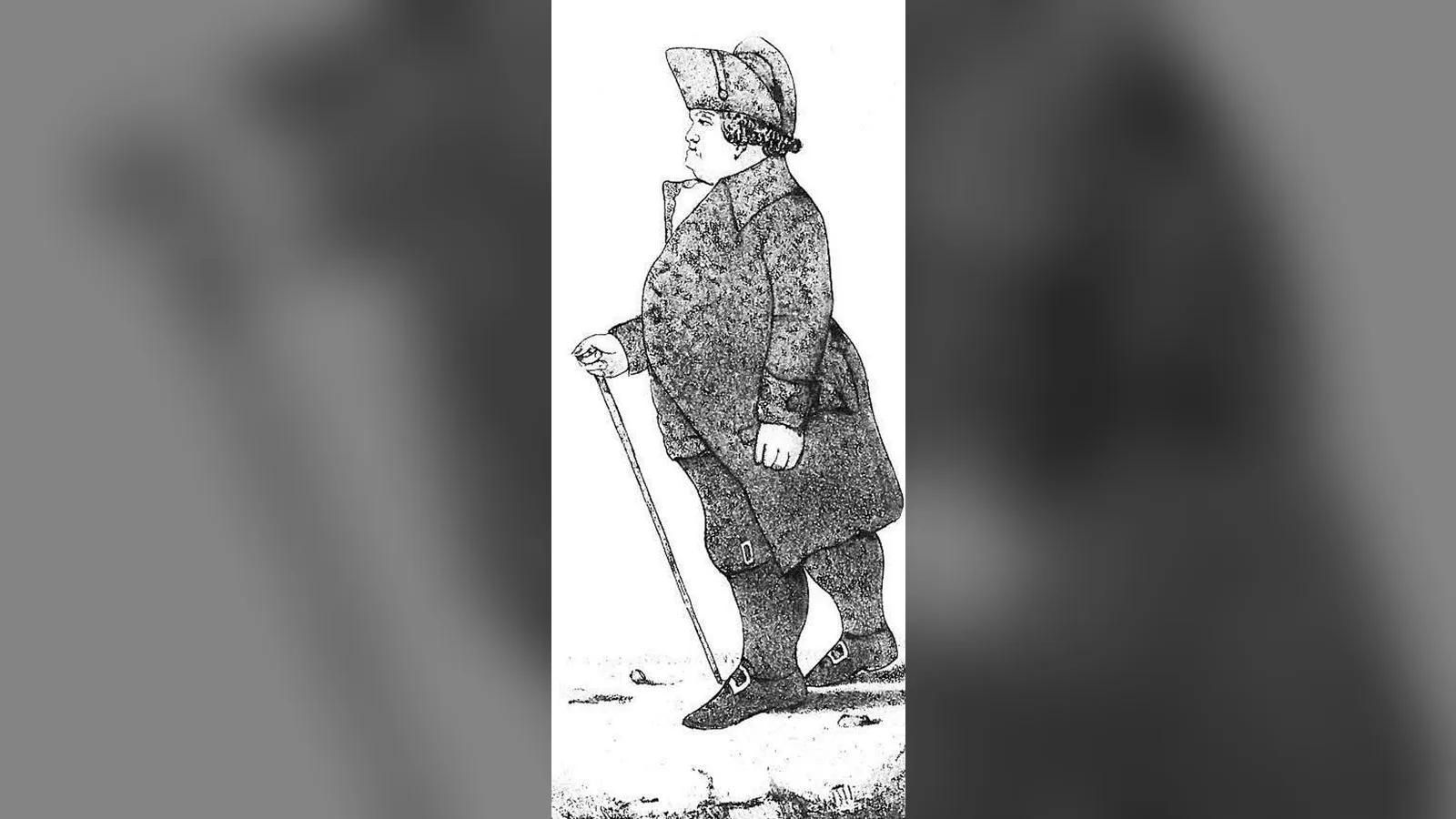

David Dale (1739–1806): Merchant, Mill Owner, and the Man Before Robert Owen
Contents
TL;DR
- Established/Documented: David Dale rose from a herd boy and apprentice weaver in Ayrshire to become one of Glasgow's leading merchants, bankers, and industrialists, co-founding the New Lanark cotton mills with Richard Arkwright in 1784-85 and building them into one of Britain's largest and most celebrated industrial communities.
- Established/Documented: Dale employed several hundred pauper apprentice children at New Lanark, housed in dedicated dormitories, and by the standards of contemporary British factory and workhouse practice provided genuinely better food, clothing, medical care, and schooling than these children would typically have received elsewhere — a fact attested by independent visitors including the public health reformer Dr James Currie.
- Established/Established, but requires context: This same system still involved several hundred unpaid children, some as young as the pauper apprenticeship system allowed, working roughly thirteen-hour days, six days a week — conditions that should be understood as relatively humane by the standards of 1790s industrial Britain, not as humane in any absolute or modern sense.
- Established/Documented: Dale was a committed evangelical Christian and an active, financially serious philanthropist across multiple causes — hospitals, prison reform, poor relief, education — and chaired the Glasgow Society for the Abolition of the Slave Trade from 1791, despite his mills' raw cotton being sourced from slave-labour economies in the Americas.
- Shared/Traditional, worth correcting: New Lanark's reputation as a model of industrial welfare is popularly and almost entirely credited to Robert Owen, Dale's son-in-law and eventual successor; the historical record is clear that Owen inherited, and built upon, an already well-established and independently celebrated system of welfare, housing, and education that Dale had created over the preceding fifteen years.
Key Facts
- Born
- 6 January 1739, Stewarton, Ayrshire, Scotland
- Died
- 7 March 1806, Rosebank House, Cambuslang, near Glasgow (aged 67)
- Occupation
- Merchant, banker, textile manufacturer, philanthropist
- Known for
- Co-founding and developing New Lanark cotton mills; pioneering welfare and education provisions for factory workers and pauper apprentice children
- Key achievement
- Building New Lanark into one of the earliest and most celebrated examples of industrial welfare provision in Britain, combining profitable large-scale manufacturing with schooling, healthcare, and housing for workers
- Notable relationships
- Business partner Richard Arkwright; son-in-law and successor Robert Owen (married Dale's daughter Caroline in 1799); business partner Claud Alexander (Catrine mills)
- Religious life
- Left the Church of Scotland over patronage disputes; co-founded the Old Scotch Independent congregation and served as an unpaid pastor
- Legacy
- New Lanark is a UNESCO World Heritage Site; Dale is increasingly recognised by historians as the true originator of the welfare model long credited almost solely to Robert Owen
Scottish Impact Index (SI Score)
- Global Influence
- 4/10
- Enduring Relevance
- 7/10
- Material Contribution
- 4/10
- Exceptional Achievement
- 5/10
- Lasting Legacy
- 4/10
- Recognition
- 2/10
26/60
Ranked =125th of 200 in Great Scots
A Note on Claims and Evidence
This article tiers claims by evidential strength. Established/Documented claims rest on multiple independent, well-corroborated sources, including contemporary visitor accounts and Dale's own surviving records. Shared/Traditional claims are widely repeated but rest on thinner sourcing or reflect a popular simplification of a more complicated record. David Dale's story requires two distinct kinds of correction, pulling in opposite directions: first, correcting the popular tendency to credit Robert Owen with innovations Dale had already established; and second, resisting the temptation, in making that correction, to present Dale's treatment of child labour as more comfortable than the documented working hours and conditions actually were. Both corrections are given full weight here.
Timeline
Born 6 January in Stewarton, Ayrshire, son of general dealer William Dale; works as a herd boy in childhood.
Apprenticed to a handloom weaver in Paisley.
Works as a yarn agent in Hamilton and Cambuslang before moving to Glasgow around 1763 as a silk merchant's clerk.
Establishes his own import business trading French and Dutch linen yarns on Glasgow's High Street, which grows into a substantial merchant enterprise; becomes a burgess of Glasgow and joins the Merchant Guild and Trades House.
Marries Anne Caroline Campbell, daughter of a former Royal Bank of Scotland executive; the couple have several children, several of whom die in infancy.
Co-founds Glasgow's first Royal Bank of Scotland agency; becomes a founding director of the Glasgow Chamber of Commerce, the first of its kind in Britain.
Richard Arkwright visits Scotland; Dale and landowner George Dempster accompany him to the Falls of Clyde site that becomes New Lanark. A partnership forms to build cotton mills there, based on Arkwright's Cromford design.
The New Lanark mills begin spinning. Arkwright and Dempster subsequently withdraw from active involvement, leaving Dale as sole owner.
Partners with Claud Alexander to establish mills at Catrine, Ayrshire, eventually employing around 1,300 workers.
New Lanark grows to house nearly 1,400 people, including several hundred pauper apprentice children from Glasgow and Edinburgh workhouses; Dale establishes a structured day and evening school system, eventually enrolling over 500 pupils under 16 trained teachers. Visitors including William and Dorothy Wordsworth and Samuel Taylor Coleridge tour the site, drawn by its reputation.
Chairs the founding meeting of the Glasgow Society for the Abolition of the Slave Trade.
Sells the Blantyre mills to James Monteith.
The Glasgow Royal Infirmary opens; Dale, who chaired its fundraising committee from 1788 and contributed personally, becomes a manager.
Dale's daughter Caroline marries Robert Owen, a Manchester cotton manufacturer who had been courting a partnership in New Lanark.
Robert Owen assumes management of New Lanark following its purchase by Owen and his business partners.
Dale sells his Catrine mill interests to James Finlay as he winds down his active business involvement.
Dies at Rosebank House, Cambuslang, aged 67; buried at Ramshorn Cemetery, Glasgow, following a funeral procession reportedly lined by large crowds.
Details
From Herd Boy to Glasgow Merchant
David Dale's early life gave little indication of the commercial empire he would eventually build. Born in 1739 in Stewarton, Ayrshire, to a general dealer, he worked as a young boy herding cattle before being apprenticed to a handloom weaver in Paisley — a trade, notably, that would later be devastated by the very industrial mechanisation Dale himself helped pioneer, a pattern this series has now documented in more than one Scottish industrialist's origin story. After working as a yarn agent, he moved to Glasgow around 1763 and built, over roughly two decades, a substantial merchant business trading imported linen yarns, eventually becoming a burgess of the city, a director of Scotland's first Chamber of Commerce, and, from 1783, Glasgow's first agent for the Royal Bank of Scotland — a branch that within a few years was conducting business worth a million pounds. By any measure, Dale was already a significant figure in Glasgow's commercial life well before New Lanark existed.
Founding New Lanark
In 1784, the English inventor and industrialist Richard Arkwright — whose water-powered spinning frame had already transformed textile manufacturing in England — visited Scotland at the invitation of the landowner George Dempster, seeking suitable sites for new mills. Dale and Dempster accompanied Arkwright to the Falls of Clyde, whose fast-flowing water made it an ideal site for powering cotton-spinning machinery, and a partnership quickly formed to build mills there based on Arkwright's existing Cromford design. Spinning began in early 1786. Arkwright and Dempster's direct involvement proved short-lived, and Dale retained sole ownership of New Lanark from shortly after its founding, managing and developing it personally for the following fifteen years.
Building a Model Industrial Community
What distinguished New Lanark from countless other cotton mills built across Britain in this period was Dale's deliberate, sustained investment in the welfare of the people who worked there — a genuinely unusual commitment for an industrialist of his era, and one that deserves to be assessed on its own terms rather than solely as a prelude to Robert Owen's later, more famous reforms. By the 1790s, New Lanark housed nearly 1,400 people. Workers received well-documented, substantial food provision — porridge for breakfast, barley broth and fresh beef for dinner, a standard of catering genuinely notable for an industrial workforce of the period. Dale established a comprehensive schooling system, with a day school for younger children and an evening school running from 7 to 9pm for working children and adults, teaching reading, writing, arithmetic, sewing, music, and religious instruction; by the mid-1790s, the school employed sixteen trained teachers across eight ability-grouped classes, enrolling over 500 pupils, with teachers receiving bonuses tied to pupil progress. The public health campaigner Dr James Currie, visiting independently, recorded that "the utmost cleanliness, health and order pervaded the whole manufactory" — an external, contemporaneous endorsement rather than a later, self-serving account.
The Pauper Apprentices: Progressive for Its Era, Still Child Labour
The part of New Lanark's history that most demands careful, unflattering precision is Dale's employment of pauper apprentice children — by 1793, around 800 children out of a total workforce of roughly 1,157, sourced from Glasgow and Edinburgh workhouses as unpaid indentured labour in exchange for board, lodging, clothing, and basic education. It is entirely accurate, and well documented by multiple independent sources, that Dale's provision for these children was genuinely better than the alternative most of them faced: Dale's own 1796 report describes whitewashed dormitory walls, scalding-water-and-sand floor cleaning, regular linen changes, and shoes provided except in summer, with three children sharing each bed. As one historical assessment puts it plainly, these children "were certainly far better off here in New Lanark than they would have been in the Work Houses of the City slums."
But "better than the workhouse" is a genuinely low bar, and this article does not let that comparison obscure the underlying reality: these were still several hundred unpaid children, working roughly thirteen-hour days (documented as running from 6am to 7pm, with breakfast and dinner breaks) six days a week, in conditions that would be regarded as a serious human rights violation by any modern standard. Dale's own stated justification — that such employment turned "destitute orphans, children abandoned by their parents" into people with "stout, healthy bodies and decent behaviour" rather than society's "pests" — reflects a genuine paternalistic concern for these children's welfare within the moral framework of his time, but it is also, in plain terms, a justification for a system of large-scale unpaid child labour. Both things are true simultaneously, and this article treats them as such rather than resolving the tension in either direction.
Diversification: Catrine, Blantyre, and Spinningdale
Dale did not confine his industrial ambitions to New Lanark. In 1788 he partnered with Claud Alexander to establish mills at Catrine in Ayrshire, which grew to employ around 1,300 workers before Dale sold his interest to James Finlay in 1801. He also built mills at Blantyre, sold in 1792 to James Monteith, and backed a charitable mill venture at Spinningdale in Sutherland, explicitly intended to relieve rural poverty and reduce emigration pressure in the Highlands — a detail that reflects the same welfare-oriented instinct that shaped New Lanark, applied to a different region and problem. He also established a Turkey Red dyeworks at Dalmarnock in Glasgow and a tape ("incles") manufactory, and built a substantial property and insurance investment portfolio alongside these manufacturing interests.
Faith, Philanthropy, and a Genuine Abolitionist Commitment — With a Caveat
Dale's religious convictions were neither decorative nor incidental to his public life. He left the Church of Scotland over objections to ecclesiastical patronage and co-founded the Old Scotch Independent congregation, serving as an unpaid pastor and preaching regularly in Glasgow. His recorded sermons show a direct, theologically grounded concern for the poor: "Riches... frequently take to themselves wings and fly away... if these are obtained by oppressing the poor... your riches are corrupted." This was not merely rhetorical. He served for two decades directing Glasgow's Town's Hospital poor-relief institution, chaired the fundraising committee for the Glasgow Royal Infirmary from its 1788 founding, personally referred patients from New Lanark for treatment there between 1795 and 1803, and supported causes ranging from prison reform to famine relief grain shipments for Glasgow's destitute, earning a reputation, as a magistrate, as "the Benevolent Magistrate" for his leniency.
His abolitionism, too, was genuine and organisationally serious: he chaired the Glasgow Society for the Abolition of the Slave Trade from its founding in January 1791, whose members formally resolved that the slave trade was "founded on the grossest injustice" and constituted behaviour "disgraceful to the nation." It is worth stating plainly, however, rather than leaving unexamined, that this abolitionist commitment sat alongside a cotton manufacturing business whose raw material was sourced from slave-labour economies in the Americas and West Indies — a contradiction Dale shared with essentially the entire British cotton industry of his era, and one that does not erase the genuineness of his abolitionist activism, but that should not be edited out of the record either.
Robert Owen and the Question of Credit
The marriage of Dale's daughter Caroline to the Manchester cotton manufacturer Robert Owen in 1799, followed by Owen's purchase of New Lanark and assumption of its management on 1 January 1800, marks the point at which the popular historical record begins to diverge sharply from the documented one. Robert Owen would go on to become one of the most famous social reformers of the 19th century, and New Lanark under his management became internationally celebrated as a pioneering experiment in humane industrial management and early socialist thought. The difficulty, well recognised by serious historians, is that Owen's own writings and public presentation of New Lanark's history tended to understate how much of the welfare infrastructure — the schooling system, the housing standards, the healthcare provision, the broader philosophy of combining profitable manufacturing with worker welfare — he inherited directly from Dale, who had already built and refined these systems over the preceding fifteen years. This is not a case of active deception so much as a natural tendency for a reformer to foreground his own innovations; but the effect, compounded over two centuries of retelling, has been to leave David Dale as a comparatively obscure footnote to a story he substantially authored. This article, consistent with this series' standard, credits Owen fully for his own genuine and further reforms while restoring Dale's independently documented and contemporaneously celebrated role to its proper place in the record.
Death and Legacy
David Dale died on 7 March 1806 at Rosebank House in Cambuslang, near Glasgow, at the age of 67, and was buried at Ramshorn Cemetery in the city, in a plot he had purchased some years earlier. His funeral procession reportedly drew large crowds lining Glasgow's streets, a genuine popular testament to his standing in the city. The Glasgow Herald's obituary captured the consistent theme of contemporary assessments of him: "his ear was never shut to the cry of distress; his private charities were boundless." The historian Tom Devine has described Dale as "the greatest cotton magnate of his time in Scotland," a judgment that rests not only on the scale of his manufacturing enterprises but on his genuinely unusual integration of profitable industry with sustained, well-documented investment in worker welfare, education, and community health — the model that New Lanark, now a UNESCO World Heritage Site, is chiefly remembered for today, even when that memory too often names only his successor.
Did You Know?
- David Dale began his working life as a herd boy in rural Ayrshire, decades before he became one of Glasgow's most significant merchants, bankers, and industrialists.
- Dale co-founded Glasgow's first Chamber of Commerce and established the city's first Royal Bank of Scotland agency before he ever became involved in cotton manufacturing.
- New Lanark attracted visitors from across Europe during Dale's ownership, including the poets William and Dorothy Wordsworth and Samuel Taylor Coleridge, drawn by its reputation for combining industry with welfare.
- Dale's pauper apprentice children at New Lanark received notably better food, housing, and schooling than most industrial or workhouse children of the era — but they were still unpaid, and worked roughly thirteen-hour days, six days a week.
- Dale left the Church of Scotland over a dispute about ecclesiastical patronage and became an unpaid preacher for his own independent congregation, the Old Scotch Independents.
- He chaired the Glasgow Society for the Abolition of the Slave Trade from 1791, even as his own cotton mills depended on raw material sourced from slave-labour economies — a contradiction he shared with the entire British cotton industry of his time.
- Robert Owen, Dale's son-in-law, is popularly credited as the originator of New Lanark's welfare and education system, but historians widely recognise that Owen inherited and expanded a system Dale had already built and run successfully for fifteen years.
- Dale's funeral procession in 1806 reportedly drew large crowds lining the streets of Glasgow — a measure of his genuine standing in the city he had done so much to shape commercially and charitably.
Frequently Asked Questions
1Did Robert Owen invent New Lanark's famous welfare and education system?
No, not from scratch. David Dale had already established comprehensive schooling, structured housing, and welfare provision for workers and pauper apprentice children over the fifteen years he ran New Lanark before Owen took over in 1800. Owen expanded and further refined this system and brought it to much wider international fame, but the foundational model was Dale's.
2Was New Lanark under Dale a genuinely humane place to work by the standards of its time?
Relative to other contemporary factories and, especially, workhouses, yes — this is well documented by independent visitors. But "better than the alternatives available in 1790s Britain" should not be mistaken for humane by modern standards: several hundred unpaid pauper children worked roughly thirteen-hour days, six days a week, even under Dale's comparatively better conditions.
3How many children worked at New Lanark under Dale, and what did they receive in return?
By 1793, around 800 children were employed out of a total workforce of roughly 1,157. They received board, lodging, clothing, and structured schooling, but no wages, as part of the pauper apprenticeship system common to British industry at the time.
4Was David Dale an abolitionist while running a cotton business dependent on slave-grown cotton?
Yes to both, and this article does not resolve that tension. Dale chaired the Glasgow Society for the Abolition of the Slave Trade from 1791 and was a genuinely committed activist on the issue, while his mills' raw cotton came from slave-labour economies in the Americas and West Indies — a contradiction shared by virtually the entire British cotton industry of the period.
5What was David Dale's relationship to Robert Owen?
Owen married Dale's daughter Caroline in 1799 and subsequently purchased New Lanark with business partners, assuming its management on 1 January 1800. Owen went on to become a far more internationally famous reformer than Dale, but built directly on the welfare and education foundations Dale had already established.
6What other businesses did David Dale run besides New Lanark?
He operated mills at Catrine (with partner Claud Alexander) and Blantyre, a charitable mill venture at Spinningdale in Sutherland aimed at relieving Highland poverty, a dyeworks in Dalmarnock, a tape manufactory, and substantial banking and property interests, alongside his original Glasgow merchant business.
7Was Dale primarily a businessman or a philanthropist?
Both, in a genuinely integrated way rather than as separate pursuits. He was one of Scotland's most significant industrialists of his era, and simultaneously a serious, financially committed philanthropist across hospitals, prison reform, poor relief, and education — New Lanark itself being the clearest expression of that combination.
8Why is Dale less famous today than Robert Owen?
Largely because Owen's own writings and public advocacy, and his far more extensive subsequent career as an international social reformer and early socialist thinker, tended to foreground his own contributions to New Lanark over Dale's prior work, a pattern later popular retellings have generally continued rather than corrected.
9Where is David Dale buried?
At Ramshorn Cemetery in central Glasgow, in a plot he had purchased during his lifetime.
10Is New Lanark still standing today?
Yes. It is preserved as a UNESCO World Heritage Site, recognised for its exceptional significance as an early model of industrial community planning combining manufacturing with social welfare provision.
Sources and Further Reading
Primary / Institutional
- David Dale's 1796 report on New Lanark dormitory and welfare conditions
- Minutes of the Glasgow Society for the Abolition of the Slave Trade, 1791–1792
- National Galleries Scotland: portrait of David Dale by James Tassie
- National Portrait Gallery: David Dale
Scholarly / Reference
- Wikipedia: "David Dale"
- Wikipedia: "Robert Owen"
- Open University OpenLearn: "Robert Owen and New Lanark"
- Encyclopedia.com: "Dale, David"
General / Popular
Caveats: Myths and Disputed Claims
- "Robert Owen created New Lanark's famous welfare system." Inaccurate as commonly told. The core system — structured schooling, dedicated housing, healthcare access, welfare provision for pauper apprentice children — was built and run successfully by David Dale for fifteen years before Owen took over in 1800. Owen expanded on this foundation significantly and brought it to far wider fame, but did not originate it.
- "Dale's treatment of pauper apprentice children was humane in any absolute sense." This overstates the case. Dale's provision was genuinely better than the workhouse alternative and than most contemporary factory conditions, independently attested by visitors such as Dr James Currie — but several hundred unpaid children still worked roughly thirteen-hour days, six days a week, under his system. This article presents both facts together rather than allowing the comparative framing to stand alone.
- Death date discrepancy. Most standard sources give 7 March 1806 as Dale's date of death; at least one source gives 17 March. This is treated here as a minor archival inconsistency rather than a substantive dispute.
- "Dale's abolitionism was inconsistent with his business, and therefore insincere." The contradiction between Dale's genuine, organisationally serious abolitionist activism and his mills' dependence on slave-grown cotton is real and is stated plainly in this article — but it does not, on its own, establish that his abolitionist commitment was insincere; it reflects a contradiction common to nearly the entire British cotton industry of the period, Dale included.
Card 074 · Great Scots