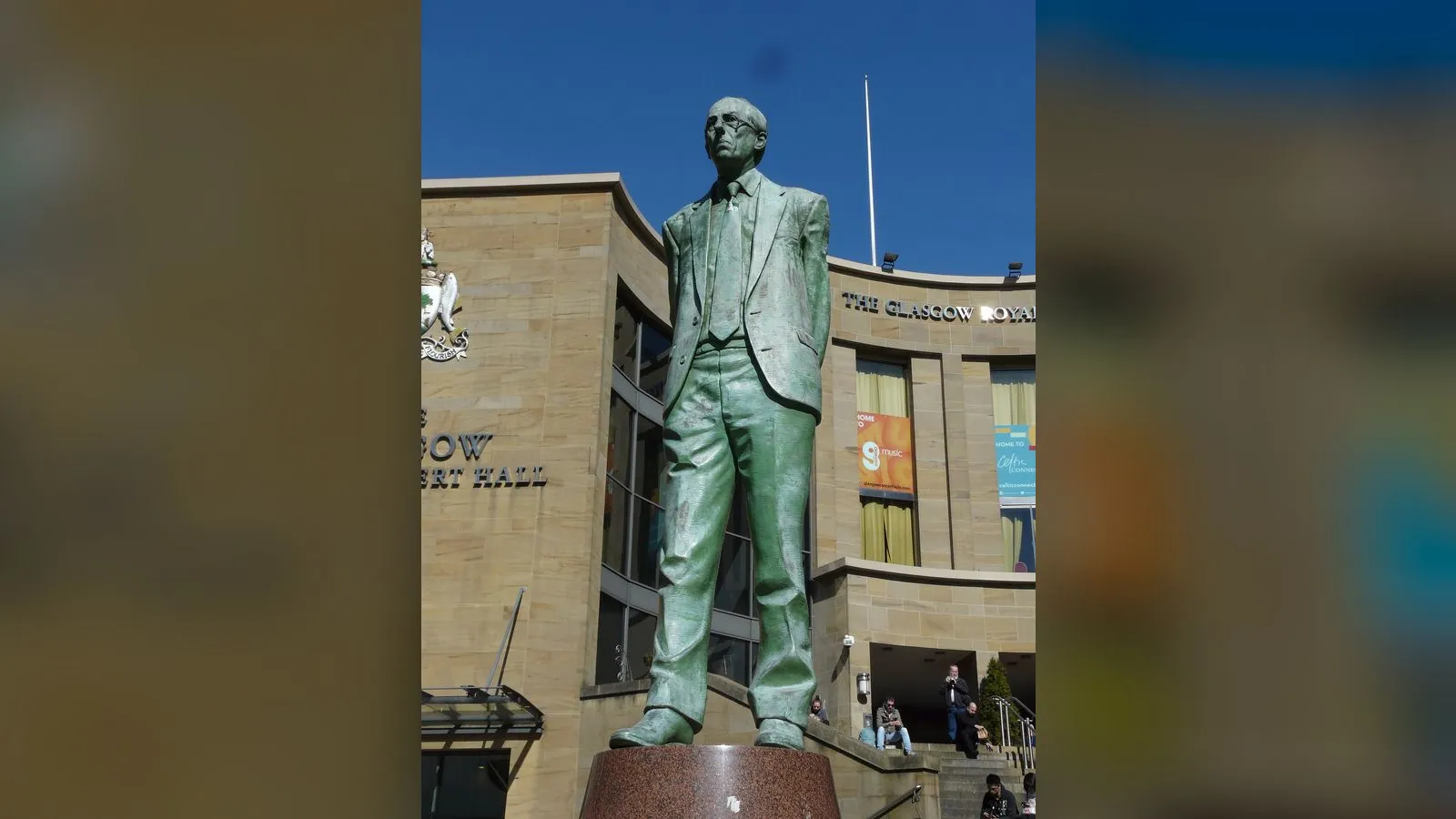

Donald Dewar (1937–2000)
Contents
TL;DR
- established Born and raised in Glasgow, Dewar became Scotland's first First Minister following the 1999 restoration of the Scottish Parliament, and is widely and accurately credited as the chief architect of Scottish devolution, having driven both the 1997 referendum and the Scotland Act 1998 through his role as Secretary of State for Scotland.
- established Dewar's 1964 marriage to Alison McNair ended in divorce in 1973 after she began a relationship with Derry Irvine, a prominent barrister and close friend who had been best man at the Dewars' wedding; Dewar never remarried, and the two men later served together in Tony Blair's cabinet from 1997 to 1999 without any recorded reconciliation — a genuinely painful personal episode this article reports directly, given its documented and lasting effect on Dewar's private life.
- established He died suddenly in October 2000, just over a year into his historic premiership, after a fall outside his official residence triggered a massive brain hemorrhage, possibly connected to blood-thinning medication he was taking following earlier heart surgery that year.
- established He is widely remembered in Scotland as the "Father of the Nation" for his central role in restoring the Scottish Parliament after a gap of nearly 300 years, a legacy memorialised in a 2002 Glasgow statue inscribed with his words: "There Shall Be A Scottish Parliament."
- Shared/Traditional. Dewar was known for a famously rumpled, unpretentious personal style and a sharp, often self-deprecating wit, traits that became closely associated with his public persona and are reflected in how he continues to be publicly commemorated.
Key Facts
- Born
- 21 August 1937, Glasgow, Scotland
- Died
- 11 October 2000, Edinburgh, Scotland, aged 63
- Known for
- First First Minister of Scotland (1999–2000); "Architect of Devolution"
- Education
- Glasgow Academy; University of Glasgow (history and law)
- First Minister
- 17 May 1999 – 11 October 2000
- Spouse
- Alison McNair (m. 1964; divorced 1973)
Scottish Impact Index (SI Score)
- Global Influence
- 4/10
- Enduring Relevance
- 6/10
- Material Contribution
- 2/10
- Exceptional Achievement
- 3/10
- Lasting Legacy
- 5/10
- Recognition
- 3/10
23/60
Ranked =151st of 200 in Great Scots
A Note on Claims and Evidence
Dewar's biography, his parliamentary career, and his central role in driving Scottish devolution are extensively documented in UK and Scottish political records and treated as Established. The circumstances of his 1973 divorce, including his wife's relationship with his friend and best man Derry Irvine, are documented in contemporary and subsequent biographical accounts and are reported here directly, consistent with house style's commitment to presenting a complete and honest account of his personal life alongside his substantial political achievements.
Timeline
Born in Glasgow to Dr. Alasdair Dewar and Mary Howat Dewar.
Studies history and then law, forming friendships with future political figures including John Smith and Menzies Campbell.
Marries Alison McNair; the couple have two children.
Elected MP for Aberdeen South at age 28; his maiden speech successfully opposes a potato tax increase.
Loses his Aberdeen South seat; returns to legal practice and later hosts a talk show on Radio Clyde.
Divorces Alison McNair, following her relationship with barrister Derry Irvine, who had been best man at the Dewars' wedding.
Returns to Parliament, winning the Glasgow Garscadden by-election.
Becomes Shadow Scottish Secretary.
Appointed Secretary of State for Scotland following Labour's general election landslide; leads the successful devolution referendum campaign.
The Scotland Act 1998 is passed, establishing the framework for the Scottish Parliament.
Becomes Scotland's first First Minister, forming a coalition government with the Scottish Liberal Democrats.
Undergoes surgery after doctors discover a faulty aortic valve.
Suffers a fall outside his official residence, Bute House, in Edinburgh.
Dies from a resulting massive brain hemorrhage, aged 63.
A statue of Dewar is unveiled in Glasgow; the Dewar Arts Award is established in his memory.
Details
A Glasgow upbringing and an early political gift
Dewar was born in Glasgow in 1937 and raised in the middle-class Kelvingrove area, attending Glasgow Academy before studying history and then law at the University of Glasgow, where he built lasting friendships with future senior political figures including John Smith and Menzies Campbell. After qualifying and working as a solicitor, Dewar entered Parliament remarkably young, winning Aberdeen South at just 28 in 1966; his maiden speech, opposing a proposed increase to a tax on potatoes, proved persuasive enough to help secure the levy's repeal — an early sign of the parliamentary skill that would define much of his career. He lost the seat in 1970, returning to legal practice and a period hosting a talk radio programme on Radio Clyde, before winning the Glasgow Garscadden by-election in 1978 and returning to Westminster for the remainder of his career.
A marriage, a friendship, and a painful divorce
Dewar married Alison McNair in 1964, and the couple had two children together. The marriage ended in divorce in 1973 after Alison began a relationship with Derry Irvine, a prominent Scottish barrister who had been best man at the Dewars' own wedding — a genuinely painful personal betrayal this article reports plainly rather than skipping past in deference to Dewar's later political stature. Dewar never remarried. In a detail that speaks to the particular, lasting discomfort of the episode, Dewar and Irvine went on to serve together in Tony Blair's cabinet from 1997 to 1999 — Irvine as Lord Chancellor, Dewar as Scottish Secretary and later First Minister — with no recorded reconciliation between the two men despite their sustained professional proximity at the highest level of British government.
The architect of devolution
Dewar rose steadily through Labour's ranks over subsequent decades, becoming Shadow Scottish Secretary in 1983 and remaining closely identified with the cause of Scottish devolution throughout his career. Following Labour's landslide 1997 election victory, Tony Blair appointed him Secretary of State for Scotland — a role that placed him at the direct centre of delivering a political project he had championed for years. Dewar led the successful 1997 devolution referendum campaign and then drove the Scotland Act 1998 through Parliament, establishing the legal framework for a restored Scottish Parliament — work that earned him the lasting epithet "Architect of Devolution." Following the first Scottish Parliament elections in 1999, Dewar became Scotland's first First Minister on 17 May 1999, forming a coalition government with the Scottish Liberal Democrats and overseeing an early legislative agenda that included education reform, land reform, and the establishment of Scotland's national parks.
A sudden death just over a year into office
Dewar's premiership was tragically brief. In 2000, doctors discovered he had a faulty aortic valve requiring surgery, and though he returned to his duties afterward, colleagues and observers noted he appeared visibly tired in the months that followed. On 10 October 2000, Dewar suffered what initially appeared to be a minor fall outside Bute House, his official Edinburgh residence; the fall subsequently triggered a massive brain hemorrhage, possibly connected to blood-thinning medication he had been prescribed following his earlier heart surgery. He died the following day, 11 October 2000, aged 63 — just under eighteen months after becoming Scotland's first First Minister, and this article reports the suddenness and specific medical circumstances of his death directly, as a genuinely significant and premature end to a historically consequential premiership.
"Father of the Nation"
Dewar is remembered with particular warmth and respect in Scottish public life, widely credited with having restored the Scottish Parliament after a gap of nearly 300 years since the 1707 Act of Union, and commonly honoured with the epithet "Father of the Nation." A statue of Dewar was unveiled in Glasgow in 2002, deliberately depicting him in his characteristically rumpled, unpretentious attire and inscribed with his own words at the Parliament's reopening: "There Shall Be A Scottish Parliament." The Dewar Arts Award, established the same year in his memory, continues to support young Scottish artists, extending his legacy beyond the purely constitutional achievement for which he remains best known.
Did You Know?
- Dewar's maiden parliamentary speech in 1966, opposing a potato tax increase, helped secure the levy's repeal.
- His first wife left him for his own best man, barrister Derry Irvine; the two men later served together in cabinet without any recorded reconciliation.
- He hosted a talk radio programme on Radio Clyde during a period out of Parliament in the 1970s.
- He died just under eighteen months into his historic tenure as Scotland's first First Minister.
- His death followed a fall that triggered a brain hemorrhage, possibly linked to blood-thinning medication from earlier heart surgery that same year.
- His Glasgow statue deliberately depicts him in his characteristically rumpled, unpretentious attire.
- He is widely and warmly known in Scotland as the "Father of the Nation" for restoring the Scottish Parliament.
- The Dewar Arts Award, established in his memory, continues to support young Scottish artists today.
FAQ
1What is Donald Dewar best known for?
Serving as Scotland's first First Minister and being widely credited as the chief architect of Scottish devolution and the restored Scottish Parliament.
2What happened to his marriage?
He divorced in 1973 after his wife, Alison McNair, began a relationship with Derry Irvine, a barrister who had been best man at the Dewars' wedding; Dewar never remarried.
3How did Donald Dewar die?
He died in October 2000, aged 63, after a fall outside his official residence triggered a massive brain hemorrhage, just over a year into his premiership.
4Did Dewar and Derry Irvine ever reconcile?
There is no recorded reconciliation between the two men, despite their later serving together in Tony Blair's cabinet from 1997 to 1999.
5Why is he called the "Father of the Nation"?
For his central role in restoring the Scottish Parliament after nearly 300 years, through the 1997 devolution referendum and the Scotland Act 1998.
6How long was he First Minister?
Just under eighteen months, from 17 May 1999 until his death on 11 October 2000.
7Where was he born?
Glasgow, Scotland, in 1937.
8How is he commemorated today?
Through a 2002 statue in Glasgow and the Dewar Arts Award, established in his memory to support young Scottish artists.
Sources and Further Reading
Primary/Institutional
Scholarly/Critical
- Law and change: Scottish legal heroes: Week 6: Donald Dewar — The Open University
- Iain McLean, "Challenging the Union", in T. M. Devine and Jenny Wormald (eds), The Oxford Handbook of Modern Scottish History (Oxford University Press, 2012) — further reading on devolution and the Scotland Act 1998
General
Caveats: Myths and Disputed Claims
- Clarification: Dewar's personal life, particularly the circumstances of his 1973 divorce, is sometimes omitted from accounts focused solely on his constitutional achievements. This article includes it directly as a genuine, documented, and personally significant part of his life story.
- Note: The precise medical cause connecting Dewar's October 2000 fall to his fatal brain hemorrhage, including the possible role of his heart-surgery medication, is reported here as widely understood from contemporary medical and news accounts, rather than as an independently verified clinical finding by this article.
Card 155 · Great Scots