
Dorothée Pullinger (1894–1986): The Engineer Who Built Cars "By Ladies, For Their Own Sex"
Contents
TL;DR
- Established/Documented: Dorothée Pullinger trained as an engineer at her father's Arrol-Johnston works in Scotland from 1910, managed a workforce of roughly 7,000 people, including many women, at a major munitions factory during the First World War, and went on to direct Galloway Motors at Tongland, Kirkcudbrightshire, where she led the design and manufacture of the Galloway car — deliberately engineered with women drivers' ergonomic needs in mind.
- Established/Documented: In 1914 Pullinger applied to the Institution of Automobile Engineers and was refused on explicitly sexist grounds — reportedly told that the institution's rules applied only to "persons," and that "the word 'person' only applies to a man." She was finally admitted as the institution's first full female member in the early 1920s, after her wartime work had earned her an MBE.
- Established/Documented: The Tongland factory and its associated training college offered women a genuine, structured engineering apprenticeship at a time when almost no other British institution would, though that apprenticeship ran three years rather than the five years standard for male apprentices — a disparity this article notes plainly rather than either celebrating uncritically or reading as straightforwardly discriminatory, since the historical evidence does not settle which.
- Established/Documented: The Galloway car was a genuine commercial success, selling several thousand units, but Galloway Motors' manufacturing operations closed within a few years, consistent with a broader pattern across this series of pioneering ventures — and particularly ventures run by or for women — that struggled to secure the long-term backing needed to survive once their original wartime or immediate post-war circumstances changed.
- Established/Documented: Rather than retreating from professional life after the closure of Galloway's manufacturing operation, Pullinger built an entirely separate and substantial second career in industrial laundry management, and later served, as the only woman on the UK Ministry of Production's Industrial Panel during the Second World War, in national industrial policy work.
Key Facts
- Born
- 13 January 1894, Saint-Aubin-sur-Scie, France
- Died
- 28 January 1986, St Peter Port, Guernsey (aged 92)
- Occupation
- Automotive and mechanical engineer, factory manager, businesswoman
- Known for
- Designing and directing manufacture of the Galloway car at Tongland; becoming the first full female member of the Institution of Automobile Engineers
- Key achievement
- Leading a major industrial workforce and an engineering training programme for women, and directing the design of a car specifically engineered around women drivers' ergonomic needs
- Notable relationships
- Father Thomas Charles Pullinger, engineer and managing director of Arrol-Johnston; husband Edward Marshall Martin
- Honours
- MBE (1920); founding member of the Women's Engineering Society (1919); inducted into the Scottish Engineering Hall of Fame (2012)
- Legacy
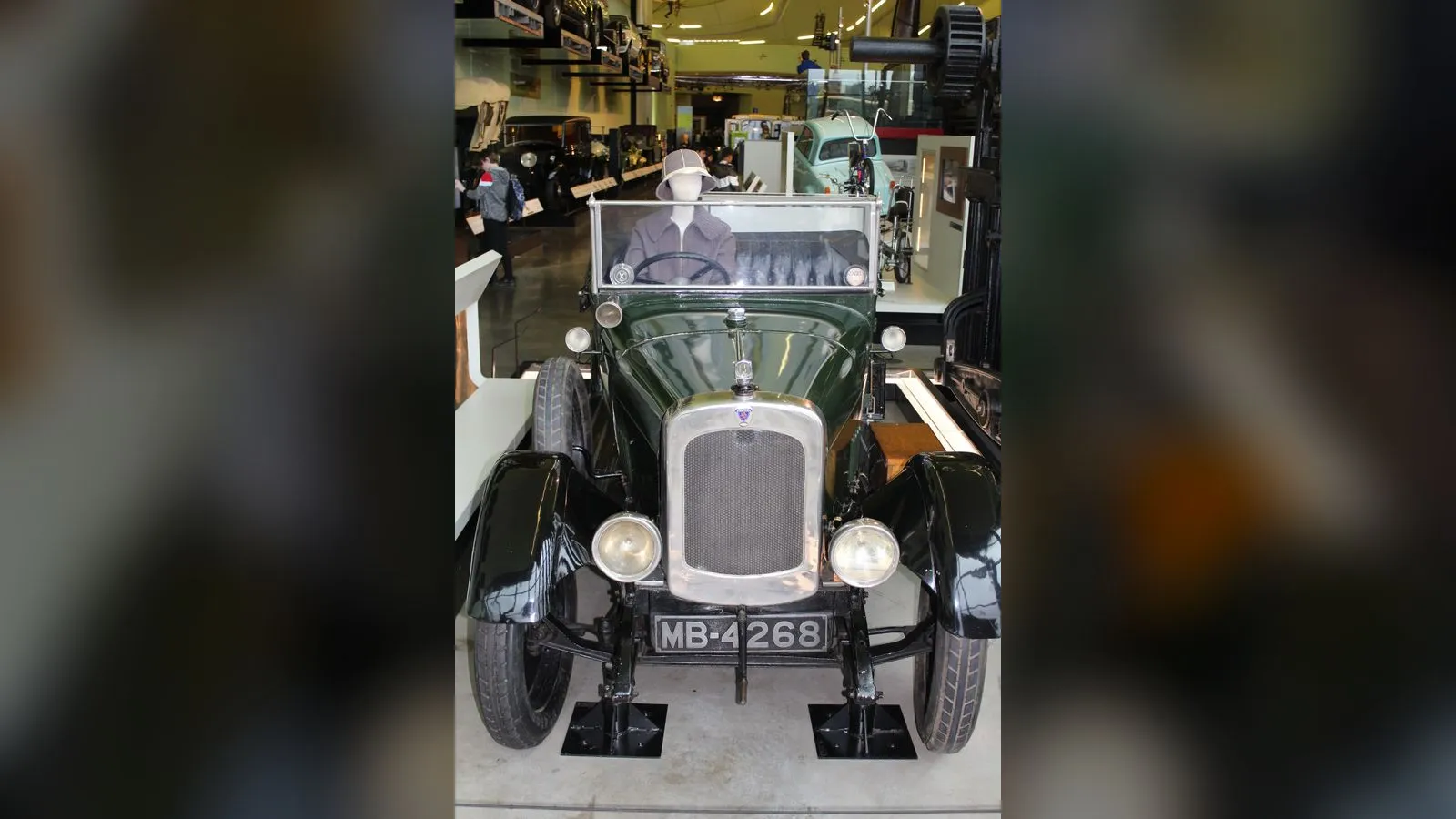
- A surviving 1924 Galloway coupe is displayed at Glasgow's Riverside Museum; recognised as a pioneering figure in women's engineering history
Scottish Impact Index (SI Score)
- Global Influence
- 4/10
- Enduring Relevance
- 7/10
- Material Contribution
- 4/10
- Exceptional Achievement
- 7/10
- Lasting Legacy
- 4/10
- Recognition
- 3/10
29/60
Ranked =105th of 200 in Great Scots
A Note on Claims and Evidence
This article tiers claims by evidential strength. Established/Documented claims rest on multiple independent, well-corroborated sources. Shared/Traditional claims are widely repeated but rest on thinner sourcing. Dorothée Pullinger's story requires comparatively little myth-correction of the kind that recurs elsewhere in this series, since her most striking achievements — and the explicit sexism she faced in having them recognised — are already well documented rather than softened in popular retellings. The more careful editorial task here is resisting the temptation to flatten a genuinely complicated institutional legacy (the Tongland training scheme) into either uncomplicated triumph or uncomplicated exploitation, when the surviving evidence supports neither extreme cleanly.
Timeline
Born 13 January in Saint-Aubin-sur-Scie, France, eldest of eleven children of engineer Thomas Charles Pullinger and Aurélie Bérénice Sittwel.
Family relocates to Scotland, settling near Dalry, Ayrshire, as her father takes up senior engineering roles in the Scottish motor industry.
Begins working as a draughtswoman at the Arrol-Johnston car works in Paisley, then Scotland's largest car manufacturer, where her father serves as managing director.
Applies to join the Institution of Automobile Engineers and is refused, reportedly on the explicit grounds that its membership rules applied only to "persons," which the institution interpreted to mean men.
Serves as a supervisor managing a workforce of roughly 7,000 people, including many women and Belgian and French refugees, at Vickers' munitions works in Barrow-in-Furness during the First World War.
Her father establishes a new munitions factory near Kirkcudbright, Tongland, incorporating a dedicated engineering training college and apprenticeship programme specifically for women.
Awarded the MBE in recognition of her wartime industrial management contribution.
Becomes the first full female member of the Institution of Automobile Engineers, following her earlier 1914 rejection.
The Tongland factory converts from munitions to automobile manufacturing under the name Galloway Motors Ltd, with Pullinger as director and works manager; the company produces the Galloway car, marketed with the slogan "Built by ladies, for those of their own sex" and employing a predominantly female workforce.
Wins the Scottish Six Days Car Trials cup as a competitive driver. Marries Edward Marshall Martin, a P&O ship's purser.
Serves as a sales representative for Arrol-Johnston.
Manufacturing operations at Tongland/Galloway Motors cease, with production consolidated at Arrol-Johnston's Heathhall facility; the venture's backers reportedly conclude that a car marketed primarily to women could not match the commercial returns of mainstream production.
Establishes White Service Steam Laundry Ltd in Croydon with her husband, which grows to seventeen locations.
Serves as the sole woman on the UK Ministry of Production's Industrial Panel during the Second World War; contributes to the 1944 report "Looking Ahead: Work and the Future of British Industry" on post-war industrial reconstruction.
Sells the White Service Steam Laundry chain.
Relocates to Guernsey.
Founds Normandy Laundries in Guernsey.
Dies in St Peter Port, Guernsey, aged 92.
Inducted into the Scottish Engineering Hall of Fame.
Riverside Museum, Glasgow, opens an exhibition featuring a surviving 1924 Galloway coupe.
Details
An Engineering Apprenticeship Inside the Family Business
Dorothée Pullinger's path into engineering was unusual for a woman of her generation chiefly because it existed at all, and it existed largely because her father, Thomas Charles Pullinger, was himself a senior figure in the Scottish motor industry. Born in France in 1894, the eldest of eleven children, Dorothée moved with her family to Ayrshire as a child when her father took up senior roles in Scottish car manufacturing, eventually becoming managing director of Arrol-Johnston, then the largest car manufacturer in Scotland. In 1910, at sixteen, she began work as a draughtswoman at the company's Paisley works — a genuine technical apprenticeship rather than a token or honorary position, and one that gave her direct, practical engineering training years before most British women had any comparable access to such an education.
A First World War Managing Thousands
When Arrol-Johnston's production shifted to aircraft manufacture during the First World War, Pullinger moved into wartime industrial management at a scale that is, on its own terms, a remarkable achievement independent of the automotive engineering career for which she is now best remembered. At Vickers' munitions works in Barrow-in-Furness, she supervised a workforce of roughly 7,000 people, including substantial numbers of Belgian and French refugees, drawing directly on her fluency in English and French. This was large-scale industrial management of exactly the kind that, in peacetime, women of her era were almost never permitted to undertake — wartime labour shortages created an opening that Pullinger filled capably, and her later 1920 MBE recognised precisely this wartime management contribution.
A Direct, Documented Rejection
The clearest and most quotable instance of institutional sexism in Pullinger's career, and one this article states plainly rather than softening, came in 1914, when she applied to join the Institution of Automobile Engineers. She was refused membership on grounds that were not vague or merely procedural but explicitly gendered: the institution's rules, she was reportedly told, applied to "persons," and "the word 'person' only applies to a man." This is not a case requiring interpretation or inference about underlying attitudes — it is a directly documented, explicit statement of exclusion on the basis of sex, from a professional body whose stated purpose was to represent engineers in her own field.
The eventual resolution of this episode is worth recording with equal clarity: following her substantial wartime management achievements and her 1920 MBE, Pullinger was admitted to the Institution of Automobile Engineers in the early 1920s as its first full female member — not merely as an associate or honorary member, but on equal professional terms. The gap between the 1914 rejection and this eventual full membership spans roughly six or seven years and an entire World War, a timeline that itself says something about what it took for the institutional barrier to move.
Tongland: A Genuine Training Ground, With Genuine Complications
In 1916, Pullinger's father established a new munitions factory at Tongland, near Kirkcudbright, which included a dedicated engineering training college and structured apprenticeship programme specifically for women — a genuinely unusual institutional commitment for the period, when formal engineering training was almost universally closed to women in Britain. Surviving accounts describe genuinely substantial facilities for the era, including a library, a writing room, and recreational amenities, and a recruitment prospectus explicitly aimed at "educated women, for whom a life of independence from relations is necessary" — language that frames the opportunity in terms of women's economic independence rather than merely wartime necessity.
It is also accurate, and worth stating directly rather than omitting, that the apprenticeships offered to women at Tongland ran three years, compared with the five years standard for male apprentices in comparable trades. This detail admits more than one reasonable reading, and the surviving sources reviewed for this article do not settle which is correct: it could reflect a genuinely more efficient, purpose-designed curriculum tailored to get women into skilled work faster; it could equally reflect an assumption that women's training need not, or could not, match the full depth of a male apprenticeship. This article presents the fact rather than resolving it in either direction, consistent with this series' standard of not supplying a flattering interpretation where the evidence does not clearly support one.
The Galloway: A Car Designed by and for Women
Following the war, the Tongland factory converted to automobile manufacturing as Galloway Motors Ltd, with Pullinger as director and works manager, overseeing a workforce that was predominantly female. The resulting car, the Galloway, was not simply a conventional vehicle built by women workers but was specifically engineered with women drivers' practical needs in mind: Pullinger's design changes reportedly included a raised driver's seat and brake pedals, a lowered dashboard, a smaller-diameter steering wheel suited to smaller hands and reach, and the addition of wing and rear-view mirrors to improve visibility — genuine ergonomic engineering decisions, not merely cosmetic or marketing choices. The car was marketed directly and unapologetically around this identity, with the slogan "Built by ladies, for those of their own sex," and achieved real commercial success, with reported sales in the thousands of units — a genuine market validation of both the product and the workforce that built it.
A Short-Lived Manufacturing Venture
Despite this commercial success, Galloway Motors' manufacturing operations at Tongland ceased in 1928, with production consolidated at Arrol-Johnston's Heathhall facility. The specific commercial reasoning attributed to the venture's backers — that a car marketed primarily to women could not generate returns comparable to mainstream, male-oriented production — is recorded in secondary sources rather than as a directly quoted contemporary business decision, and should be read with that caveat. What is clear is that a genuinely pioneering venture, commercially successful on its own terms, did not survive as an independent operation once the particular wartime and immediate post-war conditions that had enabled it began to shift — a pattern this series has now observed in more than one venture built around opportunities that opened for women specifically because of wartime labour circumstances.
A Substantial Second Career
Pullinger did not retreat from professional life after Galloway Motors' manufacturing operation ended. In the late 1920s, with her husband Edward Marshall Martin, she established White Service Steam Laundry Ltd in Croydon, building it over subsequent years into a chain of seventeen locations before its sale in 1946 — a genuinely substantial business achievement in an entirely different industry, demonstrating that her earlier success was not a one-off product of unusual wartime circumstances but reflected durable management and business capability. During the Second World War, she served as the sole woman on the UK Ministry of Production's Industrial Panel, contributing to national industrial policy discussions, including the 1944 report "Looking Ahead: Work and the Future of British Industry" on post-war industrial reconstruction — placing her, once again, in a position of national significance that very few women of her era occupied. After relocating to Guernsey in 1947, she founded a further laundry business, Normandy Laundries, in 1950.
Death and Legacy
Dorothée Pullinger died in St Peter Port, Guernsey, on 28 January 1986, at the age of 92, having lived long enough to see the engineering profession she had fought to enter as a young woman become, gradually and still incompletely, more open to women following her. She had been a founding member of the Women's Engineering Society in 1919, an organisation that continues today, and was inducted into the Scottish Engineering Hall of Fame in 2012. A surviving 1924 Galloway coupe is now displayed at Glasgow's Riverside Museum, following a dedicated 2019 exhibition — a rare physical survival of the specific, ergonomically engineered vehicle that remains the most tangible evidence of what her Tongland venture actually built.
Did You Know?
- Dorothée Pullinger was born in France, not Scotland, and moved to Ayrshire as a child when her father took up a senior engineering role in the Scottish motor industry.
- In 1914 she was refused membership of the Institution of Automobile Engineers on the explicit grounds that "the word 'person' only applies to a man" — a directly documented statement of exclusion, not an inference about attitudes.
- During the First World War, she managed a workforce of roughly 7,000 people, including Belgian and French refugees, at a major munitions factory — using her fluency in French directly in that role.
- The Tongland training college offered women a genuine, structured engineering apprenticeship at a time when almost no other British institution would, though it ran three years rather than the five-year standard for male apprentices — a disparity this article treats as genuinely ambiguous rather than resolving one way or the other.
- The Galloway car's design changes — raised seat and pedals, lowered dashboard, smaller steering wheel, added mirrors — were genuine ergonomic engineering decisions specifically aimed at women drivers, not just marketing.
- The Galloway was marketed with the slogan "Built by ladies, for those of their own sex," and sold in the thousands, a genuine commercial success before the factory's manufacturing operations closed in 1928.
- After her automotive manufacturing venture ended, Pullinger built an entirely separate, substantial second career running a chain of seventeen industrial laundries in England.
- During the Second World War, she was the only woman on the UK Ministry of Production's Industrial Panel, contributing to national post-war industrial policy.
- A surviving 1924 Galloway coupe is displayed today at the Riverside Museum in Glasgow.
Frequently Asked Questions
1Was Dorothée Pullinger Scottish?
She was born in France in 1894 but moved to Ayrshire, Scotland, as a child when her father took up senior roles in the Scottish motor industry, and built her entire engineering career in Scotland, which is why she is included in this series.
2Did the Institution of Automobile Engineers really refuse to admit her because she was a woman?
Yes, and this is directly documented rather than a matter of interpretation. In 1914 she was refused membership on the explicit grounds that the institution's rules applied only to "persons," interpreted as meaning men. She was admitted as the institution's first full female member in the early 1920s, after her substantial wartime industrial management work and her 1920 MBE.
3What made the Galloway car different from other cars of its era?
It was specifically engineered around women drivers' practical needs, with a raised seat and brake pedals, a lowered dashboard, a smaller steering wheel, and added mirrors for visibility — genuine ergonomic design choices, developed and overseen by Pullinger herself as the factory's director and works manager.
4Was the Galloway car a commercial success?
Yes, reportedly selling in the thousands of units. However, the factory's manufacturing operations closed in 1928, with reported commercial reasoning suggesting the venture's backers did not believe sales to a primarily female market could match mainstream, male-oriented car sales — though the specific sourcing for that reasoning should be treated as a secondary-source account rather than a directly quoted contemporary decision.
5Was the training Pullinger's factory offered women genuinely equal to men's engineering training?
Not entirely, on the surviving evidence. Women's apprenticeships at Tongland ran three years compared with the standard five years for men. This article does not resolve whether that reflects a more efficient curriculum or an assumption that women needed less training, since the available evidence does not clearly support either conclusion.
6What did Dorothée Pullinger do after her car manufacturing venture ended?
She built a substantial second career in industrial laundry management, founding White Service Steam Laundry Ltd in Croydon with her husband, which grew to seventeen locations before its sale in 1946, and later founded Normandy Laundries in Guernsey in 1950.
7Did Pullinger have any other notable public roles?
Yes. During the Second World War she was the only woman on the UK Ministry of Production's Industrial Panel, contributing to national industrial policy discussions including a 1944 report on post-war industrial reconstruction.
8How is Dorothée Pullinger remembered today?
She was inducted into the Scottish Engineering Hall of Fame in 2012, and a surviving 1924 Galloway coupe is displayed at Glasgow's Riverside Museum following a dedicated 2019 exhibition. She is recognised as a pioneering figure in the history of women in engineering.
9Was Pullinger only involved in cars designed for women?
No. Her career spanned large-scale wartime industrial management of a mixed workforce, general automotive engineering and sales work for Arrol-Johnston, competitive motor racing, and an entirely separate later career in industrial laundry management and national industrial policy — the women-focused Galloway car was one significant chapter within a much broader professional life.
10Where did Dorothée Pullinger die?
In St Peter Port, Guernsey, on 28 January 1986, at the age of 92.
Sources and Further Reading
Primary / Institutional
- Records of the Institution of Automobile Engineers, membership applications and admissions, 1914 and early 1920s
- Scottish Engineering Hall of Fame: Dorothée Aurélie M Pullinger
- Riverside Museum, Glasgow — 1924 Galloway coupe and associated 2019 exhibition materials
Scholarly / Reference
- Wikipedia: "Dorothée Pullinger"
- Wikipedia: "Thomas Pullinger"
- Wikipedia: "Galloway (car)"
- Maharam: "Dorothée Pullinger's Car for Women" (Alice Rawsthorn)
- Beaulieu: "Women in Motorsport & Social History: Dorothée Pullinger"
General / Popular
Caveats: Myths and Disputed Claims
- The exact date of her admission to the Institution of Automobile Engineers. Some sources give 1918 for her election as a member, while the more commonly cited date, following her 1920 MBE, is the early 1920s (January 1921 in at least one source). This article treats the post-MBE date as the better-supported figure while flagging the discrepancy rather than asserting false precision.
- The three-year versus five-year apprenticeship disparity at Tongland. This article presents this fact directly rather than omitting it to preserve an uncomplicated positive narrative, and does not resolve whether it reflects efficient training design or an assumption of lesser training need for women, since the surviving evidence does not clearly support either reading.
- The reason Galloway Motors' manufacturing operations closed in 1928. The commonly repeated explanation — that a female-market car could not match mainstream commercial returns — rests on secondary-source characterisation rather than a directly quoted contemporary business record, and should be read with appropriate caution rather than as an established, sourced fact.
- "Pullinger's career was defined solely by the Galloway car." This understates the full scope of her working life, which included large-scale wartime industrial management of a mixed workforce of thousands, a substantial second career in industrial laundry management spanning nearly two decades, and national industrial policy work during the Second World War.
Card 076 · Great Scots