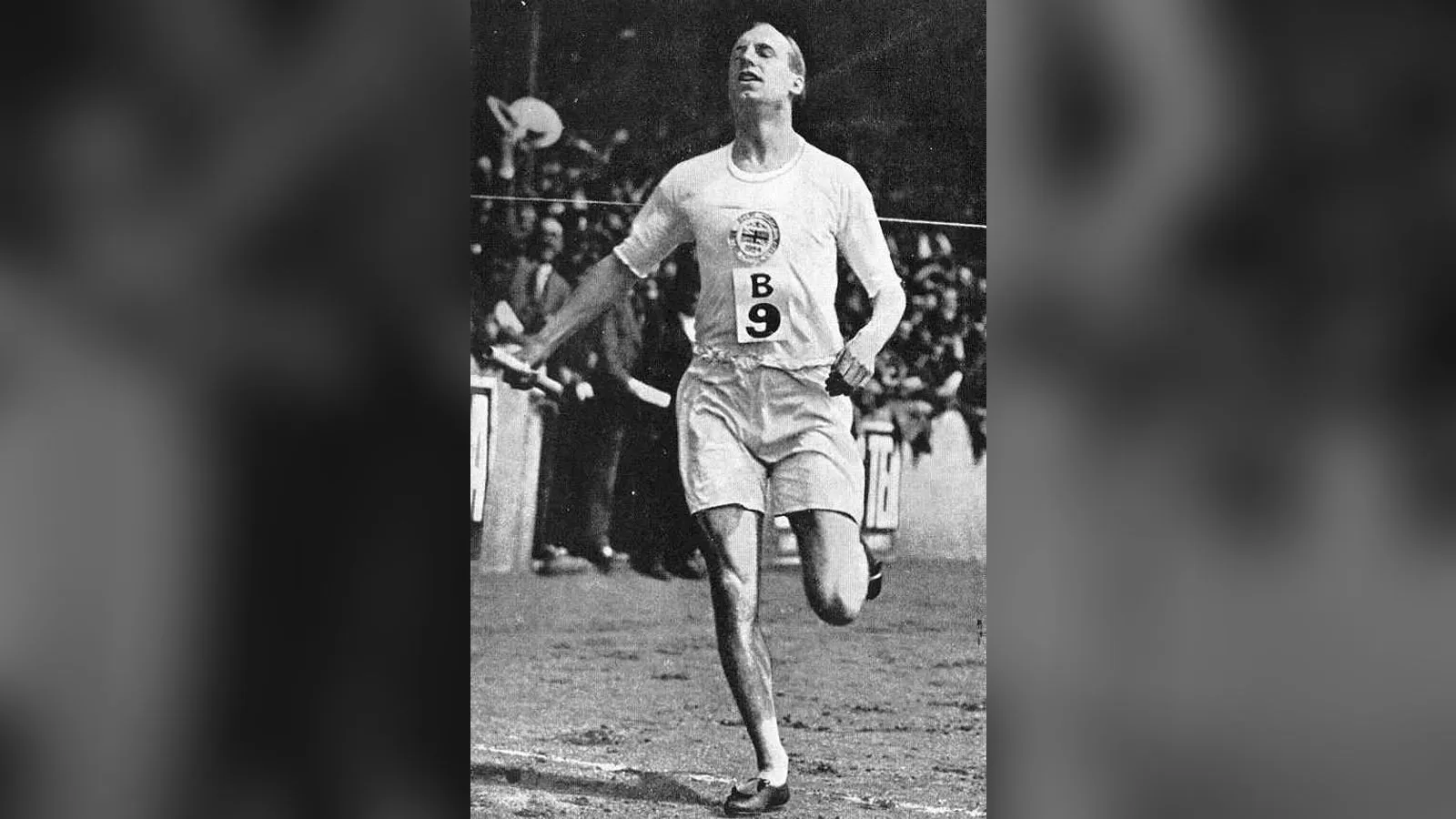

Eric Liddell (1902–1945)
Contents
TL;DR
- established At the 1924 Paris Olympics, Liddell withdrew from the 100 metres — his strongest event — because the heats fell on a Sunday, which his Christian faith led him to keep free of competition; this decision was made months in advance, not discovered suddenly on the eve of the Games as later dramatised.
- established He switched to the 400 metres, an event he was not specialised in, and won gold in an Olympic and world record time of 47.6 seconds, also taking bronze in the 200 metres.
- established He returned to China in 1925 as a missionary, following in his parents' footsteps, teaching and later serving at a rural mission station even as Japanese aggression escalated through the late 1930s and early 1940s.
- established He was interned by Japanese forces at the Weihsien Internment Camp in Shandong Province from 1943, where he became a widely respected figure for his tireless, selfless work caring for and organising activities for fellow internees, particularly young people, under conditions of real hardship and deprivation.
- established He died in the camp on 21 February 1945, aged 43, from an undiagnosed brain tumour, a condition worsened by overwork and malnutrition — a death that occurred only months before the camp's liberation, and one widely and deeply mourned by fellow internees.
Key Facts
- Born
- Eric Henry Liddell, 16 January 1902, Tianjin, China
- Died
- 21 February 1945 (aged 43), Weihsien Internment Camp, Shandong, China
- Education
- University of Edinburgh (Pure Science)
- Known for
- 1924 Olympic 400m gold; missionary work in China
- Honours
- Posthumous honorary doctorate, University of Edinburgh (2024); voted Scotland's greatest sporting hero (2002)
- Spouse
- Florence Mackenzie (m. 1934)
- Children
- Three daughters: Patricia, Heather, Maureen
Scottish Impact Index (SI Score)
- Global Influence
- 6/10
- Enduring Relevance
- 7/10
- Material Contribution
- 2/10
- Exceptional Achievement
- 4/10
- Lasting Legacy
- 5/10
- Recognition
- 6/10
30/60
Ranked =93rd of 200 in Great Scots
A Note on Claims and Evidence
Liddell's athletic career, Olympic results, missionary work, and internment are extensively documented through contemporary records, fellow internees' accounts, and subsequent historical research, and are treated as Established. One specific claim about his conduct in the internment camp — that he gave up his own place in a prisoner exchange to a pregnant woman — is reported here as a widely circulated but contested account, since fellow internees have disputed the specific details, and this article flags that distinction explicitly rather than presenting it as settled fact.
Timeline
Born in Tianjin, China, to Scottish missionary parents.
Enrolled, aged six, at Eltham College near London, a boarding school for missionary children, while his parents return to China.
Begins studying Pure Science at the University of Edinburgh.
Earns seven rugby caps for Scotland; wins national sprint championships.
At the Paris Olympics, withdraws from the 100m due to Sunday heats; wins gold in the 400m in an Olympic and world record time, and bronze in the 200m.
Returns to China as a missionary, teaching at the Anglo-Chinese College in Tianjin.
Ordained as a Congregational minister.
Marries Florence Mackenzie, a Canadian missionary.
As Japanese aggression escalates, his wife and children evacuate to Canada; Liddell remains, moving to a rural mission station in Xiaozhang, Hebei province.
Interned by Japanese forces at Weihsien Internment Camp, Shandong Province.
Dies in the camp, aged 43, from an undiagnosed brain tumour.
The camp is liberated by Allied forces, months after his death.
His unmarked grave is rediscovered by civil engineer Charles Walker.
The University of Edinburgh erects a memorial headstone at the gravesite.
Awarded a posthumous honorary doctorate by the University of Edinburgh, a century after his Olympic victory, accepted by his daughter Patricia.
Details
A childhood divided between China and Scotland
Liddell was born in Tianjin, China, to Scottish missionary parents serving with the London Missionary Society — a detail essential to understanding the rest of his life, since China was not an incidental later destination for him but his actual birthplace and, ultimately, where he would die. At six, he and his brother were sent to Eltham College, a boarding school for missionary children near London, while his parents returned to their work in China; the family reunited only during school holidays in Edinburgh. His headmaster later described him as "entirely without vanity." He went on to study Pure Science at the University of Edinburgh, where he became known as Scotland's fastest runner, winning national sprint titles, and also earned seven rugby caps for Scotland as a wing-threequarter.
The 1924 Olympics: a decision made well in advance
Liddell's defining public moment came at the 1924 Paris Olympics, when he withdrew from the 100 metres — widely considered his strongest event — because the heats were scheduled for a Sunday, a day his Christian faith led him to keep free from competition. It is a significant and often-misunderstood point that this was not a last-minute discovery or dramatic eve-of-Games dilemma, as later popularised: the Olympic schedule had been published months in advance, giving him ample time to prepare for an alternative event. He switched to the 400 metres, an event outside his usual specialism, and won gold in an Olympic and world record time of 47.6 seconds, reportedly after a team masseur handed him a note that morning referencing the Biblical verse "He that honours me I will honour." He also won bronze in the 200 metres at the same Games.
Chariots of Fire and where the film diverges from fact
Liddell's Olympic story was dramatised in the Oscar-winning 1981 film Chariots of Fire, which remains the primary reason his story is widely known internationally. The film accurately captures his distinctive, unconventional running style — head thrown back, mouth open — but takes dramatic liberties with the central plot point, portraying Liddell as discovering the Sunday scheduling conflict suddenly, as the British team travelled to Paris, creating an eleventh-hour crisis of conscience. In reality, as noted above, his decision was made with months of advance notice, allowing for calm and deliberate preparation rather than a sudden dramatic reversal — a meaningful distinction this article preserves rather than repeating the more dramatic but inaccurate film version uncritically.
A missionary's life, interrupted by war
After graduating in 1924, Liddell returned to China in 1925 to become a missionary himself, following his parents' path, teaching mathematics and science and coaching athletics at the Anglo-Chinese College in Tianjin. He was ordained a Congregational minister in 1932 and married Florence Mackenzie, a Canadian missionary, in 1934; the couple had three daughters. As Japanese aggression in China escalated through the late 1930s and into the 1940s, Liddell sent his wife and children to safety in Canada in 1941 while he remained, moving to a rural mission station in Hebei province alongside his brother, a doctor, to continue serving impoverished communities — a decision that placed his own safety well below his sense of continued duty.
Internment, selflessness, and death at Weihsien
In 1943, Japanese forces interned Liddell, along with other British nationals and missionaries, at the Weihsien Internment Camp in Shandong Province. Despite conditions of real scarcity — of food, medicine, and basic supplies — he became a widely respected figure within the camp, particularly known for his tireless efforts organising activities and support for young internees. Fellow internee Langdon Gilkey later recalled him "bent over a chessboard or a model boat, or directing some sort of square dance — absorbed, weary and interested, pouring all of himself into this effort to capture the imagination of these penned-up youths." One specific, widely circulated story holds that Liddell gave up his own place in a prisoner exchange to a pregnant woman — a moving account of self-sacrifice that this article notes has been disputed in its specific details by some fellow internees, and is therefore reported here as a contested claim rather than settled fact. What is firmly established is that Liddell died in the camp on 21 February 1945, aged 43, from an undiagnosed brain tumour, a condition significantly worsened by overwork and malnutrition under internment conditions — dying only months before the camp's eventual liberation by Allied forces. His reported final words, "It's complete surrender," reflected the same religious conviction that had shaped his most famous public decision two decades earlier. His death was deeply felt throughout the camp.
Rediscovery and lasting honour
Liddell's grave, initially marked only with a wooden cross in the camp's garden, went unlocated for decades until it was rediscovered in 1989 by civil engineer Charles Walker; the University of Edinburgh subsequently erected a memorial headstone there in 1991. His legacy has continued to be honoured substantially in the decades since, including the founding of the Eric Liddell Centre in Edinburgh in 1980, numerous sports facilities bearing his name, his selection as Scotland's greatest sporting hero in a 2002 public vote, and a posthumous honorary doctorate awarded by the University of Edinburgh in 2024, a century after his Olympic victory, accepted on his behalf by his daughter Patricia.
Did You Know?
- He was born in China, not Scotland — his connection to the country he later died in began at birth, not through missionary work alone.
- His Olympic 100m withdrawal was decided months in advance, not discovered suddenly as dramatised in Chariots of Fire.
- He won his Olympic 400m gold in an event outside his main specialism, having switched from his stronger 100m.
- He earned seven rugby caps for Scotland before his athletics career brought him wider fame.
- His grave went unidentified for over 40 years before being rediscovered in 1989.
- He died only months before the camp where he was interned was liberated by Allied forces.
- He was voted Scotland's greatest sporting hero in a 2002 public poll.
- The University of Edinburgh awarded him a posthumous honorary doctorate in 2024, a full century after his Olympic victory.
FAQ
1Did Eric Liddell really refuse to run on a Sunday at the Olympics?
Yes — he withdrew from the 100m because its heats fell on a Sunday, a decision made months before the Games based on his Christian faith, not a last-minute discovery as the film Chariots of Fire dramatises.
2Did he still win a medal?
Yes — he switched to the 400m, an event outside his specialism, and won gold in an Olympic and world record time, also winning bronze in the 200m.
3Is Chariots of Fire historically accurate?
Largely, but with one significant dramatic liberty: the film portrays Liddell discovering the Sunday scheduling conflict suddenly, as the team travelled to Paris, when in reality he had known and planned for months in advance.
4What happened to him after his Olympic career?
He returned to China as a missionary in 1925, following his parents, and remained there — eventually sending his wife and children to safety in 1941 while he stayed to continue his missionary work as conditions worsened.
5How did he die?
He died in a Japanese internment camp in China on 21 February 1945, aged 43, from an undiagnosed brain tumour, worsened by overwork and malnutrition under internment conditions — only months before the camp was liberated.
6Did he really give up his place in a prisoner exchange for a pregnant woman?
This is a widely told story about his character, but it has been disputed in its specific details by some fellow internees; this article reports it as a contested claim rather than settled fact.
7Is he still honoured today?
Yes — including the Eric Liddell Centre in Edinburgh, numerous sports facilities bearing his name, and a posthumous honorary doctorate from the University of Edinburgh awarded in 2024.
8Was he Scottish by birth?
He was born in Tianjin, China, to Scottish missionary parents, and was raised partly in Scotland during school holidays — his Scottish identity is through parentage and upbringing rather than birthplace.
Sources and Further Reading
Primary/Institutional
Scholarly/Critical
- Eric Liddell: An Olympic Hero Who Ran His Last Race in a WWII Japanese Prison Camp
- The Little Known Story of Olympian Eric Liddell's Final Years — Eternal Perspective Ministries
General
Caveats: Myths and Disputed Claims
- Myth: Chariots of Fire is sometimes treated as a precise historical record of Liddell's Olympic decision-making. Correction: The film's central dramatic device — a sudden, last-minute discovery of the Sunday scheduling conflict — is inaccurate; Liddell knew of and planned for the conflict months in advance.
- Disputed claim: The widely told story that Liddell voluntarily gave up his place in a camp prisoner exchange to a pregnant woman is a moving and frequently repeated account of his character, but it has been disputed by some fellow internees in its specific details. This article reports it as contested rather than confirmed.
- Clarification: Liddell's death occurred only months before the Weihsien camp's liberation — a genuinely tragic detail of timing that is sometimes omitted but is well documented.
Card 134 · Great Scots