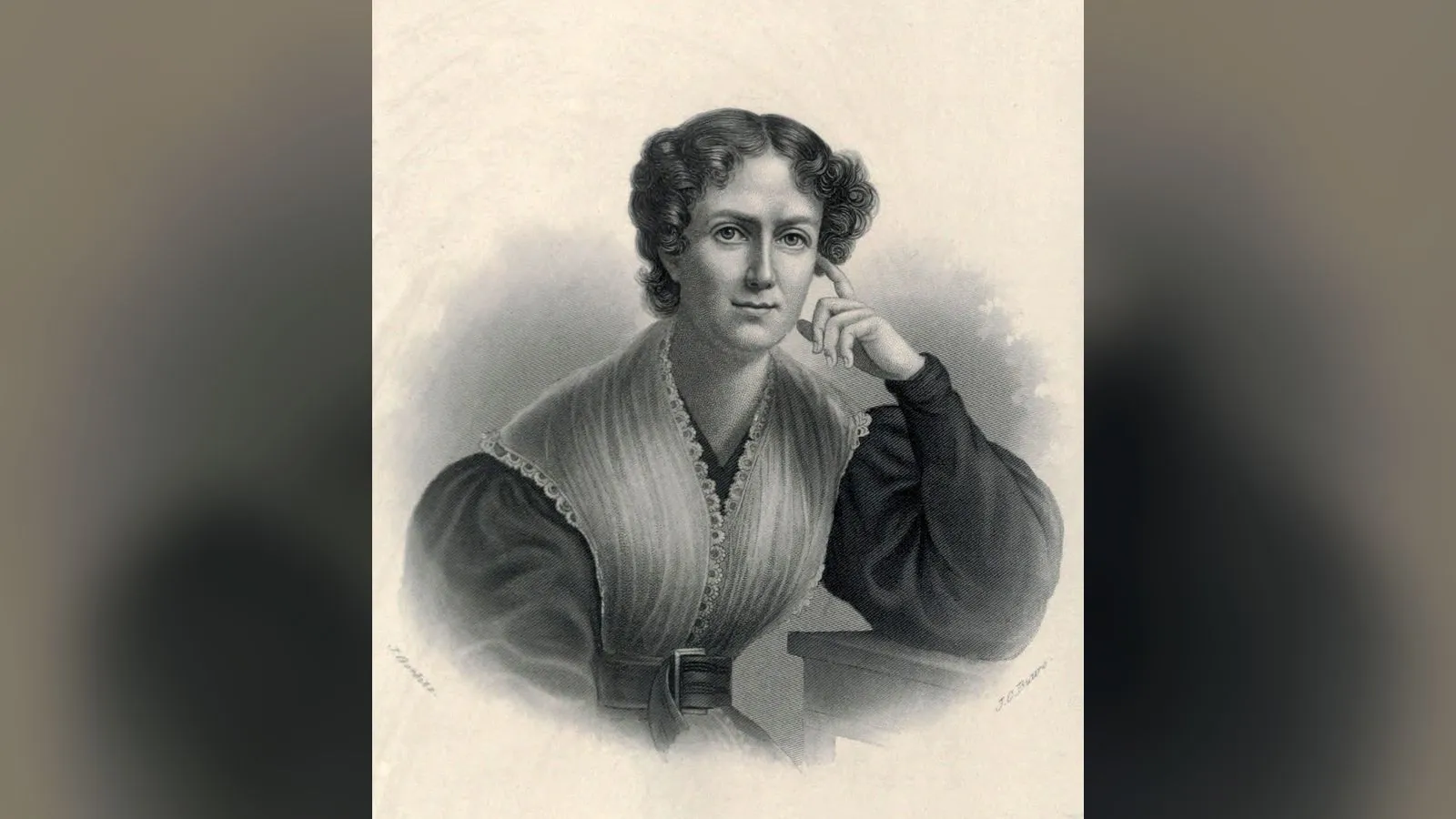

Frances Wright (1795–1852)
Contents
TL;DR
- established Born in Dundee to a wealthy, politically radical family and orphaned as a young child, Wright became one of the most genuinely radical public figures of early nineteenth-century reform, advocating abolition, women's rights, birth control, liberal divorce laws, and secular thought at a time when a woman publicly lecturing to mixed audiences on such subjects was virtually unheard of.
- established In 1825, Wright founded Nashoba, an experimental Tennessee commune intended to demonstrate how enslaved people could work toward their own freedom while receiving education; this article reports directly that the project required Wright herself to purchase roughly thirty enslaved people as part of its design, a genuinely uncomfortable structural fact about an avowedly anti-slavery project that this article does not soften or omit.
- disputed Nashoba collapsed amid malaria, failed harvests, harsher punishment of Black workers under interim management during Wright's absence, and a widely reported scandal involving an interracial relationship between a white supervisor and a free woman of colour at the commune; this article presents the community's failure honestly as a serious practical and ethical disappointment, not merely an underfunded idealistic venture undone by bad luck.
- established Having acknowledged the experiment's failure, Wright personally chartered a ship in 1830 to transport Nashoba's thirty enslaved residents to Haiti so they could live as free people — a concrete, documented act of follow-through this article credits directly, distinct from and not cancelling out the project's earlier serious failures.
- established Wright's subsequent career as one of America's first prominent female public lecturers drew fierce, often openly hostile criticism — one contemporary newspaper called her "a female monster" — and she went on to marry, have a daughter, and endure a bitter divorce and custody dispute before dying in 1852 following a fall, having spent her final years estranged from her own daughter.
Key Facts
- Born
- 6 September 1795, Dundee, Scotland
- Died
- 13 December 1852, Cincinnati, Ohio, aged 57
- Known for
- Founding Nashoba commune (1825); pioneering female public lecturer
- Key publication
- Views of Society and Manners in America (1821)
- Key associate
- Marquis de Lafayette
- Nashoba's fate
- Collapsed by 1830; residents transported to freedom in Haiti
- Honour
- Inducted, National Women's Hall of Fame, 1994
Scottish Impact Index (SI Score)
- Global Influence
- 4/10
- Enduring Relevance
- 6/10
- Material Contribution
- 2/10
- Exceptional Achievement
- 6/10
- Lasting Legacy
- 4/10
- Recognition
- 2/10
24/60
Ranked =143rd of 200 in Great Scots
A Note on Claims and Evidence
Wright's biography, her founding and management of Nashoba, its documented failures and scandals, and her subsequent public career are extensively documented in contemporary press accounts, her own publications, and historical scholarship, and are treated as Established. The specific circumstances and full extent of mismanagement during Wright's absence from Nashoba, and the precise nature of the interracial relationship scandal there, are drawn from multiple contemporary and scholarly sources and tiered as Disputed/complex rather than presented as a single, uncontested narrative, reflecting genuine historical debate over how to characterise the community's failure.
Timeline
Born in Dundee, Scotland, to a wealthy, politically radical linen manufacturer.
Orphaned young; raised by Campbell relatives in England.
Moves to Glasgow to live with her great-uncle, philosophy professor James Mylne.
Travels to America with her sister Camilla for two years.
Publishes Views of Society and Manners in America; joins Jeremy Bentham's intellectual circle in London.
Begins a close, lasting friendship with the Marquis de Lafayette.
Returns to America, following Lafayette's farewell tour; visits Thomas Jefferson and meets presidents Madison and John Quincy Adams.
Visits utopian communities at Harmonie, Pennsylvania, and New Harmony, Indiana; purchases land in Tennessee and founds the Nashoba commune.
Publishes A Plan for the Gradual Abolition of Slavery in the United States.
Contracts malaria; leaves Nashoba to recover, during which interim managers impose harsher treatment on Black workers; a scandal develops over an interracial relationship at the community.
Frances Trollope visits Nashoba and reports it in serious disarray.
Co-edits the Free Enquirer with Robert Dale Owen in New York City; joins the Working Men's Party.
Acknowledging Nashoba's failure, charters a ship to transport its enslaved residents to freedom in Haiti.
Marries French physician Guillaume D'Arusmont in Paris.
Undertakes major national lecture tours, drawing large audiences and spawning "Fanny Wright societies."
Her daughter, Francès-Sylva, is born.
Settles in Cincinnati, Ohio.
Publishes her final book, England, the Civilizer.
Divorces D'Arusmont amid a bitter legal battle over custody and wealth.
Dies in Cincinnati from complications following a fall, estranged from her daughter.
Details
A radical inheritance
Wright was born in Dundee in 1795 to a wealthy, politically radical linen manufacturer father — a correspondent of Adam Smith and sympathiser with American revolutionary ideals — who died when she was just two years old, leaving her orphaned alongside her sister and raised by English relatives. Educated in part by an aunt who introduced her to French materialist philosophy, and later shaped by study of Greek philosophy under her great-uncle in Glasgow, Wright developed an intellectually serious, genuinely radical worldview well before adulthood, publishing her first book defending Epicurean philosophy before she was eighteen. This article presents her subsequent career not as a sudden late-life radicalism but as the direct continuation of an unusually early and substantive intellectual formation.
Glasgow, the Millars and the road to America
established A Glasgow friendship with an American past. The literary historian Andrew Hook, in Scotland and America (1975), notes that in Glasgow Wright was befriended by Robina Millar, widow of John Craig Millar, son of the Glasgow law professor John Millar and son-in-law of the physician William Cullen. Hook records that the Millars had emigrated to Philadelphia in 1795, when John Craig Millar's support for the reforming Friends of the People cost him his legal practice; he died within two years, and his widow, who said they had often met President Washington, came home to Scotland. Hook does not say how far this friendship prompted Wright's first American journey in 1818, but it placed her in a Glasgow circle with first-hand knowledge of the United States.
shared A Scottish route into Owenism. Hook argues that the intellectual world of the Scottish Enlightenment, and above all the "science of society" of Adam Ferguson and Dugald Stewart, lay behind much of Robert Owen's thinking, following the historian J. F. C. Harrison, and that this shared background helps explain why Owenism took root in America in the 1820s to 1840s. In his view Wright, raised in Glasgow's academic circle and later a leading American Owenite, "properly symbolises" the link between Owenism in Scotland and America. The weight given to the Scottish Enlightenment in Owen's ideas is Harrison's and Hook's interpretation, and other influences on Owen and on Wright, among them Bentham, are also well documented.
American admiration, and a controversial experiment
Wright's 1821 travel memoir, Views of Society and Manners in America, brought her real intellectual standing, an invitation into Jeremy Bentham's London circle, and a close, lasting friendship with the Marquis de Lafayette. Inspired by visits to utopian communities including Robert Owen's New Harmony, Wright founded her own experimental community, Nashoba, in Tennessee in 1825, intending to demonstrate that enslaved people could work toward purchasing their own freedom while receiving education. This article states directly, rather than glossing past an uncomfortable structural fact, that Wright's own avowedly anti-slavery project required her to personally purchase roughly thirty enslaved people, nearly half of them children, as the community's founding population — a detail central to understanding both the genuine ambition and the real ethical complexity of the undertaking from its very inception.
A serious, documented failure
Nashoba's collapse was neither minor nor merely a matter of underfunding: the land proved mosquito-infested and malaria-prone, harvests repeatedly failed, and when Wright herself contracted malaria and left to recover in 1826, interim managers at the community imposed harsher punishments on the Black workers Wright had intended to protect and educate — a genuine moral failure of the project's own stated purpose, not an external misfortune. A widely reported scandal further damaged the community's reputation, involving an interracial relationship between a white supervisor, James Richardson, and Josephine Lalotte, a free woman of colour living at Nashoba. When Wright's friend, the writer Frances Trollope, visited in 1828, she found the community in serious disarray and close to financial collapse. This article presents these failures plainly and together, consistent with an accurate account of a project whose real-world execution fell seriously short of its stated egalitarian ideals, rather than treating Nashoba's failure as simply the fate of an impractical but well-intentioned dream.
A documented act of follow-through
Despite this record of failure, this article credits directly a concrete and genuinely significant action Wright took once she acknowledged the experiment could not succeed: in January 1830, she personally chartered a ship and transported Nashoba's enslaved residents to Haiti, where slavery had been abolished, so they could live as free people — an act of real financial and logistical commitment, costing Wright roughly $16,000 of her own money, that this article presents as distinct from, though not erasing, the project's earlier serious failures. Both facts are reported together as part of an honest, complete account of the Nashoba experiment.
A pioneering, fiercely contested public career
Following Nashoba's collapse, Wright became one of the first women in America to lecture publicly to mixed audiences of men and women on political and social reform — a practice genuinely unheard of for a woman at the time — addressing abolition, women's suffrage, marriage reform, birth control, and property rights across major lecture tours between 1833 and 1836 that drew large audiences and inspired the formation of "Fanny Wright societies" nationwide. This article reports directly the real hostility these views provoked: one contemporary newspaper, the New York American, branded her "a female monster," reflecting the genuine scale of social backlash Wright faced for positions — including advocacy for sexual freedom and liberal divorce — that were considered deeply transgressive for the era, regardless of gender.
A difficult later life
Wright married French physician Guillaume D'Arusmont in 1831, had a daughter the following year, and continued travelling and lecturing through the 1830s and 1840s, though her later public appearances were not always well received. Her personal life deteriorated significantly in her final years: she and D'Arusmont divorced in 1850 amid a bitter legal battle over custody of their daughter and control of her own wealth, a dispute that remained unresolved at her death. She died in Cincinnati in December 1852 from complications following a fall on ice, having spent her final years in quiet retirement, estranged from her own daughter — a genuinely sombre personal coda this article presents honestly rather than allowing her earlier public achievements to obscure.
Did You Know?
- Wright's founding of the anti-slavery Nashoba commune required her to personally purchase roughly thirty enslaved people as its original population.
- Interim managers at Nashoba imposed harsher treatment on Black workers while Wright was away recovering from malaria.
- Wright personally chartered a ship in 1830 to transport Nashoba's residents to freedom in Haiti after the project's collapse.
- A contemporary newspaper called her "a female monster" for her public advocacy of causes including birth control and liberal divorce laws.
- Political opponents mockingly nicknamed a New York party's candidate slate "the Fanny Wright ticket" due to her influence.
- She requested formal adoption by the Marquis de Lafayette, a request that strained his relations with his own family.
- She died from complications of a fall on ice outside her Cincinnati home.
- Her Glasgow friend Robina Millar, a daughter of the physician William Cullen, had lived in Philadelphia in the 1790s and met George Washington.
- She spent her final years estranged from her own daughter amid a bitter divorce settlement.
FAQ
1What is Frances Wright best known for?
Founding the Nashoba commune in Tennessee and becoming one of the first women in America to lecture publicly on political and social reform to mixed audiences.
2Was Nashoba a success?
No — it collapsed due to malaria, failed harvests, mismanagement, and a serious scandal, though Wright did personally arrange for its enslaved residents to be transported to freedom in Haiti once it failed.
3Did Wright own enslaved people?
Yes — she purchased roughly thirty enslaved people as the founding population of her anti-slavery Nashoba project, a genuine structural complexity in the venture's design.
4What views made her so controversial?
Her public advocacy of abolition, women's suffrage, birth control, liberal divorce laws, and opposition to organised religion, at a time when such views, especially from a woman speaking publicly, were considered deeply transgressive.
5What happened to Nashoba's residents?
Wright personally chartered a ship in 1830 to transport them to Haiti, where they could live as free people.
6Did she marry?
Yes — French physician Guillaume D'Arusmont, in 1831; they divorced in 1850 amid a bitter custody and financial dispute.
7How did she die?
In December 1852, from complications following a fall on ice outside her Cincinnati home.
8How did Glasgow shape her interest in America?
In Glasgow she was befriended by Robina Millar, whose husband, a son of the professor John Millar, had emigrated to Philadelphia in 1795 and died there within two years. Andrew Hook also sees her as the living link between Scottish and American Owenism.
9How is she remembered today?
As a pioneering, if genuinely complicated, figure in women's rights and abolitionist history, inducted into the National Women's Hall of Fame in 1994.
Sources and Further Reading
Primary/Institutional
- Frances Wright — Wikipedia
- Frances Wright — Encyclopaedia Britannica
- Frances Wright — Saltire Society
Scholarly/Critical
- Andrew Hook, Scotland and America: A Study of Cultural Relations, 1750–1835 (Blackie, 1975), conclusion and appendix, citing J. F. C. Harrison, Robert Owen and the Owenites in Britain and America (1969)
- Nashoba Community — Wikipedia
- Revisiting Nashoba: Slavery, Utopia, and Frances Wright in America, 1818–1826 — academic paper
General
Caveats: Myths and Disputed Claims
- Clarification: Nashoba is sometimes presented simply as an idealistic but underfunded failure. This article states directly that its failure also involved a genuine ethical lapse — harsher treatment of Black workers under interim management — and a serious interracial-relationship scandal, alongside the practical difficulties of disease and failed harvests, and does not minimise these documented complications.
- Do not present the Scottish Enlightenment as the single source of Wright's or Owen's ideas. The link is an interpretation by J. F. C. Harrison and Andrew Hook; Bentham, French materialism and her own reading also shaped her.
- Note: Wright's eventual transport of Nashoba's enslaved residents to freedom in Haiti is a well-documented, concrete act of follow-through; this article presents it honestly alongside, rather than as cancelling out, the project's earlier serious failures.
Card 180 · Great Scots