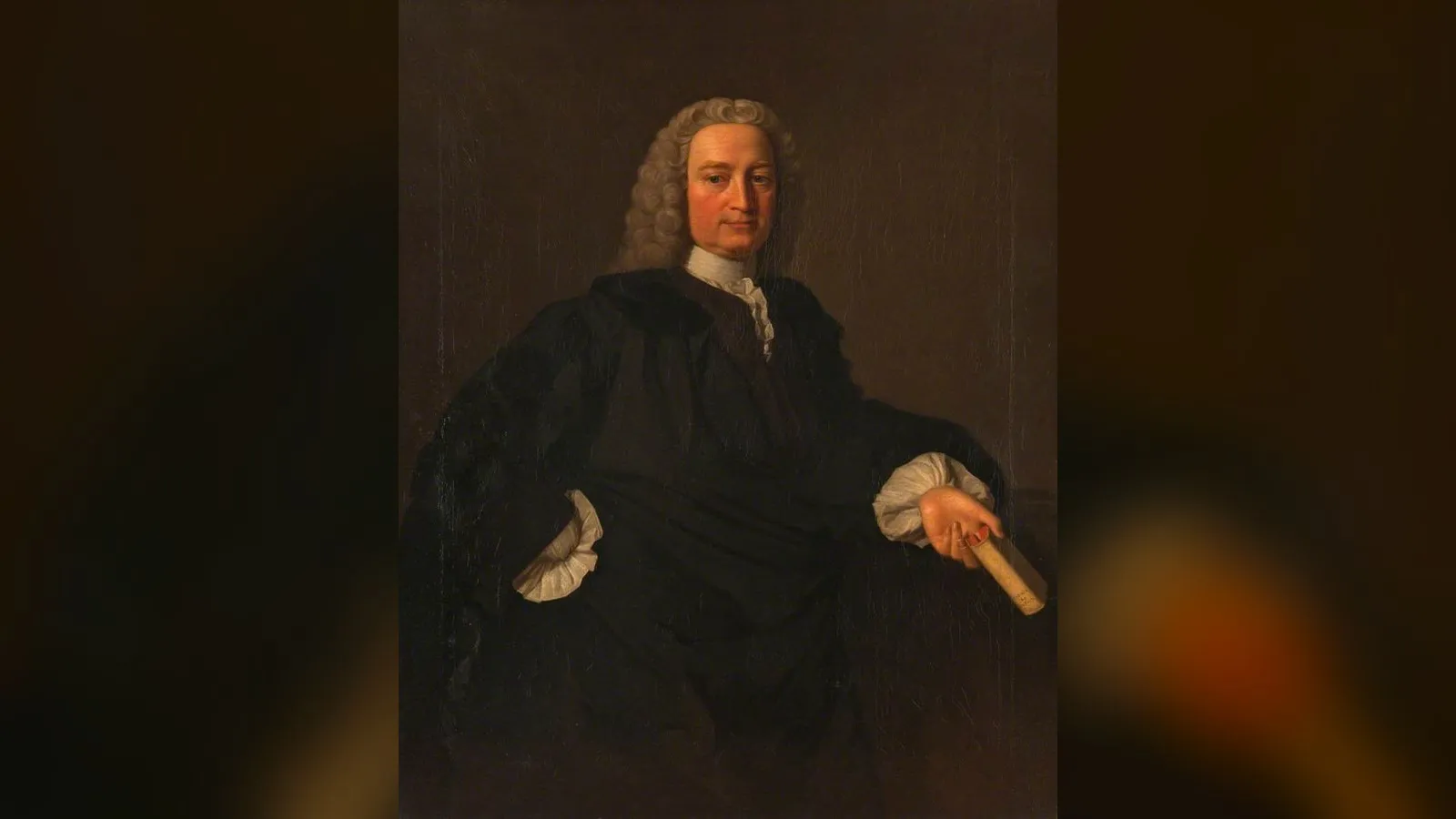

Francis Hutcheson (1694–1746)
Contents
The Irish-Born Ulster-Scot Who Taught the Scottish Enlightenment How to Think
TL;DR
- established Francis Hutcheson, though born and raised in Ulster, Ireland, became Professor of Moral Philosophy at the University of Glasgow (1729–1746), where his lectures — the first at Glasgow delivered in English rather than Latin — directly shaped both Adam Smith and, less directly, David Hume, earning him a strong claim to be considered a foundational figure of the Scottish Enlightenment.
- established His central philosophical contribution, "moral sense theory," argued that humans possess an innate perceptual faculty for recognising virtue and vice, comparable to the five physical senses — a position that shaped how the entire generation of Scottish philosophers after him approached ethics.
- established Hutcheson articulated an early version of the phrase "the greatest happiness for the greatest numbers," directly anticipating Jeremy Bentham's utilitarianism by several decades — one of Scottish philosophy's more underappreciated direct lines into later Anglo-American moral and political thought.
- Established, with real nuance required: Hutcheson explicitly rejected Aristotle's philosophical justification for slavery and argued no one could hold "a perfect right to assume power over others, without their consent" — a genuinely progressive position for his time — but his framework still accommodated forms of time-bound servitude for criminals and debtors, and should not be presented as a complete or modern abolitionist position.
- disputed His influence on Thomas Jefferson and the American Declaration of Independence is real but contested in its precise extent — one influential 1978 scholarly argument for a strong, direct textual influence was sharply challenged by other historians, and the current scholarly position is one of genuine, unresolved disagreement rather than settled consensus.
Key Facts
- Born
- 8 August 1694, Saintfield, County Down, Ulster, Ireland
- Died
- 8 August 1746 (his 52nd birthday), Dublin
- Family background
- Son of a Presbyterian minister of Ulster-Scottish (Scots-Irish) descent, tracing to Ayrshire, Scotland
- Education
- University of Glasgow, 1710–1718
- Career
- Ran a dissenting academy in Dublin (c. 1719–1729); Professor of Moral Philosophy, University of Glasgow (1729–1746)
- Major works
- An Inquiry into the Original of Our Ideas of Beauty and Virtue (1725); An Essay on the Nature and Conduct of the Passions and Affections (1728); A System of Moral Philosophy (1755, posthumous)
- Best-known idea
- "Moral sense theory" — an innate faculty for perceiving virtue and vice
- Notable students
- Adam Smith
- Burial
- St Mary's churchyard, Dublin (grave now unmarked)
Scottish Impact Index (SI Score)
- Global Influence
- 6/10
- Enduring Relevance
- 9/10
- Material Contribution
- 3/10
- Exceptional Achievement
- 8/10
- Lasting Legacy
- 7/10
- Recognition
- 3/10
36/60
Ranked =52nd of 200 in Great Scots
Claim-Status Note
Hutcheson occupies an unusual position for a "Great Scots" card: he was born and died in Ireland, and spent significant portions of his career there, making him more accurately described as an Ulster-Scot whose defining professional legacy happened to be built at Glasgow. This article states that plainly rather than overstating his "Scottishness" for the sake of a cleaner national narrative. It also treats his historical reputation on two specific points — his position on slavery, and his influence on the American Declaration of Independence — with careful, evidence-tiered nuance, since both are genuinely more complicated than either a simple "progressive hero" or "American founding influence" framing would suggest.
Timeline
Born 8 August, Saintfield, County Down, Ulster, to a Presbyterian minister of Scots-Irish descent
Studies philosophy, classics, literature and theology at the University of Glasgow
Runs a private dissenting academy in Dublin, teaching without a formal episcopal licence
Publishes An Inquiry into the Original of Our Ideas of Beauty and Virtue
Publishes An Essay on the Nature and Conduct of the Passions and Affections
Appointed Professor of Moral Philosophy, University of Glasgow, succeeding Gershom Carmichael
Delivers his inaugural Glasgow lecture, "De naturali hominum socialitate" ("On the natural fellowship of mankind")
Adam Smith enters the University of Glasgow and studies under Hutcheson
Dies, 8 August, while visiting Dublin, on his 52nd birthday
A System of Moral Philosophy, his fullest statement of his philosophy, published posthumously
Writes from Glasgow on 16 April that a Pennsylvania presbytery has asked Scotland for ministers and books, and offers to advise on books and buy them cheaply
Provost William Smith recommends Hutcheson to students at the College of Philadelphia; one of his works is a textbook there
His Inquiry into Beauty and Virtue is in the library of the College of New Jersey (Princeton)
His work becomes influential reading among American colonial intellectuals, including at Harvard and the College of Philadelphia
A System of Moral Philosophy is on James Madison's list of books for the use of Congress
First American edition of his Short Introduction to Moral Philosophy, Philadelphia
Historian Garry Wills publishes an influential, later contested, argument for Hutcheson's direct influence on Jefferson's Declaration of Independence
The Details
An Ulster-Scot, Not Simply a Scot
Hutcheson was born in 1694 in Saintfield, County Down, in Ulster, Ireland, the son of a Presbyterian minister whose own family had Scots-Irish roots tracing back to Ayrshire in Scotland — part of the broader Ulster-Scots Presbyterian community established through earlier Scottish migration to the north of Ireland. This background matters for understanding his career: Hutcheson moved between Irish and Scottish Presbyterian institutional worlds throughout his life, studying at Glasgow, then returning to Ireland to run a private academy in Dublin for roughly a decade before eventually taking up his famous Glasgow professorship. He died, fittingly, back in the Dublin "where his best work was done," according to one assessment of his career — a detail worth sitting with honestly rather than smoothing over for a simpler "great Scot" framing. established
From Dublin Academy to Glasgow's First English-Language Lectures
After studying at Glasgow (1710–1718), Hutcheson returned to Ireland, where institutional suspicion — connected to his Irish background and his association with John Simson, a theologian under investigation by Scottish church courts for doctrinal heterodoxy — appears to have limited his prospects for a ministry career in Scotland. He instead established and ran a private dissenting academy in Dublin for roughly a decade, teaching without a formal episcopal licence, a fact the local Archbishop apparently chose not to prosecute. In 1729, he returned to Scotland to take up the Chair of Moral Philosophy at Glasgow, succeeding Gershom Carmichael, and delivered his inaugural lecture the following year. A genuinely notable detail: Hutcheson was the first professor at Glasgow to lecture in English rather than the traditional academic Latin — a significant, practical break with convention that made his ideas considerably more accessible to students and, over time, to a wider reading public. established
Moral Sense Theory: An Innate Faculty for Perceiving Right and Wrong
Hutcheson's central and most enduring philosophical contribution was his theory of an innate "moral sense" — the idea that humans possess a perceptual faculty for recognising virtue and vice in themselves and others, operating somewhat like the five physical senses, alongside a related "public sense" (a natural disposition to be pleased by others' happiness and troubled by their suffering) and even an aesthetic "sense of beauty," treated as a comparably innate and immediate faculty of perception rather than the product of reasoned calculation. This was a direct response to, and rejection of, Thomas Hobbes's more pessimistic account of human nature as fundamentally self-interested: Hutcheson insisted that benevolence toward others was a genuine, direct, and irreducible feature of human psychology, not merely disguised self-interest. Scholars have noted a genuine internal tension in this framework worth flagging honestly: Hutcheson's account of moral judgment as an immediate, intuitive "sense" sits somewhat uneasily alongside his simultaneous use of a more calculated, outcome-based standard for judging actions (see below) — a tension he did not fully resolve. established
"The Greatest Happiness for the Greatest Numbers" — Before Bentham
One of Hutcheson's most historically significant, if today underappreciated, contributions is his early articulation of what later became the founding formula of utilitarianism: the idea that the moral worth of an action can be judged by its tendency to produce "the greatest happiness for the greatest numbers." He went so far as to propose a kind of "moral algebra" for weighing the calculated happiness produced by different actions. This directly anticipates Jeremy Bentham's utilitarian philosophy by several decades, and represents a genuine, traceable line of influence running from Hutcheson through his student circle and later readers toward one of the most influential ethical and political traditions in the English-speaking world. established
Teacher to Adam Smith, Influence on Hume
Hutcheson's most concrete legacy runs through his students, chief among them Adam Smith, who studied under him at Glasgow in the late 1730s and later described him with evident reverence as "the never to be forgotten Hutcheson" — a phrase Smith is recorded using for only two people in his life: Hutcheson and David Hume. The structural influence is traceable in specific, documented detail: the sequence of topics in the economic portion of Hutcheson's own System of Moral Philosophy (1755) closely parallels the order Smith later used in both his Glasgow lectures and in The Wealth of Nations itself. Scholars note that Hutcheson's influence on Smith operated as much through his personal teaching style and oratory as through strict doctrinal transmission — Smith did not simply adopt Hutcheson's specific conclusions wholesale, but was formatively shaped by his approach. Hutcheson's broader articulation of a utilitarian-leaning ethical standard also fed, somewhat less directly, into David Hume's own moral philosophy, and from there into the later utilitarian tradition associated with figures like Joseph Priestley, William Paley, and eventually Bentham himself. established
On Slavery: A Genuinely Progressive Position, With Real Limits
This is a point worth treating with real care rather than either celebrating uncritically or glossing over. In his writing, Hutcheson explicitly and directly rejected Aristotle's classical philosophical justification for slavery, stating plainly that "no endowments, natural or acquired, can give a perfect right to assume power over others, without their consent," and describing the idea that any wrongdoing could transform "a rational creature into a piece of goods void of all right" as something "the natural sense of justice and humanity abhors." He specifically condemned the enslavement of prisoners taken in war as "horridly unjust." This was a genuinely progressive philosophical position for his era, directly engaging with and rejecting one of the classical world's most influential justifications for the institution of slavery.
At the same time, it is important not to overstate this into a fully modern abolitionist position, which it was not. Hutcheson's framework still accommodated a category of time-bound, involuntary servitude for criminals and debtors — people could be compelled to labour to repay a debt or as punishment for a crime — while insisting such servitude retain meaningful limits (protection from torture, a right to adequate subsistence, and, critically, an endpoint once the value of the labour extracted matched what was owed). This is a considerably more restrictive and rights-respecting position than chattel slavery as actually practised across the British Atlantic world in his lifetime, but it is a reformed, bounded system of servitude rather than a rejection of all compelled labour whatsoever. established, presented with the nuance the original argument actually contains, rather than either overstating it as full modern abolitionism or understating its genuine significance.
Influence on America — Real, But Its Precise Extent Is Genuinely Disputed
Hutcheson's writing found a substantial and well-documented American readership in the 18th century — his Inquiry into the Original of Our Ideas of Beauty and Virtue was being used as a Harvard textbook by the 1730s, and one assessment describes him as "probably the most influential and respected moral philosopher in America" during that century. His ideas reached American colonial intellectual circles partly through direct reading and partly through students of his own students — notably Francis Alison, a former Hutcheson student who went on to teach moral philosophy at the College of Philadelphia, whose own students included several men who later signed the Declaration of Independence; and John Witherspoon at the College of New Jersey (Princeton), whose lectures leaned heavily on Hutcheson's work.
Where the picture becomes genuinely contested is the more specific claim that Hutcheson directly and substantially shaped the actual language and philosophy of Thomas Jefferson's Declaration of Independence. The historian Garry Wills made an influential case for this direct influence in 1978, but this was met with a sharply critical scholarly rebuttal from Ronald Hamowy, and subsequent scholarship — including a more measured partial endorsement from Samuel Fleischacker, who found it "perfectly reasonable to see Hutcheson's influence behind the appeals to sentiment" Jefferson incorporated — has left the question genuinely unresolved rather than settled. This article treats Hutcheson's broad, diffuse influence on 18th-century American moral and political thought as well established, while treating the more specific claim of direct influence on Jefferson's actual drafting as a real but unresolved scholarly dispute. established (broad influence); disputed (specific, direct Jefferson influence).
The American record in detail
The literary historian Andrew Hook, in Scotland and America (1975), collects the documentary traces of Hutcheson in America. He calls Hutcheson the thinker who gave the Scottish Enlightenment its first philosophical impetus, and his evidence shows Hutcheson was among the earliest Scottish philosophers Americans read.
A letter about Pennsylvania. established On 16 April 1746, four months before his death, Hutcheson wrote from Glasgow to the Belfast minister Thomas Drennan that he had received a letter from a Pennsylvania presbytery asking Scotland for ministers and books. The Pennsylvanians, he reported, complained that George Whitefield's revivalism had bred "a contempt" of learning among his followers. Hutcheson promised his "best advice about books and philosophy" and offered to buy books for them more cheaply than they could get them anywhere else. He added that he would sooner ask the Roman conclave for help than his own presbytery. The letter, printed by James McCosh in The Scottish Philosophy (1875), shows the American Presbyterian quarrel between revivalists and their critics running in parallel with the Scottish one between Moderates and evangelicals.
In colonial colleges. established Hook, quoting I. Woodbridge Riley (1907), records that in 1756 one of Hutcheson's works was a textbook in the philosophy school of the Philadelphia Academy, and that his Inquiry into Beauty and Virtue was in the Princeton library by 1760. In 1756 William Smith, the Aberdeen-educated provost of the College of Philadelphia, recommended Hutcheson for students' private reading, alongside the mathematicians Colin Maclaurin and Robert Simson. When John Witherspoon arrived at Princeton in 1768 his moral philosophy lectures drew heavily on Hutcheson.
After the Revolution. established James Madison's 1782 list of books to be bought for Congress, drawn up with Witherspoon and John Lowell, included Hutcheson's System of Moral Philosophy. Thomas Jefferson owned three Hutcheson titles. A Philadelphia edition of Hutcheson's Introduction to Moral Philosophy appeared in 1788. Samuel Miller's survey of 1803 shows that Hutcheson was still studied in American moral philosophy courses well after the Revolution, though he was gradually replaced by Reid and Dugald Stewart.
shared Hook's general conclusion about Scottish books in colonial America applies to Hutcheson: they were known before 1776, but in a handful of college libraries, among teachers and in unusual private collections such as Jefferson's, not widely. The heavier influence came after the Revolution, through the colleges. That is consistent with the cautious modern position on the Wills thesis set out above.
Animal Ethics: An Early and Distinctive Argument
Less widely known than his moral sense theory or his utilitarian formula is Hutcheson's genuinely early contribution to what would today be called animal ethics. In A System of Moral Philosophy (1755), he argued that animals merit moral consideration on the basis of their capacity to experience pleasure and pain — their sentience — rather than on the basis of rational faculties, directly challenging the dominant view among contemporaries like Hobbes, Locke, Pufendorf and Spinoza, who generally excluded animals from any direct moral standing. He argued animals possess "a right not to suffer unnecessary pain." This represents a genuinely distinctive, comparatively overlooked strand of his broader philosophical project. established
Religious Position and Institutional Suspicion
Hutcheson's own religious position, while he remained a practising figure within the Presbyterian tradition throughout his life, attracted institutional suspicion at points in his career — notably through his association with the theologian John Simson, whose own doctrinal heterodoxy was under formal investigation by Scottish church courts, a connection that appears to have limited Hutcheson's early ministry prospects in Scotland and contributed to his choice to build his early career in Dublin instead. He nonetheless maintained cordial working relationships with senior Church of Ireland figures in Dublin, including offers of clerical preferment (conditional on formal episcopal ordination, which he declined). established as to the institutional friction; the precise theological substance of any specific heterodoxy attributed to him is less fully documented and should be treated with appropriate caution.
Death and an Unmarked Grave
Hutcheson died in Dublin on 8 August 1746 — his 52nd birthday — while visiting the city, and was buried in St Mary's churchyard there. His grave today remains unmarked, a detail some biographical accounts note with a degree of poignancy, in a city one assessment describes as the place "where his best work was done," a further reminder of the genuinely cross-national, Ulster-Scots character of his career and legacy. established
Legacy
Hutcheson's standing as a genuinely foundational figure of the Scottish Enlightenment rests substantially on the direct, traceable influence he had over Adam Smith specifically, and on the broader intellectual climate he helped establish at Glasgow — a climate of rigorous, English-language, publicly engaged moral philosophy that shaped the university for a generation after his death. His moral sense theory provoked serious contemporary philosophical pushback, notably from Joseph Butler and Richard Price, who argued for a more strictly rational, rather than sense-based, account of moral knowledge — a genuine, substantive philosophical debate rather than a one-sided triumph, worth noting as evidence that Hutcheson's ideas were seriously contested even in his own time, not simply accepted wholesale. established
Hutcheson, the Kirk and his pupils
The philosopher Alexander Broadie stresses how much the Scottish Enlightenment owed to the Glasgow line from Gershom Carmichael to Hutcheson. Carmichael, first holder of Glasgow's chair of moral philosophy from 1727, brought the European natural-law tradition of Grotius, Pufendorf and Locke into the Scottish universities. Hutcheson studied under him, then added the idea of a moral sense, a faculty that lets us tell virtue from vice, put more weight on benevolence, and took a softer line on God's place in morality: he did not hold that only a believer could be virtuous.
That stance drew Kirk opposition. Broadie notes that within a short period three Glasgow professors, Hutcheson, William Leechman and John Simson, faced church critics; Hutcheson for teaching that people are naturally benevolent and can be virtuous without belief in God. His pupil Adam Smith remained loyal to "the never to be forgotten Hutcheson", and judged him, among all writers who based morality on benevolence, "the most acute, the most distinct, the most philosophical, and what is of the greatest consequence of all, the soberest and most judicious".
Did You Know?
- Francis Hutcheson wasn't Scottish by birth — he was born and largely raised in Ulster, Ireland, to a family of Scots-Irish Presbyterian descent, and only built his famous academic career at Glasgow later in life.
- He was the first professor at the University of Glasgow to lecture in English instead of the traditional academic Latin — a significant, practical break with convention.
- He coined an early version of "the greatest happiness for the greatest numbers," anticipating Jeremy Bentham's utilitarianism by several decades.
- Adam Smith reserved the phrase "the never to be forgotten" for only two people he ever wrote about — Hutcheson and David Hume.
- Hutcheson developed one of the earliest philosophical arguments for animal welfare, based on animals' capacity to feel pain rather than on any claim to rationality.
- He explicitly rejected Aristotle's classical justification for slavery — a genuinely progressive stance for his era, though his own framework still accommodated limited, time-bound forms of servitude.
- His influence on Thomas Jefferson's Declaration of Independence is a genuinely disputed question among historians — one influential 1978 argument for direct influence was sharply challenged by other scholars, and the debate remains unresolved.
- He died in Dublin, the city where he'd built his earliest career, on his 52nd birthday — and his grave there remains unmarked today.
- A few months before he died, Hutcheson offered to buy books in Glasgow for a Pennsylvania presbytery that had written to Scotland asking for ministers and books.
Frequently Asked Questions
1
- Was Francis Hutcheson actually Scottish?
Not by birth — he was born and largely raised in Ulster, Ireland, into a family of Scots-Irish Presbyterian descent. His defining career achievement, the Glasgow professorship, was built in Scotland, which is why he's closely associated with — and genuinely foundational to — the Scottish Enlightenment, but it's more accurate to describe him as an Ulster-Scot than as simply Scottish.
2
- What is "moral sense theory"?
Hutcheson's central philosophical idea: that humans possess an innate perceptual faculty for recognising virtue and vice, working somewhat like the five physical senses, rather than moral judgment being purely a matter of learned reasoning or calculation.
3
- Did Hutcheson influence Adam Smith?
Yes, directly and substantially — Smith studied under him at Glasgow, described him with clear reverence, and the structure of Smith's later economic writing closely follows patterns first laid out in Hutcheson's own work.
4
- Did Hutcheson invent utilitarianism?
Not exactly, but he articulated an early version of its defining formula — "the greatest happiness for the greatest numbers" — decades before Jeremy Bentham developed utilitarianism into a full ethical and political philosophy.
5
- What were Hutcheson's views on slavery?
He explicitly rejected the classical philosophical justification for slavery associated with Aristotle, arguing no one could hold a "perfect right" over another person without their consent. This was genuinely progressive for his time, though his framework still allowed for limited, time-bound servitude for criminals and debtors, so it should not be mistaken for a fully modern abolitionist position.
6
- Did Hutcheson influence the American Declaration of Independence?
His broader influence on 18th-century American moral and political thought is well established — his work was widely read in the American colonies and shaped later American intellectuals. Whether he directly and specifically influenced Thomas Jefferson's actual drafting of the Declaration is a genuinely disputed question among historians, not a settled fact.
7
- What did Hutcheson believe about animals?
He argued animals deserve moral consideration because they can feel pleasure and pain, not because of any claim to rationality — a genuinely distinctive and comparatively early position among philosophers of his time, most of whom excluded animals from moral consideration entirely.
8
- Why did Hutcheson leave Scotland to run an academy in Dublin?
Institutional suspicion connected to his Irish background and his association with a theologian under investigation for doctrinal heterodoxy appears to have limited his early ministry prospects in Scotland, leading him to build his early career in Dublin instead.
9
- Was Hutcheson's moral sense theory universally accepted in his own time?
No — it provoked serious philosophical pushback from contemporaries including Joseph Butler and Richard Price, who argued for more strictly rational accounts of moral knowledge rather than an intuitive "sense." It was a genuinely contested position, not a one-sided triumph.
10
- Where is Francis Hutcheson buried?
In St Mary's churchyard, Dublin — the city where he built his earliest career. His grave remains unmarked today.
11
- What's the difference between Hutcheson's moral philosophy and Hume's?
Hutcheson grounded morality in an innate "moral sense" perceiving virtue directly; Hume grounded it more in sympathy and the imagined judgment of an "impartial spectator" (a concept later developed further by Adam Smith). Both rejected pure rationalist or purely self-interested accounts of morality, but via somewhat different mechanisms — and both fed into the broader utilitarian tradition that followed.
12
- Why is Hutcheson sometimes called "the father of the Scottish Enlightenment"?
Because of his foundational, directly traceable influence on Adam Smith and his broader role in establishing Glasgow as a serious centre of accessible, publicly engaged moral philosophy — though it's worth noting this title reflects his enormous influence on the movement rather than a claim that he was Scottish by birth.
13
- When was Hutcheson first read in America?
Some accounts put his Inquiry at Harvard in the 1730s. The documents Andrew Hook collects are firm from the 1740s and 1750s: one of his works was a textbook at the Philadelphia Academy in 1756, his Inquiry was in the Princeton library by 1760, and he had corresponded about a Pennsylvania presbytery's need for books in 1746. His System of Moral Philosophy was on Madison's 1782 list of books for Congress.
Sources and Further Reading
Primary/Institutional
- Francis Hutcheson, An Inquiry into the Original of Our Ideas of Beauty and Virtue (1725); An Essay on the Nature and Conduct of the Passions and Affections (1728); A System of Moral Philosophy (1755, posthumous)
- University of Glasgow — historical materials on Georgian-era Glasgow professors
Scholarly
- Stanford Encyclopedia of Philosophy, "Francis Hutcheson"
- Internet Encyclopedia of Philosophy, "Hutcheson, Francis"
- Routledge Encyclopedia of Philosophy, "Hutcheson, Francis (1694–1746)"
- Garry Wills, Inventing America: Jefferson's Declaration of Independence (1978) — the influential, subsequently contested case for direct Hutcheson-Jefferson influence
- Ronald Hamowy, critical rebuttal of Wills's argument
- Samuel Fleischacker, partial reassessment of the Hutcheson-Jefferson influence question
- Irish Philosophy (irishphilosophy.com), on Hutcheson's critique of Aristotelian slavery justification
- Alexander Broadie, "The Rise (and Fall?) of the Scottish Enlightenment", in T. M. Devine and Jenny Wormald (eds), The Oxford Handbook of Modern Scottish History (Oxford University Press, 2012)
- Andrew Hook, Scotland and America: A Study of Cultural Relations, 1750–1835 (Blackie, 1975)
- James McCosh, The Scottish Philosophy (New York, 1875) — prints Hutcheson's 1746 letter about Pennsylvania
- I. Woodbridge Riley, American Philosophy: The Early Schools (New York, 1907)
General
- Encyclopaedia Britannica, "Francis Hutcheson"
- Undiscovered Scotland, biography of Francis Hutcheson
- New World Encyclopedia, "Francis Hutcheson"
Caveats: Myths and Disputed Claims
- "Hutcheson was Scottish." More precisely, he was Ulster-Irish by birth, of Scots-Irish Presbyterian descent, whose defining career was built in Scotland. established correction.
- Hutcheson's anti-slavery position is sometimes presented as fully modern abolitionism. His rejection of Aristotelian slavery-justification was genuinely progressive for his era but still accommodated limited, time-bound servitude — a real but bounded position, not a complete rejection of all compelled labour. established, presented with necessary nuance.
- His direct influence on Thomas Jefferson's Declaration of Independence is sometimes stated as settled fact. It remains a genuinely disputed question among historians, following a sharply contested 1978 scholarly argument. disputed
- His title as "father of the Scottish Enlightenment" is a well-earned characterisation of his influence, not a claim about his national origin, and should be read that way.
- Do not assume Hutcheson reached America only through John Witherspoon. His books were in Philadelphia and Princeton by 1756–60, before Witherspoon arrived in 1768. established
- The specific theological content of the heterodoxy suspicion attached to Hutcheson via his association with John Simson is less fully documented in general sources than the broader institutional friction it caused, and should be presented with appropriate caution regarding specifics.
Card 021 · Great Scots