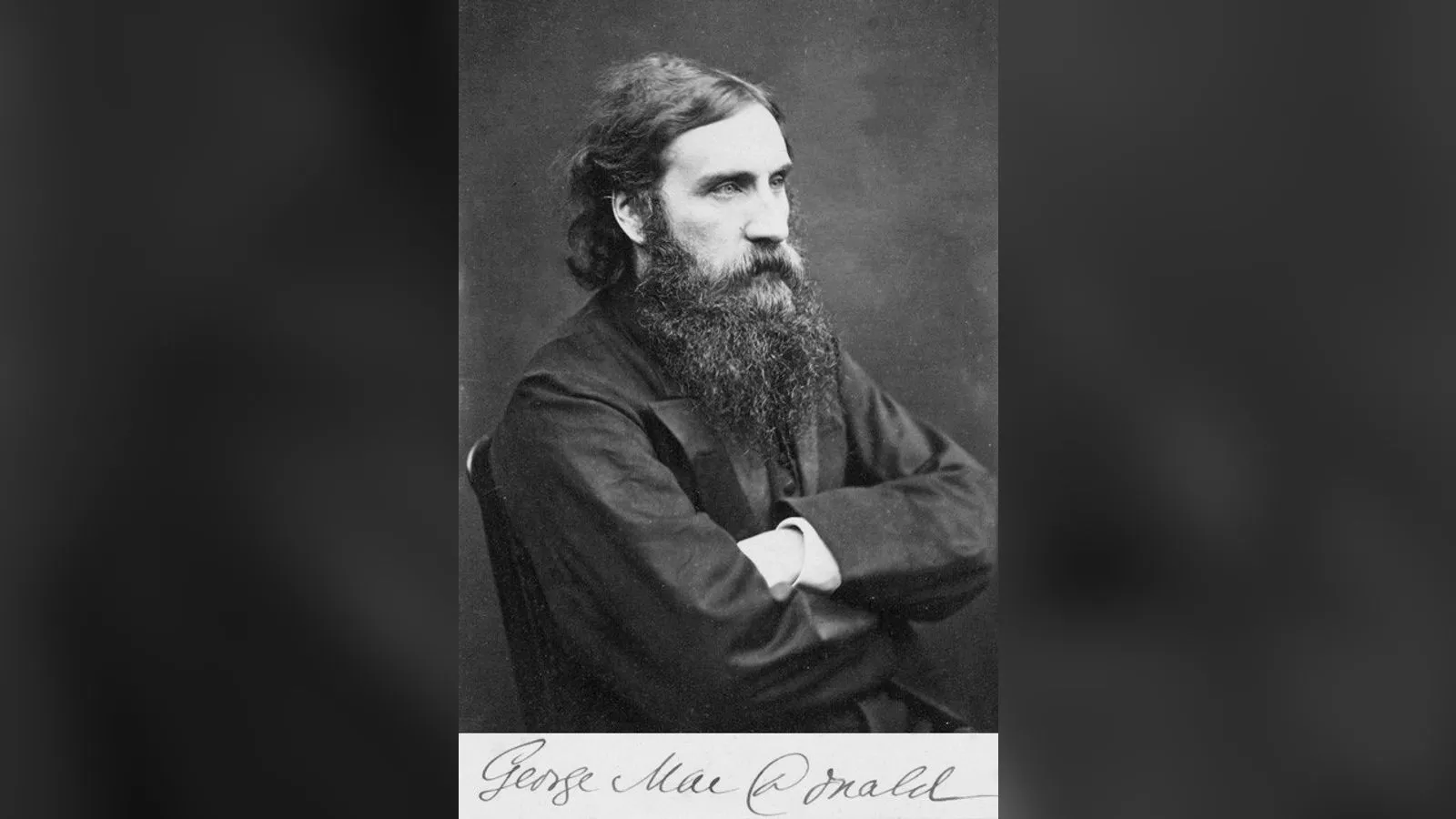

George MacDonald (1824–1905)
Contents
TL;DR
- established George MacDonald was a Scottish minister turned novelist and poet now widely regarded as the founding figure of modern fantasy literature, best known for Phantastes (1858), At the Back of the North Wind (1871), The Princess and the Goblin (1872), and Lilith (1895).
- established He was forced out of his first ministry at Arundel in 1853 after his congregation objected to his preaching of universal divine love and his rejection of strict Calvinist predestination — a genuine doctrinal dispute with real financial consequences, not a minor disagreement.
- established His influence on later writers was direct and enormous: he personally encouraged Lewis Carroll to publish Alice's Adventures in Wonderland, and C. S. Lewis named him as his single greatest literary and spiritual influence, writing that he had never written a book without quoting him.
- established MacDonald's family life was marked by repeated, devastating loss to tuberculosis — the disease killed two of his brothers, his mother, and four of his own eleven children — a pattern of grief that runs under much of his fiction.
- established He spent his last two decades largely in Bordighera, Italy, for his health, where he produced roughly half his entire literary output before dying in England in 1905.
Key Facts
- Born
- 10 December 1824, Huntly, Aberdeenshire
- Died
- 18 September 1905 (aged 80), Ashtead, Surrey, England
- Category
- Culture / Literature
- Known for
- Founding modern fantasy fiction; Phantastes, At the Back of the North Wind, The Princess and the Goblin, Lilith
- Trained as
- Congregationalist minister (Highbury College)
- Key relationships
- Mentor to Lewis Carroll; principal literary influence on C. S. Lewis; influenced J. R. R. Tolkien, G. K. Chesterton, Madeleine L'Engle
- Spouse
- Louisa Powell (married 1851)
Scottish Impact Index (SI Score)
- Global Influence
- 5/10
- Enduring Relevance
- 7/10
- Material Contribution
- 3/10
- Exceptional Achievement
- 7/10
- Lasting Legacy
- 5/10
- Recognition
- 3/10
30/60
Ranked =93rd of 200 in Great Scots
A Note on Claims and Evidence
MacDonald's ministry, his dismissal from Arundel, his major published works, and his documented influence on Lewis Carroll and C. S. Lewis are all extensively attested in his own writing, correspondence, and the published testimony of the writers he influenced, and are treated here as established. His theological views are reported descriptively, in his own terms, rather than assessed for doctrinal correctness, since that is a matter of religious belief rather than historical fact.
Timeline
Born in Huntly, Aberdeenshire, into a family touched by Celtic scholarship and Romanticism on both sides.
Graduates from King's College, Aberdeen, in chemistry and physics.
Begins theological training at Highbury College, London.
Appointed minister of Trinity Congregational Church, Arundel.
Marries Louisa Powell.
Forced to resign from Arundel after his congregation objects to his preaching on universal salvation and his stipend is cut in half.
Travels to Algiers for his health on the encouragement of Lady Byron; subsequently settles in London.
Publishes Phantastes: A Faerie Romance, his first fantasy novel.
Meets and encourages Lewis Carroll (Charles Dodgson) to publish Alice's Adventures in Wonderland.
Publishes At the Back of the North Wind.
Publishes The Princess and the Goblin; undertakes a lecture tour of the United States, meeting Longfellow and Walt Whitman.
Awarded a Civil List pension in recognition of his literary work, easing chronic financial pressure.
Settles with his family in Bordighera, Italy, founding the literary house Casa Coraggio.
Publishes The Princess and Curdie.
Publishes Lilith, his final and most complex fantasy novel.
Moves to St George's Wood, Haslemere, England.
Dies in Ashtead, Surrey, aged 80; ashes buried in Bordighera beside his wife and two of his daughters.
Details
A childhood shadowed by illness and books
MacDonald was born in 1824 in Huntly, Aberdeenshire, into a household unusually rich in literary and scholarly connections for its time and place: his maternal uncle, Mackintosh MacKay, was a noted Celtic scholar and collector of fairy tales, and his paternal grandfather had supported the controversial publication of James Macpherson's Ossian poems, which had helped shape European Romanticism. Both his parents were serious readers, and the household combined strong religious seriousness with real intellectual curiosity.
That upbringing was set against chronic ill health from early childhood — MacDonald suffered from asthma, bronchitis, and at least one bout of tuberculosis — and tuberculosis would prove to be the defining shadow over his entire life. It killed two of his brothers and his mother, and would later kill four of his own children. He graduated from King's College, Aberdeen, in 1845 with a degree in chemistry and physics before turning to theology, beginning ministerial training at Highbury College in 1848.
The Arundel dismissal: a real doctrinal rupture
In 1850 MacDonald was appointed minister of Trinity Congregational Church in Arundel, West Sussex. The appointment did not last. MacDonald preached what he believed sincerely — that God's love was universal and that every person was ultimately capable of redemption — in direct tension with the strict Calvinist doctrine of predestination that much of his congregation expected. According to his own account, he had been troubled by predestination since he first encountered it as a young man, reportedly bursting into tears at the apparent unfairness of a doctrine that could exclude people from salvation by divine decree rather than their own choices. He rejected the Calvinist model of penal substitutionary atonement, in which Christ's death satisfies a legal penalty owed to God, in favour of what is sometimes called the Christus Victor view, in which Christ's role is to save people from sin itself rather than from a divine punishment.
This was not an abstract disagreement. MacDonald's congregation responded by halving his stipend, and he was effectively forced to resign in May 1853 — a genuine professional and financial rupture triggered directly by his theology, not a stylistic dispute dressed up as doctrine. He went on to a brief further ministry in Manchester, which he also left, this time citing poor health. From this point his clerical career was effectively over, though his theological convictions never left his writing: he continued publishing collections of sermons, including several volumes of Unspoken Sermons, throughout his literary career, and spiritual and moral questions run through nearly all of his fiction.
MacDonald's theology is best described, in his own terms, as a form of Christian universalism — not the belief that everyone is automatically saved regardless of their choices, but the hope that every person would, in the end, freely choose repentance and reconciliation with God, a position with roots stretching back to early Christian theologians such as Gregory of Nyssa. He put it memorably: that he believed "no hell will be lacking which would help" bring about that final redemption — a line that captures both his rejection of eternal, purposeless punishment and his insistence that suffering could still have moral meaning.
Founding modern fantasy
Having lost his pulpit, MacDonald turned increasingly to writing to support his growing family, and it is this body of work — not his theology — for which he is now chiefly remembered. He is widely credited as a founding figure of modern fantasy fiction, beginning with Phantastes: A Faerie Romance (1858), a dreamlike adult fantasy following a young man's journey through Fairy Land. He followed this with children's fantasy classics including At the Back of the North Wind (1871) and the Princess books — The Princess and the Goblin (1872) and its sequel The Princess and Curdie (1883) — along with enduringly popular short fairy tales such as "The Light Princess," "The Golden Key," and "The Wise Woman." His final and most ambitious fantasy novel, the strange and theologically dense Lilith (1895), is often regarded as his masterwork by later scholars and writers, even though it found a smaller readership in his own lifetime.
MacDonald also wrote more than twenty realistic novels set in Scotland, works that helped establish what later became known as the "kailyard school" of sentimental, dialect-rich Scottish fiction — commercially important to him at the time, if less central to his lasting reputation than his fantasy. He was explicit about who his fantastic writing was for, famously stating that he wrote "not for children, but for the child-like, whether they be of five, or fifty, or seventy-five."
A direct, documented line to Carroll, Lewis, and Tolkien
MacDonald's influence on the writers who came after him is not a matter of vague literary kinship but of specific, well-documented personal and textual connections. He was a close friend of Charles Dodgson — Lewis Carroll — and it was MacDonald's own enthusiastic response, along with the delighted reaction of his children to a reading of the manuscript, that gave Carroll the confidence to publish Alice's Adventures in Wonderland in 1865. Carroll, an accomplished amateur photographer, in turn photographed several of the MacDonald children.
The clearest and most emphatic line of influence runs to C. S. Lewis, who described MacDonald as his master in explicit terms, writing that he had never written a book "in which I did not quote from him," compiling an anthology of MacDonald's writing, and putting MacDonald himself into The Great Divorce as a guide figure. Lewis stated plainly that his "debt to this book is almost as great as one man can owe to another." J. R. R. Tolkien, Madeleine L'Engle, W. H. Auden, John Ruskin, and the novelist David Lindsay have all acknowledged MacDonald's influence in their own writing, and G. K. Chesterton credited The Princess and the Goblin specifically with shaping his sense, formed in childhood, of how close "both the best and the worst things are to us." During an 1872–73 lecture tour of the United States, addressing crowds reportedly numbering in the thousands in Boston, MacDonald also formed personal friendships with Henry Wadsworth Longfellow and Walt Whitman.
A family repeatedly devastated by tuberculosis
MacDonald married Louisa Powell in 1851, and the couple had eleven children. The family's history is marked by repeated, severe loss: tuberculosis, the disease that had already killed MacDonald's own mother and two brothers, went on to kill four of his children — Lilia, Mary Josephine, Grace, and Maurice — as well as a granddaughter and a daughter-in-law. MacDonald was reportedly particularly affected by the death of Lilia, his eldest daughter. This recurring, intimate experience of loss to the same disease that had shadowed his own childhood is widely read by scholars as a significant undercurrent in his fiction's preoccupation with death, mortality, and what lies beyond it.
Not every part of the family's story was tragedy. His son Greville MacDonald became a noted medical specialist and an influential figure in the Peasant Arts movement; another son, Ronald, became a novelist in his own right; and a grandson, Philip MacDonald, went on to a career as a Hollywood screenwriter.
Financial precarity and the move to Italy
Despite his large literary output, MacDonald struggled financially for much of his career — unsurprising, given a family of thirteen supported chiefly by a writer's income in the Victorian book trade. Relief came in 1877 with the award of a Civil List pension, a form of state recognition that provided crucial, if modest, financial stability. From 1879 he and his family settled in Bordighera, on Italy's Riviera dei Fiori, seeking a climate kinder to his lifelong chest complaints. There he founded Casa Coraggio ("Bravery House"), which became a genuine cultural hub for the expatriate community, hosting readings of Dante and Shakespeare and amateur theatrical productions. MacDonald produced roughly half of his entire literary output, including much of his most significant fantasy work, during his two decades in Bordighera.
Death and afterlife
MacDonald returned to England in 1900, settling at St George's Wood in Haslemere, a house designed by his son Robert and overseen by his eldest surviving son, Greville. He died on 18 September 1905 in Ashtead, Surrey, at the age of 80. He was cremated at Woking, and his ashes were returned to Bordighera to be buried beside his wife Louisa and his daughters Lilia and Grace — a final, deliberate act of reunion with the family members tuberculosis had taken from him decades earlier.
His theological writing shaped generations of Christian thinkers drawn to his rejection of punitive, deterministic doctrine, while his fantasy fiction fundamentally reshaped what imaginative storytelling for both children and adults could do — establishing, well before Tolkien or Lewis, that fantasy could be a serious vehicle for exploring genuine spiritual and moral questions rather than mere escapism.
Did You Know?
- MacDonald was trained as a scientist, graduating in chemistry and physics, before training for the ministry.
- His stipend was halved and he was effectively pushed out of his first church post over a genuine doctrinal dispute about predestination and universal salvation.
- He personally persuaded Lewis Carroll to publish Alice's Adventures in Wonderland after reading the manuscript aloud to his own children.
- C. S. Lewis said he had never written a book without quoting George MacDonald.
- Tuberculosis killed his mother, two brothers, and four of his own eleven children — a loss that recurs as a theme throughout his fiction.
- He produced roughly half of his entire body of work while living in Bordighera, Italy, where he founded a literary and cultural house called Casa Coraggio.
- During an 1872–73 American lecture tour he addressed crowds of thousands and became personal friends with Walt Whitman and Henry Wadsworth Longfellow.
- His ashes were returned from England to Italy to be buried beside his wife and two daughters who had died of tuberculosis.
FAQ
1What is George MacDonald best known for?
Being a founding figure of modern fantasy fiction, through works including Phantastes, At the Back of the North Wind, The Princess and the Goblin, and Lilith.
2Why did George MacDonald leave the ministry?
His Arundel congregation objected to his preaching of universal divine love and his rejection of strict Calvinist predestination; his stipend was cut in half and he was effectively forced to resign in 1853.
3What is George MacDonald's connection to C. S. Lewis?
Lewis named MacDonald as his single greatest literary and spiritual influence, compiled an anthology of his writing, and said he never wrote a book without quoting him.
4Did George MacDonald really help get Alice in Wonderland published?
Yes. His enthusiastic response to the manuscript, and his children's delight on hearing it read aloud, gave Lewis Carroll the confidence to publish it in 1865.
5What is George MacDonald's theology sometimes called?
A form of Christian universalism — not automatic salvation regardless of choice, but the belief that all people would ultimately, freely choose reconciliation with God.
6How many of George MacDonald's children died of tuberculosis?
Four of his eleven children died of the disease, which also killed his mother and two brothers.
7Where did George MacDonald spend his later life?
Mainly in Bordighera, Italy, from 1879, for his health, where he produced roughly half of his literary output before returning to England in 1900.
8What is considered George MacDonald's masterwork?
Lilith (1895), his final and most complex fantasy novel, is widely regarded by later scholars as his most significant work, though it was less popular than his children's fiction in his own lifetime.
9Who else did George MacDonald influence?
J. R. R. Tolkien, G. K. Chesterton, Madeleine L'Engle, W. H. Auden, John Ruskin, and the novelist David Lindsay have all acknowledged his influence.
10Was George MacDonald Scottish or English?
Scottish by birth, raised in Huntly, Aberdeenshire; he spent much of his adult and working life in England and Italy.
Sources and Further Reading
Primary / Institutional
- George MacDonald, Unspoken Sermons (collected volumes), for his own theological statements
- Civil List pension records (1877), as evidence of official literary recognition
Scholarly
- C. S. Lewis, preface to George MacDonald: An Anthology (1946)
- Christian History Institute, "George MacDonald: Writer Who Inspired C. S. Lewis"
- Tolkien Gateway, entry on George MacDonald's influence on J. R. R. Tolkien
General
- Wikipedia, "George MacDonald" (overview, cross-checked against institutional and scholarly sources above)
- Undiscovered Scotland, biography of George MacDonald
- Britannica, "George MacDonald"
Caveats: Myths and Disputed Claims
- Myth: MacDonald was primarily a children's author who dabbled occasionally in fantasy for adults. Reality: His most ambitious and theologically serious fantasy work, Lilith, was written explicitly for adult readers, and he described his fairy tales as being for "the child-like" of any age, not children specifically.
- Clarify: MacDonald's universalism should not be equated with the belief that salvation is automatic or that moral choices do not matter in his theology; his own writing frames it as a hope that all would, in time, freely choose repentance.
- Myth: MacDonald's clash with his Arundel congregation was a minor personality dispute. Reality: It was a substantive doctrinal conflict with direct financial consequences — his pay was halved before his resignation — rooted in his explicit rejection of Calvinist predestination and penal substitutionary atonement.
Card 100 · Great Scots