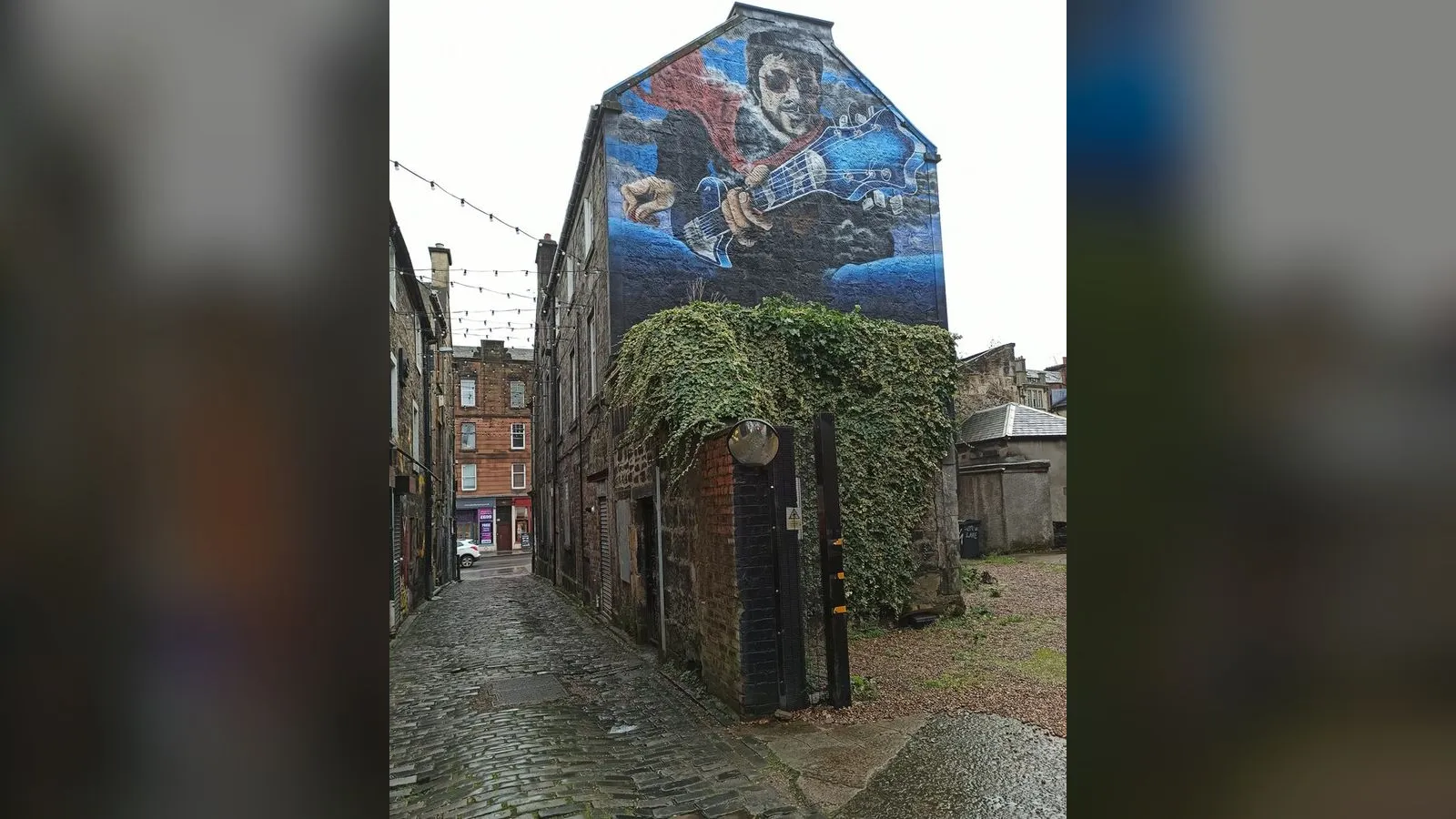

Gerry Rafferty (1947–2011)
Contents
TL;DR
- established Rafferty began his professional music career in the folk duo the Humblebums alongside Billy Connolly (also featured elsewhere in this series) — Connolly later reflected candidly that "I wanted success and fame and I got it... Gerry wanted respect. He wanted his talent to be respected... he certainly got that."
- established His 1978 solo hit "Baker Street" became one of the best-known pop singles of its era, but its famous saxophone riff was the subject of a genuine, well-documented authorship dispute: Rafferty always maintained he wrote the melodic line himself and sang it to saxophonist Raphael Ravenscroft, a claim later supported by a surviving demo recording in which the same line appears played on electric guitar.
- established Co-writing and recording "Stuck in the Middle with You" with Stealers Wheel (1973) gave him enormous commercial success, but years of resulting legal disputes over the band's business affairs prevented him from releasing new music for three years afterward.
- established He struggled with serious, worsening alcoholism from the 1980s onward, including a well-documented 2008 drinking episode at a London hotel and subsequent periods of reclusiveness and declining health, before dying of liver failure in January 2011, aged 63.
- established He was deeply and lastingly affected by the 1995 death of his older brother Joseph, from which those close to him reported he never fully recovered — a serious personal loss reported here as a real contributing thread in his later decline, not a minor biographical footnote.
Key Facts
- Born
- Gerald Rafferty, 16 April 1947, Paisley, Renfrewshire
- Died
- 4 January 2011 (aged 63), Stroud, Gloucestershire
- Known for
- "Baker Street," "Stuck in the Middle with You" (Stealers Wheel), City to City
- Early band
- The Humblebums (with Billy Connolly)
- Honours
- Ivor Novello Award (1979, "Baker Street")
- Spouse
- Carla Ventilla (m. 1970; divorced 1990)
- Daughter
- Martha Rafferty
Scottish Impact Index (SI Score)
- Global Influence
- 4/10
- Enduring Relevance
- 6/10
- Material Contribution
- 3/10
- Exceptional Achievement
- 5/10
- Lasting Legacy
- 3/10
- Recognition
- 4/10
25/60
Ranked =133rd of 200 in Great Scots
A Note on Claims and Evidence
Rafferty's career, chart achievements, and the circumstances of his later decline and death are extensively documented through contemporary press coverage, his own interviews, and detailed later reporting, and are treated as Established. The "Baker Street" saxophone-riff authorship question has a specific, well-documented resolution via surviving demo material and is reported as such, not as an unresolved dispute. His struggles with alcoholism and reclusiveness in his final years are reported plainly and at full weight, consistent with house style's commitment to giving difficult personal material the seriousness it deserves.
Timeline
Born in Paisley to a working-class Irish Catholic family; father a miner and lorry driver.
Father dies when Gerry is sixteen.
Busks on the London Underground; performs with local group the Maverix, then forms the Fifth Column.
Joins the Humblebums, alongside Billy Connolly; the group becomes a duo after Tam Harvey's departure.
Marries Carla Ventilla.
The Humblebums disband; releases solo debut Can I Have My Money Back?, a critical success with minimal commercial impact.
Forms Stealers Wheel with Joe Egan.
"Stuck in the Middle with You" becomes a major international hit.
Stealers Wheel disbands amid legal disputes that prevent Rafferty releasing new solo material for three years.
Legal issues resolved; releases City to City, featuring "Baker Street," which tops the US Billboard 200.
"Baker Street" wins the Ivor Novello Award.
Sleepwalking, a more introspective, synthesiser-influenced album reflecting personal exhaustion.
Publicly announces he is stepping back from large-scale touring.
Divorces Carla Ventilla, though they remain close.
Death of his older brother Joseph; those close to him report he never fully recovers from the loss.
Releases Another World independently through his own website.
Severe, publicly documented drinking episode at London's Westbury Hotel; subsequent hospitalisation for chronic liver disease.
Period of reclusiveness; meets Italian artist Enzina Fuschini, who later describes him as being "in despair."
Admitted to Royal Bournemouth Hospital with multiple organ failure.
Dies at his daughter Martha's home in Stroud, Gloucestershire, from liver failure, aged 63.
Rest in Blue, a posthumous album completed by his daughter from his unfinished demos, is released.
Details
A Paisley childhood and the Humblebums years
Rafferty was born in Paisley into a working-class Irish Catholic family; his father, a miner and lorry driver of Irish descent, died when Gerry was sixteen, and his mother taught him traditional Irish and Scottish folk songs from early childhood — a direct musical inheritance he later credited as foundational. After various jobs and a period busking on the London Underground, he joined the folk group the Humblebums in 1969, alongside future comedian Billy Connolly. When founding member Tam Harvey left shortly afterward, Rafferty and Connolly continued as a duo, recording several albums and building a following on the Scottish folk circuit before the group dissolved in 1971. Connolly later offered a notably candid reflection on how the two men's paths diverged: "I wanted success and fame and I got it... Gerry wanted respect. He wanted his talent to be respected... he certainly got that" — a comparison this article preserves because it captures something genuine about Rafferty's own stated discomfort with celebrity, discussed further below.
Stealers Wheel, legal disputes, and a forced three-year silence
Rafferty's first major commercial success came with Stealers Wheel, the band he formed with Joe Egan in 1972. Their single "Stuck in the Middle with You" (1973) became an international hit and has remained a widely recognised song for decades since (later gaining further cultural prominence through its use in film). However, the band's business affairs became mired in legal disputes following its 1975 breakup, and these disputes — not any lack of creative output — prevented Rafferty from releasing new solo material for three full years, a serious professional setback often omitted from more celebratory accounts of his career.
Baker Street and a resolved authorship question
Once the legal disputes were settled, Rafferty's 1978 album City to City became a major commercial triumph, topping the US Billboard 200 and selling over 5.5 million copies, led by its signature single "Baker Street." The song's instantly recognisable saxophone riff became the subject of a long-running public question about authorship: Rafferty consistently maintained that he had composed the melodic line himself and sung it to saxophonist Raphael Ravenscroft, who performed it on the record. This was not simply Rafferty's unverified claim — a surviving 2011 remastered demo recording confirmed that the identical melodic line appears on an earlier version of the song, played on electric guitar, supporting Rafferty's account of sole authorship. The song went on to earn him the 1979 Ivor Novello Award and remained extraordinarily lucrative for decades; Rafferty noted in a later interview that the song alone was still earning him around £80,000 a year, decades after its release.
A deliberate retreat from the celebrity machine
Rafferty was unusually candid and consistent about his discomfort with fame itself, distinct from his evident comfort with songwriting and recording. He told one interviewer, "There's a thin line between being a songwriter and a singer and being a personality... If you feel uncomfortable with it you shouldn't do it." His 1974 Stealers Wheel album Ferguslie Park — named after his own deprived home neighbourhood in Paisley — was a deliberate artistic statement distancing himself from what he saw as the music industry's superficiality. In 1983, following the exhausting aftermath of Baker Street's success, he announced he was stepping back from large-scale touring, stating plainly that "whatever I do in the future, it's at my own pace, on my own terms." This was a genuine, sustained position reflected across his later career choices, including his decision to release Another World (2000) independently through his own website rather than through a major label.
Grief, alcoholism, and a difficult decline
Rafferty had enjoyed alcohol since youth — some of his own early songs reference drinking directly — but his drinking became a serious, worsening problem from the 1980s onward, straining both his marriage to Carla Ventilla (whom he divorced in 1990, though they remained close) and his later professional output. The 1995 death of his older brother Joseph affected him profoundly; people close to him reported that he never fully recovered from this loss, a genuine personal grief that this article treats as a real contributing factor in his subsequent decline rather than a minor biographical detail. By 2008, his alcoholism had become severe and publicly documented: a widely reported drinking episode at London's Westbury Hotel caused extensive damage to his room, with the hotel's director telling a reporter, "It was such a shame... he was clearly on a downward spiral. He was in self-destruct mode." He was subsequently hospitalised with chronic liver disease, and the following years involved periods of reported reclusiveness, inconsistent accounts of his whereabouts, and a relationship with Italian artist Enzina Fuschini, who described him during this period as seeming to be "under some sort of evil spell," adding, "He felt crippled by it... I saw a man in despair." He was admitted to Royal Bournemouth Hospital in November 2010 with multiple organ failure and died on 4 January 2011 at his daughter's home in Stroud, Gloucestershire, from liver failure, aged 63.
A well-attended farewell and lasting legacy
Rafferty's requiem mass, held at St Mirin's Cathedral in Paisley on 21 January 2011, was livestreamed and attended by figures including Scotland's First Minister at the time, Alex Salmond, as well as The Proclaimers, former Stealers Wheel bandmate Joe Egan, singer Barbara Dickson, and artist John Byrne (also featured elsewhere in this series), who delivered the eulogy. His ashes were scattered on Iona. In 2012, Paisley named a street — Gerry Rafferty Drive — in his honour, and a posthumous album, Rest in Blue, completed by his daughter Martha from his unfinished demos, was released in 2021.
Did You Know?
- He began his professional music career in a folk duo with future comedian Billy Connolly.
- The authorship of "Baker Street"'s famous saxophone riff — long attributed informally to saxophonist Raphael Ravenscroft — was later confirmed by surviving demo recordings to have been Rafferty's own composition.
- "Baker Street" was still earning him roughly £80,000 a year decades after its release, according to his own account.
- He named a Stealers Wheel album Ferguslie Park, after his own deprived home neighbourhood in Paisley, as a deliberate statement against music-industry superficiality.
- Legal disputes following Stealers Wheel's breakup silenced him as a recording artist for three full years.
- He released his 2000 album Another World independently through his own website, ahead of the wider trend toward artist-direct distribution.
- His requiem mass was attended by Scotland's then-First Minister, Alex Salmond.
- His ashes were scattered on the island of Iona.
FAQ
1What is Gerry Rafferty's most famous song?
"Baker Street" (1978), though "Stuck in the Middle with You," recorded with Stealers Wheel, is nearly as widely recognised.
2Did he really write the "Baker Street" saxophone riff himself?
Yes — Rafferty always maintained he composed the melodic line and sang it to saxophonist Raphael Ravenscroft, who performed it on the record. A surviving demo recording later confirmed his authorship, showing the same melodic line played on electric guitar before the sax was added.
3Was he in a band with Billy Connolly?
Yes — the folk duo the Humblebums, from 1969 to 1971, before Connolly moved into comedy and Rafferty into his solo and Stealers Wheel career.
4Why did he stop releasing music for three years after Stealers Wheel?
Legal disputes over the band's business affairs following its 1975 breakup prevented him from releasing new solo material until 1978.
5What happened to him later in life?
He struggled with serious alcoholism that worsened significantly from the 1980s onward, compounded by the profound and lasting grief of his brother's 1995 death. He experienced a severe, publicly documented drinking crisis in 2008 and died of liver failure in January 2011, aged 63.
6Was he comfortable with fame?
No — he spoke repeatedly and consistently about discomfort with celebrity and the music industry's culture, deliberately stepping back from large-scale touring in 1983 and later releasing music independently.
7Did he release any music after his death?
Yes — Rest in Blue (2021), completed by his daughter Martha from demos he had recorded before he died.
8Where is he buried or remembered?
His ashes were scattered on Iona, and a street in Paisley, Gerry Rafferty Drive, was named in his honour in 2012.
Sources and Further Reading
Primary/Institutional
Scholarly/Critical
General
Caveats: Myths and Disputed Claims
- Myth: The "Baker Street" saxophone riff is sometimes informally credited to Raphael Ravenscroft as his own composition, given his memorable performance of it. Correction: Rafferty maintained he wrote the line himself, and surviving demo recordings — featuring the identical melody on electric guitar — support his account as the composer, even though Ravenscroft's saxophone performance is what made the riff famous.
- Clarification: Rafferty's later reclusiveness and declining health involved some inconsistent contemporary press reporting about his whereabouts in 2008–2009; this article follows the more detailed, better-sourced later accounts of this period rather than the more speculative contemporary tabloid coverage.
- Note: His alcoholism and the profound effect of his brother's death are reported here plainly and at full weight, as serious, documented parts of his later life, not as incidental detail.
Card 128 · Great Scots