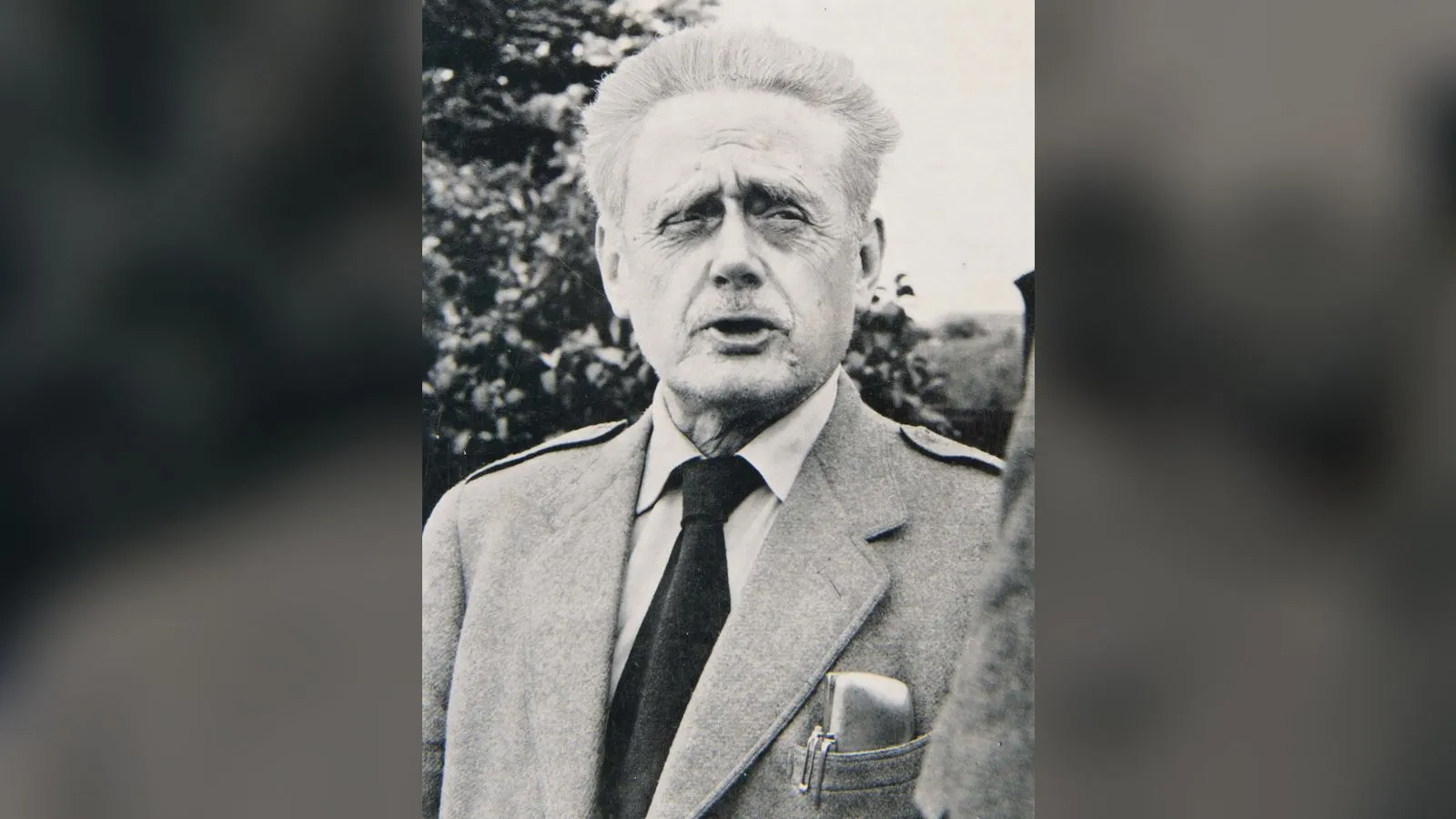

Hugh MacDiarmid (1892–1978): The Scottish Renaissance's Genius, and Its Most Politically Troubling Figure
Contents
TL;DR
- Established (Documented): Born Christopher Murray Grieve, MacDiarmid is widely credited as the single most important force behind the 20th-century Scottish Renaissance, pioneering "synthetic Scots" as a revived literary language and producing in A Drunk Man Looks at the Thistle (1926) one of the most significant long poems in modern Scottish literature.
- Established (Documented): His political affiliations were genuinely, repeatedly contradictory rather than merely eccentric: he was expelled from the National Party of Scotland in 1933 for his Marxism, then expelled from the Communist Party of Great Britain in 1938 for his nationalism, and maintained — by his own account, until his death — that he saw no fundamental contradiction in holding Marxist and nationalist convictions simultaneously.
- Established, and genuinely serious: In the early 1920s, MacDiarmid wrote essays explicitly titled "Plea for a Scottish Fascism" and "Programme for a Scottish Fascism," and in the 1930s he reviewed a biography of Hitler approvingly and urged Scottish nationalists to adopt the "race-consciousness of National Socialism." This article treats these as documented statements, not retrospective smears, while also noting he later rejected fascism as international events developed.
- Established (Documented): Private wartime correspondence, only discovered and published in 2010, reveals MacDiarmid stating in 1941 that he regarded the Axis powers as "less dangerous... in the long run" than his own government, and in 1940 that the German threat, though "appalling," mattered less than defeating the "British and French bourgeoisie" — alongside a poem celebrating the prospect of London being destroyed by Luftwaffe bombing. These are his own documented words, not a later characterization of his views.
- Disputed (framing, not fact): Some contemporary scholars argue the persistent focus on MacDiarmid's fascist-era statements functions today as a political tool in debates over Scottish independence, used to associate the independence movement with 1930s fascism, rather than reflecting a fair proportional assessment of his actual, if genuinely troubling, record. This article reports that scholarly argument honestly while still stating the underlying documented facts plainly.
Key Facts
- Born
- 11 August 1892, Langholm, Dumfriesshire, Scotland, as Christopher Murray Grieve
- Died
- 9 September 1978, Edinburgh, aged 86
- Pen name
- Hugh MacDiarmid, adopted for his Scots-language poetry
- Key literary innovation
- "Synthetic Scots" — a constructed literary Scots drawn from multiple dialects and dictionaries
- Masterwork
- A Drunk Man Looks at the Thistle (1926)
- Movement
- Principal founder of the 20th-century Scottish Renaissance
- Political memberships
- Founding member, National Party of Scotland (1928, expelled 1933); Communist Party of Great Britain (joined 1934, expelled 1938)
- Documented controversial positions
- Authored pro-fascism essays (1923); approving review of a Hitler biography (1930s); wartime private correspondence preferring Axis victory to continued British government (1940–41)
- British intelligence attention
- Under MI5/counterintelligence surveillance 1931–1943; named by George Orwell in a 1949 list of those "not to be trusted"
Scottish Impact Index (SI Score)
- Global Influence
- 5/10
- Enduring Relevance
- 7/10
- Material Contribution
- 2/10
- Exceptional Achievement
- 8/10
- Lasting Legacy
- 5/10
- Recognition
- 3/10
30/60
Ranked =93rd of 200 in Great Scots
A Note on Claim Status
This article follows ScottishInventions.co.uk's standard evidence tiers: Established/Documented (supported by primary sources or strong scholarly consensus), Shared/Traditional (widely repeated but resting on thinner evidence), disputed (credible sources disagree), and Legend/Myth (popular but unsupported or contradicted by the record). MacDiarmid presents this series' most genuinely difficult balance to date: a towering, foundational literary figure whose political record includes documented pro-fascist writing and private wartime statements preferring Axis victory to his own government's survival. This article states both the scale of his literary achievement and the substance of his most troubling documented positions plainly, without using either to excuse or erase the other, while also reporting honestly that some scholars argue the contemporary political use of these facts exceeds their proportional weight in his actual body of work and belief.
Timeline
Born Christopher Murray Grieve in Langholm, Dumfriesshire, son of a postman.
Begins at Broughton Junior Student Centre, Edinburgh, where teacher George Ogilvie introduces him to influential literary magazine The New Age.
Leaves school abruptly following an incident involving theft of books and stamps; his father dies eight days later.
Works as a journalist in Edinburgh and Wales, including for a socialist newspaper associated with Keir Hardie.
Enlists in the Royal Army Medical Corps; serves in Salonica and France during the First World War.
Contracts cerebral malaria; returns to Scotland.
Works as a journalist in Montrose, also serving as a justice of the peace and county councillor.
Publishes essays "Plea for a Scottish Fascism" and "Programme for a Scottish Fascism," advocating a Scottish "fascism of the Left." Publishes his first book, Annals of the Five Senses.
Publishes Sangschaw, Penny Wheep, and his masterwork A Drunk Man Looks at the Thistle under the pen name Hugh MacDiarmid, pioneering "synthetic Scots."
Founding member of the National Party of Scotland.
Reviews a biography of Hitler approvingly; urges Scottish nationalists toward the "race-consciousness of National Socialism."
Placed under British counterintelligence surveillance.
Expelled from the National Party of Scotland over his Marxist convictions; moves to Whalsay, Shetland.
Joins the Communist Party of Great Britain; publishes First Hymn to Lenin and Other Poems.
Expelled from the Communist Party of Great Britain for his nationalist sympathies.
Writes privately that while "the Germans are appalling enough, they cannot win, but the British and French bourgeoisie can and they are a far greater enemy"; composes a poem on the imminent destruction of London that treats the prospect of Luftwaffe bombing with apparent approval.
Writes privately that he regards "the Axis powers, tho' more violently evil for the time being, less dangerous than our own government in the long run."
Directed to wartime work; moves to Glasgow.
Publishes autobiography Lucky Poet.
Stands as a Scottish National Party parliamentary candidate.
Named by George Orwell in a private list given to British intelligence as someone "not to be trusted," owing to suspected Soviet sympathies.
Lives at Dungavel House estate, Lanarkshire.
Lives at Brownsbank Cottage, near Biggar, Lanarkshire.
Publishes Collected Poems.
Stands as a Communist Party parliamentary candidate, receiving 127 votes.
Dies in Edinburgh, aged 86.
Private wartime correspondence revealing his most troubling statements, previously undisclosed, is published and brought to wider public and scholarly attention.
Details
A postman's son who remade Scottish poetry
Christopher Murray Grieve was born in Langholm in 1892, the son of a postman, and grew up above the town library — an environment that gave him early, formative access to books his family's own means would not otherwise have provided. After early journalism work in Edinburgh and Wales, including for a socialist newspaper connected to Labour Party founder Keir Hardie, his life was interrupted by the First World War, during which he served in the Royal Army Medical Corps in Salonica and France and contracted cerebral malaria — an experience biographers connect to the significant shift in both his politics and his artistic ambitions upon his return.
Writing under the pen name Hugh MacDiarmid from the 1920s onward, Grieve became, by wide and largely uncontested scholarly consensus, the single most important figure behind the 20th-century Scottish Renaissance — a literary and cultural revival that transformed Scottish writing's relationship to its own languages and identity. His central technical innovation, "synthetic Scots," involved deliberately constructing a literary Scots drawn from multiple regional dialects and historical dictionary sources rather than simply writing in his own native speech — an ambitious, scholarly act of linguistic reconstruction rather than a nostalgic exercise. His 1926 long poem A Drunk Man Looks at the Thistle remains, by consistent critical judgment, one of the most significant achievements in 20th-century Scottish literature, and his broader influence on Scottish poetry's subsequent development is difficult to overstate.
A political record of genuine, repeated contradiction
What makes MacDiarmid a genuinely difficult subject is not simply that his politics were unusual, but that they were documented, repeated, and strikingly contradictory in ways he himself never fully resolved or, by his own account, felt needed resolving. He was a founding member of the National Party of Scotland in 1928, from which he was expelled in 1933 specifically over his Marxist-Leninist convictions. He then joined the Communist Party of Great Britain the following year, only to be expelled from it in 1938 for his nationalist sympathies — a remarkable double expulsion from opposite ideological directions within the span of a single decade. He later stood as both a Scottish National Party candidate (1945, 1950) and a Communist Party candidate (1964, receiving just 127 votes), and maintained throughout his life — scholars note this was a genuinely held position, not mere political opportunism — that he saw no essential contradiction between international Marxist socialism and Scottish nationalist aspiration, drawing explicitly on the earlier model of the Scottish revolutionary socialist John Maclean. He also championed, for decades and alongside these other commitments, the fringe economic theory of social credit, reportedly believing it compatible with Marxism until his death — a further, genuine instance of MacDiarmid holding simultaneously what most contemporaries would have regarded as mutually exclusive positions.
The fascism essays: documented, not alleged
The most seriously troubling documented material in MacDiarmid's record begins earlier than many retrospective accounts acknowledge. In 1923, he wrote and published two essays with titles that leave little room for euphemism: "Plea for a Scottish Fascism" and "Programme for a Scottish Fascism," explicitly advocating what he termed a "fascism of the Left" as a route to revitalising rural Scotland. This was not an isolated youthful slip quickly abandoned: in the early 1930s, he reviewed a biography of Hitler in approving terms and urged Scottish nationalists to adopt what he described as the "race-consciousness" of National Socialism. These are documented published statements, not retrospective inference or hostile characterisation, and this article reports them as such. It is also accurate, and worth stating with equal directness, that MacDiarmid later rejected fascism outright as the 1930s progressed and the real character of Nazi Germany and fascist Italy became unmistakable through unfolding international events — a genuine evolution in his thinking, though one that does not erase the documented record of his earlier published advocacy.
Private wartime correspondence that surfaced decades later
A further, separate layer of controversy emerged only in 2010, when private wartime correspondence previously unknown to the wider public and most scholars was published. In these letters, MacDiarmid expressed views considerably more troubling, in some respects, than his earlier fascism essays, precisely because they were written during Britain's own existential wartime struggle against Nazi Germany. In June 1940, writing privately, he stated that "although the Germans are appalling enough, they cannot win, but the British and French bourgeoisie can and they are a far greater enemy" — explicitly prioritising his opposition to British and French capitalism over the defeat of Nazi Germany at the very height of the Battle of Britain period. In April 1941, with the war's outcome still genuinely uncertain, he wrote that he regarded "the Axis powers, tho' more violently evil for the time being, less dangerous than our own government in the long run and indistinguishable in purpose" — a direct, explicit statement equating his own government's long-term threat to that of Nazi Germany. In the same period he composed a poem, "On The Imminent Destruction Of London, June 1940," which treated the prospect of German bombing of London with what has been characterised, by those who have examined it, as apparent approval, comparing the city itself to "a foul disease." These are MacDiarmid's own private words, documented in his own correspondence and verse, not a hostile later gloss placed upon ambiguous material — and this article presents them without euphemism as the genuinely serious record that they are. His own daughter-in-law and literary executor later offered a characteristically candid assessment of this pattern across his whole life: "I think he entertained almost every ideal it was possible to entertain at one point or another."
Surveillance, Orwell's list, and a feud over fascism itself
The British state took MacDiarmid's political activity seriously enough to place him under counterintelligence surveillance from 1931 to 1943, and in 1949 George Orwell — himself a committed anti-Stalinist — included MacDiarmid on a private list given to British intelligence of figures he regarded as untrustworthy, owing to suspected Soviet sympathies. In a further ironic twist given his own fascism essays, MacDiarmid also conducted a decades-long public feud with the South African poet Roy Campbell, during which, scholars note, he directed accusations of fascism at Campbell — stemming from disagreements over the Spanish Civil War — in terms one recent academic analysis has described as "weaponizing" the accusation, a characterisation worth including precisely because it illustrates how selectively and strategically MacDiarmid himself was willing to deploy the very charge that would later attach most persistently to his own record.
How scholars weigh this today, honestly reported
Contemporary scholarship does not uniformly treat MacDiarmid's fascist-era and wartime statements as disqualifying, nor does it dismiss them. Scholar Scott Lyall has argued that supporters of Scottish independence should openly acknowledge MacDiarmid's fascist statements rather than minimise them, while also contending that MacDiarmid's engagement with fascism was comparatively "superficial" set against contemporaries such as Ezra Pound, whose fascist commitment was considerably deeper and more sustained. Lyall and others have also argued that the persistent contemporary prominence of the "MacDiarmid was a fascist" framing — particularly in modern political debate — functions today partly as what one analysis calls a "politico-cultural trump card," deployed to associate the broader Scottish independence movement with interwar fascism, and that this contemporary political use may exceed what a fair, proportional historical assessment of MacDiarmid's actual record and overall body of work would support. This article reports that scholarly argument honestly, as a genuine and credentialed position in ongoing debate, while maintaining that the underlying documented facts — the 1923 essays, the approving Hitler review, the 1940–41 private correspondence, the poem on London's destruction — are not themselves in dispute and should not be softened in the course of contextualising them.
Literary legacy, weighed honestly alongside the political record
MacDiarmid's later life settled into relative literary eminence: decades at Brownsbank Cottage near Biggar, continued major publication including his 1943 autobiography Lucky Poet and his 1962 Collected Poems, and widespread recognition as the central figure of Scottish literary modernism. Fellow poet Edwin Morgan offered what remains perhaps the most balanced critical summary available: "Eccentric and often maddening genius he may be, but MacDiarmid has produced many works which, in the only test possible, go on haunting the mind and memory." Literary scholar Michael Schmidt credited him with having "redrawn the map of Scottish poetry and affected the whole configuration of English literature." MacDiarmid died in Edinburgh in 1978, aged 86, leaving a literary legacy that remains, by consistent scholarly judgment, genuinely foundational to modern Scottish literature — a legacy this article presents in full alongside, rather than instead of, the documented and genuinely serious political record that accompanies it.
The Name and the Language
Cairns Craig, in the Oxford Handbook of Modern Scottish History (2012), notes that when the young Christopher Murray Grieve set out to renew Scottish poetry in the 1920s, he invented as his alter ego "Hugh MacDiarmid", an archetypal Scottish poet steeped in the language of early Scottish writing. Craig sees this as a sign of how central Scots vernacular was to Scottish literary identity from Burns onwards. MacDiarmid's highly literary Scots was taken up from the 1930s to the 1970s by poets such as Sydney Goodsir Smith, Robert Garioch and Alexander Scott. The historians Colin Kidd and James Coleman add that MacDiarmid rejected the sentimental cult of Burns in favour of the medieval makars, and helped turn the Victorian Presbyterian view of Scottish history on its head.
Did You Know?
- MacDiarmid wrote for the short-lived nationalist Pictish Review (1927–28), whose editor Ruaraidh Erskine of Mar promised to "restore the name of Pict to the politico-cultural map of Scotland" as an alternative to kitsch tartanry and the Burns cult (Colin Kidd, 2002).
- MacDiarmid was expelled from two opposing political parties within five years of each other: the National Party of Scotland in 1933 for being too Marxist, and the Communist Party of Great Britain in 1938 for being too nationalist.
- In 1923, he published essays explicitly titled "Plea for a Scottish Fascism" and "Programme for a Scottish Fascism," advocating what he called a "fascism of the Left."
- Private wartime letters, not published until 2010, reveal he privately wrote in 1941 that he considered Nazi Germany "less dangerous... in the long run" than his own British government.
- He composed a poem during the Battle of Britain period that treated the prospect of German bombing of London with apparent approval.
- George Orwell personally included MacDiarmid on a 1949 list of people he considered untrustworthy, submitted to British intelligence.
- MacDiarmid was under British counterintelligence surveillance for twelve years, from 1931 to 1943.
- Despite his fascism essays, he also wrote poems celebrating Lenin and maintained lifelong Marxist convictions, seeing no contradiction between the two commitments.
- His standard parliamentary candidacy for the Communist Party in 1964 received only 127 votes — a stark contrast to his towering literary reputation.
Frequently Asked Questions
1Who was Hugh MacDiarmid?
The pen name of Christopher Murray Grieve (1892–1978), widely regarded as the most important figure behind the 20th-century Scottish Renaissance literary movement, and the author of A Drunk Man Looks at the Thistle (1926).
2Was Hugh MacDiarmid really a fascist?
He wrote explicit pro-fascism essays in 1923 and approvingly reviewed a Hitler biography in the early 1930s — documented, genuine positions, not a later retrospective smear. He later rejected fascism as the decade progressed, and scholars continue to debate how this phase should be weighed against his broader, largely left-wing political record, which also included lifelong Marxist and nationalist commitments.
3Did MacDiarmid support Nazi Germany during WWII?
Private wartime correspondence, published only in 2010, shows him writing in 1940–41 that he regarded his own British government as a greater long-term danger than the Axis powers, and composing a poem treating the prospect of German bombing of London with apparent approval. These are his own documented private statements.
4How can someone be both a Marxist and a nationalist, and also write pro-fascist essays?
MacDiarmid held all of these positions genuinely and, by his own account, saw no fundamental contradiction between them — a pattern his own daughter-in-law and literary executor summarised by noting he "entertained almost every ideal it was possible to entertain at one point or another."
5Was MacDiarmid ever investigated by British intelligence?
Yes. He was under counterintelligence surveillance from 1931 to 1943, and in 1949 George Orwell named him in a private list of untrustworthy figures submitted to British intelligence.
6What is MacDiarmid's most significant literary achievement?
A Drunk Man Looks at the Thistle (1926), widely regarded as one of the most important long poems in 20th-century Scottish literature, alongside his broader role in reviving literary Scots through his technique of "synthetic Scots."
7Do scholars today excuse MacDiarmid's fascist-era and wartime statements?
Not generally, though some argue the statements should be understood in fuller context — as comparatively less deeply held than other European modernist writers' fascism, and that their prominence in contemporary political debate sometimes serves present-day political purposes around Scottish independence rather than reflecting a strictly proportional historical assessment.
8Was MacDiarmid's political record consistent over his lifetime?
No — it was genuinely volatile and contradictory, including expulsion from two opposing political parties, a documented fascist phase he later rejected, and lifelong, simultaneous commitment to Marxism, Scottish nationalism, and a fringe economic theory called social credit.
9How is MacDiarmid remembered in Scottish literature today?
As a towering, foundational figure — credited by scholars with having "redrawn the map of Scottish poetry" — whose genuinely serious political controversies remain an acknowledged and actively discussed part of his legacy rather than a forgotten footnote.
10How did Hugh MacDiarmid die?
He died in Edinburgh in September 1978, aged 86, having spent his final decades at Brownsbank Cottage near Biggar, Lanarkshire.
Sources and Further Reading
Primary / Institutional
- University of Edinburgh: Hugh MacDiarmid
- Scottish Poetry Library: Hugh MacDiarmid
- Poetry Foundation: Hugh MacDiarmid
Scholarly
- Colin Kidd, "The Ideological Uses of the Picts, 1707–c.1990", in Edward J. Cowan and Richard J. Finlay (eds), Scottish History: The Power of the Past (Edinburgh University Press, 2002)
- Cairns Craig, "The Literary Tradition", in T. M. Devine and Jenny Wormald (eds), The Oxford Handbook of Modern Scottish History (Oxford University Press, 2012)
- Bella Caledonia: Hugh MacDiarmid and Prejudice
- The Bottle Imp: Hugh MacDiarmid and the British State
- Josie Holford: Communist, Nationalist, Fascist, Poet and Glasgow 1960
General
Caveats: Myths and Disputed Claims
- MacDiarmid's fascist and pro-Axis statements are a later, hostile fabrication or exaggeration. Not accurate. His 1923 fascism essays were published under his own name, his approving Hitler review is documented, and his 1940–41 private correspondence preferring Axis victory to his own government's survival was published in 2010 from his own surviving letters. These are his own words.
- MacDiarmid was a consistent, committed fascist throughout his life. Also inaccurate, in the other direction. He later explicitly rejected fascism as the 1930s progressed, maintained lifelong Marxist convictions he never abandoned, and his political record overall is better described as genuinely volatile and contradictory than as consistently fascist.
- The focus on MacDiarmid's political controversies is purely a modern political tool with no basis in his actual record. Not supported either. While some scholars argue the contemporary emphasis on these facts serves present-day political purposes around Scottish independence, the underlying documented statements themselves are genuine, verified, and serious, not invented or exaggerated for political effect.
- MacDiarmid's literary achievement should be set aside given his political record, or his political record should be excused given his literary achievement. This article rejects both framings. Both his foundational literary importance and his documented, genuinely troubling political statements are established facts that belong together in any honest account of his life.
Card 097 · Great Scots