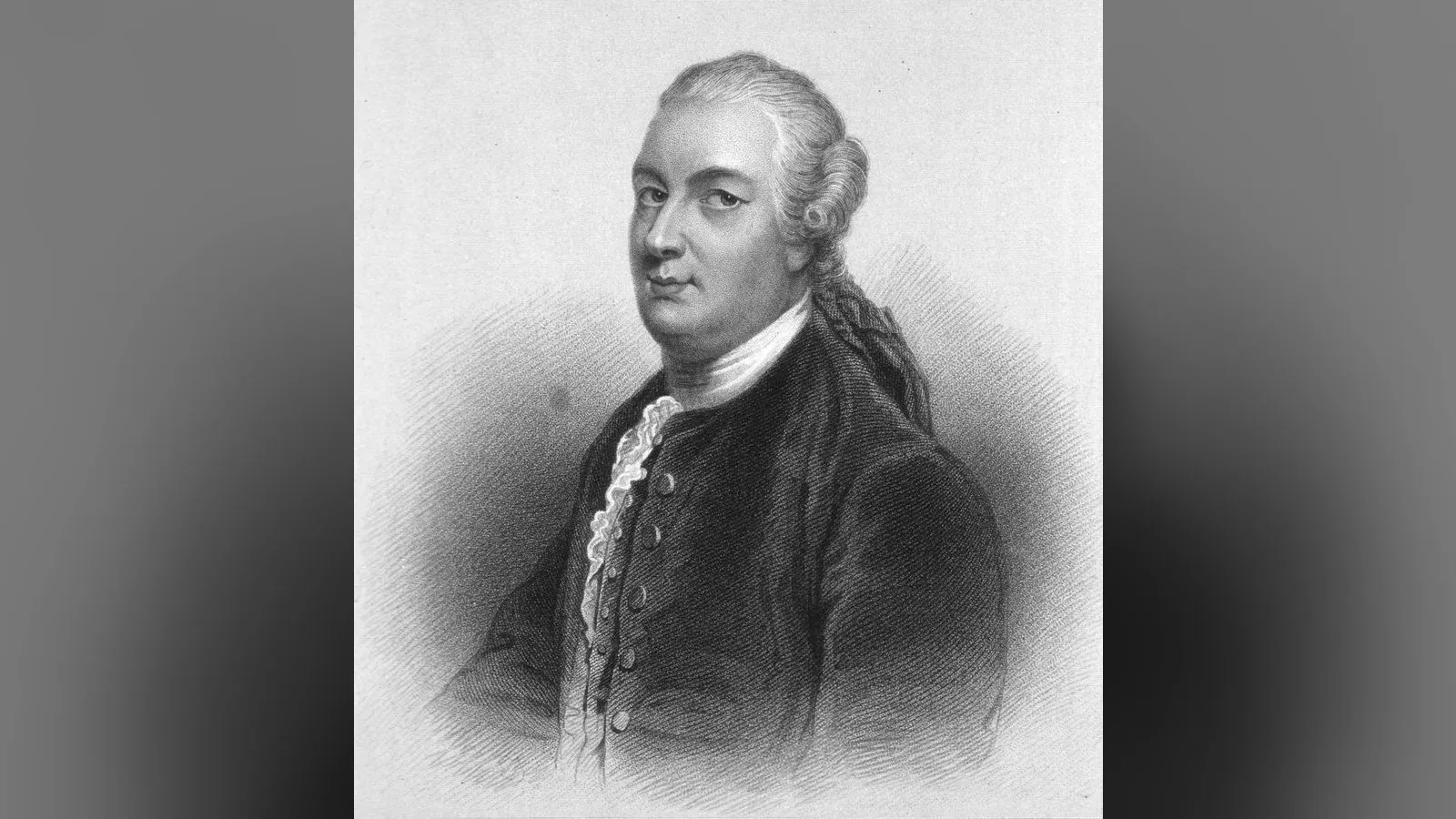

James Bruce of Kinnaird (1730–1794): The Nile Explorer Britain Refused to Believe
Contents
TL;DR
- Established/Documented: James Bruce, a Stirlingshire laird turned diplomat and linguist, travelled to Ethiopia between 1768 and 1773 and reached Gish Abay, the source of the Blue Nile, on 14 November 1770 — a genuine feat of endurance, linguistic skill, and political navigation at the Ethiopian court.
- Disputed/Shared, requires correction: Bruce is popularly remembered, and presented himself, as the discoverer of the source of the Nile; in fact he found the source of the Blue Nile specifically — a major tributary, but not the primary and longer stream now recognised as the Nile's true headwaters — and he was not even the first European to reach that particular source, since the Portuguese Jesuit priest Pedro Páez had already done so in 1618, some 152 years earlier, an account Bruce actively disputed and dismissed as fabricated in his own published work.
- Established/Documented: On returning to Britain in 1774, Bruce's detailed and often extraordinary accounts of Ethiopian court life, customs, and geography were met with widespread public scorn and disbelief, a reception so wounding that he largely withdrew from public life and did not publish his full account for another sixteen years.
- Established/Documented: The subsequent 1790 publication of Bruce's five-volume Travels to Discover the Source of the Nile sold well and was favourably reviewed in several journals, but was simultaneously attacked by rival travellers and critics as unworthy of belief — and the substantial accuracy of his account was only firmly established by later historians after his death, too late for Bruce himself to enjoy the vindication.
- Established/Documented: Bruce's expedition produced genuine and lasting scholarly value independent of the Nile-source dispute: he brought back to Europe some of the earliest known manuscripts of the Book of Enoch, texts effectively lost to Western scholarship since antiquity, directly enabling the modern academic study of that text.
Key Facts
- Born
- 14 December 1730, Kinnaird House, Larbert, Stirlingshire, Scotland
- Died
- 27 April 1794, Kinnaird House, Stirlingshire, Scotland (aged 63)
- Occupation
- Laird, diplomat, linguist, explorer, writer
- Known for
- Travelling to Ethiopia and reaching the source of the Blue Nile (1770); publishing Travels to Discover the Source of the Nile (1790)
- Key achievement
- A genuinely significant, though frequently mischaracterised, expedition that advanced European geographical and manuscript knowledge of Ethiopia
- Notable relationships
- Served as British consul at Algiers; gained favour at the Ethiopian court of Emperor Tekle Haymanot II; interviewed by James Boswell on his return to London
- Legacy
- Brought early manuscripts of the Book of Enoch to Europe, enabling modern scholarship on the text; inspired the founding of the African Association in 1788; his account's eventual vindication came only after his death
Scottish Impact Index (SI Score)
- Global Influence
- 4/10
- Enduring Relevance
- 7/10
- Material Contribution
- 2/10
- Exceptional Achievement
- 6/10
- Lasting Legacy
- 4/10
- Recognition
- 2/10
25/60
Ranked =133rd of 200 in Great Scots
A Note on Claims and Evidence
This article tiers claims by evidential strength. Established/Documented claims rest on multiple independent, well-corroborated sources. Disputed/Shared claims involve a popular version of events that the documented historical record does not fully support. James Bruce's story is a genuinely striking case for this series' evidence-tiered approach, because it requires correction in two opposite directions simultaneously: correcting the popular overstatement of what he discovered and whether he discovered it first, while also correcting the contemporary British public's unfair dismissal of an account that was, in its substantial essentials, accurate.
Timeline
Born 14 December at Kinnaird House, Larbert, Stirlingshire, into a family with substantial estate holdings.
Educated at Harrow School and Edinburgh University; initially studies for the bar.
Marries; his wife dies within nine months, prompting him to enter the wine trade and travel in Portugal and Spain on business.
While examining Arabic and Ge'ez manuscripts at Spain's Escorial library, develops a serious interest in Middle Eastern and Ethiopian languages that would shape the rest of his career.
Inherits the Kinnaird estate on his father's death.
Submits a military plan concerning Spain to the British government.
Appointed British consul at Algiers, where he also studies ancient Roman ruins and acquires sufficient medical knowledge to pass, when useful, as a physician.
Arrives at Alexandria, Egypt, beginning his expedition with the explicit goal of locating the source of the Nile.
Lands at Massawa on the Red Sea coast, en route into the Ethiopian interior.
Reaches Gondar, the Ethiopian capital, where his height, linguistic fluency in Ge'ez, and personal bearing win him genuine favour at the court of Emperor Tekle Haymanot II, including appointment as Gentleman of the Bedchamber and commander of the royal household cavalry.
Reaches Gish Abay, the source of the Lesser Abay — the Blue Nile — after recovering from malaria and renewing his expedition in October.
Departs Gondar, tracing the Blue Nile downstream to its confluence with the White Nile.
Reaches Cairo after a difficult return journey involving detention, theft, and the loss of his camels.
Arrives in France, where he is received favourably by prominent scholars.
Arrives in London; interviewed by James Boswell, whose account is published in the London Magazine; faces widespread public scepticism about his travel accounts.
Offended by public disbelief, retires to Kinnaird at age 44, largely withdrawing from public engagement with his own achievement.
Marries Mary Dundas; the couple have three children.
Bruce's second wife dies; his friend Daines Barrington encourages him to finally document his travels formally for publication.
Publishes Travels to Discover the Source of the Nile, in five quarto volumes totalling roughly 3,000 pages; the book sells well and receives favourable reviews in several journals, while simultaneously facing serious attacks from rival travellers and critics questioning its credibility.
Dies at Kinnaird House after falling down a staircase; buried at Larbert churchyard beneath a cast-iron monument made by the local Carron Ironworks.
The substantial accuracy of Bruce's Ethiopian account is confirmed by later historians and travellers, vindicating him too late for him to witness it himself.
Details
From Stirlingshire Laird to Algiers Consul
James Bruce's path to African exploration began nowhere near Africa. Born in 1730 to a landed Stirlingshire family and educated at Harrow and Edinburgh University, Bruce's early adult life followed a conventional pattern of personal tragedy and commercial reinvention: the early death of his first wife redirected him into the wine trade and extensive travel across Portugal and Spain. It was during this period, while examining Arabic and Ge'ez manuscripts at Spain's Escorial library, that Bruce developed the serious linguistic interest that would ultimately determine the entire shape of his later career — a case, not unlike several other figures in this series, of a formative intellectual encounter reorienting an otherwise conventional life. His subsequent appointment as British consul at Algiers in 1763 gave him direct diplomatic experience, further language training, and — notably — enough practical medical knowledge to convincingly present himself as a physician when useful, a skill that would later prove genuinely valuable in Ethiopia.
Reaching the Ethiopian Court
Bruce's 1768 departure for Egypt, with the explicit stated goal of locating the source of the Nile, led him through a genuinely demanding overland and maritime route to the Ethiopian interior, reaching the capital, Gondar, in February 1770. What followed was a remarkable and well-documented episode of successful cross-cultural diplomacy: Bruce's considerable height, his fluency in Ge'ez, and his evident personal confidence won him genuine standing at the court of Emperor Tekle Haymanot II, resulting in formal appointments including Gentleman of the Bedchamber and command of the royal household cavalry — positions that gave him both protection and the freedom of movement necessary to continue his expedition. This was not a peripheral tourist's visit but a sustained, politically embedded presence at a foreign royal court, achieved through genuine linguistic and diplomatic skill.
The Source of the Blue Nile — Not "The Nile"
On 14 November 1770, having recovered from a bout of malaria and resumed his journey the previous month, Bruce reached Gish Abay, the spring generally regarded as the source of the Lesser Abay, or Blue Nile. He marked the occasion with toasts to King George III and other monarchs — a genuinely celebratory, and by his own account deeply felt, moment after years of difficult travel.
It is essential, and this article states it plainly rather than repeating the popular shorthand, that what Bruce reached was specifically the source of the Blue Nile, a major tributary that in fact contributes the greater share of the combined river's water volume, but is not the primary stream by length; the White Nile, whose own headwaters lie much further south and were not conclusively traced by Europeans until nearly a century later, is now recognised as the Nile's true source by the standard measure of river length. Bruce himself was aware of this distinction and argued explicitly, in his own published work, that the Blue Nile was "the Nile of the ancients" and therefore the geographically and historically significant source — a position that was not simply naive overclaiming but a genuine, argued interpretation, even if it is not the one modern geography has settled on.
Not Even First: The Forgotten Priority of Pedro Páez
The second, and in some ways more striking, correction this article makes concerns priority rather than definition. Bruce was not the first European to reach the source of the Blue Nile. That distinction belongs to the Portuguese Jesuit priest Pedro Páez, who reached and described the same source at Gish Abay on 21 April 1618 — some 152 years before Bruce's own arrival — and who is credited by historians as the first European to see and document it. Bruce was aware of this prior claim and, in his own published account, actively disputed it, suggesting that the earlier Jesuit accounts (including that of another Portuguese missionary, Jerónimo Lobo) had been fabricated or exaggerated, and implying that the 17th-century Jesuit scholar Athanasius Kircher had circulated an unreliable version of events. This was, on the historical record now available, an unfair and incorrect dismissal of a genuine prior achievement — a case of one explorer actively working to discredit an earlier and, as it turned out, accurate account in order to preserve his own claim to priority. This article restores Páez's credit directly rather than allowing Bruce's own self-interested framing to stand unchallenged.
Public Ridicule on Return
Whatever inaccuracies existed in Bruce's own claims to priority, the treatment he received on his return to Britain in 1774 was, by the standards this series applies, a genuine case of an accurate account being unfairly dismissed rather than a justified correction of a dishonest one. Bruce's descriptions of Ethiopian court life, customs, and natural history were, by several contemporary accounts, extraordinary enough — including vivid and now largely corroborated descriptions of local customs that struck London society as implausible — that the London public and much of the contemporary press treated his accounts "with scorn and disbelief." Bruce was reportedly deeply wounded by this reception; the injury to his personal standing appears to have been genuine enough that he withdrew substantially from public life, retiring to his Kinnaird estate and not publishing a full, formal account of his travels for a further sixteen years.
Vindication, Delayed Past His Own Lifetime
When Bruce's five-volume Travels to Discover the Source of the Nile finally appeared in 1790, the pattern of his earlier reception repeated itself in a more complicated form: the book sold well and received genuinely favourable reviews in several contemporary journals, while simultaneously being subjected to serious, public attacks from rival travellers and critics who continued to question its credibility. The full and substantial vindication of Bruce's account — the confirmation that his descriptions of Ethiopian geography, court life, and customs were, in their essentials, accurate — came only from later historians examining the evidence after Bruce's own death in 1794, a genuinely bitter irony for a man who had been so wounded by disbelief during his own lifetime that he had delayed publishing his account for over a decade and a half.
A Lasting Scholarly Legacy Beyond the Nile Dispute
Independent of the Nile-source controversy, Bruce's expedition produced a body of genuine and lasting scholarly value that deserves recognition in its own right. He brought back to Europe manuscripts including some of the earliest known copies of the Book of Enoch, an ancient Jewish text that had effectively been lost to Western scholarship since antiquity, surviving chiefly within the Ethiopian Orthodox biblical canon. The manuscripts Bruce brought to Europe are credited as marking the beginning of modern academic study of this text, a genuinely significant and durable scholarly contribution that stands apart from, and arguably outweighs in lasting historical importance, the geographical priority dispute that dominated his own lifetime's reputation. He also acquired what is now known as the Bruce Codex, containing rare Gnostic texts of independent scholarly significance, and his published account is credited with helping inspire the founding of the African Association in 1788 — the same organisation that would later commission Mungo Park's expeditions to the Niger.
Death and a Curiously Undramatic End
James Bruce died on 27 April 1794 at Kinnaird House in circumstances notably less dramatic than his African travels: he fell down a staircase at his own home, sustaining fatal injuries, having grown notably corpulent in his final years. He was buried at Larbert churchyard beneath a cast-iron monument produced by the local Carron Ironworks — a fittingly Scottish industrial memorial for a man whose most significant achievements lay thousands of miles from the Stirlingshire estate where his life began and ended.
Did You Know?
- James Bruce reached the source of the Blue Nile, not the primary and longer White Nile now recognised as the Nile's true geographical source — a distinction his own published work argued against, but which modern geography does not support.
- The Portuguese Jesuit priest Pedro Páez had already reached and documented the same Blue Nile source 152 years before Bruce, in 1618 — a fact Bruce knew and actively disputed in his own writing, dismissing the earlier account as unreliable.
- Bruce's accounts of Ethiopian court life were initially met with such widespread public disbelief in London that he withdrew from public life and delayed publishing his full account for sixteen years.
- Before setting out for Ethiopia, Bruce acquired enough medical knowledge to convincingly pass as a physician when it proved useful during his travels.
- Bruce won genuine favour at the Ethiopian royal court, receiving formal appointments including command of the emperor's household cavalry.
- The manuscripts of the Book of Enoch that Bruce brought back to Europe are credited as the starting point for modern academic study of that ancient text, effectively lost to the West since antiquity.
- Bruce's eventual historical vindication — confirmation that his much-doubted accounts were substantially accurate — came only after his death, too late for him to witness it himself.
- Bruce died not in some further act of exploration, but from a fall down the stairs of his own Stirlingshire home.
Frequently Asked Questions
1Did James Bruce discover the source of the Nile?
Not quite, in the way the phrase is usually used. He reached the source of the Blue Nile specifically, a major tributary, in November 1770 — but the primary and longer White Nile is now recognised as the Nile's true source by river length, and its headwaters were not conclusively traced by Europeans until decades later.
2Was James Bruce the first European to reach the source of the Blue Nile?
No. The Portuguese Jesuit priest Pedro Páez reached the same source in 1618, 152 years before Bruce. Bruce was aware of this earlier account and actively, and incorrectly, disputed its accuracy in his own published work.
3Why was James Bruce's account disbelieved when he returned to Britain?
His descriptions of Ethiopian court life, customs, and natural history struck contemporary London society as too extraordinary to credit. This scepticism deeply affected Bruce personally, leading him to withdraw from public engagement with his own achievements for many years.
4Was James Bruce's account actually accurate?
Yes, in its substantial essentials, according to later historians who examined the evidence — but this vindication came only after Bruce's death in 1794, meaning he never lived to see his reputation restored.
5What else did James Bruce achieve besides reaching the Blue Nile's source?
He brought back to Europe some of the earliest known manuscripts of the Book of Enoch, effectively lost to Western scholarship since antiquity, directly enabling modern academic study of the text, and also acquired the Bruce Codex of rare Gnostic texts. His expedition is also credited with helping inspire the founding of the African Association in 1788.
6How did James Bruce die?
He died on 27 April 1794 at his home, Kinnaird House in Stirlingshire, from injuries sustained in a fall down a staircase — a notably undramatic end for a man famous for his African travels.
7Did James Bruce serve in any official diplomatic role?
Yes. He served as British consul at Algiers from 1763, where he also studied Roman antiquities and gained the medical knowledge that would later prove useful during his Ethiopian expedition.
8What was Bruce's relationship with the Ethiopian royal court like?
Genuinely favourable and substantive. His height, fluency in Ge'ez, and personal bearing won him real standing at the court of Emperor Tekle Haymanot II, including formal appointment as Gentleman of the Bedchamber and commander of the royal household cavalry.
9Did Bruce publish his account immediately after returning to Britain?
No. Though he returned in 1774, the hostile public reception he faced led him to delay full publication until 1790 — a gap of sixteen years, during which he largely withdrew to his Stirlingshire estate.
10Where is James Bruce buried?
At Larbert churchyard in Stirlingshire, beneath a cast-iron monument produced by the local Carron Ironworks.
Sources and Further Reading
Primary / Institutional
- James Bruce, Travels to Discover the Source of the Nile, in the Years 1768, 1769, 1770, 1771, 1772, and 1773 (1790), full text available via Project Gutenberg
- James Boswell's 1774 interview account of Bruce, published in the London Magazine
- The Bruce Codex and Book of Enoch manuscripts, held in UK academic and royal collections
Scholarly / Reference
- Wikipedia: "James Bruce"
- Wikipedia: "Pedro Páez"
- 1911 Encyclopædia Britannica: "Bruce, James"
- Encyclopedia.com: "James Bruce"
- Encyclopedia.com: "James Bruce Explores the Blue Nile to Its Source"
General / Popular
Caveats: Myths and Disputed Claims
- "James Bruce discovered the source of the Nile." Inaccurate as commonly stated. He reached the source of the Blue Nile, a major tributary, not the primary and longer White Nile now recognised as the Nile's true source by river length. This article states the distinction directly rather than repeating the popular simplification.
- "Bruce was the first European to reach the Blue Nile's source." Untrue. The Portuguese Jesuit Pedro Páez reached the same location in 1618, 152 years earlier, and is credited by historians as the first European to document it — a prior claim Bruce knew of and actively, incorrectly disputed in his own published work.
- "Bruce's contemporaries were right to disbelieve his account." This article corrects the opposite error: the substantial accuracy of Bruce's descriptions of Ethiopian court life and geography has since been confirmed by later historians, meaning the widespread contemporary scepticism he faced was, in its essentials, unfair and incorrect — a case of an accurate account being wrongly dismissed rather than a justified exposure of dishonesty.
- Reducing Bruce's legacy solely to the Nile-source dispute. This understates his genuinely significant and lasting contribution to manuscript scholarship, particularly his role in bringing early Book of Enoch manuscripts to Europe, which arguably outweighs the geographical priority dispute in lasting academic importance.
Card 081 · Great Scots