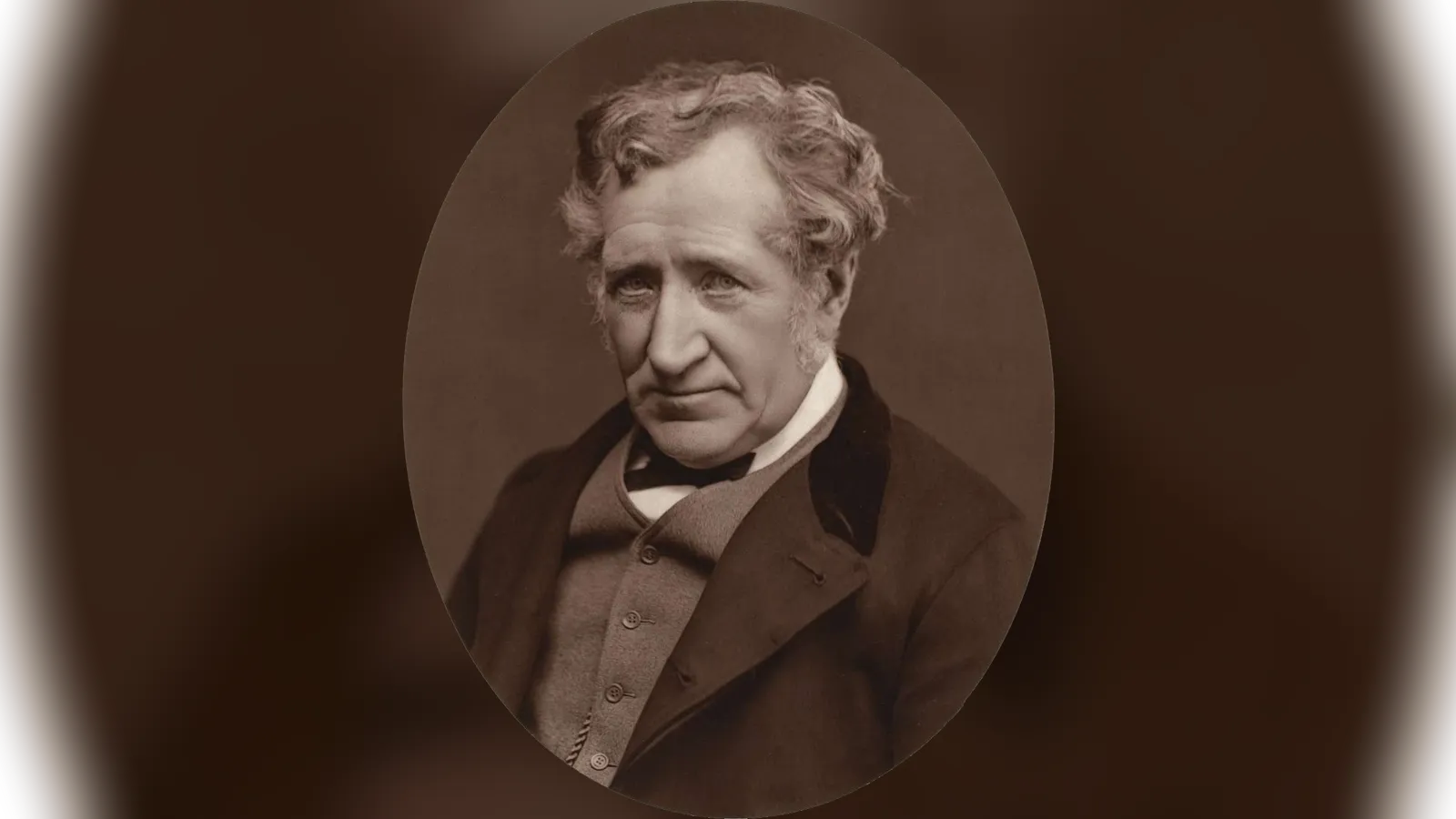

James Nasmyth (1808–1890)
Contents
TL;DR
- Established/Documented: Nasmyth is best known as the inventor of the steam hammer, a machine that transformed industrial forging by allowing precisely controllable, massively powerful blows — famously demonstrated by using it to crack an egg inside a wine glass without breaking the glass, immediately followed by a full-force blow that shook the surrounding building.
- Disputed/Documented — a genuine, carefully balanced priority question: The steam hammer was very likely invented independently and near-simultaneously by Nasmyth in Britain and French engineer François Bourdon at the Schneider & Cie works, both working from sketches or concepts dated to 1839 — but Bourdon's team built and operated the first actual working steam hammer in 1840, two years before Nasmyth completed and patented his own, and Nasmyth's own patent followed a visit to France where Bourdon's working machine had already been seen; a public priority dispute broke out between the two men in 1843, and this card presents both documented timelines honestly rather than repeating the more familiar British-led version uncritically — historians of technology now generally treat this as a genuine case of independent, parallel invention responding to the same industrial problem, complicated by Nasmyth's own considerable skill at publicising his own claim to priority.
- Established/Documented: Nasmyth retired from active business at just 48, in 1856, with the characteristically blunt explanation "I have now enough of this world's goods: let younger men have their chance" — a genuinely unusual choice for a man at the height of his commercial success, rather than a forced or circumstantial retirement.
- Established/Documented: In retirement, Nasmyth pursued a serious second career in astronomy, building his own 20-inch reflecting telescope (inventing the "Nasmyth focus" optical arrangement still used in large telescopes today) and co-authoring a major study of the Moon, for which — lacking any means of photographing the lunar surface directly at sufficient detail — he built physical plaster relief models of lunar features based on his own observations and photographed those models under controlled lighting to recreate authentic lunar shadow patterns, a genuinely ingenious solution to a real technical limitation of his era.
- Established/Documented: Nasmyth was the son of the well-known Scottish painter Alexander Nasmyth, and his own hands-on technical education began directly in his father's workshop — a detail worth noting as a real point of continuity between Scottish artistic and engineering achievement within a single family, rather than two unrelated careers.
Key Facts
- Born
- 19 August 1808, Edinburgh, Scotland
- Died
- 7 May 1890, London, England (aged 81)
- Education
- Royal High School, Edinburgh; Edinburgh School of Arts (now Heriot-Watt University), 1821–1826; apprenticeship under Henry Maudslay, London (from 1829)
- Known for
- Invention of the steam hammer (1839–1842); pioneering standardised machine-tool manufacturing; later astronomical observation of the Moon
- Key ventures
- Nasmyth, Gaskell and Company, Bridgewater Foundry, Patricroft, Lancashire (from 1836)
- Family
- Son of painter Alexander Nasmyth; married Anne Hartop (1840); no children
- Later career
- Amateur astronomer; co-author, The Moon: Considered as a Planet, a World, and a Satellite (1874)
Scottish Impact Index (SI Score)
- Global Influence
- 7/10
- Enduring Relevance
- 9/10
- Material Contribution
- 7/10
- Exceptional Achievement
- 8/10
- Lasting Legacy
- 7/10
- Recognition
- 4/10
42/60
Ranked =33rd of 200 in Great Scots
Claim-Status and Evidence Note
Claims are evidence-tiered as Established/Documented (settled by primary records, patent history, or broad scholarly consensus), Shared/Traditional (widely told and broadly accurate, if simplified), disputed (credible sources genuinely differ), or Legend/Myth (unsupported and actively corrected here). The steam hammer priority question is the central point requiring careful, balanced treatment in Nasmyth's story — this card presents the documented timeline honestly, including the detail that Bourdon's working machine preceded Nasmyth's own by roughly two years, rather than repeating the simpler, more flattering British-invention narrative that Nasmyth himself, by most accounts, actively helped popularise.
Timeline
Born in Edinburgh, son of landscape and portrait painter Alexander Nasmyth.
Attends the Edinburgh School of Arts (predecessor of Heriot-Watt University) as one of its earliest students, alongside continuing hands-on technical training in his father's workshop.
Aged around seventeen, builds his first working steam engine.
Builds a functional steam carriage capable of carrying eight passengers a distance of one mile.
Hired as an assistant workman by the renowned engineer Henry Maudslay in London, after Nasmyth built a complete working steam engine model specifically to demonstrate his skills, being unable to afford formal apprenticeship fees.
Following Maudslay's death, continues working as a draughtsman for Maudslay's successor.
Aged 23, establishes his own independent engineering business in Manchester with £69 in capital.
Opens the Bridgewater Foundry at Patricroft, Lancashire, with business partner Holbrook Gaskell, trading as Nasmyth, Gaskell and Company.
Engineer Francis Humphries, working on the SS Great Britain's paddle shaft, writes to Nasmyth that no existing forge hammer in Britain is powerful enough for the task.
Sketches his steam hammer design in response to this problem.
French engineer François Bourdon, working independently at the Schneider & Cie works at Le Creusot, develops a similar concept he calls a "Pilon."
Meets Anne Hartop during a snowstorm coach journey and becomes betrothed the same day (note: this meeting predates the marriage by over two years).
Bourdon's team builds and operates the first actual working steam hammer at Le Creusot, weighing roughly 2,500 kilograms; visiting Nasmyth's works around this time, Bourdon and colleague Eugène Schneider reportedly see Nasmyth's earlier sketch, which reinforces their confidence in the design's feasibility.
Marries Anne Hartop in Wentworth, Yorkshire.
The Schneiders formally patent their steam hammer design in France.
Nasmyth patents his own steam hammer design in Britain, after a visit to France, and builds his first working steam hammer at Patricroft later the same year.
A public priority dispute breaks out between Nasmyth and Bourdon over who should be credited with the invention.
Invents a pile-driving machine capable of driving a 70-foot pile in four and a half minutes, versus roughly twelve hours by conventional methods.
Patents the vacuum brake jointly with Charles May.
Some 490 Nasmyth steam hammers have been sold across Europe, Russia, India, and Australia, accounting for around 40% of the company's revenue.
Retires from active business at age 48; relocates near Penshurst, Kent, naming his new home "Hammerfield."
Builds his own 20-inch reflecting telescope, inventing the "Nasmyth focus" optical arrangement; conducts detailed lunar observations.
Co-publishes The Moon: Considered as a Planet, a World, and a Satellite with James Carpenter.
Dies in London, aged 81; buried with his wife in Dean Cemetery, Edinburgh.
Details
A painter's workshop as an engineer's classroom
James Nasmyth was born in Edinburgh in 1808, the son of Alexander Nasmyth, a well-regarded landscape and portrait painter whose own workshop became, somewhat unexpectedly, the formative environment for his son's mechanical education. Rather than a conventional technical apprenticeship, young James's earliest hands-on training in working with wood, brass, iron, and steel came directly from time spent in his father's studio — a detail worth noting specifically, since it represents a genuine and interesting point of continuity between Scottish artistic and engineering achievement within a single family, rather than two entirely separate and unrelated careers. This early exposure combined with formal study at the Edinburgh School of Arts (the institution that later became Heriot-Watt University, where Nasmyth was among its earliest students) from 1821 to 1826, and by around age seventeen he had already built his own working steam engine — a genuinely precocious achievement. By 1828, aged just twenty, he had constructed a functional steam carriage capable of carrying eight passengers a full mile, evidence that his engineering talent was substantial and practically demonstrated well before he left Scotland.
Working for nothing to work for the best
Nasmyth's determination to train under the renowned London engineer Henry Maudslay produced one of the more memorable episodes of his early career: unable to afford Maudslay's formal apprenticeship fees, Nasmyth instead built a complete, fully functional working model of a high-pressure steam engine, along with all its original technical drawings, specifically to demonstrate his abilities directly. The gambit worked — Maudslay hired him in May 1829 as an assistant workman for ten shillings a week, a modest wage reflecting Nasmyth's junior status but securing him direct access to one of the era's most respected engineering workshops. Following Maudslay's death in 1831, Nasmyth continued for a period as a draughtsman under Maudslay's successor, before striking out entirely on his own: at 23, with £69 in capital, he established his own independent business in Manchester. After an early setback — his first premises proved structurally inadequate, with an engine beam actually crashing through the wooden floor — Nasmyth relocated to Patricroft, Lancashire, where in 1836 he and business partner Holbrook Gaskell opened the Bridgewater Foundry, trading as Nasmyth, Gaskell and Company, the enterprise that would become the base for his most significant engineering achievement.
A problem from the SS Great Britain, and a sketch dated precisely
The steam hammer's origin traces to a very specific, documented practical problem. In 1837, engineers working on the paddle shaft for the SS Great Britain — one of the era's most ambitious ship-engineering projects — found that no existing forge hammer in Britain was powerful enough to do the job; engineer Francis Humphries wrote to Nasmyth directly stating plainly, "I find there is not a forge-hammer in England or Scotland powerful enough to forge the paddle-shaft." In response, Nasmyth sketched his revolutionary steam hammer design on a specific, recorded date: 24 November 1839. The core innovation was genuinely significant — rather than relying on a hammer's mechanically fixed drop weight and distance, Nasmyth's design used a steam-powered piston to drive the hammer, allowing an operator precise, variable control over the force of each blow, from the barely perceptible to the enormous. Nasmyth would later famously demonstrate this control publicly by cracking an egg inside a wine glass with a single delicate blow, without breaking the glass itself, and then immediately following with a full-force strike powerful enough to shake the surrounding building — a genuinely striking and well-documented piece of engineering showmanship, not an exaggerated retelling.
The priority dispute: an honest account of who built what, and when
This is the point in Nasmyth's story that most deserves direct, evidence-based correction rather than simple repetition of the more familiar British telling. While Nasmyth's 1839 sketch is genuinely and precisely dated, it was the French engineer François Bourdon, working independently at the Schneider & Cie works at Le Creusot, who actually built and successfully operated the first working steam hammer — in 1840, a full two years before Nasmyth completed and patented his own. Bourdon had developed a broadly similar concept, which he called a "Pilon," in 1839, entirely independently of Nasmyth's own work; this is most plausibly understood as a genuine case of parallel, independent invention by two engineers responding to essentially the same pressing industrial need — forging increasingly large components for locomotives, ships, and heavy machinery — rather than either man copying the other outright.
What complicates the story further, and deserves to be stated plainly, is the specific sequence of events that followed. Bourdon and his colleague Eugène Schneider visited Nasmyth's own works around 1840 and reportedly saw Nasmyth's earlier sketch, which reinforced their confidence that the design was sound and workable — evidence that some direct information exchange did occur between the two men's efforts, even if the underlying concept had been independently conceived. The Schneiders formally patented their own steam hammer design in France in 1841. Nasmyth, for his part, did not patent his own design in Britain until June 1842 — notably, after a visit to France, where Bourdon's already-operational working machine would have been directly observable — and only built his own first working steam hammer at Patricroft later that same year, some two years after Bourdon's machine had already been running at Le Creusot. A public priority dispute broke out between the two men in 1843.
Historians of technology examining this dispute have generally concluded that both men essentially reinvented the steam hammer independently around 1839, in response to the same underlying industrial pressures — a genuine case of parallel invention rather than straightforward theft in either direction. What tipped the popular historical memory decisively toward crediting Nasmyth as sole inventor, however, is a documented and specific factor worth naming directly: Nasmyth was, by most accounts, an unusually skilled self-publicist, and he successfully convinced a very wide public and professional audience that he alone deserved credit for the invention — a reputation for effective self-promotion that sits alongside, and should not be allowed to simply override, the clearer documentary timeline showing Bourdon's working machine preceding Nasmyth's own by roughly two years. This card presents Nasmyth's genuine and independently dated 1839 sketch as real evidence of his own original thinking, while stating plainly that Bourdon built first, and that Nasmyth's own later, more dominant popular reputation as "the" inventor of the steam hammer owes something real to his own considerable talent for publicity, not only to the underlying engineering facts.
Beyond the hammer: a career of genuinely wide-ranging mechanical innovation
However the priority question is ultimately weighed, the steam hammer's practical industrial impact, once adopted, was substantial and well documented regardless of exactly who built the very first working example: it is credited with reducing certain forging production costs by more than half while significantly improving the quality and consistency of the resulting forgings. By 1856, some 490 Nasmyth steam hammers had been sold across Europe, Russia, India, and Australia, accounting for around 40% of his company's total revenue — genuine, large-scale commercial success regardless of the earlier priority dispute. Nasmyth's wider engineering output was similarly substantial: he pioneered the shaper machine (a key machine tool still fundamental to metalworking), developed early hydraulic press technology, and was an early advocate of standardised machine-tool manufacturing practices that anticipated much of later industrial mass-production methodology. In 1843 he invented a pile-driving machine dramatically faster than conventional methods — capable of driving a 70-foot pile in four and a half minutes, compared to roughly twelve hours using existing techniques — and in 1844 he jointly patented the vacuum brake with Charles May, an early contribution to a braking technology that would later become important in railway safety.
A deliberate, early, and unusually self-aware retirement
Nasmyth's retirement from active business, at just 48 years old in 1856, is worth treating as a genuinely notable biographical fact in its own right rather than a routine career footnote. He retired at the height of his commercial success, not under any financial or health-driven compulsion, offering the characteristically blunt and self-possessed explanation: "I have now enough of this world's goods: let younger men have their chance." This included a striking act of deliberate professional restraint: Henry Bessemer, developer of the revolutionary Bessemer steelmaking process, offered Nasmyth a full one-third share of his patent's value in specific acknowledgment of Nasmyth's own earlier, related work on iron conversion — a substantial financial windfall that Nasmyth chose to decline, prioritising his planned retirement over further wealth.
A second career studying the Moon, solved with plaster and light
Nasmyth's retirement years at his Kent home, "Hammerfield," produced a genuinely serious and technically inventive second career in astronomy, not merely a gentleman's hobby. He built his own 20-inch reflecting telescope, and in doing so devised what is still known today as the "Nasmyth focus" — an optical arrangement that redirects a telescope's focal point to a fixed, externally accessible location, a design still used in large modern telescopes, including major professional observatories, well over a century later. His detailed lunar observations culminated in the 1874 publication, co-authored with James Carpenter, of The Moon: Considered as a Planet, a World, and a Satellite. Faced with the real technical limitation that contemporary photographic technology could not adequately capture the lunar surface directly at the level of detail his own visual observations achieved, Nasmyth devised a genuinely ingenious workaround: he constructed physical plaster relief models of specific lunar features based on his own careful observations, then photographed these three-dimensional models under precisely controlled artificial lighting angled to recreate the authentic shadow patterns actually visible on the Moon's surface — a solution to a real scientific communication problem that reflects the same practical, hands-on inventiveness that had defined his entire engineering career. A lunar crater is today named in his honour, a fitting form of recognition for a man who devoted a serious and inventive second career to studying it.
Death and a legacy carved in stone
Nasmyth died in London in 1890, aged 81, and was buried alongside his wife Anne, to whom he had been married for fifty years without children, in Edinburgh's Dean Cemetery — his gravesite marked by a monument that notably features a carved model of a steam hammer, a fitting and literal memorial to his most famous invention. His legacy persists in named institutions, including Heriot-Watt University's Department of Mechanical Engineering building, and in surviving physical examples of his machines, including an original Nasmyth hammer preserved at the Patricroft foundry site and a further large Nasmyth & Wilson hammer at the University of Bolton.
Did You Know
- Nasmyth's famous public demonstration of the steam hammer — cracking an egg inside a wine glass without breaking the glass, then following it with a full-force blow that shook the building — was a genuine, documented demonstration of the machine's precise variable control, not an exaggerated retelling.
- The steam hammer most Britons credit solely to Nasmyth was actually built and successfully operated first by French engineer François Bourdon, roughly two years before Nasmyth completed his own — a documented timeline obscured in popular memory partly by Nasmyth's own considerable skill as a self-publicist.
- Unable to afford Henry Maudslay's apprenticeship fees as a young man, Nasmyth built an entire working steam engine model from scratch specifically to demonstrate his skills and secure a job.
- Nasmyth retired from business at just 48, at the height of his commercial success, declaring simply that he had "enough of this world's goods" and that younger men deserved their chance.
- Nasmyth turned down a full one-third share of the value of Henry Bessemer's revolutionary steelmaking patent — offered specifically in acknowledgment of Nasmyth's own earlier related work — choosing his planned retirement instead.
- In retirement, Nasmyth invented the "Nasmyth focus," an optical telescope arrangement still used in major professional observatories today.
- Lacking photographic technology capable of capturing the Moon's surface in sufficient detail, Nasmyth built physical plaster models of lunar features and photographed them under carefully controlled lighting to recreate authentic lunar shadows for his 1874 book on the Moon.
- Nasmyth's Edinburgh gravestone in Dean Cemetery features a carved model of a steam hammer.
FAQ
1Did James Nasmyth really invent the steam hammer?
The evidence supports independent, parallel invention by both Nasmyth and French engineer François Bourdon around 1839, in response to the same industrial problem. Nasmyth's dated sketch (November 1839) genuinely predates Bourdon's documented concept, but Bourdon's team built and operated the first actual working steam hammer in 1840 — two years before Nasmyth completed and patented his own in 1842.
2Why is Nasmyth more commonly credited than Bourdon?
Largely because Nasmyth was, by most historical accounts, an unusually effective self-publicist who successfully promoted his own claim to sole credit, a reputation that has shaped popular memory more than the underlying, more balanced documentary timeline.
3What problem did the steam hammer originally solve?
Engineers building the paddle shaft for the SS Great Britain in 1837 found no existing forge hammer in Britain powerful enough for the job — Nasmyth's design solved this by using steam power to allow precisely variable, much greater hammer force than traditional mechanical drop hammers could achieve.
4Why did Nasmyth retire so early?
He retired voluntarily at 48, in 1856, at the height of his commercial success, explicitly stating he had enough wealth and wanted to give younger engineers their opportunity — not due to financial difficulty or poor health.
5What did Nasmyth do after retiring from engineering?
He pursued a serious second career in astronomy, building his own 20-inch reflecting telescope (inventing the still-used "Nasmyth focus" optical design in the process) and co-authoring a major, technically innovative study of the Moon's surface.
6How did Nasmyth study the Moon without modern photographic technology?
He built physical plaster relief models of lunar features based on his own detailed telescopic observations, then photographed these models under carefully controlled artificial lighting to recreate the Moon's actual shadow patterns for publication.
7Did Nasmyth invent anything besides the steam hammer?
Yes — he pioneered the shaper machine tool, developed early hydraulic press technology, invented a dramatically faster pile-driving machine (1843), co-patented the vacuum brake (1844), and was an early advocate of standardised machine-tool manufacturing practices.
8Was Nasmyth related to any other notable figures?
Yes — his father, Alexander Nasmyth, was a well-regarded Scottish landscape and portrait painter, whose own workshop provided James's earliest hands-on technical training.
9Did Nasmyth have children?
No — he married Anne Hartop in 1840, and the couple remained married for fifty years without children.
10Where is James Nasmyth buried?
In Dean Cemetery, Edinburgh, beside his wife, beneath a monument featuring a carved model of a steam hammer.
Sources and Further Reading
Primary/Institutional
- Science Museum Group Collection, "Nasmyth's Steam Hammer"
- Grace's Guide to British Industrial History, "James Nasmyth"
- National Galleries Scotland, "James Nasmyth, 1808–1890: Inventor of the Steam Hammer" (self-portrait record)
Scholarly
- Wikipedia, "Steam Hammer" and "James Nasmyth" — sourced timeline of the Nasmyth–Bourdon priority dispute
- François Bourdon biographical record — French primary-source perspective on the parallel invention
- Linda Hall Library, "Scientist of the Day: James Hall Nasmyth, Scottish Engineer and Inventor"
General
- Encyclopaedia Britannica, "James Nasmyth"
- Undiscovered Scotland, biography of James Nasmyth
- Wikiquote, "James Nasmyth" (documented quotations)
Caveats: Myths and Disputed Claims
The central myth this card addresses directly is the popular, largely British telling that credits Nasmyth as the unambiguous, sole inventor of the steam hammer. The documented timeline does not fully support this: while Nasmyth's November 1839 sketch is genuinely and precisely dated, French engineer François Bourdon's team at Le Creusot built and successfully operated the first actual working steam hammer in 1840, roughly two years before Nasmyth completed and patented his own design in 1842 — a sequence historians of technology generally regard as genuine independent, parallel invention rather than straightforward priority for either man, complicated further by evidence that Bourdon's colleagues saw Nasmyth's earlier sketch, and that Nasmyth's own patent followed a visit to France where Bourdon's working machine was already operating. This card also notes directly, rather than omitting, the specific historical judgment that Nasmyth's own considerable skill as a self-publicist substantially shaped the more one-sided version of the story that became dominant in popular British memory.
Card 065 · Great Scots