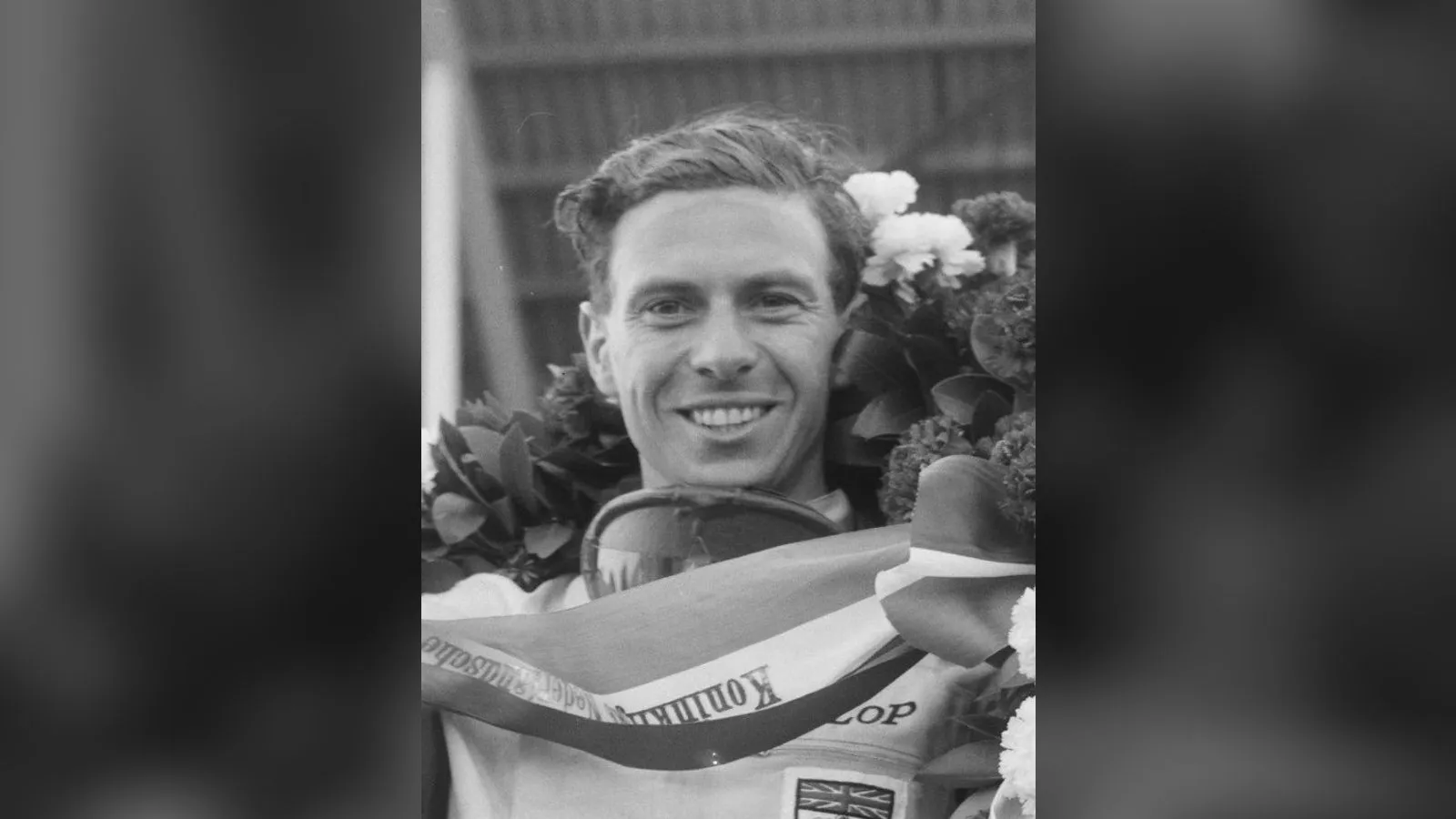

Jim Clark (1936–1968)
Contents
TL;DR
- established A two-time Formula 1 World Champion (1963, 1965), Clark held the sport's records for most wins, pole positions, and fastest laps at the time of his death, and remains widely regarded by historians and fellow drivers as one of the greatest racing drivers of all time — Motor Sport magazine named him "the greatest racing driver of all time" in 2024.
- established In 1965, he achieved an extraordinary and still-unmatched feat: winning the Formula 1 World Championship, the Indianapolis 500, the Tasman Series, and the French and British Formula Two championships all in the same year — becoming the only driver in history to combine an Indy 500 win with a Formula 1 title in one season.
- established He was involved in the fatal 1961 Italian Grand Prix crash in which Wolfgang von Trips and fifteen spectators died; Clark was initially accused of manslaughter in connection with the collision, though the charges were subsequently dropped.
- established He died on 7 April 1968 at Hockenheim, West Germany, aged 32, when his Lotus 48 left the wet track during a Formula 2 race and crashed into trees; he sustained fatal injuries and died before reaching hospital. A deflating rear tyre was widely concluded to be the most likely cause, and fellow drivers — including rivals who respected his reputation as one of the safest and most skilled drivers of his era — largely rejected driver error as an explanation.
- established He came from a farming family in the Scottish Borders and remained a private, reserved public figure throughout his career, reportedly harbouring real anxieties about the dangers of the sport that proved, tragically, to be well founded.
Key Facts
- Born
- James Clark, 4 March 1936, Kilmany, Fife
- Died
- 7 April 1968 (aged 32), Hockenheim, West Germany
- Known for
- Two-time Formula 1 World Champion (1963, 1965); 1965 Indianapolis 500 winner
- Honours
- OBE (1964); International Motorsports Hall of Fame (1990)
- Team
- Lotus, under Colin Chapman
- Records at death
- Most F1 wins (25), pole positions (33), fastest laps (28)
Scottish Impact Index (SI Score)
- Global Influence
- 6/10
- Enduring Relevance
- 7/10
- Material Contribution
- 4/10
- Exceptional Achievement
- 5/10
- Lasting Legacy
- 5/10
- Recognition
- 5/10
32/60
Ranked =80th of 200 in Great Scots
A Note on Claims and Evidence
Clark's racing record, championships, and the circumstances of his death are extensively documented through contemporary reporting, official race records, and subsequent historical analysis, and are treated as Established. The precise cause of his fatal crash was never conclusively proven beyond the "most likely" tyre-deflation explanation, and this article reports that uncertainty honestly rather than presenting the tyre theory as definitively settled fact.
Timeline
Born in Kilmany, Fife, the youngest of five children and only son in a farming family.
Family relocates to Edington Mains Farm near Duns, in the Scottish Borders.
Begins competing in local road rallies and hillclimbs, against his parents' wishes.
Races for the Border Reivers team; finishes second to Colin Chapman in a Boxing Day race at Brands Hatch, leading to a Lotus opportunity.
Makes his Formula 1 debut at the Dutch Grand Prix.
Involved in the fatal Italian Grand Prix crash that killed Wolfgang von Trips and fifteen spectators; initially accused of manslaughter, later cleared.
Wins his first World Championship, driving the Lotus 25, with a then-record seven race wins in a season.
Awarded the OBE; wins every race he enters in the British Saloon Car Championship.
Wins his second World Championship and the Indianapolis 500 in the same year — the first non-American winner in 49 years and the first mid-engined car to win — while also winning the Tasman Series and French and British Formula Two titles.
Dies at Hockenheim during a Formula 2 race, aged 32.
Details
From a Borders farm to Lotus
Clark grew up on Edington Mains Farm near Duns in the Scottish Borders, the only son among five children in a farming family that initially opposed his interest in motorsport. He began competing in local rallies and hillclimbs in 1956 and quickly showed exceptional natural talent, racing for the Border Reivers team before a chance second-place finish to Lotus founder Colin Chapman in a 1958 Boxing Hall Day race at Brands Hatch led to his entry into Chapman's Formula Junior team. He dominated that series immediately, defeating future motorcycle world champion John Surtees among others, and was in Formula 1 by 1960.
An unmatched 1965 season
Clark's two World Championships, in 1963 and 1965, were built on a driving style widely praised by contemporaries for its remarkable smoothness; fellow driver (and later three-time champion) Jackie Stewart described him as someone who "was so smooth, he was so clean, he drove with such finesse. He never bullied a racing car." His 1965 season stands as one of the most remarkable in motorsport history: alongside winning the Formula 1 World Championship, he also won the Indianapolis 500 — becoming the first non-American winner of the race in 49 years, and the first driver to win it in a mid-engined car — as well as the Tasman Series and both the French and British Formula Two championships in the same calendar year. No other driver has combined an Indy 500 victory with a Formula 1 World Championship in a single season before or since.
A sport with real, documented danger
Clark's career unfolded during one of Formula 1's most dangerous eras, and this context matters to understanding both his own life and his eventual death. At the 1961 Italian Grand Prix at Monza, his Lotus was involved in a collision with Wolfgang von Trips's Ferrari; von Trips's car became airborne, killing the driver and fifteen spectators in one of the deadliest accidents in the sport's history. Clark was initially accused of manslaughter in connection with the crash, though the charges were subsequently dropped. Those close to him have said he carried real, ongoing anxiety about the sport's dangers throughout his career — an understandable and, as it turned out, tragically well-founded concern.
Death at Hockenheim
On 7 April 1968, while leading that year's Formula 1 World Championship standings, Clark competed in a Formula 2 race at the Hockenheimring in West Germany — a comparatively minor event he entered partly due to a contractual obligation with tyre manufacturer Firestone. On the fifth lap of the race, in wet conditions, his Lotus 48 left the track at high speed and crashed into trees; he sustained a broken neck and skull fracture and died before reaching hospital, aged 32. There were no witnesses to the exact moment of the crash. The most widely accepted explanation, reached by investigators, was a deflating rear tyre, described as the "most likely" cause — though this was never conclusively proven, and some fellow drivers, including John Surtees and Jack Brabham, believed a mechanical failure rather than driver error was responsible. Given Clark's reputation as one of the safest and most technically precise drivers of his generation, the racing community broadly rejected the idea that the crash resulted from any mistake on his part. Fellow driver Chris Amon captured the shock felt across the sport: "If it could happen to him, what chance do the rest of us have? I think we all felt that. It seemed like we'd lost our leader." His Lotus teammate Graham Hill went on to win the 1968 World Championship and dedicated it to Clark's memory.
A lasting statistical and historical legacy
At the time of his death, Clark held the Formula 1 records for most wins (25), pole positions (33), and fastest laps (28); his win record stood until 1973, and his pole and fastest-lap records persisted until 1989. He remains the holder of eight so-called "Grand Slams" (pole position, fastest lap, victory, and leading every lap of a race) — a record that remains unmatched decades later. He is commemorated today by a life-size statue in his native Kilmany, a dedicated museum in Duns, and an annual rally held in his name in the Scottish Borders.
Did You Know?
- His 1965 season remains the only time any driver has won both the Indianapolis 500 and the Formula 1 World Championship in the same year.
- He was initially accused of manslaughter following the fatal 1961 Italian Grand Prix crash that killed Wolfgang von Trips and fifteen spectators; the charges were later dropped.
- His 1965 Indy 500 win made him the first non-American winner of the race in 49 years, and the first winner driving a mid-engined car.
- He grew up on a working farm in the Scottish Borders and remained a reserved, private figure despite his global fame.
- His record of eight "Grand Slams" (pole, fastest lap, win, and leading every lap) remains unmatched in Formula 1 history.
- He died racing in a comparatively minor Formula 2 event, partly fulfilling a tyre-manufacturer contractual obligation, rather than in a flagship Grand Prix.
- His pole-position and fastest-lap records stood for over two decades after his death.
- Motor Sport magazine named him "the greatest racing driver of all time" in 2024, more than five decades after his death.
FAQ
1How many Formula 1 World Championships did Jim Clark win?
Two — in 1963 and 1965.
2What made his 1965 season so remarkable?
He won the Formula 1 World Championship and the Indianapolis 500 in the same year — a feat no other driver has matched — alongside the Tasman Series and both the French and British Formula Two titles.
3How did he die?
He was killed in a crash during a Formula 2 race at Hockenheim, West Germany, on 7 April 1968, aged 32, when his car left the wet track and struck trees. A deflating tyre was widely concluded to be the most likely cause.
4Was he blamed for his own death?
No — the racing community, including rival drivers, broadly believed a mechanical failure rather than driver error caused the crash, given his reputation as an exceptionally safe and skilled driver.
5Was he involved in any other serious accidents?
Yes — he was involved in the fatal 1961 Italian Grand Prix crash that killed Wolfgang von Trips and fifteen spectators, and was initially accused of manslaughter before the charges were dropped.
6Where was he from?
He grew up on a farm in the Scottish Borders, near Duns, after his family moved from Fife when he was a child.
7Is he still considered one of the greatest drivers of all time?
Yes — he is consistently ranked among the greatest in historical and statistical analyses, and was named "the greatest racing driver of all time" by Motor Sport magazine in 2024.
8Is there a museum dedicated to him?
Yes — the Jim Clark Motorsport Museum in Duns, in the Scottish Borders, near where he grew up.
Sources and Further Reading
Primary/Institutional
Scholarly/Critical
General
Caveats: Myths and Disputed Claims
- Clarification: The exact cause of Clark's fatal crash was never conclusively proven. A deflating rear tyre was the widely accepted and "most likely" explanation reached by investigators, but some contemporaries believed a different mechanical failure was responsible; this article reports the uncertainty honestly rather than treating the tyre theory as definitively proven fact.
- Note: Clark's 1961 Monza crash, in which he was initially accused of manslaughter, is sometimes omitted from shorter tributes focused solely on his championships. This article includes it because it is a genuine, serious part of the historical record, and because the charges being dropped is itself part of that record.
- Clarification: His 1965 "won four major titles in one year" achievement is occasionally stated imprecisely; the specific, verified combination is the Formula 1 World Championship, the Indianapolis 500, the Tasman Series, and the French and British Formula Two championships.
Card 133 · Great Scots