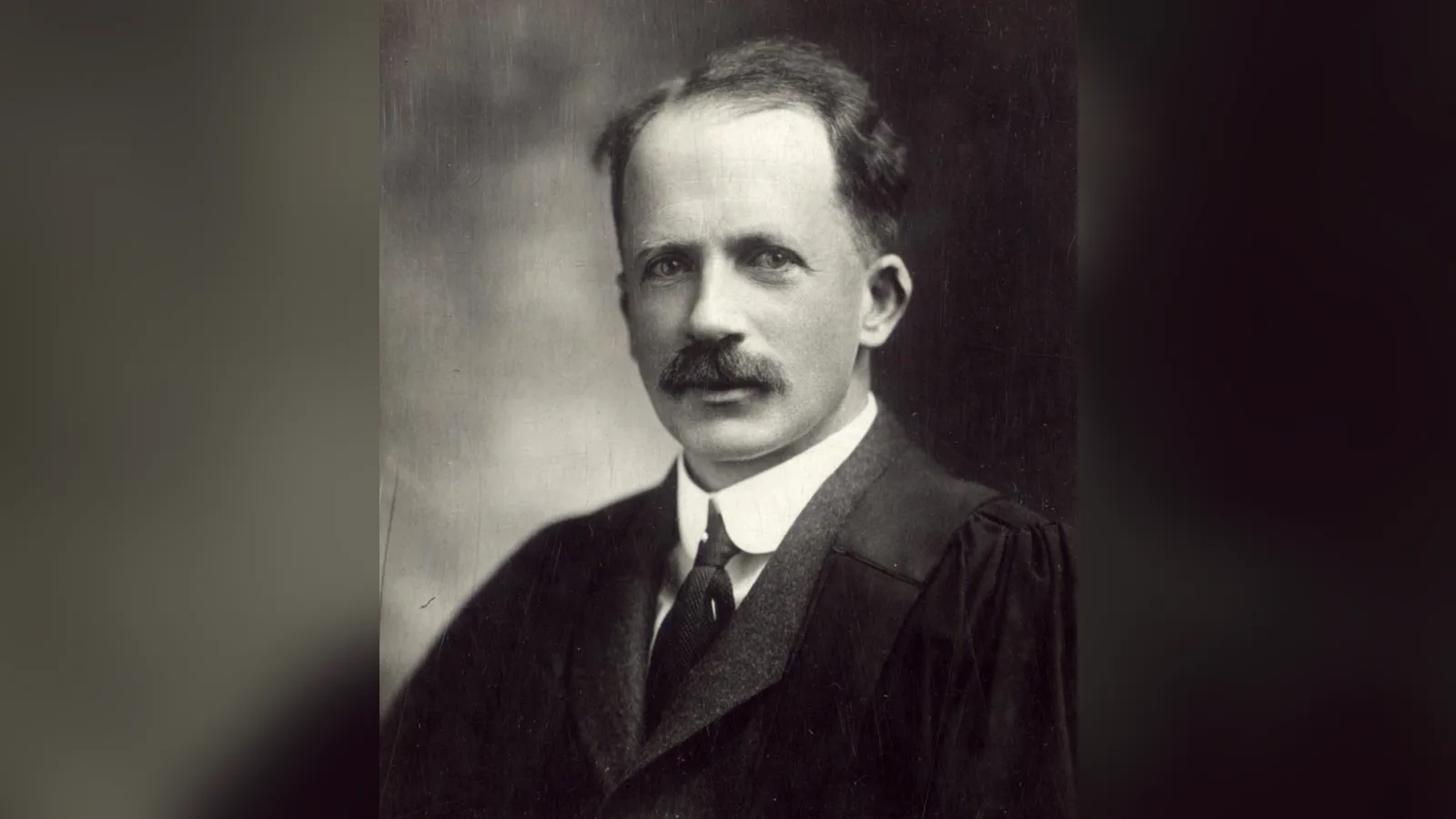

John James Rickard Macleod (1876–1935)
Contents
TL;DR
- Established/Documented: Macleod was the University of Toronto physiologist who provided the laboratory, resources, scientific direction, and eventual Nobel Prize–winning oversight for the team that discovered insulin — sharing the 1923 Nobel Prize in Physiology or Medicine with Frederick Banting, the only Nobel Prize ever awarded for a Scottish-linked discovery made in Canada.
- Established/Documented: Macleod did not perform the initial dog experiments himself — that was Banting and student Charles Best, working in Macleod's lab during summer 1921 while Macleod was in Scotland — but he supplied the facilities, animals, technique training, scientific rigour, and, critically, recruited biochemist James Collip, whose alcohol-purification method turned a promising extract into a usable human drug.
- Disputed/Documented controversy: Banting was furious that Macleod shared the Nobel Prize rather than Best, and spent the rest of his life publicly minimising Macleod's contribution — a dispute that shaped the insulin story's popular telling for over 50 years before archival evidence restored a fuller, more balanced picture.
- Established/Documented: In response to the Nobel decision, both winners split their prize money with the men they felt deserved greater recognition: Banting shared his half with Best, and Macleod shared his half with Collip.
- Shared/Traditional: Popular accounts (and some later dramatisations) cast Macleod as a credit-stealing administrator riding on Banting's genius; historical scholarship since the 1980s and 1990s, once University of Toronto archives were finally opened, has substantially rehabilitated his reputation as a scientist whose direction was indispensable to the discovery's success.
Key Facts
- Born
- 6 September 1876, Clunie (Cluny), Perthshire, Scotland
- Died
- 16 March 1935, Aberdeen, Scotland (aged 58)
- Education
- Aberdeen Grammar School; MB ChB with honours, University of Aberdeen (1898); postgraduate study, University of Leipzig; DPH, University of Cambridge (1902)
- Known for
- Director of the University of Toronto physiology laboratory where insulin was discovered (1921–22); co-recipient, Nobel Prize in Physiology or Medicine, 1923
- Key positions
- Demonstrator, London Hospital Medical School (1902–03); Professor of Physiology, Western Reserve University, Cleveland (1903–18); Professor of Physiology, University of Toronto (1918–28); Regius Professor of Physiology, University of Aberdeen (1928–35)
- Spouse
- Mary Watson McWalter (m. 1903); no children
Scottish Impact Index (SI Score)
- Global Influence
- 8/10
- Enduring Relevance
- 9/10
- Material Contribution
- 7/10
- Exceptional Achievement
- 7/10
- Lasting Legacy
- 8/10
- Recognition
- 4/10
43/60
Ranked =27th of 200 in Great Scots
Claim-Status and Evidence Note
Every substantive claim below is marked by evidence tier: Established/Documented (settled by primary sources, archival records, or broad scholarly consensus), Shared/Traditional (widely told, broadly accurate in substance, sometimes simplified or dramatised in retelling), disputed (credible sources disagree, often for reasons of personal grievance or incomplete access to evidence), or Legend/Myth (unsupported by evidence and actively corrected here). The Macleod story is unusual in this series in that the central controversy is not myth-versus-fact but grievance-versus-archive: for decades, key University of Toronto records were withheld, and Macleod's reputation was shaped largely by the surviving party's version of events. This card reflects the more complete picture available since those archives were opened.
Timeline
Born in Clunie, Perthshire, son of a Free Church of Scotland minister; family relocates to Aberdeen shortly after his birth.
Graduates MB ChB with honours from the University of Aberdeen.
Postgraduate research in physiological chemistry at Leipzig; publishes his first scientific paper; earns a Cambridge Diploma in Public Health.
Moves to Western Reserve University, Cleveland, Ohio, beginning fifteen years of research into carbohydrate metabolism and diabetes.
Appointed Professor of Physiology and Chair of Physiology at the University of Toronto.
Frederick Banting approaches Macleod with a proposal to isolate an internal pancreatic secretion to treat diabetes.
Macleod, departing for Scotland, provides Banting laboratory space, dogs, and student assistant Charles Best; Banting and Best conduct the pivotal early experiments in his absence.
Macleod returns, reviews the results with scientific skepticism, and directs the team to repeat and verify their findings.
Macleod recruits biochemist James Collip, whose alcohol-based purification process makes the extract usable and safe; the extract is named "insulin."
First human clinical trial, on 13-year-old Leonard Thompson, at Toronto General Hospital.
Macleod negotiates the production agreement with Eli Lilly and Company, enabling mass manufacture of insulin.
Macleod and Banting jointly awarded the Nobel Prize in Physiology or Medicine; Banting splits his share with Best, Macleod splits his with Collip; Macleod also receives the Cameron Prize (Edinburgh) and Fellowship of the Royal Society.
Leads efforts, through the League of Nations Health Committee, to establish international standards for insulin potency.
Leaves Toronto, embittered by the ongoing dispute with Banting (who refuses to attend his farewell dinner), and returns to Scotland as Regius Professor of Physiology at the University of Aberdeen.
Serves on the UK Medical Research Council.
Dies in Aberdeen after years of worsening arthritis.
Independent historical reviews begin restoring a more balanced account of the discovery.
Inducted into the Canadian Medical Hall of Fame.
Details
From Aberdeen to Toronto: building a career in metabolism
Macleod was not a Toronto outsider parachuted into the insulin story — he arrived there in 1918 as one of the most credentialed physiologists of carbohydrate metabolism working anywhere. Born in Clunie, Perthshire, the son of a Free Church of Scotland minister, he grew up in Aberdeen and took his medical degree there with honours in 1898 before pursuing advanced biochemical training in Leipzig, then a world centre for physiological chemistry. By the time Frederick Banting walked into his office in November 1920, Macleod had already spent fifteen years at Western Reserve University in Cleveland studying carbohydrate metabolism specifically, had published six monographs and numerous papers, and was internationally regarded as an authority on the biochemistry of diabetes — a disease that, before insulin, was a death sentence for anyone diagnosed as a child, managed only by starvation diets that bought a few extra years of suffering.
This matters for how the discovery is properly understood. Banting arrived with an idea and clinical intuition but no significant laboratory research experience, no funding, and no institutional standing. What Macleod supplied was not incidental — it was the entire scientific infrastructure the project needed to succeed: laboratory space, experimental animals, a trained research assistant in Charles Best, instruction in the difficult Hédon pancreatectomy surgical technique, and, crucially, the scientific judgment to demand that early, promising-looking results be rigorously repeated and verified before being believed.
Summer 1921: absence, autonomy, and the roots of resentment
Macleod left for a summer trip to Scotland shortly after agreeing to support Banting's project, leaving Banting and Best working largely on their own through the summer of 1921. It was during this period that the two men achieved their first striking results — extracts from degenerated pancreatic tissue that lowered blood sugar in diabetic dogs. This arrangement, seemingly a matter of simple scheduling, became the seed of the entire later controversy: because Macleod was not physically present for the breakthrough experiments, Banting came to feel — and later argued publicly and repeatedly — that the discovery belonged to himself and Best alone, and that Macleod's subsequent involvement amounted to a senior academic claiming credit for junior researchers' work.
That framing does not survive contact with the full record. Macleod's skepticism on his return in September 1921 was not obstruction; it was exactly the kind of rigorous demand for reproducibility that separates a genuine discovery from a false positive — and it was Macleod who insisted the results be repeated before anyone went further. More decisively, it was Macleod who, in December 1921, recruited biochemist James Collip to the team. Collip's contribution — refining the crude pancreatic extract using alcohol purification — is what turned an inconsistent, sometimes toxic preparation into a reliably safe treatment that could be given to human patients. Without Collip's purification method, brought in at Macleod's initiative, insulin as a usable medicine would very likely not have existed on the timeline it did. Macleod also personally oversaw the coordination of the first clinical trials at Toronto General Hospital in January 1922, and it was Macleod, not Banting, who negotiated the pivotal May 1922 manufacturing agreement with Eli Lilly and Company that made mass production possible.
A presentation, a breakdown, and a grievance that would not fade
One specific incident crystallised Banting's anger and has been retold, with varying accuracy, in almost every popular account since. In December 1921, the team presented their findings to the American Physiological Society at Yale. Banting, inexperienced as a public speaker and deeply nervous, faltered badly during his portion of the talk. Macleod, an experienced and polished lecturer, stepped in to complete the presentation. Banting experienced this — not unreasonably, from his own perspective, though the historical record does not support his conclusion — as Macleod seizing an opportunity to present himself as the discovery's leading figure. He later described it as "a brazen coup by Macleod to rob him of the credit." This single episode became, in Banting's retelling over the following two decades, a symbol of a much larger claimed injustice.
The Nobel Prize and its long aftermath
In autumn 1923 the Nobel Committee awarded the Prize in Physiology or Medicine jointly to Banting and Macleod — not to Best or Collip, a decision that has itself been debated by historians of science, but one the Committee justified explicitly on the grounds that, in its own words, Banting would not have found the way to insulin without Macleod's guidance. Banting was reportedly so outraged that he initially considered refusing the prize altogether; he ultimately accepted it but split his prize money with Best. Macleod, for his part, split his own share with Collip — a detail that receives far less attention in popular tellings than Banting's gesture, but is equally well documented and equally telling: both men used their prize money to correct what they each judged to be an incomplete piece of institutional recognition.
Banting's resentment did not fade with the award. He spent much of the rest of his career, until his death in a 1941 plane crash, actively working to diminish Macleod's role in both scientific and popular accounts of the discovery, and Charles Best continued this effort after Banting's death. The University of Toronto, wary of reopening a bitter internal dispute involving two of its most celebrated figures, kept much of the relevant archival documentation restricted for over fifty years. As a direct consequence, the version of the insulin story that dominated public memory for most of the twentieth century — Banting and Best as the heroic discoverers, Macleod as a credit-claiming administrator who happened to be in charge of the lab — is now understood by historians to be a significantly distorted account, shaped less by evidence than by the surviving grievance of one party and decades of restricted access to the other side's records. A 1976 television dramatisation, "Comets Among the Stars," depicted Macleod in explicitly unflattering terms, reflecting and reinforcing this one-sided narrative; it was not until archives opened following Best's death, and a more balanced 1988 film treatment, "Glory Enough for All," that a fuller picture reached a wider audience.
Leaving Toronto, returning home
By 1928, the atmosphere at Toronto had become personally difficult for Macleod, and he returned to Scotland as Regius Professor of Physiology at the University of Aberdeen — succeeding his own former teacher, John Alexander MacWilliam, in the chair. Banting's hostility by this point was such that he refused to attend Macleod's farewell dinner in Toronto. Rather than remaining in the field that had made him famous, Macleod largely moved on from insulin research in Aberdeen, pursuing wider questions in carbohydrate metabolism, including work on teleost (bony) fish that helped demonstrate insulin's origin in the islet tissue of the pancreas rather than the surrounding acinar tissue, and research supporting his long-standing view that the central nervous system plays a significant regulatory role in carbohydrate metabolism.
Later years and death
Macleod remained scientifically prolific throughout his life, authoring more than 200 papers and eleven books, including the widely used textbook "Physiology and Biochemistry in Modern Medicine," which reached its seventh edition in 1934. He served on the UK Medical Research Council from 1929 to 1933 and undertook a US lecture tour as late as 1933, despite worsening arthritis that increasingly limited his mobility in his final years. He died in Aberdeen on 16 March 1935, aged 58.
Did You Know
- Macleod never conducted the original insulin-extraction dog experiments himself — he was in Scotland on a summer visit when Banting and Best achieved their first key results in his laboratory.
- The word "insulin" itself was Macleod's suggestion for naming the extract.
- Banting was so angry about sharing the Nobel Prize with Macleod that he split his own prize money with Charles Best in protest — a fact usually told on its own, without noting that Macleod did the exact same thing, splitting his half with James Collip.
- Banting refused to attend Macleod's own farewell dinner when Macleod left Toronto to return to Scotland in 1928.
- The University of Toronto kept key documents relating to the insulin dispute restricted for over 50 years, meaning the popular version of the discovery story was shaped largely by one side's account for most of the twentieth century.
- It was Macleod, not Banting, who personally negotiated the landmark 1922 agreement with Eli Lilly and Company that turned insulin from a laboratory extract into a mass-produced, worldwide medicine.
- Macleod suffered from severe arthritis in his final years but still undertook a lecture tour of the United States in 1933, two years before his death.
- A 1976 television drama portrayed Macleod as "dark and repulsive" — a characterisation historians now regard as a product of the one-sided narrative that dominated for decades, not of the evidence.
FAQ
1Did Macleod actually discover insulin?
Not in the narrow sense of performing the key laboratory experiments — that was primarily Banting and Best, working in Macleod's lab. But Macleod directed the research programme, supplied its essential resources, insisted on the scientific rigour that validated the results, and recruited the biochemist (Collip) whose purification method made insulin safe for human use. The Nobel Committee judged his role essential, not incidental.
2Why was Banting so angry about sharing the prize with Macleod?
Banting believed the discovery belonged to himself and Best, since they conducted the pivotal 1921 summer experiments while Macleod was away, and he resented what he saw as Macleod claiming outsized credit — particularly after Macleod took over a faltering 1921 conference presentation. Historians now view this grievance as understandable emotionally but not well supported by the full documentary record.
3Should Charles Best and James Collip have received the Nobel Prize too?
This is a genuinely debated question among historians of science. The Nobel Committee's decision to recognise only Banting and Macleod, rather than all four principal contributors, has been criticised since 1923. Both prize-winners responded by sharing their winnings with the men they believed also deserved recognition.
4Was Macleod Scottish or Canadian?
Scottish by birth, upbringing, and eventual return. He was born in Perthshire and educated at Aberdeen Grammar School and the University of Aberdeen; his insulin work took place during a fifteen-year career in North America (Cleveland, then Toronto), after which he returned to Scotland permanently in 1928 as Regius Professor at Aberdeen, where he remained until his death.
5Why did it take so long for Macleod's reputation to be reassessed?
Largely because Banting's version of events, publicly repeated for decades and reinforced by Best after Banting's 1941 death, went largely unchallenged while the University of Toronto's relevant archival records remained restricted. Once those records became accessible, historians were able to construct a far more balanced account of each man's actual contribution.
6Did Macleod continue insulin research after leaving Toronto?
Not primarily. In Aberdeen he moved into broader questions of carbohydrate metabolism, including research on insulin's origin in fish pancreatic tissue and the role of the nervous system in blood sugar regulation, rather than continuing direct insulin development work.
7What happened to the insulin patent?
Banting, Best, and Collip sold the insulin patent to the University of Toronto for a token sum (widely cited as $1), so that insulin production could be licensed cheaply and widely rather than restricted for profit — a decision made collectively by the team, with Macleod overseeing the resulting production agreement with Eli Lilly.
8Is Macleod buried in Scotland?
Yes. He died in Aberdeen in March 1935, having spent his final years as Regius Professor of Physiology at the University of Aberdeen.
9How is Macleod recognised today?
Recognition came slowly but has grown substantially: he was inducted into the Canadian Medical Hall of Fame in 2012, the University of Toronto's medical research auditorium bears his name, and Diabetes UK's award for patients who have lived with diabetes for seventy years is also named after him.
10Did Macleod and Banting ever reconcile?
There is no strong evidence of a personal reconciliation; the animosity, primarily on Banting's side, persisted for the rest of Banting's life until his death in a 1941 plane crash.
Sources and Further Reading
Primary/Institutional
- Nobel Prize official biography and facts, John Macleod, 1923: nobelprize.org/prizes/medicine/1923/macleod
- University of Toronto, "The Discovery and Early Development of Insulin" digital collection, biography of J.J.R. Macleod: collections.library.utoronto.ca/explore/insulin/about/macleod
- Canadian Medical Hall of Fame, induction record for J.J.R. Macleod (2012)
Scholarly
- Mayo Clinic Proceedings, "John J. R. Macleod—Nobel Prize for Discovery of Insulin"
- Acta Diabetologica, "The Nobel Prize of Physiology or Medicine, 1923: controversies on the discovery of the antidiabetic hormone"
- Michael Bliss, The Discovery of Insulin (University of Chicago Press) — the standard scholarly history, drawing on archival material only opened to researchers in the later twentieth century
General
- Encyclopaedia Britannica, "J.J.R. Macleod"
- Science History Institute, "Frederick Banting, Charles Best, James Collip, and John Macleod"
- jjrmacleod.org — dedicated biographical resource on Macleod's life and work
Caveats: Myths and Disputed Claims
The dominant popular myth here is not a single false anecdote but a decades-long distortion of emphasis: the "Banting and Best discovered insulin, Macleod took the credit" narrative that shaped public understanding for most of the twentieth century. This card does not treat that narrative as simply wrong — Banting's frustration was genuine and his and Best's experimental work was real and essential — but it does not accept it as the complete or balanced account either. The Nobel Committee's own stated reasoning, Macleod's documented scientific direction and recruitment of Collip, his coordination of clinical trials, and his negotiation of the Eli Lilly manufacturing agreement are all independently verifiable and support a more equal four-way (Banting, Best, Collip, Macleod) picture of the discovery than either the original popular telling or a simple reversal crediting Macleod alone. Readers should also note that the question of whether Best and Collip were unjustly excluded from the Nobel Prize itself remains a genuinely open historical debate, not one this card resolves.
Card 047 · Great Scots