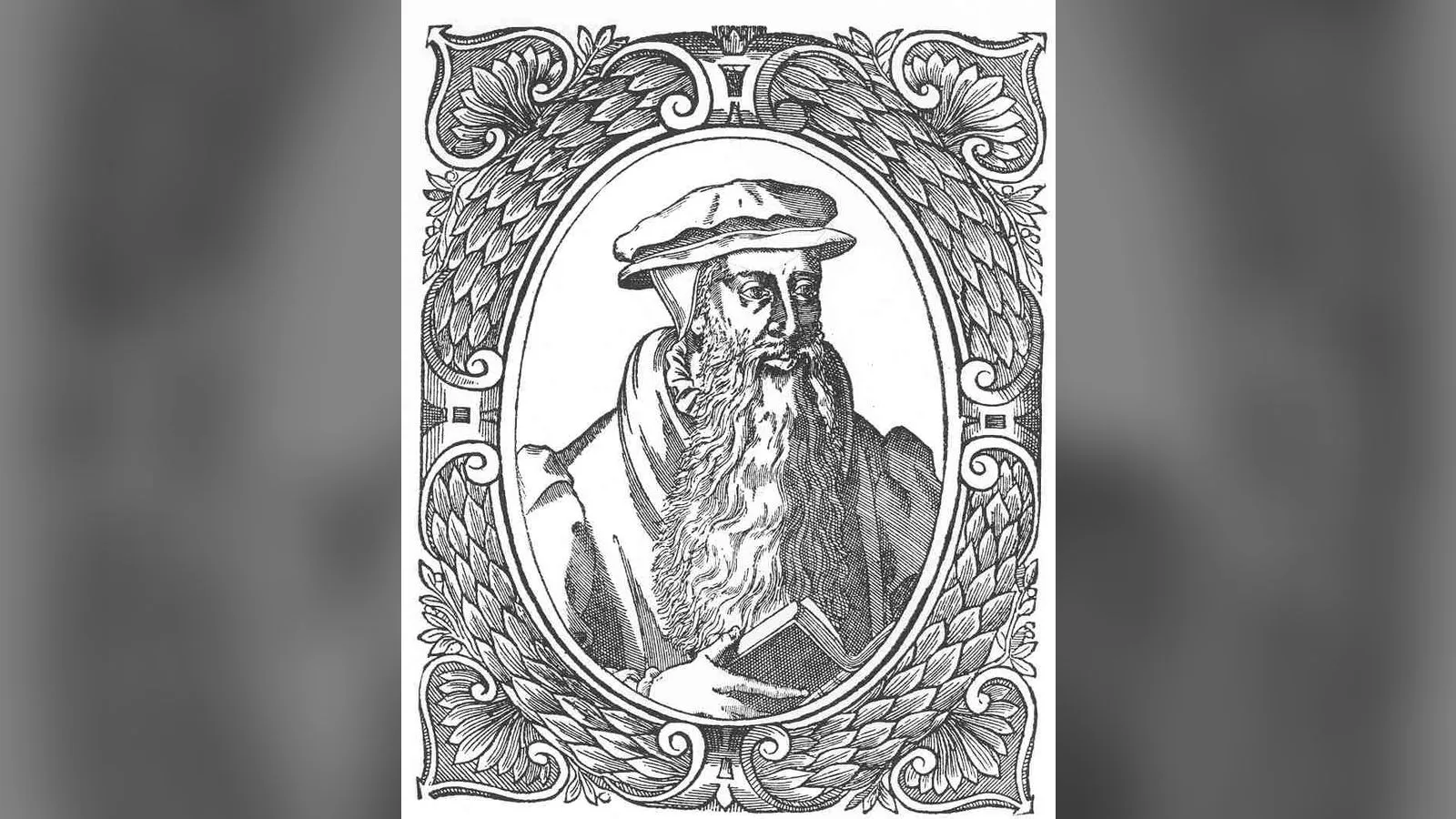

John Knox (c.1514–1572): Evidence-Tiered Research Dossier for the "Great Scots" Series
Contents
John Knox was a major preacher, polemicist and co-author of the Scottish Reformation, but he did not create it alone. He was not the architect of the Kirk's later presbyterian system. The best evidence puts his birth at c.1513–15, not the traditional 1505. Much of his popular image comes from his own partisan History of the Reformation in Scotland. The article should present him as a pivotal but contested figure. His most famous scenes, the Mary interviews and the galley prophecy, survive mainly because he wrote them down himself.
TL;DR
- established Knox (d. Edinburgh, 24 November 1572) was a notary-priest turned Protestant preacher. He was captured at St Andrews Castle in 1547 and spent nineteen months in French galleys. Thomas McCrie's Life of John Knox (1811) and the chronology in Laing's Works both date his release to February 1549. He then worked as a Church of England preacher and royal chaplain (1549–53) and as a Marian exile in Frankfurt and Geneva. He returned to Scotland on 2 May 1559 and co-drafted the Scots Confession and First Book of Discipline (1560) with five other ministers, the "six Johns".
- disputed His birth year (1505 vs c.1513–15; c.1514 is the modern consensus, used by the ODNB and Dawson). His university, his 1536 ordination date, his exact authorship of the "Black Rubric", and how fair his own account of Mary, Queen of Scots is. Institutional sources disagree on several of these points and occasionally make outright errors.
- Myth to correct: Knox did not single-handedly make Scotland Protestant or invent Scottish Presbyterianism. The 1559–60 revolution was led politically by the Lords of the Congregation and won with English military intervention. Presbyteries came after his death, under Andrew Melville's generation. The First Book of Discipline's school-in-every-parish plan was largely unfunded "devout imaginations" for decades. The Knox House and "parking space 23" traditions both need careful qualification.
Key Facts
- Born
- c.1513–15 (conventionally c.1514); older tradition 1505 | Disputed (c.1514 = scholarly consensus)
- Birthplace
- Giffordgate, Haddington, East Lothian | Shared/Traditional
- Parents
- Father William Knox (merchant, per Dawson); mother née Sinclair | Documented (mother's surname); Shared (father's trade)
- Education
- Probably Haddington grammar school; probably St Andrews, possibly under John Major/Mair | Shared/Traditional
- Early career
- Priest and apostolic notary, documented 1540–43 | Established/Documented
- Conversion
- Gradual, c.1543–47 (Dawson's three stages) | Shared (interpretive)
- Galleys
- Captured 31 July 1547; freed February 1549 (about 19 months) | Established/Documented
- England
- Licensed 7 April 1549; Berwick, Newcastle, royal chaplain 1551; declined Rochester 1552 | Established/Documented
- Exile
- Dieppe, Geneva, Frankfurt (expelled 26 March 1555), Geneva (arrived 13 Sept 1556) | Established/Documented
- First Blast
- Published anonymously, Geneva, 1558 | Established/Documented
- Return to Scotland
- 2 May 1559 | Established/Documented
- Ministry
- Minister of St Giles', Edinburgh, from 1559 (intermittently to 1572) | Established/Documented
- Spouses
- Marjorie Bowes (d. Dec 1560); Margaret Stewart (m. 26 March 1564, aged about 17) | Established/Documented
- Children
- Nathaniel (b. 1557), Eleazar (b. 1558); Martha, Margaret, Elizabeth | Established/Documented
- Died
- 24 November 1572, Edinburgh | Established/Documented
- Buried
- 26 November 1572, St Giles' kirkyard; exact spot lost | Documented (burial); Traditional (marker location)
Scottish Impact Index (SI Score)
- Global Influence
- 6/10
- Enduring Relevance
- 9/10
- Material Contribution
- 3/10
- Exceptional Achievement
- 7/10
- Lasting Legacy
- 7/10
- Recognition
- 6/10
38/60
Ranked =44th of 200 in Great Scots
Claim Status
This dossier uses the site's four tiers:
- Established/Documented: Supported by contemporary records (notarial deeds, state papers, letters, parliamentary acts) or by consensus across modern scholarly biographies.
- Shared/Traditional: Widely accepted and plausible, but resting on a single source (often Knox himself), late testimony, or inference.
- disputed Credible scholars or institutions disagree, or the evidence conflicts.
- Legend/Myth: No contemporary basis, demonstrably wrong, or a later embellishment.
The central source problem. A large share of the vivid Knox narrative comes from his own History of the Reformation in Scotland. He wrote it from 1559 to 1566, and it was published after his death. The Lords of the Congregation had asked him to write a history of their movement, and the Scottish History Society describes it as an account "from the viewpoint of the reformers" that "attempted to legitimise the actions of the Lords of the Congregation." The only record of his conversations with Mary, Queen of Scots, is his own. Knox also often narrated his own actions in the third person. Anything "Knox says Knox did" should therefore be tiered at most Shared/Traditional unless it is corroborated independently.
The secondary-source problem. Even reputable websites contradict each other on Knox's dates. The Scottish History Society's own key-figures page states that Knox "died at St Andrews in 1572". This is wrong: he died in Edinburgh, after returning from St Andrews in August 1572. Christian History Institute dates the "perfect school of Christ" letter to 1554, but it belongs to 1556. Editors should not treat any single website, including institutional ones, as definitive.
Timeline
Birth at or near Haddington — Disputed
Ordination by William Chisholm, Bishop of Dunblane (per some accounts) — Disputed
First appears in records as priest ("Schir John Knox") and notary — Established
Associate and sword-bearing bodyguard of George Wishart — Shared (Knox's own account)
Wishart burned at St Andrews — Established
Cardinal David Beaton murdered in St Andrews Castle — Established
Knox enters the castle with his pupils — Established
Called to preach by John Rough; first sermon on Daniel 7 — Shared (Knox's account)
French fleet (21 galleys, Leone Strozzi) besieges castle; surrender 31 July — Established
Galley slave (about 19 months); winter on the Loire at Nantes — Established (duration); Shared (details)
Licensed to preach in England; Berwick-upon-Tweed — Established
Court sermon against kneeling leads to the "Black Rubric" — Established (Knox's role in triggering it)
Northumberland proposes Knox for bishopric of Rochester; Knox declines — Established
Flees to Dieppe after Mary I's accession — Established
Minister to English exiles in Frankfurt; forced out after the Cox faction's intervention — Established
Marries Marjorie Bowes (date not recorded) — Shared
Arrives in Geneva as minister of the English congregation — Established
Letter to Anne Locke: Geneva "the most perfect school of Christ" — Established (letter in Laing's Works, vol. 4)
First Blast published anonymously (printer Jean Crespin) — Established
Leaves Geneva; refused passage through England — Established
Arrives in Scotland — Established
Perth sermon followed by iconoclastic riot — Established
Lords of the Congregation "suspend" Mary of Guise as regent — Established
Treaty of Berwick brings English military aid — Established
Mary of Guise dies in Edinburgh Castle (sources give 10, 11 or 12 June) — Established (month); Disputed (day)
Treaty of Edinburgh; French and English troops withdraw — Established
Reformation Parliament: Scots Confession approved, papal authority and the Mass abolished — Established
Marjorie Bowes dies — Established
First Book of Discipline accepted by an act of secret council, but not enacted by Parliament — Established
Mary's state entry into Edinburgh; Knox dismisses the pageants ("Fain would fools have counterfeited France") — Established
First interview with Mary, Queen of Scots, at Holyrood, with Lord James Stewart present — Established (it occurred); Shared (content)
Preaches before Parliament against a Catholic marriage for Mary; summoned to Holyrood the same afternoon, where she weeps — Established (it occurred); Shared (content)
Tried before the Privy Council for summoning "a convocation of the brethren"; acquitted — Established
Marries Margaret Stewart, daughter of Lord Ochiltree — Established
Rebukes the Protestant Countess of Argyll for standing proxy at Prince James's Catholic baptism — Established
Mary having been forced to abdicate on 24 July, Knox preaches at James VI's coronation in Stirling and calls for her execution; 1560 Acts ratified in December — Established
Preaches the funeral sermon for the murdered Regent Moray in St Giles' — Established
Suffers a stroke (refers to his "dead hand") — Shared
Returns to Edinburgh from St Andrews; denounces St Bartholomew's Day Massacre; inducts James Lawson as successor (9 Nov) — Established
Dies in Edinburgh — Established
Buried in St Giles' kirkyard; Regent Morton's graveside tribute — Established (burial); Shared (wording)
Second Book of Discipline: the more clearly presbyterian blueprint — Established
Details
1. Birth date, birthplace and family
Birth year (Disputed, handle explicitly). The older tradition of 1505 appears in the nineteenth-century Dictionary of National Biography (1892), whose article is headed "Knox, John (1505–1572)". It also appears in Thomas McCrie's influential 1811 Life. Andrew Lang (1905) described 1505 as resting "on a late statement of little authority."
The revised date rests on near-contemporary testimony:
- Sir Peter Young, tutor to James VI, wrote to Theodore Beza in 1579 that Knox died in his fifty-ninth year. This implies a birth around 1513–14.
- Beza's Icones (1580) gives 1515.
- David Hay Fleming argued in The Bookman (September 1905) that 1505 was probably a transcription error.
- William Croft Dickinson's standard edition of the History notes that Knox's own reference to "our youth" in 1547 makes a 1505 birth unlikely.
The modern Oxford Dictionary of National Biography entry, written by Jane Dawson, is titled "Knox, John (c.1514–1572)", and Jasper Ridley (1968) and Dawson (2015) both follow the later date.
Recommended wording: "born c.1514 (some older sources say 1505)". Never give a single confident date. Canonical age also matters. Lang noted that priests were supposed to be 25 at ordination, which fits Knox's appearance as a priest and notary in 1540 better than an ordination in 1536.
Birthplace (Shared/Traditional). Giffordgate, then a suburb across the Tyne from Haddington, is the standard attribution. Britannica says only "near Haddington," and the Catholic Encyclopedia says "at Haddington". There is no birth record.
Family (mixed). Britannica states bluntly that "almost nothing is known of Knox's life before 1540, the accounts given by his earlier biographers being mostly fanciful." His mother's maiden name, Sinclair, is secure because Knox used "John Sinclair" as a pseudonym, including in 1559 correspondence with William Cecil. Dawson identifies his father William as a merchant and his elder brother William as carrying on the business. Earlier writers guessed he was a small farmer's son. The popular "humble poverty" narrative is Legend-adjacent and should not be asserted.
2. Early life, education and the Catholic priesthood
University (Shared/Traditional). A "John Knox" matriculated at Glasgow in 1522. Lang and others point out that this cannot be the reformer if he was born c.1514. Beza, who knew Knox, said he was a St Andrews man. Knox's name is absent from the St Andrews registers, but those registers were poorly kept. John Major (Mair) moved from Glasgow to St Andrews in 1523. Dawson accepts that Knox studied at St Andrews under Mair, where he developed a love of rhetoric and combative debate. Mair was reportedly in the congregation at Knox's first sermon in 1547. Tier: St Andrews = Shared/Traditional (probable); "studied under Major" = Shared/Traditional; "graduated 1536" (a claim in some popular timelines) = unsupported, since no graduation record exists.
Ordination (Disputed). Wikipedia states that Knox was ordained in Edinburgh on Easter Eve 1536 by William Chisholm, Bishop of Dunblane. Some church sites give the same year: the Beautiful Feet site (romans1015.com), for example, says "Ordained as a Catholic priest around 1536 (age 34)", having dated his birth to 1505. Britannica's summary gives 1540. The documentary record firmly establishes only that he was a priest and apostolic notary by 1540. In a deed of 27 March 1543 he styled himself (in Latin) "minister of the sacred altar in the diocese of St Andrews, notary by apostolic authority."
Tutor (Established). Instead of parish work, he tutored the sons of the Protestant-leaning lairds Hugh Douglas of Longniddry and John Cockburn of Ormiston. Dawson's summary is that "Knox owed his early career entirely to the late medieval Church, and he was a churchman through and through."
3. Conversion and George Wishart
Knox never recorded when or how he converted. Dawson proposes three stages:
- Around 1543, the Earl of Arran's brief pro-English, pro-reform regime sent preachers out and authorised vernacular Bibles. Knox appears to have adopted justification by faith alone at this time.
- In 1545 he met Wishart.
- In 1547 he was called to the ministry at St Andrews Castle.
Dawson also reads an unusual addition to one of his notarial signatures, "a faithful witness through Christ to whom be the glory, amen," as possibly an early sign of changed belief. That reading is interpretive, so tier it as Shared.
Wishart's bodyguard (Shared/Traditional, from Knox). Knox carried a two-handed sword while escorting Wishart. Dawson notes the symbolism, since priests were not supposed to bear arms. When Wishart was arrested, he reportedly told Knox: "Nay, return to your bairns and God bless you. One is sufficient for a sacrifice." Wishart was burned on 1 March 1546 in Beaton's presence. The Scottish History Society stresses that Wishart was the first Scot to bring back the Swiss (rather than German) Reformed message. The effect on Knox is inferred rather than recorded, so avoid melodramatic claims such as "the flames lit a fire in his heart."
4. St Andrews Castle, the call to preach and the galleys
Beaton's murder (Established). Cardinal Beaton was killed on 29 May 1546 by a small group of Fife lairds, partly in revenge for Wishart. The "Castilians" held the castle, eventually about 150 people. Knox was not involved in the murder. He arrived on 10 April 1547, during an armistice, bringing his pupils. Historic Environment Scotland interprets the siege mine and countermine, which were rediscovered in 1879 and are unique survivals of medieval siege warfare. HES also notes that Beaton's body was "certainly kept" in the bottle dungeon.
The call (Shared, from Knox). The garrison chaplain John Rough publicly proposed Knox as preacher. By Knox's own account he burst into tears and withdrew to his room. Within a week he preached on Daniel 7, identifying the papacy with Antichrist.
Fall and galleys (Established for dates). Twenty-one French galleys under Leone Strozzi arrived on 29 June 1547. Andrew Lang (1905), following Knox's own History, describes "twenty-one French galleys, and such an army as the Firth had never seen". The garrison surrendered on 31 July. The gentlemen were sent to French prisons, while Knox and others were sent to row. He was released in February 1549, after what Thomas McCrie's Life of John Knox (1811) calls "a tedious and severe imprisonment of nineteen months". How he was freed is uncertain: McCrie listed English capture, a French royal release, and ransom as possibilities. Wikipedia notes that Henry II later arranged the release of the remaining Castilians with England. shared The historian John Guy, in his biography of Mary, Queen of Scots (2004), gives a shorter term of about eighteen months and credits Protector Somerset with arranging Knox's release and safe-conduct to London. Guy adds that this was when Knox first met William Cecil, then Somerset's secretary, whose influence helped him to posts in England. The acquaintance lay behind their later secret correspondence, in which Knox wrote as "John Sinclair".
Conditions (Shared/Traditional). Knox served on the galley Notre Dame and wintered at Nantes on the Loire. He mentions an incident in which a Scots prisoner, perhaps Knox himself, threw an image of the Virgin overboard: "let her learn to swim." In mid-1548, off the Scottish coast, he fell seriously ill with fever. Pointing to St Andrews steeple, he vowed he would preach there again, a "prophecy" that survives only in his own later narrative.
The Christian History Magazine article "Life as a Galley Slave" stresses that Knox "wrote surprisingly little about his time in the galleys". It suggests the two winters spent in port "were probably the saving of Knox". It judges that "Knox was in his prime at 33 years of age and, apart from one severe bout of illness, seems to have survived well". It also notes that usually only a third of rowers pulled at once except in emergencies. Andrew Lang (1905) wrote that "Knox's health was more or less undermined... by nineteen months of the galleys, mitigated as they obviously were". John Wilkinson's Medical History of the Reformers (2001) examines the same question. Claims of lasting damage are plausible (he suffered recurrent illness later) but not documented cause-and-effect: tier Shared/Traditional. The theological impact, such as a hardened sense of providence and covenant, is interpretation and should be framed as such.
5. England, 1549–1554
- Licensed preacher (Established). Licensed on 7 April 1549, he served at Berwick, then at St Nicholas', Newcastle, from late 1550. In 1551 he became one of six royal chaplains to Edward VI. He adapted the 1549 Prayer Book to Continental Reformed emphases, especially on communion.
- Black Rubric (Established for his role, Disputed for his authorship). In autumn 1552 Knox preached before the court against kneeling at communion, which he regarded as idolatrous, just as the second Prayer Book was being printed. Cranmer defended kneeling to the Privy Council. The Council then ordered a declaration, printed in black ink as a late insertion, stating that kneeling implied no adoration of the bread and wine. The DNB says only that he "is credited with" it. Recommended wording: "Knox's agitation prompted the Black Rubric". Avoid "Knox wrote the Black Rubric."
- Bishopric refused (Established). On 28 October 1552 the Duke of Northumberland suggested to Cecil that Knox be made Bishop of Rochester. Knox refused, and by December Northumberland found him "neither grateful nor pleasable." Knox later said he objected to the English formularies. Christian History magazine calls the reasons "unclear". The claim that he refused because he "shrewdly foresaw" Mary Tudor's accession (Encyclopedia.com) is speculation. He also declined All Hallows, Bread Street, in 1553 and was called before the Privy Council.
- Flight (Established). After Mary I's accession he left for Dieppe in January 1554. On the eve of departure he wrote that England's troubles were "double more dolorous unto my heart than ever were the troubles of Scotland." This is useful evidence against a purely Scottish-nationalist framing.
Dawson emphasises that Knox spent roughly a decade after 1548 almost entirely in English contexts. He married an Englishwoman and acquired "a noticeably English accent and a hybrid Anglo-Scottish literary style."
6. Continental exile: Geneva and Frankfurt
Geneva and Calvin (Established). In 1554 Knox put four political questions to Calvin and then Bullinger:
- Could a minor rule by divine right?
- Could a woman rule, and transfer sovereignty to her husband?
- Must subjects obey idolatrous rulers?
- Whom should the godly follow if they resisted?
Both gave cautious answers, but Knox had largely made up his mind.
Frankfurt (Established, and commonly mis-told). He accepted a call from the English exile congregation (letter of 24 September 1554) and brokered a compromise liturgy. That compromise collapsed when Richard Cox's party arrived in 1555 insisting on the English Prayer Book. The popular version frames this as a vestments dispute. In fact Knox was ejected by political means: Cox's group drew the Frankfurt magistrates' attention to Knox's printed attack on Emperor Charles V as "no less enemy to Christ than was Nero." Knox left on 26 March 1555. Remembered as the "Troubles at Frankfurt", the episode is an ancestor of later Puritan–Anglican conflict.
"The most perfect school of Christ" (Established, but check the date). The quotation comes from Knox's letter of 9 December 1556 to Anne Locke (Laing, Works, vol. 4, p. 240): "the most perfect school of Christ that ever was in the earth since the days of the Apostles. In other places I confess Christ to be truly preached; but manners and religion so sincerely reformed, I have not yet seen in any other place." Christian History Institute dates this to his 1554 visit, but the source letter is from 1556. The Orthodox Presbyterian Church's New Horizons rightly calls it "characteristic hyperbole."
Geneva pastorate (Established). Elected minister on 1 November 1555, he arrived in Geneva with his wife and mother-in-law on 13 September 1556. He preached in the church now called the Auditoire de Calvin. The congregation's liturgy, The Forme of Prayers (1556), became the basis of the Scottish Book of Common Order. Its 1567 Gaelic translation by John Carswell was the first book printed in any Gaelic language. Knox also received the freedom of Geneva.
7. The First Blast of the Trumpet Against the Monstrous Regiment of Women (1558)
Context (Established). Knox wrote it in winter 1557–58, after an aborted recall to Scotland had left him waiting in Dieppe. Its targets were Mary I of England, who was persecuting Protestants, and Mary of Guise, the Scottish regent. "Regiment" means rule and "monstrous" means unnatural. It is not a general tirade against women in the modern sense of the words. Knox did not consult his congregation or tell Calvin, and he published anonymously through Jean Crespin in Geneva. The National Library of Scotland summarises that it "was in fact aimed not at women as a whole but at the Catholic Mary Tudor."
Arguments (Established). Knox argued from Scripture, natural law, Aristotle and the Church Fathers that rule by any woman is contrary to nature and God's ordinance. His stated aim was to show "how abominable before God is the Empire or Rule of a wicked woman, yea, of a traiteresse and bastard." He implied that nobles and people had a duty to remove such rulers. He dismissed the Deborah precedent that Calvin and Bullinger used to allow exceptional female rule. The argument was a general one, and that generality is what made it so damaging.
Political damage (Established, and often mis-weighted).
- Mary I died on 17 November 1558, months after publication. The Protestant Elizabeth I took deep and lasting offence, and Wikipedia's summary that "she never forgave him" matches the scholarly consensus.
- In 1559 Elizabeth refused him a passport through England, forcing him to sail directly to Scotland.
- Calvin wrote to Cecil that "by reason of the thoughtless arrogance of one individual, the wretched crowd of exiles would have been driven away, not only from this city but even from almost the whole world."
- John Aylmer published a rebuttal in 1559, An Harborowe for Faithfull and Trewe Subjectes.
- Knox himself wrote in 1559 that "my First Blast hath blown from me all my friends in England." His conciliatory letters to Cecil, enclosing one to "the virtuous and godly Queen Elizabeth," offered what the DNB calls "a double-edged apology." He would accept her rule as a special providential dispensation, not by right.
Overstated or understated? Both, in different ways.
- Understated: the long-term damage to Genevan influence in England. Dawson argues that the radical tracts of Knox and Christopher Goodman helped push the Elizabethan church away from Geneva and towards Zurich. Gospel Coalition reviewer Sean Michael Lucas, summarising Dawson, says Knox became "persona non grata in Elizabeth's court."
- Overstated: any claim that it wrecked the Anglo-Scottish Protestant alliance. Within weeks of returning, Knox was negotiating with Cecil under the alias "John Sinclair". England intervened militarily through the Treaty of Berwick (February 1560) because of French power in Scotland, not out of affection for Knox. William Maitland of Lethington took over the diplomacy, partly because Knox was a liability with Elizabeth.
Tier: "Elizabeth personally loathed Knox" = Established. "The First Blast nearly cost Scotland its Reformation" = Disputed or overstated.
8. Return to Scotland and the Reformation of 1559–60
Knox's actual role (Established, weighed carefully). Knox arrived on 2 May 1559 and was promptly outlawed. His sermon at Perth on 11 May was followed by an iconoclastic riot that sacked the Blackfriars and Greyfriars. After he preached at St Andrews in June 1559, the cathedral interior was wrecked. Mary of Guise's heavy-handed reoccupation of Perth pushed Lord James Stewart (later Regent Moray) and the Earl of Argyll to join the Lords of the Congregation.
The Scottish History Society frames the rebellion as "equally a political rebellion as much as a spiritual one." Its main secular aim was to end French domination after Mary's 1558 marriage to the Dauphin. The Historical Association's regional study goes further: it argues the lords invited Knox back partly so that a "godly" cause would stop them being classed as rebels.
After October 1559, Wikipedia (drawing on Ridley and Dawson) notes that Maitland of Lethington "took over the political tasks, freeing Knox for the role of religious leader." Victory came through the English fleet (January 1560), the Treaty of Berwick, the siege of Leith, and Mary of Guise's death in June 1560. Sources disagree on the day: 10, 11 or 12 June. Knox was the Reformation's chief preacher, propagandist and ideologue, not its military, political or diplomatic leader. Dawson's reviewer Calum Wright puts it well: Knox "was more a man of words than action, though his rhetoric inspired radical deeds."
Reformation Parliament, August 1560 (Established). Without royal assent, it approved the Scots Confession, abolished papal jurisdiction and prohibited the Mass. Mary never ratified these acts. They received formal crown ratification only in 1567, after her deposition.
Scots Confession and First Book of Discipline (Established). Both were drafted by the "six Johns": Knox, John Spottiswood, John Willock, John Winram, John Douglas and John Row. Wikipedia's account notes that Winram, Douglas and Row were relatively recent converts. The First Book of Discipline proposed a school in every parish, grammar schools in towns, reformed universities, and poor relief, all funded by transferring the old Church's wealth. It was not enacted by Parliament. It was accepted only by an act of secret council in January 1561 and subscribed by some lords. The nobility had absorbed much church property and had no wish to surrender it. Knox's History records Lethington dismissing the plan as "devout imaginations."
Implementation vs aspiration (Established).
- The 1911 Encyclopaedia Britannica states that neither the 1560 scheme "nor an act passed by the privy council in 1616 for the establishment of a school in every parish was carried into effect."
- Wikipedia's history of Scottish schools summarises that the plan "proved financially impossible," though burgh schools were largely maintained or re-founded.
- Near-universal parish schooling was a slow achievement of the seventeenth century, after the 1616, 1633 and 1696 Acts. It cannot be credited directly to Knox.
Tier: "Knox's vision inspired Scotland's parish-school ideal" = Shared. "Knox created universal Scottish education" = Legend/Myth.
Presbyterian Kirk (Established, and commonly mis-told). Knox's Kirk used superintendents for regional oversight. In 1572, the year of his death, the Concordat of Leith accepted titular bishops, which Knox reluctantly tolerated. Presbyteries and fully presbyterian polity came with the Second Book of Discipline (1578) and Andrew Melville's generation in the 1580s. A long struggle with episcopacy followed, lasting to 1690. Britannica's Student Encyclopedia says Knox "finally established Presbyterianism as Scotland's national church", and a Learn Religions biography is headlined "Scottish Theologian, Founder of Presbyterianism". Both compress about 130 years into one man.
The Reformation as a process (Established). The Scottish History Society notes that before 1560 Scotland was "a fairly typical, and very devout, Catholic country." It adds that there is "no compelling evidence" it was on course to become as completely Protestant as it did "almost overnight, in 1560". That was a legal revolution, not an instant change in belief. EBSCO's overview notes that Protestants remained a minority in 1559–60, and that in some places priest and minister served the same congregation. Catholicism persisted in parts of the north and among some nobles for generations. Modern scholars such as Margo Todd (The Culture of Protestantism in Early Modern Scotland, 2002), Alec Ryrie (The Origins of the Scottish Reformation, 2006) and Michael Lynch (Edinburgh and the Reformation, 1981) emphasise a long, negotiated, regionally uneven process. These works were not directly consulted for this dossier, and the article should check them before quoting.
A "two-speed" Reformation (Established, with interpretation). Michael Lynch describes 1559–60 as a rapid reformation from above, followed by a slow reformation of belief and behaviour that took three or four generations. The radicals did not get everything they wanted. Knox felt betrayed when Lord James Stewart blocked Protestant demonstrators from Mary's chapel in 1561, and his "no surrender" writings of 1565–66 reflect the Reformation's difficulties more than its success. The new Edinburgh regime itself feared the crowd: in spring 1561, one of Knox's closest associates fired a handgun into a crowd that had trapped the council in the tolbooth.
9. Knox and Mary, Queen of Scots
What is documented (Established).
- Mary returned in August 1561. Knox preached against her private Mass and was summoned to at least four or five interviews (commonly counted as five) between 1561 and 1563.
- The first was on 4 September 1561 at Holyrood, with Lord James Stewart and two ladies present.
- Another in 1563 followed his sermon against her proposed Spanish or Catholic marriage, and Mary wept.
- In December 1563 he was tried before the Privy Council for "convocating the lieges" after the Holyrood chapel riot, and was acquitted.
- In December 1566 he rebuked the Countess of Argyll, a Protestant, for standing proxy for Elizabeth I at Prince James's Catholic baptism at Stirling.
- In 1567, after her deposition, he preached at James VI's coronation in the parish church at Stirling on 29 July and openly called for her execution.
- In February 1570 he preached the funeral sermon in St Giles' for the Regent Moray, her half-brother and his ally, assassinated at Linlithgow.
What rests on Knox alone (Shared/Traditional). Tudor Times notes that "the only record of the meeting and the subsequent conversations... is from Knox's own History... a work which is polemic in nature." Its judgment is that he "would not pen a deliberate lie" but that his recollections probably "matched his own desires."
In the dialogue as Knox records it, Mary asks, "Think ye that subjects, having the power, may resist their princes?" He answers, "If their princes exceed their bounds, Madam, no doubt they may be resisted, even by power." He also compares living under her rule to Paul living under Nero. The words are Knox's reconstruction, written years later, and the article should say so. Victorian and some modern church writers present the exchanges as a "watershed" of democratic free speech. That is a later interpretive overlay (Legend-adjacent).
Dawson's revision (Shared, scholarly interpretation). Dawson argues that Knox "conferred as well as argued" with Mary, which qualifies the pure-confrontation narrative. There was also a documented thaw, including a 1563 meeting at Lochleven where they discussed matters including the Earl of Arran's troubles.
The first interview, as Knox told it (Shared). John Guy's biography of Mary (2004) follows Knox's account closely, while setting it against the English diplomatic papers. Mary opened, on 4 September 1561, by accusing Knox of inciting her subjects to rebel. She had read the First Blast: when Knox claimed it was aimed only at Mary Tudor, she answered, in his record, "You speak of women in general." Knox then defended armed resistance by comparing an idolatrous ruler to a father "stricken with a frenzy", whom his children might lawfully disarm and imprison. Mary's reply, as Knox gives it, was: "I perceive that my subjects shall obey you, and not me." Guy notes that Knox sent a verbatim account to Cecil, writing that "the cardinal's lessons are so deeply printed in her heart". Behind the exchange, Guy explains, lay Knox's reading of Romans 13: because Paul wrote of "powers" in the plural, the nobility, as an "inferior power", might resist and depose an idolatrous ruler.
The 1563 interview and the trial (Shared/Established). After Knox preached against a Catholic marriage before the Parliament of 1563, Mary summoned him to Holyrood that afternoon and twice demanded, "What have ye to do with my marriage?" Knox answered that he was "a subject born within the same" and a "profitable member" of the commonwealth. She wept, and he made his remark about the tears of his own boys. In December 1563 Mary had him tried before the Privy Council over a letter calling "a convocation of the brethren" to support two Calvinists imprisoned for threatening a priest. Knox records that on seeing him she laughed and said, "Yon man made me weep and shed never tear himself. I will see if I can make him weep." He was acquitted, and Mary insisted on a second vote with the same result. shared Guy argues that the Earl of Moray backed the prosecution in council but secured the acquittal behind the scenes, his "first open act of betrayal" of his sister.
Knox's charges about her court (Shared). Knox also attacked Mary's morals. He blamed her for the infatuation of the French poet Chastelard, who was twice found in her bedchamber and executed in 1563, writing that "in dancing, the queen chose Chastelard, and Chastelard took the queen." Guy calls this charge "a travesty" and notes that Mary was so frightened that for months she would not sleep without one of her ladies in the room.
The dancing interview (Established event; Shared wording). The dance historian George S. Emmerson, in A Social History of Scottish Dance (1972), sets out the episode in which Knox, preaching in December 1562, "inveighed sore against the Queen's dancing" after a ball at Holyrood that followed her return from the north. He tied it to rumours that her Guise uncles were triumphing over the French Protestants. Summoned before her, he said, in his own account, that his main grievance was that she valued "fiddlers and flatterers" above the godly, and that of dancing itself he did "not utterly damn it", provided that duty was not neglected for it and that dancers did not rejoice at the troubles of God's people. Elsewhere in the History he complained that the court rewarded those "brought up with fiddlers and dancers" and dismissed courtiers as "skippers, dancers and dalliers with dames". Mary told the English ambassador that Knox was so hard on her that she had laid aside much of her dancing. shared Emmerson points out that J. A. Froude was wrong to say news of the massacre at Vassy had just arrived, since Vassy was nine months earlier. He reads Knox as hostile to court frivolity and to Mary's circle rather than to dancing as such, which matches Knox's own qualified words and Emmerson's wider argument that the Kirk seldom banned dancing outright.
Guy's verdict, and its critics (Shared). Guy's own judgement is severe: he calls Knox "a fanatic, a misogynist and a prude". He argues that Knox's picture of a Catholic woman ruler governed by passion rather than reason became the template for the confederate lords' case against Mary in 1567–68, and the root of the lasting stereotype that she ruled by her heart while Elizabeth ruled by her head. This is Guy's interpretation, not settled fact. Jane Dawson's more sympathetic reading of Knox, and Jenny Wormald's critical view of Mary's statecraft in Mary Queen of Scots: A Study in Failure (1988), point in different directions. Guy also notes that Knox himself praised what he called Mary's "manly" courage in escaping from Holyrood with Darnley after Riccio's murder in 1566.
Unsourced legend (Legend/Myth). The line attributed to Mary, "I fear the prayers of John Knox more than an army of ten thousand men", has no contemporary source identified in the standard literature. Do not use it except as a debunked item.
10. Marriages and family
Marjorie Bowes (Established; date Shared). She was the daughter of Richard Bowes, captain of Norham Castle, and Elizabeth Aske. Knox met the family around 1549–50 while at Berwick. No marriage date is recorded, and c.1555 is the conventional estimate. Correction to the brief: the documented opposition came from her father and her brother Robert Bowes, not her mother. Elizabeth Bowes was Knox's close spiritual correspondent. She later left her husband to join Knox in Geneva, and this caused what the DNB calls "unwarranted scandal," which Knox addressed publicly in 1572. The age gap is not precisely known because Marjorie's birth date is not recorded. Their sons were Nathaniel (born May 1557 in Geneva, godfather William Whittingham) and Eleazar (born c.November 1558, godfather Myles Coverdale). Marjorie died in December 1560. Knox's letters and Calvin's condolence show a warm marriage.
Margaret Stewart (Established). She was a daughter of Andrew Stewart, 2nd Lord Ochiltree, a Protestant ally, and was a Hamilton kinswoman related to the royal house. Knox married her on 26 March 1564 (Palm Sunday). She was about 17 (born c.1547); John Guy (2004) calls her sixteen, so her exact age is Shared. Knox was about 50 on a c.1514 birth, and Guy gives his age at death as fifty-eight, consistent with that date. Sources that assume other birth years give 51, 54 or "around 60", which is a good illustration of how the birth-year dispute spreads.
The controversy was real:
- The English ambassador Thomas Randolph reported that Cecil would think the news "madness".
- Mary was angry because a royal kinswoman had married without her consent.
- A Catholic polemicist claimed Knox had used "sorcery and witchcraft" to "allure that poor gentlewoman". This is hostile propaganda and should be tiered Legend.
- Undiscovered Scotland argues the match "did not seem so unusual at the time". This holds for age-disparate marriages in general, but not for the rank and political implications.
Margaret acted as his secretary and nurse. They had three daughters:
- Martha (married Alexander Fairlie of Braid; died 1592).
- Margaret (married Zachary Pont).
- Elizabeth (married John Welsh, minister of Ayr, who was later exiled to France).
The General Assembly of March 1573 allowed Margaret a year's stipend, apparently at Morton's suggestion. She married Andrew Ker of Faldonside by a contract dated 8 January 1574. Ker had been one of David Rizzio's murderers in 1566.
Sons' fates (Established, via Cambridge alumni records). Both sons went to St John's College, Cambridge. Nathaniel became a Fellow and died in 1580. Eleazar became a university preacher and then vicar of Clacton Magna (Great Clacton), Essex, from 1587, and died in 1591. He was buried in St John's College chapel. Knox's male line therefore ended in England, as Anglican clergy. This is striking editorial material, but it relies on nineteenth-century genealogies (Crawford 1895, Rogers 1879) together with Venn's Alumni Cantabrigienses. Verify against the Cambridge Alumni Database before publication.
11. Final years, death and burial
Health (Shared). He suffered a stroke in July 1570, after which he referred to his "dead hand". During the Marian civil war (1571–72) he withdrew to St Andrews. The young James Melville later recalled him there, frail but still thunderous in the pulpit. Knox returned to Edinburgh in August 1572 during a truce. He denounced the St Bartholomew's Day Massacre and, on 9 November 1572, inducted James Lawson as his successor at St Giles'.
Death (Established). He died in Edinburgh on 24 November 1572, the same day the Earl of Morton was elected Regent. Accounts by his colleague Richard Bannatyne (his secretary) and others describe his last days. They were read to from John 17, where he said he "cast his first anchor."
Burial and Morton's tribute (Established burial; wording Shared). He was buried on Wednesday 26 November 1572 in St Giles' kirkyard, attended by Morton and the nobility in town (McCrie; Calderwood). The famous line, "Here lies one who neither flattered nor feared any flesh", is a modern English smoothing.
The DNB's article on Morton identifies the oldest version as James Melville's Diary: "he nather fearit nor flatterit any fleche". Melville was a teenager at St Andrews in 1572, so he may be reporting hearsay. David Calderwood's later, "more theatrical" History of the Kirk gives: "Here lyeth a man who, in his life, never feared the face of man: who hath beene often threatned with dag and dager, but yitt hath ended his dayes in peace and honour." Hume of Godscroft gives a third variant. The 1911 Britannica describes Morton "speaking under the hostile guns of the castle."
Tier: Morton spoke a tribute = Established. The exact popular wording = Shared/Traditional, and should be presented as "traditionally rendered". The epitaph "feared God so much that he never feared the face of any man" is a later embellishment.
"Parking space 23" (Shared/Traditional, needs precise wording). The kirkyard was cleared in the seventeenth century, conventionally dated to 1633, when Parliament House was built and remains were moved to Greyfriars. The exact grave site has been lost since then. A small plain stone and an inset plaque in the Parliament Square car park, conventionally identified as space no. 23, read: "The above stone marks the approximate site of the burial in St Giles graveyard of John Knox the great Scottish divine who died 24 Nov 1572." Dawson herself notes that the grave lies under the car park outside the Court of Session.
Some popular sites (such as Atlas Obscura) claim Knox asked to be buried within 20 feet of St Giles'. This claim is unsourced, so tier it Legend. The claim "Knox's remains lie exactly under bay 23" is also wrong; the marker is explicitly approximate. Editorial action: Parliament Square parking arrangements have been subject to change, so photographers should confirm on site whether the space numbering and cars are still present before captioning "parking space 23."
12. Legacy and historiography
The History of the Reformation in Scotland (Established as primary source; Disputed as reliable narrative). It was written from 1559 to 1566. Its earliest section was commissioned by the Lords of the Congregation as a justification of their rebellion. It is invaluable, vivid and indispensable, and it is also self-dramatising and polemical. Knox himself directed readers to "universal histories of the time" for exact information.
The nineteenth-century historian John Hill Burton found "the mark of Knox's vehement colouring" in his narratives, adding that "it is needless to seek in the account for precise accuracy." The Catholic Historical Review's reviewer of Dawson calls it "rather polemical" and credits Dawson with "cutting through some of that fog." It was published after his death, and a full edition appeared only in the seventeenth century. Tier: it is excellent evidence for what Knox believed and wanted remembered, and weaker evidence for what others said.
Reputation over time (Established trajectory).
- Sixteenth–seventeenth centuries: Catholic polemicists vilified him, while Covenanting presbyterians revered him.
- Enlightenment: William Robertson and David Hume treated him as a zealot.
- Early nineteenth century: Thomas McCrie's Life of John Knox (1811) rehabilitated him as a patriot and hero. The Glasgow Necropolis monument (22 September 1825) calls him "The Chief Instrument, under God, of the Reformation of Scotland" and credits his "Services in the cause of Religion, Education, and Civil Liberty". This is a textbook statement of the heroic tradition.
- Victorian period: Thomas Carlyle's On Heroes (1840) made Knox the "Hero as Priest". The Victorian cult included the John Knox House tradition, statues, and St Giles' commemorations.
- 1905: Andrew Lang's sceptical John Knox and the Reformation and Hay Fleming's rebuttals marked a critical turn.
- Twentieth century: Jasper Ridley (1968) and W. Stanford Reid (Trumpeter of God, 1974) wrote the standard modern lives. Rosalind Marshall's John Knox (2000) offered a balanced popular life. Roger Mason edited Knox: On Rebellion (Cambridge, 1994) and John Knox and the British Reformations (1998), placing Knox's resistance theory in a British context.
- Twenty-first century: Jane Dawson's John Knox (Yale, 2015) is widely regarded as the standard life. It is based partly on newly found letters to Christopher Goodman in the Denbighshire Record Office. Yale's description says it "challenges the traditionally held stereotype of this founder of the Presbyterian denomination as a strident and misogynist religious reformer whose influence rarely extended beyond Scotland." The Scotsman's review adds that the new sources "reveal a far more conflicted man, often uncertain of his calling and prone to depression."
Feminist and critical readings (Disputed). Calum Wright's review (Reviews in History, 2016) judges that Dawson's contextualisation of the First Blast "does little to dispel" the view of Knox as misogynist. He argues that "Knox clearly did not hate women, but it is equally clear that he saw them as inferior to men". He also notes that such views "were commonplace in his own time." This is the balanced position the article should adopt. Knox depended on close female correspondents (Elizabeth Bowes, Anne Locke, his "Edinburgh sisters"), but that does not neutralise the First Blast.
The "Knoxian" killjoy stereotype (Disputed). The Scotsman's reviewer notes a "contested legacy, with part of the country seeing in him an intransigent killjoy and bullying misogynist, whose ideas ground the dour into Scotland's soul." Much of the "dour Calvinism" of later centuries, such as strict Sabbatarianism and the kirk-session culture of discipline, developed in the seventeenth century and after. Knox's household in fact kept wine and hospitality. Dawson aims to "dispel the notion of Knox as 'the dour Scottish Reformer'" (as summarised by reviewer David Barshinger). Tier: "Knox personally created Scottish dourness" = Legend/Myth. "Knox's theology of discipline and iconoclasm contributed to it" = Shared.
13. Knox vs Calvin (common confusion)
Calvin (1509–1564) was a French theologian-organiser of Geneva and a prolific systematic writer. Knox was a Scottish preacher-activist and polemicist, and he was never Calvin's student in any formal sense. They differed on female rule and on resistance: Calvin was far more cautious and was angered by the First Blast. Knox adapted Genevan worship and discipline, but the Scots Confession is a Scottish document, not a translation of Calvin.
Knox and the myth of godly Scotland
The historian Jenny Wormald argues that Knox's later fame owes much to a myth he helped to start. Knox, Andrew Melville and the Presbyterian historians David Calderwood and John Row all portrayed Scotland as uniquely godly, "one of the purest kirks under heaven", as the 1616 Confession put it. But Wormald points out that in the first years of the Reformation Knox was actually marginalised: by his badly timed First Blast of the Trumpet, for which Elizabeth I never forgave him, and by his attacks on Mary, Queen of Scots, at a time when Protestants were getting support from her. The myth only took deep root after the Union of 1707, when the Kirk asserted its own spiritual authority, and the idea of a Knoxian "Presbyterian democracy" was born, "in a form that they would not have recognized".
The Victorian cult of Knox, and the backlash
The historians Colin Kidd and James Coleman show how Victorian Presbyterians turned Knox into a national hero of liberty. At the tercentenary of his death in 1872, the Free Church minister Alexander Duff claimed that by thwarting "Popish conspiracies", Knox had saved Elizabeth's throne and secured civil, constitutional and religious liberty across the British Isles. At the laying of a foundation stone for a Knox monument intended for Edinburgh's High Street, William Cunningham contrasted Scotland with Ireland, which he said had no Reformer of its own and remained "sunk in Popish ignorance and darkness".
The reputation was overturned between the wars. Writers of the Scottish Renaissance blamed the Reformation for a prim culture that had stifled native energies; in "Scotland 1941" the poet Edwin Muir wrote of the Scots as once "a tribe, a family, a people", until "Knox and Melville clapped their preaching palms". Kidd and Coleman conclude that Knox and the Reformers came to be cast as "authoritarian dominies", enemies of popular freedom rather than its founders: the Presbyterian view of history "turned on its head".
Did You Know?
- Knox's surviving physical description comes from Sir Peter Young (1579): "a rather small man" with "dark blue eyes," high cheekbones, and a long black beard that later turned grey. The widely reproduced "Somerville" portrait adopted by Carlyle has, per the 1911 Britannica, "neither pedigree nor probability." (Established)
- After cleaning, a portrait owned by the University of Edinburgh is now thought to be the earliest surviving image of Knox. Dawson's biography uses it on its cover. (Shared)
- Knox's pseudonym in secret correspondence with Elizabeth I's minister William Cecil was "John Sinclair", his mother's maiden name. (Established)
- The order of worship Knox's Geneva congregation used became the Book of Common Order. Its 1567 Gaelic translation was the first book printed in any Gaelic language. (Established)
- Both of Knox's sons were educated at St John's College, Cambridge. His last male descendant was an Anglican vicar in Essex who died in 1591. (Established via Cambridge records; verify)
- In one interview Knox told a weeping Mary, as recorded in his own History, that he "can scarcely well abide the tears of my own boys whom my own hand corrects, much less can I rejoice in your Majesty's weeping." (Shared: Knox's own record)
- Glasgow's Knox Monument (1825) predates the Necropolis around it. Knox has no connection to the site and is not buried there. (Established)
- At the 1872 tercentenary of Knox's death, a Free Church minister claimed Knox had saved Elizabeth I's throne. (Established)
- After the Riccio plot of 1566, even Knox praised what he called Mary's "manly" courage in escaping from Holyrood at midnight with Darnley and riding to Dunbar while six months pregnant. (Shared: Knox's own record, highlighted by John Guy)
- Two years after Knox's death, his young widow married Andrew Ker of Fawdonside, the man who had levelled a pistol at the pregnant Mary while Riccio was dragged to his death. (Established)
FAQ
1
- When was John Knox born?
Probably c.1513–15, conventionally c.1514. The older date of 1505 comes from a late, weak source and is now rejected by the ODNB, Ridley and Dawson. Present it as a dispute.
2
- Did Knox study under John Major?
Probably, at St Andrews. Dawson accepts this, but Knox's name does not appear in the university registers.
3
- Was Knox involved in Cardinal Beaton's murder?
No. He joined the castle garrison about ten months later, in April 1547.
4
- How long was he a galley slave?
About 19 months, from July 1547 to February 1549. He fell seriously ill, but most details of his treatment come only from his own brief account.
5
- Did Knox write the Black Rubric?
Not demonstrably. His 1552 sermons against kneeling prompted the Privy Council to add it.
6
- What did he mean by "monstrous regiment of women"?
"Unnatural rule by women." He aimed it at Mary Tudor and Mary of Guise, but it argued against female rule in general. That is why it offended Elizabeth I.
7
- Did the First Blast ruin Knox's relationship with England?
With Elizabeth personally, yes, and permanently. It did not stop English intervention in Scotland in 1560, which served English strategic interests.
8
- Did Knox create the Church of Scotland single-handedly?
No. He co-wrote its founding documents with five other ministers, and the nobility won the political revolution with English help. The presbyterian system of church courts was developed after his death.
9
- Are the Knox–Mary conversations accurate?
They happened, but our only account of what was said is Knox's own polemical History. Read them as his version.
10
- Was Knox ever put on trial under Mary?
Yes. In December 1563 he was tried before the Privy Council for summoning "a convocation of the brethren" and was acquitted twice, to Mary's fury. John Guy argues that the Earl of Moray quietly secured the verdict.
11
- Did Knox shape how Mary has been remembered?
Probably more than anyone. The historian John Guy argues that Knox's picture of a Catholic queen ruled by passion became the template for the lords' case against her in 1567–68 and for the later image of a queen who ruled by her heart. Other historians, such as Jenny Wormald, put more weight on Mary's own political misjudgements.
12
- Did Knox condemn dancing?
Not outright. In December 1562 he preached against the queen's dancing and told her that court "fiddlers and flatterers" had too much favour, but by his own account he said he did not utterly condemn dancing if it did not displace duty.
13
- Did he live in "John Knox House"?
Unproven, and most historians doubt it. The house belonged to the goldsmith James Mossman, a supporter of Queen Mary. The link to Knox was popularised from about 1800, and nineteenth-century research placed his manse elsewhere, near Warriston Close.
14
- Is Knox really buried under a car park?
Yes, approximately. He was buried in St Giles' kirkyard, which was later paved over. A marker in Parliament Square notes the "approximate site."
Sources and Further Reading
Scholarly/Critical
- John Guy, "My Heart is My Own": The Life of Mary Queen of Scots (Fourth Estate, 2004; US edition Queen of Scots: The True Life of Mary Stuart, Houghton Mifflin, 2004)
- Michael Lynch, "In Search of the Scottish Reformation", in Edward J. Cowan and Richard J. Finlay (eds), Scottish History: The Power of the Past (Edinburgh University Press, 2002).
- Jenny Wormald, "Reformed and Godly Scotland?", in T. M. Devine and Jenny Wormald (eds), The Oxford Handbook of Modern Scottish History (Oxford University Press, 2012)
- Colin Kidd and James Coleman, "Mythical Scotland", in T. M. Devine and Jenny Wormald (eds), The Oxford Handbook of Modern Scottish History (Oxford University Press, 2012)
- George S. Emmerson, A Social History of Scottish Dance: Ane Celestial Recreatioun (McGill-Queen's University Press, 1972)
Further Reading
- Jane E. A. Dawson, John Knox (Yale University Press, 2015)
- William Croft Dickinson (ed.), John Knox's History of the Reformation in Scotland, 2 vols (Nelson, 1949)
- J. S. McEwen, The Faith of John Knox (Lutterworth Press, 1961)
Honest Caveats
| Claim | Status | Correction |
|---|---|---|
| Born 1505 | Disputed/likely wrong | c.1514 is the consensus |
| Knox single-handedly made Scotland Protestant | Myth | Political leadership lay with the Lords of the Congregation; English military aid was decisive; Knox was the chief preacher and ideologue |
| Knox founded Presbyterianism | Overstated | Superintendents, not presbyteries, in his lifetime; Melville and the 1578 Second Book of Discipline; settled only in 1690 |
| 1560 was an instant national conversion | Myth | A legal revolution; uneven regional adoption; Catholic persistence; crown ratification only in 1567 |
| First Book of Discipline created universal schooling | Myth | Not enacted; unfunded; parish schools came via the 1616, 1633 and 1696 Acts |
| Knox wrote the Black Rubric | Disputed | He provoked it; the Council issued it |
| Frankfurt split was about vestments | Oversimplified | Liturgy dispute, resolved by Cox's use of Knox's anti-Emperor writings |
| "Most perfect school of Christ" written 1554 | Error | Letter to Anne Locke, 9 December 1556 |
| Marjorie Bowes's mother opposed the marriage | Error | Her father and brother opposed it; her mother was Knox's ally |
| Margaret Stewart was bewitched into marriage | Legend (hostile propaganda) | Arranged within a Protestant noble alliance |
| Mary feared Knox's prayers "more than an army" | Legend | No contemporary source identified |
| Knox's charge that Mary encouraged Chastelard | Hostile polemic | Knox's own allegation; John Guy calls it a travesty |
| Galley term "nineteen months" | Shared | McCrie's figure; Guy gives about eighteen months |
| "A man with God is always in the majority" | Misattribution (probable) | Not traceable in Knox's works. The Standard Bearer (RFPA) repeats it and claims Geneva's Reformation Wall has, beside Knox's figure, the words "Un homme avec Dieu est toujours dans la majorité". Verify on site before citing |
| Knox lived and died in John Knox House | Disputed/Traditional | The Scottish Storytelling Centre itself says "Tradition tells"; the house was the Mossmans' |
| Knox is buried exactly under parking bay 23 | Overstated | The marker is explicitly "approximate"; the grave has been lost since the 1630s |
| Knox asked to be buried within 20 feet of St Giles' | Unsourced | Omit |
| Morton said "neither flattered nor feared any flesh" | Shared (wording) | Oldest form is Melville's Scots "nather fearit nor flatterit any fleche"; Calderwood's differs |
| Galleys permanently broke his health | Shared/Traditional | Plausible; not documented as cause-and-effect |
| Knox as dour killjoy | Stereotype | Later Calvinist culture has been projected back onto him; Dawson stresses his emotional complexity |
| Knox and Calvin were interchangeable | Confusion | Different roles and views; Calvin disowned the First Blast |
Source-quality caveats. Several vivid claims in this dossier come from church-heritage and devotional sites (Christian History Institute, Ligonier, PCA History, Banner of Truth). These are useful for quotations but carry confessional sympathy. The ODNB entry (Dawson) sits behind a paywall and was not read in full. The Melville, Calderwood and Hume wordings are quoted via the DNB and secondary compilations, not from the original editions. Venn's Cambridge alumni records were not checked directly.
Card 014 · Great Scots