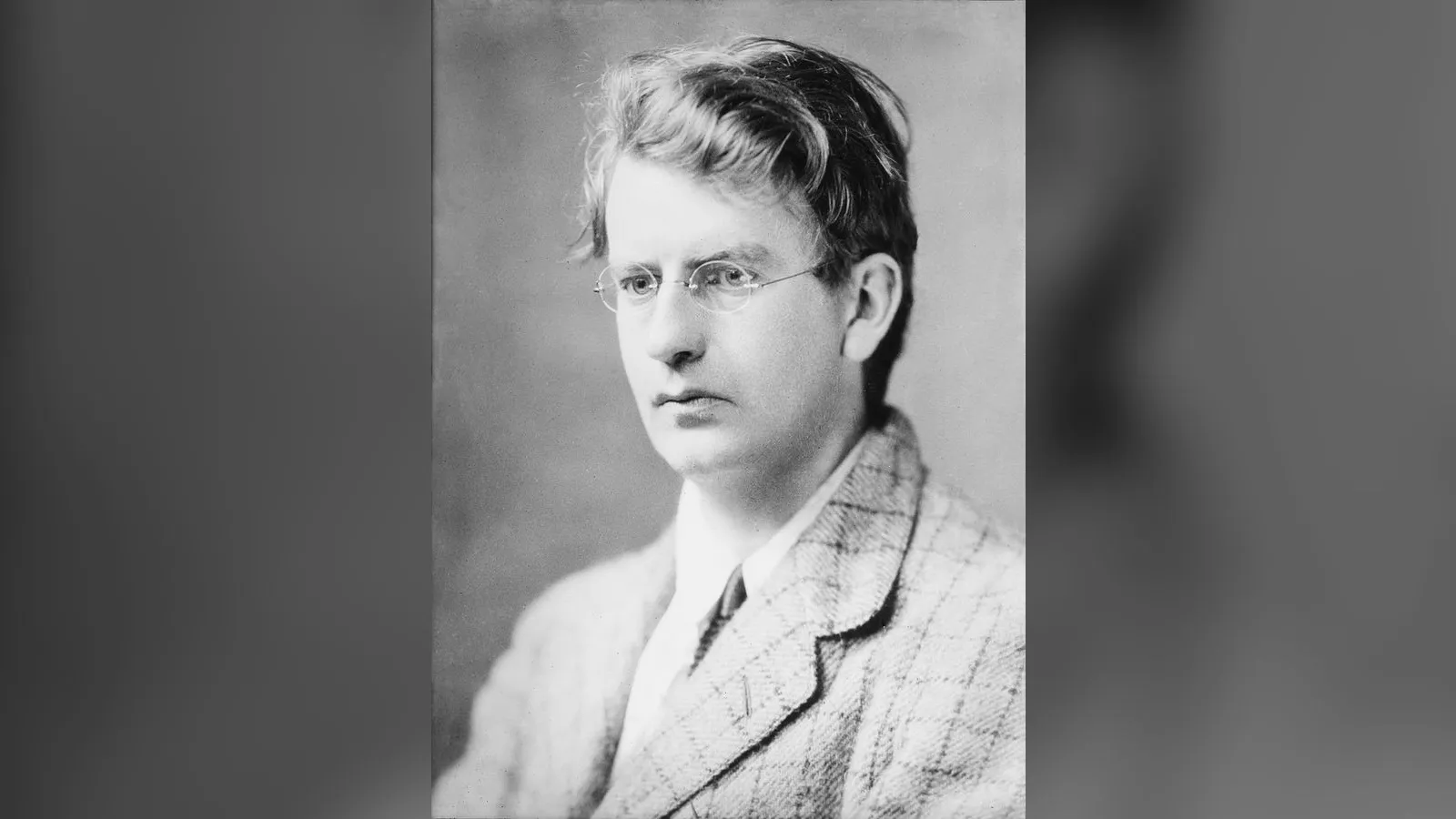

John Logie Baird (1888–1946)
Contents
John Logie Baird was a sickly minister's son from Helensburgh who failed at engineering, at socks, at jam and at soap before he built, in a Hastings lodging house and a Soho attic, the first machine to show a recognisable moving human face by television. This card tests the famous parts of the story against Baird's own memoirs, dictated in 1941 and edited with corrections by his son Malcolm, against the documented biography Malcolm Baird wrote with Antony Kamm, and against the wider record. It credits what he did first, records the many other firsts that followed, and is plain about why his system lost to electronic television in 1937.
TL;DR
- established On 2 October 1925, in his attic laboratory at 22 Frith Street, Soho, Baird transmitted the first television image with true light and shade: the head of a ventriloquist's dummy, and then the face of a 20-year-old office worker, William Taynton, whom he paid half a crown to sit in front of the machine.
- established On 26 January 1926 he demonstrated television to invited guests, among them members of the Royal Institution, in his Soho attic. By his own reckoning he had the field to himself for fourteen months, until the American Telephone and Telegraph Company's demonstration of 7 April 1927.
- established Scotland runs through the story: a Helensburgh manse childhood, eight years at Glasgow's technical college, a public lecture in St Andrew's Hall in February 1927, pictures sent by telephone line to Glasgow's Central Hotel that May, colour and 3D shown to the British Association in Glasgow in 1928, and burial in Helensburgh in 1946.
- established His company went on to a run of firsts: television by telephone line from London to Glasgow (1927), across the Atlantic (1928), in colour and in stereoscopic 3D (1928), in the dark by infra-red ("Noctovision", 1926), and recorded on gramophone discs ("Phonovision", 1927–28), as well as Britain's first television play (1930).
- established The BBC transmitted Baird's 30-line programmes from 1929, but in the 1936–37 trial at Alexandra Palace his 240-line system, part mechanical and part film, lost to the all-electronic 405-line Marconi-EMI system, and the BBC dropped it in February 1937. Kamm and Baird stress that the losing system was designed by the company's technical director, A. G. D. West, not by Baird, who had been moved out of management in 1933.
- shared In his last years, working at his own expense, he built a 600-line colour system and on 16 August 1944 showed the press the Telechrome, which Kamm and Baird describe as the first all-electronic colour television tube. Whether he "invented television" depends on the definition: he was first to demonstrate it, but modern television descends from the electronic line of Farnsworth, Zworykin and EMI.
Key Facts
- Born
- 13 August 1888, "The Lodge", Helensburgh
- Died
- 14 June 1946, Bexhill-on-Sea, aged 57; buried in Helensburgh
- Parents
- Rev. John Baird, minister of the West Parish, Helensburgh; Jessie Inglis, of the Glasgow shipbuilding family A. & J. Inglis
- Education
- Larchfield School, Helensburgh; Glasgow and West of Scotland Technical College (Royal Technical College from 1912), 1906–1914, associateship and Diploma in Electrical Engineering, 1 October 1914; Glasgow University BSc course 1914–15, not completed
- First television image
- 2 October 1925, 22 Frith Street, Soho
- First demonstration
- 26 January 1926, to invited guests including members of the Royal Institution
- First system
- About 30 lines (32 at the January 1926 demonstration, by Kamm and Baird's account); the standard 30-line picture was 7 units high by 3 wide at 12½ pictures a second
- First company
- Television Ltd, registered 11 June 1925
- BBC service
- Experimental from 30 September 1929; 30-line service ended 11 September 1935; high-definition system dropped February 1937
- Wife
- Margaret Albu, concert pianist from Johannesburg, married at the Half Moon Hotel, Coney Island, New York, 13 November 1931
- Children
- Diana (born 1932) and Malcolm (born 1935)
- Honours
- Fellow of the Physical Society (1927); Fellow of the Royal Society of Arts (1929); Honorary Fellow of the Royal Society of Edinburgh (1937)
- Patents
- 177, listed by Russell Burns
Scottish Impact Index (SI Score)
- Global Influence
- 9/10
- Enduring Relevance
- 6/10
- Material Contribution
- 8/10
- Exceptional Achievement
- 8/10
- Lasting Legacy
- 9/10
- Recognition
- 7/10
47/60
Ranked #20 of 200 in Great Scots
A Note on Claims and Evidence
Each major claim carries one of three labels. established means supported by primary records, official bodies or several independent reliable sources. shared means the core fact is sound but sources disagree on details, dates or interpretation. traditional means widely repeated but not traceable to a primary or independent source.
Baird's own account is in his memoirs, dictated in 1941 at Tempsford Hall while he was recovering from a heart attack and on a near-starvation diet, with no records to hand. His son Malcolm Baird's edition (Television and Me, 2004) corrects dozens of dates and names in footnotes, drawing on the biography he wrote with Antony Kamm. Where Baird and the corrections differ, this card follows the corrections.
Antony Kamm and Malcolm Baird, in John Logie Baird: A Life (2002), rebuilt the story from Baird's papers and diaries, company records, patents, the press, BBC files and Reith's diaries, and compared the published memoir with a corrected typescript that later reached Hastings Museum. Their dates, demonstrations, patents and documents are treated here as established. The book is co-written by Baird's son and is sympathetic to him, so its judgements on his priority and on his treatment by the BBC, the Post Office, Marconi-EMI and his own board are reported as their view and marked Shared. Baird was openly bitter about the BBC, Marconi-EMI and his own board, and his opinions about them are reported as his opinions. The question of who "invented television" is a matter of definition, and is treated as such.
Timeline
Born at The Lodge, Helensburgh, the youngest of four children.
A serious illness at the age of two leaves him a delicate child for life.
Builds a telephone exchange linking his bedroom to four friends' houses and lights The Lodge with electricity; makes his first selenium cells, in 1903 by his own account, with television in mind.
Enrols at the Glasgow and West of Scotland Technical College, where John Reith is also a student until 1908.
Graduates with the college's associateship after eight years interrupted by illness; begins a BSc at Glasgow University.
Leaves the university without a degree; works as an assistant mains engineer for the Clyde Valley Electrical Power Company at Rutherglen.
Declared "unfit for any service" by a Glasgow medical board.
Starts selling the Baird Undersock from an office at 196 St Vincent Street, Glasgow.
Sails for Trinidad, having made about £1,600 in his last twelve months of business; his jam factory in the Santa Cruz valley fails.
Returns to Britain with malaria.
Trades in honey and soap in London; falls ill.
Moves to Hastings to recover; begins television experiments; advertises for help in The Times on 27 June; the advertisement brings W. J. B. Odhams, uncle of Reith's wife, who declines to invest.
Experiments in Helensburgh with Yeudall & Sprott, the electrical engineers next door to The Lodge.
Sells Will Day a one-third share in the invention for £200.
Survives a 1,000-volt shock in his Queen's Arcade laboratory, Hastings; his landlord moves to evict him.
Moves to 22 Frith Street, Soho.
Shows crude moving outlines at Selfridges, three times a day for three weeks.
Television Ltd, the world's first television company, is registered.
First image with light and shade; first face televised.
Demonstration to invited guests, including members of the Royal Institution; reported in the Daily Chronicle the next day and in The Times on 28 January.
Post Office issues experimental licences, call-signs 2TV and 2TW.
Demonstrates "Noctovision", television by infra-red in total darkness.
Lectures in St Andrew's Hall, Glasgow, with the Duke of Montrose in the chair and his father on the platform.
AT&T gives the first American demonstration.
Television by telephone line from London to the Central Hotel, Glasgow, 435 miles.
First "Phonovision" recording of a television signal on a gramophone disc.
Television across the Atlantic, from Coulsdon, Surrey, to Hartsdale, New York; on 6 March, to the liner Berengaria in mid-ocean.
First demonstrations of colour and of stereoscopic television; both shown to the British Association in Glasgow that September.
Test through the BBC's 2LO transmitter before a committee chaired by Lord Clarendon.
Fernseh AG founded in Berlin by the Baird company with Bosch, Loewe and Zeiss Ikon.
BBC begins experimental transmissions of Baird television.
The Man with the Flower in his Mouth, the first television play in Britain; from 28 July, big-screen shows at the London Coliseum.
Televises the Derby.
Marries Margaret Albu in New York.
First public demonstration of ultra-short-wave television, from Long Acre to the roof of Selfridges.
The Derby shown live on a large screen at the Metropole Theatre, London.
BBC takes over production of the 30-line programmes, from Broadcasting House.
Relieved of executive duties after Gaumont-British takes control of his company; sets up a private laboratory at 3 Crescent Wood Road, Sydenham.
Last BBC 30-line transmission.
BBC high-definition service opens at Alexandra Palace with the Baird and Marconi-EMI systems on alternate weeks.
Crystal Palace fire destroys the company's main offices and laboratories there.
The Television Advisory Committee recommends the Marconi-EMI system; Baird transmissions end in February 1937.
Elected Honorary Fellow of the Royal Society of Edinburgh.
Made president of Baird Television Ltd and stops attending board meetings.
War stops television; his company goes into receivership.
Demonstrates 600-line colour television at his house in Sydenham.
Suffers a heart attack at Tempsford Hall; dictates his memoirs.
Becomes consulting technical adviser to Cable and Wireless, working on fast facsimile.
Demonstrates the Telechrome colour tube to the press; later gives written evidence to the Hankey television committee.
Suffers a stroke.
Dies at Bexhill-on-Sea; buried in the family grave in Helensburgh on 17 June.
Details
A minister's son in Helensburgh
established Baird was born on 13 August 1888 at The Lodge, West Argyle Street, which his father had bought in 1881 for £1,100 with the help of his mother's dowry. The family came from Falkirk: the minister's grandfather had been a carter to the Carron ironworks, and the family farmed Sunnybrae at Camelon from 1754 until 1905. His father, the Rev. John Baird, the first of the family to go to university, was minister of the West Parish church in Helensburgh, later St Bride's, a man known across the west of Scotland for his humour and, his son believed, held back in the Church because of it. His mother, Jessie Inglis, had been brought up by her uncle John Inglis of the Clyde shipbuilders A. & J. Inglis. A severe illness at the age of two left Baird delicate for the rest of his life. At Larchfield School he hated the compulsory cold showers and rugby, learned almost no science, and was elected president of a schoolboys' photographic society whose members included the future stage star Jack Buchanan.
established At home he built an electric telephone from instructions in a boys' book and then a small telephone exchange linking his bedroom to the houses of four school friends. It ended when a cabby was caught round the neck by one of its wires on a windy night. He lit the house with electricity from a second-hand oil engine, a home-made dynamo and accumulators made from lead plates in jam jars, making The Lodge the first house in Helensburgh with electric light, until his father fell down the unlit stairs one night and gas was restored. His corrected typescript dates his first television experiments, making selenium cells on the kitchen range, to 1903. He found that the current from a selenium cell was far too small to use, a problem that would only be solved by the valve amplifiers of Ambrose Fleming and Lee de Forest.
Engineering, illness and a string of businesses
established In 1906 Baird enrolled at the Glasgow and West of Scotland Technical College, known as the Tec, which became the Royal Technical College in 1912 and the University of Strathclyde in 1964. Commuting from Helensburgh in draughty trains wrecked his health, and it took him eight years to gain the associateship and Diploma in Electrical Engineering, on 1 October 1914. From 1909 he served apprenticeships with Halley's Industrial Motors at Yoker, the Argyll Motor Company at Alexandria, where he met Oliver Hutchinson, and Brash & Russell in Glasgow. As "H2O" he wrote eighteen pieces for the college magazine. John Reith overlapped with him at the college from 1906 to 1908. He began a BSc at Glasgow University in the autumn of 1914 but the war ended it and he never graduated. A Glasgow medical board declared him "unfit for any service" on 17 April 1916, citing conjunctivitis, defective vision and flat feet, and he spent the war years as an assistant mains engineer for the Clyde Valley Electrical Power Company at Rutherglen, on 30 shillings a week.
established His attempt to make diamonds by passing the power station's full current through a carbon rod set in concrete tripped the station's breakers and cut off the supply. The idea probably came from H. G. Wells's story "The Diamond Maker". Suspicion followed, and he gave notice shortly before he would have been sacked for moonlighting. From 1 May 1917 he sold the Baird Undersock, a cheap sock sprinkled with borax and worn under an ordinary one, from an office at 196 St Vincent Street, using Glasgow's first sandwich-board women and friends sent into the big stores to buy up the stock. In his last twelve months of trading he made some £1,600, more than he would have earned in twelve years as an engineer.
established On 19 November 1919 he sailed for Trinidad, where he set up a jam factory at Bourg Mulatresse in the Santa Cruz valley; insects swarmed into the boiling sugar and ants carried off some fifty kilograms of it in a night. He came home in October 1920 having lost three-quarters of his capital and caught malaria. In London, by his own account, he sold the chutney to a sausage maker for £15, then traded in Australian honey and a cheap scouring soap, "Baird's Speedy Cleaner", sold through John L Baird and Company, registered on 20 October 1922. In January 1923 he agreed to join forces with Oliver Hutchinson, whose rival soap was undercutting his, but fell ill again. Each venture ended in illness, and in 1923, on his doctor's orders, he went to Hastings to recover.
traditional The often-repeated claim that his pneumatic-soled boots anticipated Dr Martens does not come from Baird. He describes the experiment, two half-inflated balloons inside a pair of large boots that ended when one burst, as one of two failed inventions in Hastings, alongside a glass razor that cut him.
Hastings and Frith Street
established In Hastings Baird returned to television. His first apparatus used a disc cut from a hat box with two spirals of holes pierced by scissors, a darning needle as a spindle, a bullseye lens, a tea chest, and a neon lamp, held together with sealing wax and glue. It transmitted the shadow of a small cross across a couple of feet. His advertisement in The Times on 27 June 1923 ("Seeing by wireless") brought a reply from W. J. B. Odhams of Odhams Press, an uncle of John Reith's wife, who sent the BBC's A. G. D. West to inspect the apparatus but declined a partnership. Volunteers from the local radio society helped him. In the summer of 1923 he also experimented at home in Helensburgh with the electrical firm Yeudall & Sprott, then in Folkestone and Tunbridge Wells. After a press demonstration at 21 Linton Crescent in January 1924, his father sent £50, and he moved his work to a room above a shop at 8 Queen's Arcade. In April 1924 the Soho radio dealer Will Day paid £200 for a one-third share. On 24 July 1924, by Baird's own letter written the next day, a 1,000-volt shock flung him across the laboratory and burnt his hands; his landlord, Mr Tree, whom Baird disguised in his memoirs as "Mr Twigg", threatened eviction. In November 1924 he moved to two attic rooms at 22 Frith Street, Soho, found by Day.
established His first London showing, at Selfridges in the spring of 1925, paid fifty guineas for three shows a day for three weeks and showed only outlines through a funnel. Among the onlookers was an eighteen-year-old music student from South Africa, Margaret Albu, who would become his wife. By Baird's own account, the Marconi Company's general manager, Mr Gray, once his family's next-door neighbour in Helensburgh, told him he had no interest in television whatsoever, and the Daily Express had him shown out as a probable lunatic. On 1 May 1925 his boyhood friend Jack Buchanan, then starring in the West End, gave a press lunch for him at Romano's in the Strand. Two Inglis cousins put up £500, the Hart accumulator company and the General Electric Company gave him £200 of batteries and valves each, and on 11 June 1925 Television Ltd was registered, the world's first television company.
The first face
established The obstacle was light. A face reflected only a tiny fraction of the light that shone through a silhouette, and the sensitive selenium cell responded too slowly. Baird built discs up to eight feet across with lenses that sometimes broke loose and flew round the room. On Friday 2 October 1925 the head of the ventriloquist's dummy he called Stooky Bill appeared on the screen with light and shade. He ran downstairs, fetched William Taynton, the twenty-year-old office boy of Cross's Pictures, the film dealers below, and paid him half a crown to sit still. Taynton's was the first face seen by television, and he travelled to Helensburgh for Baird's funeral in 1946.
shared Kamm and Baird write that it is not known by what combination of adjustments he reached his goal. Baird kept the nature of his light cell secret, describing it at different times as a fluid cell of his own invention and as a solution of selenium particles, possibly to mislead rivals. Later explanations of the breakthrough, such as a transformer circuit that sharpened the cell's response, are reconstructions rather than documented fact. The machine that the Science Museum accepted in 1927 as "the world's first Television machine", now at the National Science and Media Museum in Bradford, was assembled for the purpose from parts in his laboratory and had no light cell.
established On Tuesday 26 January 1926 invited guests, among them members of the Royal Institution, many in evening dress, climbed the narrow stairs to see the system in batches of six, with the journalist Bill Fox on the door; by Baird's account one elderly visitor's beard was caught in the disc. The Daily Chronicle reported it the next day and The Times on 28 January. Baird's memoir and Moseley's biography both give the date wrongly as Friday 27 January.
shared Kamm and Baird describe the picture at that demonstration as of 32 lines, built up from a lensed disc of eight strips multiplied four times by a slotted and a spiral-slotted disc. Most accounts give 30 lines. By the summer of 1926 his standard picture was 30 vertical strips in a tall frame 7 units high by 3 wide at 12½ pictures a second, the format he kept for the 1932 Derby. The number of guests is usually given as around forty; the book does not settle it.
established AT&T's demonstration in New York on 7 April 1927 broke what Baird called his fourteen-month monopoly, and the news nearly frightened off the underwriters of his first public company. The physicist A. A. Campbell Swinton, who in 1923 had said practical television was scarcely worth anyone's while, remained hostile: in about 1928 he privately called Baird and Hutchinson "clever rogues" and blocked a paper by Baird at the Institution of Electrical Engineers. Nature complained in 1927 that Baird would not publish the essential details of his method; he replied that his inventions belonged to a company and that the government had asked him to withhold them.
A run of firsts
established On 23 November 1926 Baird demonstrated "Noctovision", television using infra-red rays so that the subject sat in total darkness, and on 30 December showed it to members of the Royal Institution, among them Sir Oliver Lodge. He showed it again at the British Association in Leeds on 5 September 1927, where, by his account, mounted police were needed to manage the crowd. The proposal to found the Television Society, now the Royal Television Society, was made after his talk at that meeting, and he became its first and only Honorary Fellow. Noctovision was promoted for seeing through fog, but a demonstration to the Admiralty at Box Hill in 1929 failed when real fog came down. Baird found that each scene had its own sound, and from 1927 recorded the signals on gramophone discs he called "Phonovision"; the first, of Stooky Bill, was made on 20 September 1927. Pictures recovered from surviving discs by the Scottish engineer Donald McLean are the earliest known video recordings. On 15 October 1926 he also applied for a patent on carrying images through bundles of hollow tubes, an early step in fibre optics, and in December 1926 for one on imaging with short radio waves, which his supporters later compared with radar.
established On 3 February 1927 he gave a public lecture in St Andrew's Hall, Glasgow, with the Duke of Montrose in the chair and his father, his sister Annie and his Inglis cousins on the platform; by his own wry account it was far too technical for the audience. On 24 and 26 May 1927 he sent pictures 435 miles by ordinary telephone line from London to the Central Hotel in Glasgow, where Professor E. Taylor Jones of Glasgow University watched and reported favourably in Nature. On 9 February 1928, using Ben Clapp's amateur station at Coulsdon, Surrey, his company sent television across the Atlantic to Hartsdale, New York, where Baird himself was the first human face seen; Mrs Mia Howe, wife of the Associated Press correspondent, came through recognisably as a woman though not as herself. On 6 March the pictures reached the liner Berengaria in mid-ocean.
established On 3 July 1928 he gave the first demonstration of colour television, using discs with three spirals of holes behind red, green and blue filters; Dr Alexander Russell reported in Nature that a basket of strawberries showed the red fruit very clearly. On 9 August he showed stereoscopic television, in which two views taken through mirrors were merged in an ordinary stereoscope. In September 1928 both were shown to the British Association in Glasgow, in the Applied Physics Laboratory of Glasgow University, where James Denton noted a model of Baird's first transmitter displayed next to Lord Kelvin's apparatus and five hundred senior pupils from Glasgow schools saw the stereoscopic system.
Baird and the BBC
established The BBC was reluctant. Baird later wrote that an unofficial test through a BBC transmitter in 1926 was stopped from above. On 5 August 1926 the Post Office granted his company experimental licences, call-sign 2TV, and it broadcast its own test programmes from London. After a BBC demonstration in October 1928 its officials judged the system unready, and internal memoranda called it "ludicrous". Political pressure, from the former Postmaster General Herbert Samuel among others, led to a test through the BBC's 2LO transmitter on 5 March 1929 before an advisory committee chaired by Lord Clarendon, who was also chairman of the BBC. The Postmaster General's letter of 27 March called the system a "noteworthy scientific achievement" and agreed that it might use a BBC station outside normal hours. From 30 September 1929 the BBC transmitted a Baird half-hour at 11 a.m. on weekdays, with extra slots after midnight, at £5 a half-hour to the company. Sydney Moseley introduced the first programme and Sir Ambrose Fleming spoke. Until 31 March 1930 sound and vision had to alternate on a single transmitter. The BBC took over production on 22 August 1932, using Baird's equipment and engineers at Broadcasting House, and the 30-line service ran until 11 September 1935.
established Baird's company sold the "Televisor", among the first television sets made for sale to the public, from January 1930 at 25 guineas, or 16 guineas as a kit; Plessey made a thousand of one model for the company. By Baird's estimate about a thousand had been sold by August 1932, while many more viewers built their own. Television, the Television Society's monthly, effectively the company's house magazine, began in March 1928 with a circulation of ten thousand. The company gave a set to Prime Minister Ramsay MacDonald, who wrote on 5 April 1930 thanking Baird for the instrument "put into Downing St". On 14 July 1930 Baird's company and the BBC produced Pirandello's The Man with the Flower in his Mouth, the first television play in Britain, shown on a screen of 2,100 small flash-lamp bulbs, about five feet by two, in thirty rows of seventy. From 28 July the screen topped the bill at the London Coliseum for a fortnight before touring Berlin, Paris and Stockholm. He televised the Derby on 3 June 1931, and on 1 June 1932 showed it live on a screen ten feet high by eight wide at the Metropole Theatre, using three 30-line zones to make a 90-line picture.
The business
established Baird was a poor businessman and said so. His companies grew rapidly after 1927, set up Fernseh AG in Germany with Zeiss, Bosch and Loewe, and expanded abroad, but he quarrelled with Hutchinson and sat through board meetings he compared to church services. He spent ten weeks in New York in late 1931, sailing on the Aquitania with H. G. Wells aboard and marrying Margaret Albu there; his agreement for Donald Flamm's radio station WMCA to broadcast his television was refused by the Federal Radio Commission in March 1932 after an objection by a rival company, which Baird believed was backed by RCA. Through deals arranged by his friend the journalist Sydney Moseley in 1931–32, the Gaumont-British group of Isidore Ostrer gained control of his company. Under an agreement dated 9 June 1933 Baird was relieved of management duties while keeping the title of managing director, and moved his research to a private laboratory at 3 Crescent Wood Road, Sydenham, near the company's new premises at the Crystal Palace. He received £3,000 for shares that had once been worth nearly a quarter of a million pounds, and advised inventors to sell for cash.
shared Kamm and Baird document the reasons in a letter of April 1933 from the director Archie Church, who complained that Baird had spent fifteen months resisting work on cathode-ray tubes and that Professor Edward Appleton had told him he had "missed the bus". They accept that West was brought in to sort out a mess for which Baird was largely responsible, while defending his inventive record.
Losing the Battle of the Systems
established Baird's company was early with ultra-short waves, giving a public demonstration on 29 April 1932, and by 1933 had a 120-line system with a cathode-ray tube receiver. For the BBC's high-definition service it offered a 240-line system: a fast spinning disc for close-ups, and for wider scenes an "intermediate film" process, in which the scene was filmed, the film developed in seconds and then scanned. It also tried an electronic camera, Philo Farnsworth's image dissector, which proved not sensitive enough. Marconi-EMI offered a 405-line all-electronic system with the Emitron camera. The two systems were broadcast in alternate weeks from Alexandra Palace from 2 November 1936. Baird was not invited onto the platform at the opening and sat in the audience, and five years later wrote of it as one of many slights by the BBC.
shared Kamm and Baird point out that the platform party was made up of company chairmen and officials, that Reith himself was on holiday in Scotland, and that the Baird company's 240-line system had been designed and led by A. G. D. West, with Baird playing no part in it. They write that Baird "was, however, unfairly made a scapegoat for his company's failure to obtain the BBC contract in 1936". The superiority of the Marconi-EMI system is not in dispute.
established On 30 November 1936 fire destroyed the Crystal Palace, including the company's offices and laboratories in the main building; the South Tower transmitter survived. On 16 December 1936 the Television Advisory Committee recommended the Marconi-EMI system, and in February 1937 the BBC dropped the Baird system. Baird argued for the rest of his life that it was essentially the American RCA system under another name; Marconi-EMI insisted it was British. His son adds that the BBC's 1966 anniversary documentary ended by declaring that Baird did not invent television.
Colour, 3D and the war
established Baird's company went on making receivers and installing large screens in cinemas. In his own laboratory Baird showed cinema television at the Dominion Theatre from December 1936, colour television on a twelve-foot screen there from December 1937, and on 27 July 1939 colour on a cathode-ray receiver using a spinning colour wheel. In 1938 he and Margaret travelled to the World Radio Convention in Sydney, where he lectured in the Great Hall of the university. When war broke out in September 1939 the BBC stopped transmitting and the company went into receivership; he lost his salary and his shares became worthless. Not taken into war work, Baird continued at his own expense with two or three assistants. On 19 December 1940 he showed 600-line two-colour television at his house, and in December 1941 high-definition stereoscopic television, one version needing coloured glasses and another, in full colour, needing none. The Ministry of Supply saw a demonstration that month and declined to support the work.
shared On 16 August 1944 he showed the press the Telechrome, a tube with a semi-transparent screen coated with different colour phosphors on each side, which Kamm and Baird describe as the first all-electronic colour television tube; later RCA patents cite it as prior art. Asked for written evidence by the Hankey committee on post-war television, he urged a 1,000-line colour and stereoscopic standard; the committee's 1945 report accepted his ideas only as a long-term aim.
established His friend from boyhood, Gavin Fullarton "Mephy" Robertson, who had helped him in Hastings and run his household on Box Hill, killed himself at Ryde on 14 June 1940. Baird's house was damaged by bombing, and in May 1941, at Tempsford Hall in Bedfordshire, he suffered a coronary thrombosis and, on a fasting cure, lost over three stone; there he dictated his memoirs, which he meant to call Sermons, Socks and Television. From November 1941 he was a consultant to Cable and Wireless on fast facsimile, and in 1944 Jack Buchanan backed a new company, John Logie Baird Ltd. He moved to Bexhill-on-Sea at the end of 1944, suffered a stroke on the night of 2 February 1946 and died in his sleep on 14 June 1946, a week after the BBC television service resumed. His death certificate gave his occupation as "Company Director. Inventor of Television." He was buried beside his parents in the family grave in Helensburgh on 17 June; William Taynton travelled north for the funeral.
Falkirk, Glasgow and Helensburgh
established In the 1920s Baird had a quieter Scottish base in Falkirk, near the family's old farm at Camelon. His friend John Hart, a former signaller in the Argyll and Sutherland Highlanders, ran a radio and bicycle shop in the town and helped him with parts, cycle-lamp lenses and money. In 1926 Hart brought back from London a transmitting apparatus of the kind Baird used early that year, and displayed it in his shop window. It passed to the town museum, lay forgotten in store and was identified in 1975; it is now shown at Callendar House, Falkirk.
shared A retired Falkirk businessman, Robert Shaw, maintained until his death in 1995 that Baird and Hart gave a private demonstration of television in the town's Temperance Cafe in late 1925, in which Shaw's own face was televised; Hart's widow later said it was for Royal Air Force personnel. No documentary evidence has been found, and the Temperance Trust's booking records show nothing. Kamm and Baird think the story probable, as a trial run kept away from the London press, but it remains unproven.
established After Baird's death his widow, his sister Annie and the children lived at The Lodge from 1947, and his son went to Larchfield, his father's old school. A bronze of Donald Gilbert's 1943 bust of Baird was unveiled in Helensburgh in 1961 by Annie Baird and later moved to the seafront; another stands in the Baird Hall of Residence of the University of Strathclyde, which regards him as its most famous alumnus and gave Margaret Baird an honorary degree in 1992. Memorial windows were dedicated in Helensburgh's West Parish Church for his centenary in 1988.
A contested legacy
shared Baird was the first to demonstrate television with a recognisable moving image, the first to send it over long distances and across the Atlantic, and the first to show it in colour, in the dark and in 3D. He was always clear that he depended on the valve amplifier of Fleming and de Forest, and his mechanical scanning did not become the basis of modern television, which descends from the electronic systems of Farnsworth, Zworykin and EMI. Whether he "invented television" therefore depends on whether invention means proving the thing could be done, or building the technology that lasted.
shared His reputation fell after 1946. EMI's chairman wrote to the Sunday Times within weeks of his death that modern television owed nothing to Baird, a BBC board decided in 1958 not to support a memorial fund, and Isaac Shoenberg of EMI was knighted in 1962. Kamm and Baird, and earlier Tom McArthur and Peter Waddell, argue for his wider work in colour, stereoscopic and large-screen television, fibre optics, radio imaging and secret signalling. Those claims rest partly on patents and press demonstrations rather than on systems that were adopted, and the radar claim in particular is disputed.
established Recognition has grown since his death. He was elected an Honorary Fellow of the Royal Society of Edinburgh in 1937, came second only to Sir Alexander Fleming in a 1999 poll of people listed in Who's Who in Scotland for the greatest Scot of the twentieth century, was named among Scotland's ten greatest scientists in 2006, was inducted into the Scottish Engineering Hall of Fame in 2015, received an IEEE plaque at Frith Street in 2017 and appeared on a Royal Mint 50p coin in 2021. Australia's Logie Awards for television, first given in 1958, carry his middle name.
Did You Know?
- Baird's first television apparatus used a disc cut from a hat box and a darning needle for a spindle.
- He paid William Taynton half a crown to be the first person on television.
- His fellow student at the Royal Technical College was John Reith, the future head of the BBC who resisted his television.
- He tried to make diamonds at a Glasgow power station and blacked out its supply.
- His school friend Jack Buchanan, later a stage and film star, helped him launch television to the press and financed his last company.
- He was taken up in a home-made glider as a schoolboy, crashed onto the lawn, and never flew again.
- One of his first sets was installed at 10 Downing Street for Ramsay MacDonald.
- He met H. G. Wells, his boyhood hero, on the liner Aquitania in 1931, a ship he said he had worked on as an apprentice; they talked briefly about youth camps.
- The Marconi Company manager who told him he had no interest in television whatsoever had once lived next door to the Bairds in Helensburgh.
- A Baird transmitter of 1926, taken to Falkirk by train by his friend John Hart, survives at Callendar House, Falkirk.
- He scratched his name with a diamond cutter on a window of The Lodge, Helensburgh.
- He was tone deaf, and once remarked that he thought he recognised a tune on the wireless: it was "God Save the King".
FAQ
1Did John Logie Baird invent television?
He gave the world's first demonstration of television with a recognisable moving image, in 1925–26. The electronic television used today was developed separately, so "inventor of television" is true in one sense and not in another.
2What was the first thing ever televised?
The head of a ventriloquist's dummy, on 2 October 1925, followed the same day by the office boy William Taynton.
3Where did he do it?
In two attic rooms at 22 Frith Street, Soho, after starting his experiments in Hastings in 1923.
4Did he go to university?
He studied at the Glasgow and West of Scotland Technical College, later the Royal Technical College and now the University of Strathclyde, from 1906, and gained its associateship in 1914. He then began a BSc at Glasgow University but did not finish it.
5Why did his system lose to Marconi-EMI?
In the 1936–37 trial, the all-electronic 405-line Marconi-EMI system was more reliable and flexible than the Baird company's 240-line system, which depended on spinning discs and an intermediate-film process. That system was designed under the company's technical director, A. G. D. West, not by Baird.
6Did he make colour television?
Yes. He demonstrated mechanical colour television on 3 July 1928, 600-line colour in December 1940, and the Telechrome colour tube on 16 August 1944.
7Did he demonstrate television in Scotland?
He showed television by telephone line from London to Glasgow's Central Hotel in May 1927 and colour and stereoscopic television at the British Association in Glasgow in 1928. A claimed private demonstration in Falkirk in 1925 is unproven.
8Did Baird and Lord Reith know each other?
Yes. They overlapped at the Glasgow technical college from 1906 to 1908, and as head of the BBC Reith met Baird several times in the early 1930s. Reith was wary of television, but Kamm and Baird found no sign of personal animosity in his diaries.
9Who was Mephy?
Gavin Fullarton Robertson, a Helensburgh friend from boyhood, who shared his lodgings in Hastings, ran his household on Box Hill and died by suicide in 1940.
10What was Noctovision?
Television by infra-red rays, which let a person sitting in total darkness be seen on the screen.
11What was Phonovision?
Television signals recorded on gramophone discs in 1927–28, the earliest known video recordings.
12Was the BBC on his side?
No. He wrote bitterly about the BBC's resistance, and it carried his programmes only after a test before Lord Clarendon's committee and pressure from the Post Office in 1929.
13How did he die?
After years of poor health, including a heart attack in 1941, he had a stroke in February 1946 and died in his sleep at Bexhill-on-Sea on 14 June 1946, aged 57.
14Where is he buried?
In the family grave in Helensburgh, beside his parents.
15Did he write an autobiography?
Yes. He dictated it in 1941 as Sermons, Socks and Television; it was published in 1988 as Sermons, Soap and Television and in 2004 as Television and Me. A typescript with his own later corrections was acquired by Hastings Museum in 2002.
Sources and Further Reading
Primary/Institutional
- John Logie Baird, Television and Me: The Memoirs of John Logie Baird, edited by Malcolm Baird (Mercat Press, Edinburgh, 2004), with the editor's corrective footnotes and a final chapter by Margaret Baird
- John Logie Baird — National Library of Scotland Science Hall of Fame
- John Logie Baird — Wikipedia
Scholarly/Critical
- Antony Kamm and Malcolm Baird, John Logie Baird: A Life (NMS Publishing, 2002)
- Russell Burns, John Logie Baird, Television Pioneer (Institution of Electrical Engineers, 2000)
- Donald F. McLean, Restoring Baird's Image (Institution of Electrical Engineers, 2000)
- Baird/EMI Competition — Early Television Museum
General
- Ray Herbert, Seeing by Wireless: The Story of Baird Television (PW Publishing, 1997)
- John Logie Baird — Encyclopaedia Britannica
Caveats: Myths and Disputed Claims
- Do not say Baird took a degree from Glasgow University. He gained the technical college's associateship in 1914 and left the university without graduating.
- Do not say he spent five years at the technical college. He enrolled in 1906 and graduated in 1914.
- Do not say Will Day answered the 1923 Times advertisement. It brought W. J. B. Odhams; Day bought his share in April 1924.
- Do not give the Hastings shock as 2,000 volts. Baird's letter of 25 July 1924 says one thousand.
- Do not say the 1928 transatlantic pictures were sent from Purley. They went from Ben Clapp's station at Coulsdon.
- Do not attribute the remark about strawberries to Baird. It comes from Alexander Russell's report in Nature.
- Do not say the BBC carried Baird's first programmes only late at night. From 1929 they went out at 11 a.m. on weekdays, with extra slots after midnight.
- Do not call the Bradford machine the untouched apparatus of 1925–26. It was assembled for the Science Museum in 1927 and lacked its light cell.
- Do not present the 1925 Falkirk demonstration as established. It rests on one man's memory and his informant's, with no documents.
- Do not say Baird designed the system that lost at Alexandra Palace. It was the company's, led by A. G. D. West.
- Do not say the Crystal Palace fire was in 1937. It was on 30 November 1936.
- Do not call Baird's 1936 system purely mechanical. It combined mechanical scanning with an intermediate-film process, and he also tried an electronic camera.
- Do not repeat the claim that his pneumatic boots anticipated Dr Martens; it does not come from Baird.
- Do not date the first Royal Institution demonstration to 27 January 1926, as Baird himself did. It was on Tuesday 26 January; The Times reported it on the 28th.
- Do not describe the 1930 Coliseum screen as projected. It was made of 2,100 small light bulbs.
- Treat Baird's verdicts on the BBC, Marconi-EMI and his own board as his opinions, written in anger in 1941.
- Present "inventor of television" as a matter of definition: first to demonstrate it, not the source of the electronic system used today.
Card 153 · Great Scots