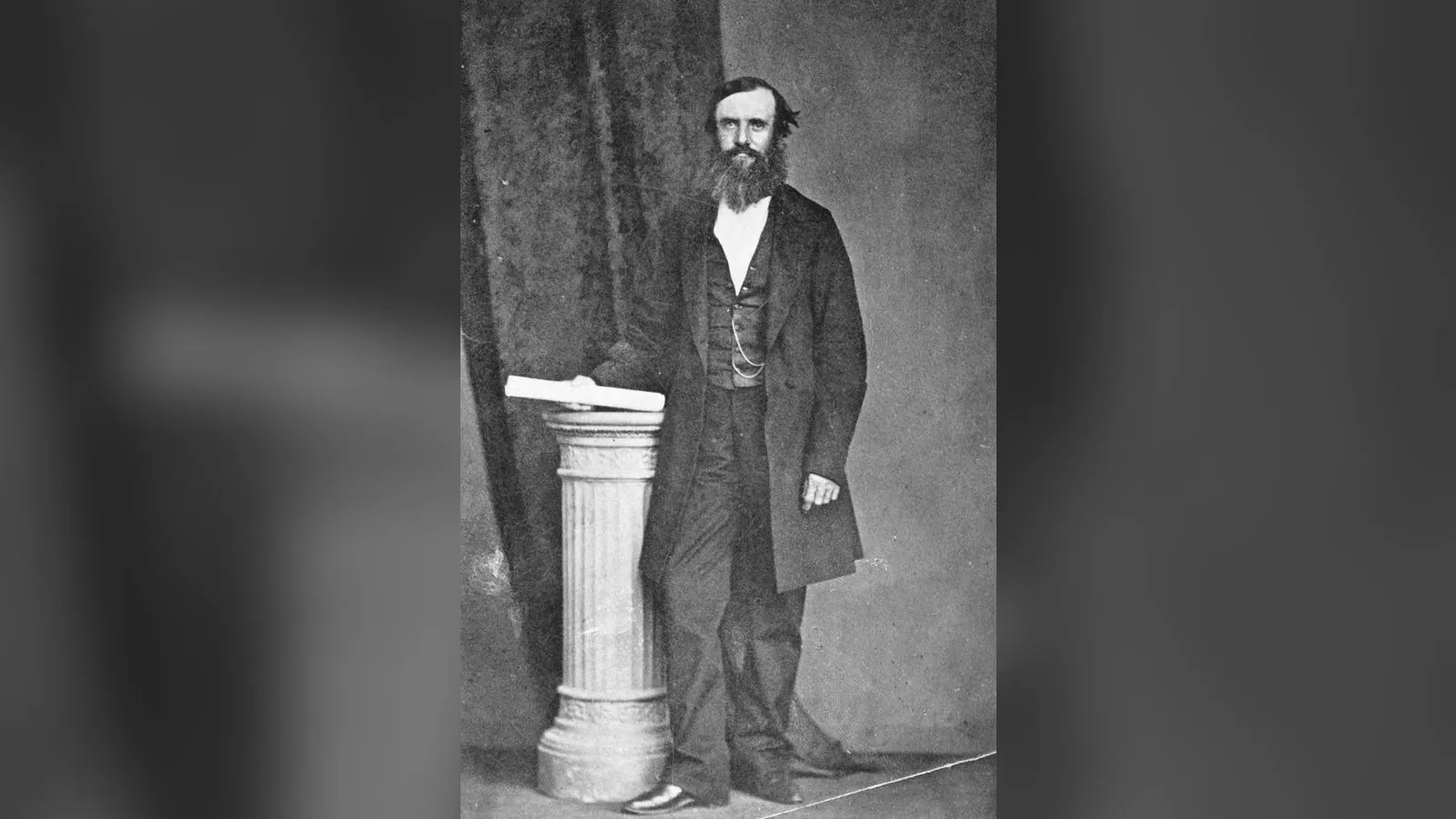

John McDouall Stuart (1815–1866): The Explorer Who Crossed Australia and Lost Not a Single Man
Contents
TL;DR
- Established/Documented: John McDouall Stuart, a Fife-born surveyor, led six expeditions into the interior of Australia between 1858 and 1862, culminating in the first successful south-to-north crossing of the continent and back — a genuine world-first achievement completed without losing a single member of his party to the journey itself.
- Established/Documented: Stuart's achievement stands in stark and well-documented contrast to the larger, far better-funded rival Burke and Wills expedition, which reached the Gulf of Carpentaria around the same period at a cost of seven lives, including both expedition leaders — a comparison this article treats directly, since Stuart's methodical, minimal-supply approach to expedition leadership was a deliberate response to lessons learned from an earlier disaster and produced measurably safer outcomes.
- Established/Documented: Stuart's expeditions were not free of serious conflict with Aboriginal peoples — his third expedition was turned back in June 1860 by a determined and effective attack from Warramunga people at what became known as Attack Creek — though multiple assessments note that Stuart, compared with some contemporary explorers, generally sought to avoid violent confrontation rather than provoke it.
- Established/Documented: The physical cost of Stuart's expeditions was severe and cumulative rather than confined to any single crisis: repeated bouts of scurvy, progressive vision loss, and general physical deterioration left him, by the end of his final expedition, so incapacitated that he had to be carried roughly 900 kilometres on a litter slung between two horses — and he never recovered his health, dying in London within four years of completing his greatest achievement.
- Established/Documented: Stuart's route directly determined the later path of the Australian Overland Telegraph Line (1871–72) and the modern Stuart Highway, making his exploration not merely a symbolic first but a decision with lasting, practical infrastructure consequences for Australia that persist to this day.
Key Facts
- Born
- 7 September 1815, Dysart, Fife, Scotland
- Died
- 5 June 1866, London, England (aged 50)
- Occupation
- Surveyor, explorer
- Known for
- First successful south-to-north crossing of the Australian continent and return (1861–62)
- Key achievement
- Completing the transcontinental crossing that the larger, costlier Burke and Wills expedition failed to survive, without losing a single member of his own party
- Notable relationships
- Mentor and early employer Captain Charles Sturt; second-in-command William Kekwick; expedition backers William Finke and the Chambers brothers
- Honours
- Royal Geographical Society Patron's Medal and gold watch — only the second person, after David Livingstone, to receive both
- Legacy
- Route followed by the Australian Overland Telegraph Line and the modern Stuart Highway; Central Mount Stuart, Alice Springs (originally named Stuart), and numerous other Australian place names
Scottish Impact Index (SI Score)
- Global Influence
- 4/10
- Enduring Relevance
- 7/10
- Material Contribution
- 3/10
- Exceptional Achievement
- 5/10
- Lasting Legacy
- 4/10
- Recognition
- 2/10
25/60
Ranked =133rd of 200 in Great Scots
A Note on Claims and Evidence
This article tiers claims by evidential strength. Established/Documented claims rest on multiple independent, well-corroborated sources, including Stuart's own expedition journals and detailed modern historical reconstruction. John McDouall Stuart's story requires comparatively little myth-correction of the "wrongly credited" variety common elsewhere in this series — his achievement is genuine, well documented, and, if anything, underappreciated relative to the more famous but far more disastrous Burke and Wills expedition. The more important editorial task here is presenting the genuine, serious physical cost of his expeditions and the documented instances of violent conflict with Aboriginal peoples honestly, rather than allowing the "successful, no deaths" framing to imply a straightforwardly comfortable or uncomplicated undertaking.
Timeline
Born 7 September in Dysart, Fife, Scotland, the youngest of nine children of a retired army captain turned customs officer; loses both parents during adolescence.
Graduates as a civil engineer from the Scottish Naval and Military Academy.
Arrives in South Australia aboard the barque Indus, aged 23, finding the colony still a rudimentary outpost of tents and simple wooden huts.
Joins Captain Charles Sturt's central Australian expedition as a draughtsman; Sturt's second-in-command dies of scurvy during the expedition, and both Sturt and Stuart suffer severely from the disease themselves, with Sturt never fully recovering and Stuart incapacitated for a year afterward.
Works as a private surveyor across remote South Australia, eventually working for pastoralists William Finke and the Chambers brothers on exploration, mineral prospecting, and land survey work.
Leads his first major backed expedition, travelling roughly 2,400 kilometres with minimal provisions and just two companions; discovers a crucial chain of waterholes later named Chambers Creek (Stuart Creek); receives a Royal Geographical Society gold watch.
Second expedition pushes toward the South Australia–Northern Territory border before a shortage of horseshoes forces retreat; discovers "The Spring of Hope," a reliable artesian water source.
Third expedition, with only two companions (William Kekwick and Benjamin Head), reaches what Stuart calculates as the centre of the continent on 22 April, later named Central Mount Stuart. Continuing north, the party is attacked by Warramunga people at what becomes known as Attack Creek on 26 June, forcing a retreat; all three men suffer scurvy on the return journey. Stuart receives the Royal Geographical Society's Patron's Medal.
The rival Burke and Wills expedition departs Melbourne, considerably better funded than Stuart's efforts.
Fourth expedition, now with government backing (ten armed men and £2,500), reaches Attack Creek again on 24 April without incident, then pushes to Newcastle Waters before provisions and deteriorating conditions force a return on 1 July.
Fifth and final expedition. Shortly after departure, Stuart is seriously injured by a rearing horse, delaying the start by five weeks. The party reaches the Mary River on 1 July 1862 and, on 24 July 1862, reaches the shore of Van Diemen Gulf near present-day Darwin — the first successful south-to-north crossing of the Australian continent. Stuart's health, severely compromised by cumulative scurvy and near-total vision loss, deteriorates so badly on the return journey that he must be carried roughly 900 kilometres on a horse-slung litter.
Departs Australia aboard the Indus, returning to Britain to prepare his journals for publication and visit family in Scotland.
Dies in London, aged 50; buried at Kensal Green Cemetery.
The Australian Overland Telegraph Line is constructed substantially along Stuart's route.
The main road from Port Augusta to Darwin, following essentially the same route, is formally named the Stuart Highway.
Details
A Formative Disaster Under Charles Sturt
John McDouall Stuart's approach to expedition leadership — an approach that would later distinguish his record so sharply from the catastrophic Burke and Wills expedition — was forged directly through personal experience of disaster rather than developed in the abstract. As a young draughtsman on Captain Charles Sturt's 1844 central Australian expedition, Stuart witnessed the death of the expedition's second-in-command from scurvy, and both he and Sturt himself suffered severely from the same disease; Sturt never fully recovered his health, and Stuart himself was left incapacitated for a full year afterward. This direct, personal encounter with the consequences of poorly managed supply and provisioning appears to have shaped Stuart's subsequent, deliberately minimalist approach to expedition planning — small parties, light supply trains, and rapid travel intended to minimise the duration of exposure to the harsh interior — a philosophy this article credits as the direct, traceable cause of his later expeditions' markedly better safety record.
Building Toward the Centre of the Continent
Stuart's first three backed expeditions, from 1858 to 1860, were conducted on a genuinely minimal scale — his first involved just two companions, half a dozen horses, a pocket compass, and a watch, covering roughly 2,400 kilometres over four months. This was not merely frugality but a deliberate operating philosophy, and it proved effective: his discovery of reliable water sources, including Chambers Creek and "The Spring of Hope," built the practical infrastructure of knowledge that made his subsequent, more ambitious expeditions possible. His third expedition, in 1860, produced his most celebrated early achievement, when his calculations placed the party at the geographic centre of the Australian continent on 22 April — a location later named Central Mount Stuart, a name Stuart himself had actually intended to honour his mentor Sturt rather than himself. Modern geographic measurement no longer recognises this precise point as the continent's true centre, but the location retains genuine symbolic and historical significance, and the achievement itself was recognised at the time as comparable in stature to contemporary geographical landmarks such as John Hanning Speke's identification of the source of the Nile — earning Stuart the Royal Geographical Society's Patron's Medal, making him only the second person, after David Livingstone, to receive both that medal and the Society's gold watch.
Attack Creek: A Genuine, Documented Confrontation
This same 1860 expedition also produced the clearest and most serious documented instance of violent conflict between Stuart's party and Aboriginal peoples, and this article states it directly rather than allowing the broader "generally got on well" characterisation of Stuart's relations with Aboriginal communities to obscure a specific, real episode. Pushing north from Tennant Creek in late June 1860, Stuart's severely weakened party — one member, Benjamin Head, had lost half his body weight — encountered determined resistance from local Warramunga people at a location subsequently named Attack Creek. On 26 June, the camp was attacked: one member stole a shoeing rasp (which Stuart recovered), boomerangs were thrown at the horses, and the surrounding grass was deliberately set alight. Facing a party already critically weakened by scurvy and exhaustion, and judging further confrontation too dangerous, Stuart made the decision that night to abandon the attempt entirely and turn south — a retreat forced directly by effective Aboriginal resistance, not merely by terrain or supply difficulties as with some of his other setbacks. This article presents this episode plainly as a documented defeat inflicted by the Warramunga people defending their own land, rather than softening it into a vague "difficulty with the local population."
It is also accurate, and worth including for balance rather than to excuse the Attack Creek episode, that multiple modern historical assessments describe Stuart as having generally sought to avoid violent confrontation with Aboriginal peoples he encountered, in contrast with the more aggressive approach some contemporary explorers took — a distinction this article notes as a genuine, if imperfect, difference in conduct, not as evidence that his expeditions were free of serious conflict.
Racing — Unknowingly — Against Burke and Wills
Stuart's third and fourth expeditions unfolded in close, often coincidental temporal parallel with the far more famous, far better-funded Victorian government expedition led by Robert O'Hara Burke and William John Wills, which departed Melbourne on 20 August 1860, mere days after Stuart's own return from his third expedition's aborted attempt. The contrast in resourcing is itself notable and well documented: Burke and Wills' expedition cost the Victorian government roughly £9,000, compared with the £2,500 the South Australian government eventually committed to Stuart's fourth expedition. On 11 February 1861, in a coincidence of timing rather than any direct competition, Stuart's fourth-expedition party reached the MacDonnell Ranges on the very same day that Burke and Wills reached the Gulf of Carpentaria — the goal of their own expedition. The outcomes that followed could scarcely have diverged more sharply: Burke, Wills, and most of their party died on the return journey, with only one member, John King, surviving, sustained directly by the assistance of Aboriginal people; Stuart's own fourth expedition, by contrast, returned without losing a single member, its own overambition checked in time by Stuart's characteristic caution rather than pressed to a fatal conclusion. This article treats this contrast as directly and legitimately relevant to assessing Stuart's leadership, not as incidental context: the same harsh interior terrain produced catastrophically different outcomes depending substantially on the two expeditions' differing approaches to risk, supply, and timing.
The Successful Crossing, and Its Physical Cost
Stuart's fifth and final expedition, departing in October 1861, ultimately achieved the goal that had eluded him twice before: on 24 July 1862, the party reached the shore of Van Diemen Gulf near present-day Darwin, completing the first successful south-to-north crossing of the Australian continent. The expedition was not without earlier crisis — Stuart himself was seriously injured before even properly departing, when a rearing horse struck him in the temple and trampled his hand, dislocating two finger joints and very nearly necessitating amputation, a setback that delayed the expedition's true start by five weeks.
The triumphant crossing itself, however, came at a severe and cumulative physical cost that this article gives full and direct weight, rather than treating as a minor footnote to an otherwise purely celebratory achievement. Years of repeated scurvy, malnutrition, and the eye condition trachoma had, by the expedition's end, left Stuart in such poor physical condition — described in the documented record as having rendered him "practically blind, in pain and in such poor health" — that for approximately 900 kilometres of the return journey, he had to be transported on a litter suspended between two horses, unable to travel any other way. This was not a dramatic, single-crisis injury of the kind that produces a memorable anecdote, but a slow, grinding physical collapse accumulated across six separate expeditions over four years — and Stuart never recovered from it. He returned to Britain in 1864 to prepare his journals for publication and died in London in June 1866, at the age of 50, less than four years after completing the achievement for which he is remembered.
A Legacy Measured in Infrastructure, Not Just Symbolism
Unlike some historical "firsts" whose primary value is symbolic, Stuart's route had direct, lasting, and practical consequences for Australian infrastructure that persist to the present day. The Australian Overland Telegraph Line, constructed in 1871–72 to connect Australia to the international telegraph network via Darwin, was built substantially along the path Stuart had pioneered — meaning his exploration did not merely establish a geographical fact but directly determined where a critical piece of national communications infrastructure would actually be built. The same corridor was later formalised as the principal road route from Port Augusta to Darwin, named the Stuart Highway in 1942, which remains one of Australia's most significant highways today. This combination — genuine geographical achievement translating directly into enduring national infrastructure — represents a considerably more substantial and lasting form of historical consequence than commemorative naming alone.
Death and a Broader Commemorative Legacy
Stuart died in London on 5 June 1866 and was buried at Kensal Green Cemetery, his grave later refurbished in 2011. His commemorative legacy across Australia is genuinely extensive: Central Mount Stuart, Stuart Creek, Kekwick Ponds (named for his loyal second-in-command), the Stuart Highway, Stuart Park in Darwin, and numerous other geographic and civic namesakes, alongside statuary in Adelaide and Darwin and a blue plaque at his final London residence. The town originally named Stuart in his honour was renamed Alice Springs in 1933, a detail worth noting as a small but genuine diminishment of his direct namesake presence in one of the Northern Territory's most significant settlements, even as his broader legacy across the region's infrastructure and place names remains substantial.
Did You Know?
- John McDouall Stuart's minimalist, rapid-travel approach to expedition leadership was a direct, deliberate response to witnessing a fatal scurvy outbreak on Charles Sturt's 1844 expedition, on which Stuart himself served as a young draughtsman.
- Stuart's third expedition reached what he calculated as the geographic centre of Australia in April 1860 — a location he intended to name after his mentor Sturt, though it became known instead as Central Mount Stuart.
- Stuart's party was turned back from its 1860 attempt to cross the continent by a determined attack from Warramunga people at what became known, directly as a result, as Attack Creek.
- Stuart was only the second person, after David Livingstone, to receive both the Royal Geographical Society's Patron's Medal and its gold watch.
- Stuart's fourth expedition reached the MacDonnell Ranges on the very same day, 11 February 1861, that the rival Burke and Wills expedition reached the Gulf of Carpentaria — a coincidence of timing between two entirely separate, unconnected expeditions.
- The Burke and Wills expedition cost roughly £9,000 and ended in the deaths of seven people, including both leaders; Stuart's comparable fourth expedition cost around £2,500 and returned without losing a single member.
- By the end of his successful 1862 crossing, Stuart was so physically debilitated by cumulative scurvy and near-total vision loss that he had to be carried roughly 900 kilometres on a litter slung between two horses.
- Stuart's exploration route directly determined the path of the 1871–72 Australian Overland Telegraph Line and, later, the modern Stuart Highway — a rare case of a 19th-century expedition route becoming permanent national infrastructure.
- The town originally named Stuart in his honour was renamed Alice Springs in 1933.
Frequently Asked Questions
1Did John McDouall Stuart successfully cross Australia?
Yes. His fifth expedition reached the northern coast near present-day Darwin on 24 July 1862, completing the first successful south-to-north crossing of the Australian continent and safe return — an achievement the larger, better-funded rival Burke and Wills expedition failed to survive.
2How does Stuart's expedition compare to the more famous Burke and Wills expedition?
Very favourably in terms of outcomes, despite Stuart's expeditions being far more modestly funded. Burke and Wills' roughly £9,000 expedition ended in the deaths of seven people, including both leaders, with only one survivor. Stuart's comparable fourth expedition, costing around £2,500, returned without losing a single member, a direct result of his deliberately cautious, minimal-supply approach to expedition leadership.
3Did Stuart's expeditions involve violent conflict with Aboriginal peoples?
Yes, at least once seriously and directly. His third expedition was forced to turn back in June 1860 after a determined attack by Warramunga people at what became known as Attack Creek. Multiple assessments note that Stuart generally sought to avoid violent confrontation compared with some contemporary explorers, but this specific episode was a genuine, documented defeat inflicted by Aboriginal resistance.
4What physical toll did the expeditions take on Stuart?
A severe and cumulative one. Repeated scurvy, malnutrition, and progressive vision loss from conditions including trachoma left him so debilitated by the end of his final expedition that he had to be carried roughly 900 kilometres on a horse-slung litter. He never recovered his health and died within four years of his greatest achievement.
5Why is Central Mount Stuart named after him, when he intended to name it after someone else?
Stuart, on reaching what he calculated as the geographic centre of the continent in 1860, intended to name the location "Mount Sturt" in honour of his mentor Charles Sturt, but it became known instead as Central Mount Stuart, after Stuart himself.
6What lasting practical impact did Stuart's route have on Australia?
A substantial one. The Australian Overland Telegraph Line, built in 1871–72 to connect Australia to the international telegraph network, followed substantially the same route Stuart had pioneered, and the modern Stuart Highway from Port Augusta to Darwin continues to follow essentially the same corridor today.
7How did John McDouall Stuart die?
He died in London on 5 June 1866, aged 50, having never recovered from the severe cumulative physical toll of his expeditions. He was buried at Kensal Green Cemetery.
8What honours did Stuart receive for his achievements?
He received the Royal Geographical Society's Patron's Medal and, earlier, a gold watch from the same Society — making him only the second person, after David Livingstone, to receive both honours.
9Is Alice Springs named after John McDouall Stuart?
Indirectly, with a complication. The settlement was originally named Stuart in his honour, but was renamed Alice Springs in 1933.
10What made Stuart's approach to exploration different from contemporaries like Burke and Wills?
A deliberate emphasis on small parties, minimal supplies, and rapid travel, developed directly from Stuart's own earlier experience of a fatal scurvy outbreak on Charles Sturt's 1844 expedition — an approach that, while still exacting a severe personal physical toll on Stuart himself, avoided the catastrophic loss of life that characterised the larger, more heavily provisioned Burke and Wills expedition.
Sources and Further Reading
Primary / Institutional
- John McDouall Stuart, expedition journals, prepared for publication in Britain (1864–66)
- Royal Geographical Society records, Patron's Medal and gold watch citations
- John McDouall Stuart Society: Biography and expedition records
Scholarly / Reference
- Wikipedia: "John McDouall Stuart"
- Britannica: "John McDouall Stuart"
- SA History Hub: "John McDouall Stuart"
- The Australian Museum: "John McDouall Stuart"
- State Library of South Australia: John McDouall Stuart LibGuide
General / Popular
Caveats: Myths and Disputed Claims
- "Stuart's expeditions were free of serious conflict with Aboriginal peoples." Untrue, and this article states the specific, documented exception directly: his third expedition was forced into retreat by a determined and effective attack from Warramunga people at Attack Creek in June 1860. His generally more cautious approach relative to some contemporaries does not amount to an absence of violent confrontation.
- "Stuart and Burke and Wills were in direct competition for the same prize." This overstates the relationship somewhat; the two expeditions were separately funded, by different colonial governments, with somewhat different specific objectives, and operated largely independently of direct knowledge of each other's progress, though their overlapping timeframes and starkly different outcomes make a legitimate and instructive comparison.
- "Central Mount Stuart is officially recognised as the exact geographic centre of Australia." It is not, by modern geographic measurement, though it retains genuine symbolic and historical significance as the point Stuart's own 1860 calculations identified, and Stuart himself had intended to name it after his mentor Sturt rather than himself.
- "Stuart's achievement was purely symbolic." This understates its practical significance considerably. His route directly determined the path of the 1871–72 Australian Overland Telegraph Line and the modern Stuart Highway, giving his exploration a lasting, concrete infrastructure legacy beyond its historical "first" status.
Card 083 · Great Scots