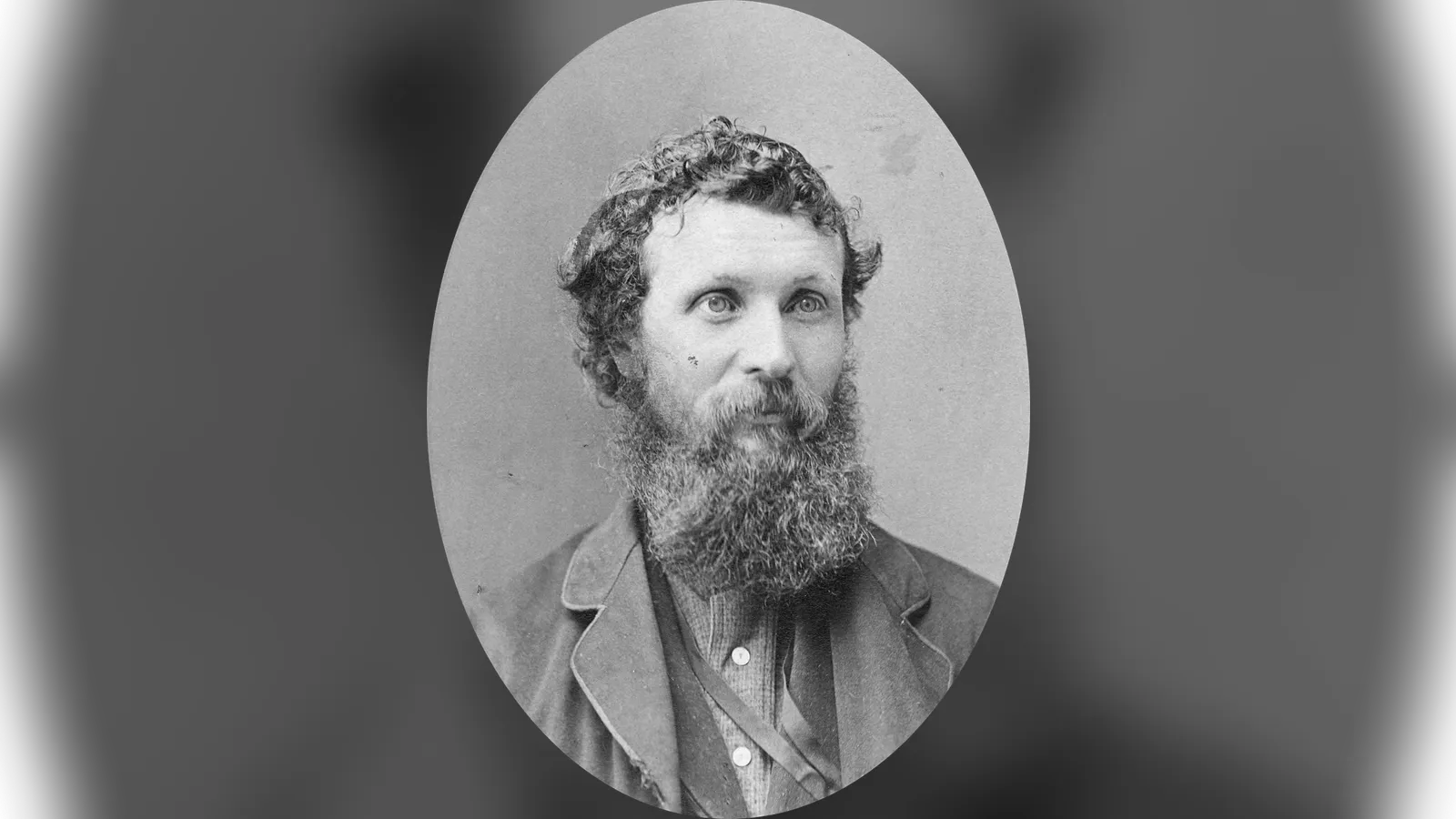

John Muir (1838–1914): The Father of the National Parks, and a Contested Legacy
Contents
TL;DR
- Established/Documented: John Muir, born in Dunbar, Scotland, and raised from age eleven in Wisconsin, became the single most influential advocate for wilderness preservation in American history, directly driving the creation of Yosemite National Park (1890) and founding the Sierra Club (1892), which he led until his death.
- Established/Documented: Muir's direct advocacy to President Theodore Roosevelt during a famous 1903 camping trip in Yosemite substantially shaped Roosevelt's subsequent conservation programme, which went on to establish or expand numerous national parks, monuments, and forests — a genuine and traceable line of influence from one man's persuasion to national policy.
- Established/Documented: Muir's final major public campaign, to prevent the damming of the Hetch Hetchy Valley within Yosemite National Park to supply water to San Francisco, ended in defeat when Congress approved the reservoir in 1913, a loss that visibly devastated Muir and which he did not live to see reversed — it never was.
- Documented/Disputed: In 2020, the Sierra Club, the organisation Muir founded, formally apologised for and disavowed racist statements attributed to him regarding Native American and Black people, specifically citing his writing that Native Americans "seemed to have no right place in the landscape" of the wilderness he sought to preserve; Muir defenders and some of his own later writing, particularly from his Alaska travels, complicate this picture with documented expressions of genuine admiration for specific Indigenous peoples he encountered, and this article presents both strands of evidence rather than resolving the dispute in either direction.
- Disputed/Shared: The wilderness preservation model Muir championed — protecting "pristine," unpeopled nature — is now widely understood by historians to rest on a historical fiction, since the landscapes he sought to preserve, including Yosemite Valley itself, had been shaped and inhabited by Indigenous peoples for millennia before their forced removal, a removal that predates and postdates rather than directly coincides with Muir's personal advocacy, but that his framework of "untouched wilderness" helped justify and sustain.
Key Facts
- Born
- 21 April 1838, Dunbar, East Lothian, Scotland
- Died
- 24 December 1914, Los Angeles, California, USA (aged 76)
- Occupation
- Naturalist, writer, conservationist
- Known for
- Advocacy leading to the creation of Yosemite National Park; founding the Sierra Club; influencing Theodore Roosevelt's conservation policy
- Key achievement
- Establishing wilderness preservation as a serious American political cause, with direct, traceable influence on the creation of the U.S. national park system
- Notable relationships
- Wife Louie Wanda Strentzel Muir; collaborator Robert Underwood Johnson; President Theodore Roosevelt
- Legacy
- Sierra Club (founded 1892); Yosemite, Sequoia, and other national parks; the John Muir Trail; over 300 articles and ten major books; a contested and actively debated 21st-century reassessment of his views on race and Indigenous peoples
Scottish Impact Index (SI Score)
- Global Influence
- 9/10
- Enduring Relevance
- 9/10
- Material Contribution
- 4/10
- Exceptional Achievement
- 8/10
- Lasting Legacy
- 9/10
- Recognition
- 7/10
46/60
Ranked =21st of 200 in Great Scots
A Note on Claims and Evidence
This article tiers claims by evidential strength. Established/Documented claims rest on multiple independent, well-corroborated sources. disputed claims involve genuine, live historical and organisational disagreement — in Muir's case, a disagreement serious enough that the very institution he founded has taken an official, public position on it. This article treats the question of Muir's views on race and Indigenous peoples as a matter requiring direct, careful evidence-presentation rather than either uncritical celebration or a flattening dismissal. Both genuinely warm and specific statements of admiration for Indigenous peoples he encountered, and genuinely troubling statements dismissing their place in the landscape, appear in the documented record, often from different periods of his life, and this article presents both rather than selecting the version that makes for a tidier story.
Timeline
Born 21 April in Dunbar, East Lothian, Scotland.
Emigrates with his family to Wisconsin at age eleven, where his father, a strict and demanding figure, works the family relentlessly on their farm; Muir's rare free time is spent exploring nature and developing early mechanical inventions, including handmade clocks.
Exhibits his inventions at the Wisconsin State Fair, gaining recognition, and subsequently enrols at the University of Wisconsin, which he leaves after roughly three years without completing a degree.
Suffers a temporary blinding workplace eye injury in Indianapolis, an event that redirects his life's focus toward nature; upon recovering his sight, he undertakes a long walk from Indianapolis to the Gulf of Mexico.
Arrives in San Francisco, California, after further travel through Cuba and Panama, and makes his way to the Sierra Nevada.
Discovers evidence of glaciers in the Yosemite region and develops influential theories, later validated, about Yosemite Valley's glacial formation, earning recognition from established scientists.
Begins publishing his "Studies in the Sierra" articles, launching his career as a widely read nature writer.
Marries Louie Wanda Strentzel; the couple settle at and manage her family's fruit ranch in Martinez, California, which provides Muir with financial stability for his subsequent travels and writing.
Travels extensively beyond California, including to Alaska, Australia, Africa, South America, Europe, and Asia, producing further writing informed by these journeys.
Yosemite National Park is established by Congress, substantially as a result of Muir's advocacy in collaboration with Century magazine editor Robert Underwood Johnson.
Founds the Sierra Club "to do something for wildness and make the mountains glad," serving as its first president until his death.
Publishes Our National Parks, which attracts the attention of President Theodore Roosevelt.
Guides Roosevelt on a multi-day camping trip in Yosemite, during which the two men discuss conservation strategy; the trip substantially shapes Roosevelt's subsequent, far-reaching conservation programme.
Leads the Sierra Club's campaign opposing the damming of the Hetch Hetchy Valley, within Yosemite National Park, to supply water to San Francisco.
Congress approves the Hetch Hetchy dam over Muir's sustained opposition, a defeat that visibly affects him in his final year.
Dies in a Los Angeles hospital following a brief illness, aged 76.
The Sierra Club formally apologises for and publicly disavows racist statements attributed to Muir regarding Native American and Black people, part of a broader organisational reckoning with its founding-era history.
Details
A Scottish Childhood Cut Short by Emigration and Hard Labour
John Muir's path to becoming America's most influential wilderness advocate began, somewhat ironically, with a childhood defined by relentless agricultural labour rather than free access to nature. Born in Dunbar, Scotland, in 1838, he emigrated with his family to Wisconsin at age eleven, where his father ran the family farm with a severity that multiple biographical accounts describe as harsh and demanding — young Muir's exposure to the natural world came chiefly in the scarce breaks this regime allowed, during which he also developed a genuine and independently notable mechanical inventiveness, building working wooden clocks and other devices that he later exhibited, to real acclaim, at the Wisconsin State Fair in 1860. This combination — hard physical labour, minimal formal schooling, and self-directed curiosity — produced a man whose later reverence for wild, unregulated nature reads in part as a direct reaction against the disciplined, cultivated farmland of his own childhood.
An Accidental Vocation
Muir's redirection toward the career for which he is remembered came through genuine misfortune: a workplace injury in an Indianapolis carriage factory in 1867 left him temporarily blind, an experience he later credited with reorienting his priorities toward the natural world he had nearly permanently lost the ability to see. Upon recovering his sight, he undertook an extended walk from Indianapolis to the Gulf of Mexico, followed by further travel that brought him to San Francisco in March 1868 and, soon after, to the Sierra Nevada — the mountain range that would define the rest of his working life, and which he famously described, in a phrase that remains closely associated with his legacy, as deserving to be called not the Sierra Nevada, or "Snowy Range," but the "Range of Light."
Scientist as Well as Poet
It is worth stating directly, since Muir is often remembered primarily as a lyrical nature writer, that his early scientific work in Yosemite was genuinely substantive and independently significant. His 1871 identification of evidence for glacial activity in Yosemite Valley, and his resulting theory of the valley's glacial formation, were serious contributions that gained him recognition from established contemporary scientists, at a time when this explanation for Yosemite's dramatic geology was not yet the accepted consensus. His subsequent decades of writing — ultimately more than 300 articles and ten major books — combined this genuine natural-historical observation with an explicitly spiritual, almost religious register describing wilderness as a site of transcendent value, a combination that proved enormously influential in shaping how subsequent generations of Americans thought and wrote about nature.
From Writer to Political Force
Muir's transition from nature writer to effective political advocate was neither automatic nor inevitable, and this article credits it as a genuinely significant achievement distinct from his writing talent alone. Working in close collaboration with Robert Underwood Johnson, editor of Century magazine, Muir built sustained public and political pressure that led directly to Congress establishing Yosemite National Park in 1890. Two years later, he founded the Sierra Club, an organisation explicitly conceived as a vehicle for ongoing wilderness advocacy rather than a one-off campaign, and served as its president for the rest of his life — a structural, institutional legacy that has proven considerably more durable than any single piece of legislation, since the Sierra Club remains one of the most significant environmental organisations in the United States more than a century later.
The Roosevelt Camping Trip
The single episode most responsible for Muir's outsized historical influence is his 1903 camping trip with President Theodore Roosevelt in Yosemite, an encounter with a direct, traceable line to some of the most significant conservation policy of the early 20th century. Roosevelt, who had read and been genuinely moved by Muir's 1901 book Our National Parks, spent several days camping with Muir with minimal formal entourage, during which the two men discussed conservation strategy directly. Roosevelt's subsequent conservation programme — which substantially expanded the national forest system and established numerous additional national monuments and parks during his presidency — is widely and credibly understood by historians to have been meaningfully shaped by this direct personal encounter, a genuinely unusual case of one private citizen's persuasive access to executive power producing lasting institutional consequence.
Defeat at Hetch Hetchy
Muir's final major campaign ended not in triumph but in a defeat he did not live to see reversed, and this article gives that defeat full weight rather than treating his career as an uninterrupted string of successes. The Hetch Hetchy Valley, within Yosemite National Park itself and, by multiple contemporary accounts including Muir's own, a landscape of comparable beauty to Yosemite Valley, was targeted by the city of San Francisco for damming to create a municipal water reservoir. Muir and the Sierra Club fought this proposal for roughly seven years, arguing directly against the principle of damming land within a national park for municipal utility purposes. Congress approved the dam in 1913, a decision Muir experienced, by multiple accounts, as a severe personal and professional blow in the final year of his life; he died the following December, and the Hetch Hetchy reservoir remains in place today, the defeat never subsequently reversed.
A Contested Legacy: What the Documented Record Actually Shows
No responsible account of John Muir's legacy can avoid the substantial and genuinely live controversy over his views on race and Indigenous peoples, formally acknowledged in 2020 by the Sierra Club itself — the organisation Muir founded — which issued a public statement disavowing racist statements attributed to him regarding both Native American and Black people. The Sierra Club's then-executive director, Michael Brune, framed this as necessary "truth-telling" about the organisation's history, explicitly noting that Muir's own prominence meant his documented words "carry an especially heavy weight," and the apology extended to other early Sierra Club leaders who had advocated positions including eugenics and explicit white supremacy.
The specific documentary record on Muir himself is genuinely mixed rather than uniform, and this article presents both strands directly rather than resolving the tension artificially. On one side: Muir's earlier writing, particularly from his first California years, includes passages describing Native Americans he encountered in dismissive and othering terms, and critics have specifically cited his writing suggesting Native Americans "seemed to have no right place in the landscape" of the wilderness he sought to preserve and present as untouched — language that directly supported, whether intentionally or not, a model of wilderness preservation premised on the absence of the very people who had inhabited and shaped those landscapes for millennia before European contact. On the other side: Muir's later writing, particularly from his Alaska travels, contains genuinely warm, specific, and comparative statements of admiration for Indigenous peoples he encountered there — he wrote of the Tlingit that "Uncle Sam has no better subjects, white, black, or brown, or any more deserving his considerate care," and of Inupiat people that they were "better behaved than white men, not half so greedy, shameless or dishonest," alongside praise for Indigenous spiritual understanding that he suggested came "nearer to the truth of an immanent living Principle in all matter" than institutional Christianity managed. Defenders of Muir's record, including some Indigenous-perspective historical assessments, argue his views evolved meaningfully over his lifetime, and dispute the more specific claim that Muir personally and directly orchestrated or advocated Indigenous removal from what became protected parkland, noting that much of the actual removal from areas including Yosemite Valley itself occurred either before Muir's 1849 arrival in America or after his 1914 death, rather than as a direct, documented consequence of his personal campaigning.
This article does not attempt to resolve this dispute into a single verdict, because the primary institutional body with the clearest standing to assess it — the Sierra Club itself — has already concluded that Muir's documented statements warrant formal disavowal, while the fuller documentary record, including his own later writing, shows genuine complexity that a simple "racist" or "not racist" label does not fully capture. What is not genuinely disputed, and what this article states as an independent, separate point from the question of Muir's personal views, is the broader historical critique that the very concept of "pristine wilderness" that underpinned Muir's entire preservationist philosophy rests on an inaccurate premise: the landscapes he sought to protect as untouched nature had in fact been actively inhabited, managed, and shaped by Indigenous peoples for thousands of years, and the American national park model Muir did more than perhaps any other individual to establish was built on, and helped popularly justify, the prior and ongoing displacement of those peoples from their own ancestral land — a structural critique, as the historian Richard White has put it, that "the way we created the wilderness areas we now rightly prize was racist," independent of any specific verdict on Muir's personal character.
Death and an Institutional Afterlife
Muir died in a Los Angeles hospital on 24 December 1914, following a brief illness, less than two years after the Hetch Hetchy defeat that had so affected him. His institutional legacy has proven exceptionally durable and, in some respects, more consequential than his own lifetime achievements: the Sierra Club he founded remains one of the most significant environmental advocacy organisations in the United States; the national park system he was instrumental in establishing has expanded enormously since his death; and his extensive published writing continues to be read as a foundational text of American environmental thought. That same institutional durability is precisely why the Sierra Club's 2020 reassessment of his personal record carries real weight rather than being a marginal historical footnote — an organisation confronting the documented views of its own founder, rather than a later generation passing judgment on a figure with whom it has no ongoing institutional relationship.
Did You Know?
- John Muir was born in Dunbar, Scotland, and did not arrive in America until age eleven, meaning his formative early childhood, before his family's harsh Wisconsin farm years, was entirely Scottish.
- Before becoming a naturalist, Muir was a genuinely accomplished inventor, exhibiting handmade wooden clocks and other mechanical devices at the Wisconsin State Fair in 1860.
- A temporary blinding workplace injury in an Indianapolis factory in 1867 was the direct catalyst for Muir's redirection toward the natural world, after which he undertook a long walk from Indianapolis to the Gulf of Mexico.
- Muir's 1871 glacial theory of Yosemite Valley's formation was a genuine, independently significant scientific contribution, not merely poetic nature writing.
- Theodore Roosevelt's multi-day 1903 camping trip with Muir in Yosemite directly and substantially shaped Roosevelt's subsequent, historically significant conservation policy as president.
- Muir's final major campaign, against the damming of the Hetch Hetchy Valley, ended in defeat in 1913, a loss that visibly affected him in the final year of his life; the resulting reservoir remains in place today.
- In 2020, the Sierra Club — the organisation Muir himself founded — formally apologised for and disavowed racist statements attributed to him regarding Native American and Black people.
- Muir's own later writing, particularly from his Alaska travels, contains genuinely warm and specific praise for Indigenous peoples he encountered there, complicating a simple verdict on his personal views.
- The broader "pristine wilderness" model of conservation Muir championed is now widely understood by historians to rest on an inaccurate premise, since the landscapes he sought to preserve had in fact been inhabited and actively shaped by Indigenous peoples for millennia.
Frequently Asked Questions
1Was John Muir Scottish or American?
Both, in a meaningful sense. He was born in Dunbar, Scotland, in 1838 and emigrated to Wisconsin with his family at age eleven, building his entire adult career and reputation in the United States, which is where his conservation legacy is chiefly associated.
2What did John Muir actually achieve?
He was the single most influential individual advocate behind the establishment of Yosemite National Park (1890), founded the Sierra Club (1892) and led it until his death, and directly shaped President Theodore Roosevelt's subsequent, historically significant conservation policy through a personal 1903 camping trip in Yosemite.
3Why did the Sierra Club apologise for its own founder?
In 2020, the Sierra Club formally disavowed racist statements attributed to Muir regarding Native American and Black people, as part of a broader organisational reckoning with its founding-era history, which also included criticism of other early leaders who had explicitly advocated white supremacy and eugenics.
4Did John Muir hold racist views?
The documented record is genuinely mixed rather than uniform. Earlier writing, particularly from his first California years, includes dismissive and othering descriptions of Native Americans that the Sierra Club has specifically cited in its 2020 apology. Later writing, particularly from his Alaska travels, includes specific and warm expressions of admiration for Indigenous peoples he encountered. This article presents both strands rather than resolving the question into a single verdict.
5Did John Muir personally cause the removal of Native Americans from Yosemite or other parks?
This specific claim is disputed. Muir's defenders argue that much of the actual displacement of Indigenous peoples from areas that became protected parkland, including Yosemite Valley, occurred either before his arrival in America or after his death, rather than as a direct consequence of his personal campaigning. What is less disputed is the broader critique that the "pristine wilderness" conservation model he championed rested on treating inhabited, actively managed Indigenous land as untouched nature.
6Did Muir win his fight to protect Hetch Hetchy Valley?
No. Despite roughly seven years of sustained opposition, Congress approved the damming of Hetch Hetchy Valley in 1913, a defeat Muir did not live to see reversed. The resulting reservoir remains in place today.
7How did Muir influence Theodore Roosevelt's conservation policy?
Roosevelt, having read Muir's 1901 book Our National Parks, spent several days camping with Muir in Yosemite in 1903, during which the two men discussed conservation strategy directly. Roosevelt's subsequent expansion of national forests, monuments, and parks during his presidency is widely credited by historians to have been meaningfully shaped by this personal encounter.
8What is the Sierra Club, and is it still active today?
The Sierra Club is an environmental advocacy organisation Muir founded in 1892, which remains one of the most significant conservation organisations in the United States, making its own 2020 reassessment of Muir's personal record a matter of genuine ongoing institutional significance rather than a distant historical footnote.
9How did John Muir die?
He died in a Los Angeles hospital on 24 December 1914, following a brief illness, less than two years after the Hetch Hetchy defeat that had visibly affected him.
10Is John Muir still considered the "father of the national parks"?
He is still widely described this way given his direct, documented role in establishing Yosemite and influencing the broader national park system, though this article notes that title now sits alongside a genuine, actively debated reassessment of the exclusionary assumptions built into the wilderness preservation model he championed.
Sources and Further Reading
Primary / Institutional
- John Muir, Our National Parks (1901)
- John Muir's original journals and correspondence, held by the University of the Pacific
- Sierra Club: statement on John Muir and organisational history, 2020
- Sierra Club John Muir Exhibit: biography
Scholarly / Reference
- Wikipedia: "John Muir"
- Britannica: "John Muir"
- NBC News: "Sierra Club apologizes for founder John Muir's racist views"
- The Washington Post: "Sierra Club apologizes for founder John Muir's racist views"
General / Popular
- Santa Clara University: "John Muir" (Environmental Activists, Heroes, and Martyrs)
- Golden Gate National Parks Conservancy: "John Muir, Merely a Naturalist?"
- John Muir's Legacy: "Native Americans and John Muir" (advocacy site presenting a more defensive perspective on Muir's record; presented here alongside, not in place of, the Sierra Club's own critical assessment)
Caveats: Myths and Disputed Claims
- "John Muir's reputation as a racial progressive or as an unambiguous racist are both overstatements." The documented record contains both dismissive, othering statements about Native Americans in his earlier writing and genuinely warm, specific praise for Indigenous peoples in his later Alaska writing. This article presents both rather than adopting either extreme.
- "Muir personally orchestrated the removal of Native Americans from national parks." This specific, strong claim is contested by Muir's defenders and is not clearly established by the sources reviewed for this article; much of the actual displacement from areas including Yosemite occurred outside the direct window of Muir's personal campaigning. The more solidly established critique concerns the exclusionary assumptions built into the wilderness-preservation model itself, independent of Muir's individual culpability.
- "Muir's conservation career was an uninterrupted series of triumphs." His final major campaign, to prevent the Hetch Hetchy dam, ended in defeat in 1913, a loss that affected him severely in the last year of his life and was never subsequently reversed.
- "The Sierra Club's 2020 apology settles the historical question of Muir's character." It represents the considered, official position of the organisation with the clearest institutional standing to assess Muir's legacy, and this article treats it as significant and weighty evidence — but it is presented here alongside, not as a complete substitute for, the fuller and genuinely more complicated documentary record of Muir's own writing across his lifetime.
Card 080 · Great Scots