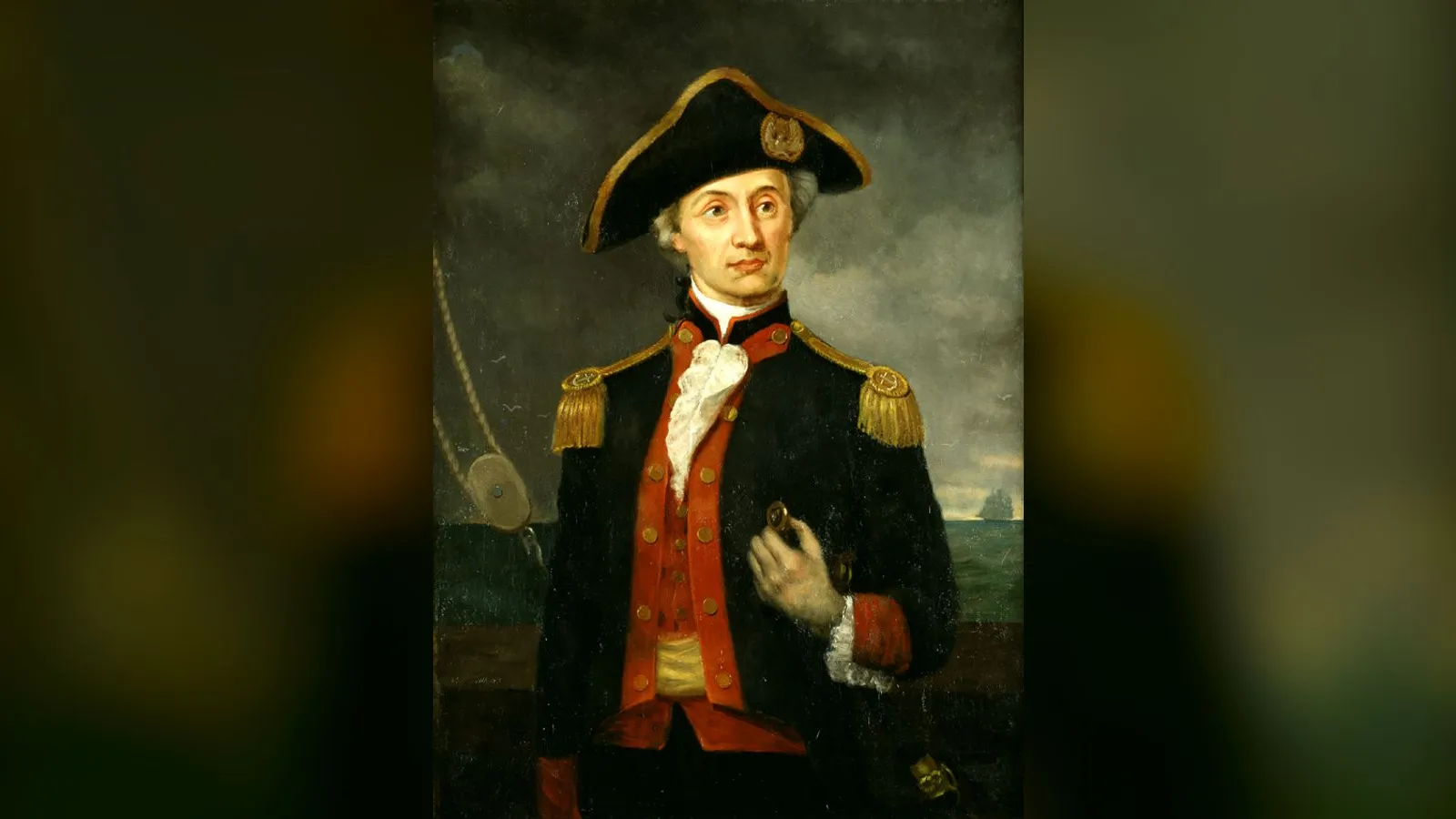

John Paul Jones (1747–1792)
Contents
TL;DR
- established Born John Paul in Arbigland, near Kirkbean on the Solway coast, Jones is widely regarded as the "Father of the American Navy" for his aggressive and often outnumbered naval campaigns during the American Revolutionary War.
- established His most famous engagement, the September 1779 battle between his ship Bonhomme Richard and the British HMS Serapis, ended in his capturing the British vessel after his own ship was so badly damaged it later sank — one of the most celebrated single-ship actions in naval history.
- disputed The famous line attributed to him during that battle, "I have not yet begun to fight," is widely repeated but is considered by most historians to be apocryphal or embellished after the fact, rather than a verified direct quotation.
- established Before his American career, Jones killed a mutinous sailor in a dispute near Tobago and fled to Virginia under a new surname, adopting the name "Jones" to escape prosecution — a serious act of lethal violence this article does not soften, whatever his later heroism.
- established In 1789, while serving as a rear admiral in Catherine the Great's Russian navy, Jones was accused of raping a ten-year-old girl in St Petersburg; medical and witness evidence supported the accusation, and although he was never formally convicted, he was effectively exiled from Russian service rather than prosecuted to conclusion. This article treats the accusation and its evidentiary basis directly, as a serious and credible allegation, rather than omitting it from an otherwise celebratory account.
Key Facts
- Born
- John Paul, 6 July 1747, Arbigland, near Kirkbean, Kirkcudbrightshire, Scotland
- Died
- 18 July 1792, Paris, France, aged 45
- Known for
- "Father of the American Navy"; victory of Bonhomme Richard over HMS Serapis, 1779
- Service
- Continental Navy (American Revolutionary War); later rear admiral, Imperial Russian Navy
- Burial
- United States Naval Academy Chapel, Annapolis, Maryland (reinterred 1906, after remains were lost for over a century)
Scottish Impact Index (SI Score)
- Global Influence
- 6/10
- Enduring Relevance
- 7/10
- Material Contribution
- 2/10
- Exceptional Achievement
- 5/10
- Lasting Legacy
- 5/10
- Recognition
- 4/10
29/60
Ranked =105th of 200 in Great Scots
A Note on Claims and Evidence
Jones's naval career, the outcome of the Bonhomme Richard–Serapis engagement, and the circumstances of his death and eventual reburial are extensively documented and treated as Established. The "I have not yet begun to fight" quotation is treated as Disputed — widely repeated in popular memory but regarded by most historians as unverified or embellished. His killing of a crew member near Tobago before fleeing to America is Established fact, as is the 1789 rape accusation against him in Russia, which is reported here with the supporting medical and witness evidence that exists, while noting plainly that no formal criminal conviction was ever secured.
Timeline
Born John Paul at Arbigland, near Kirkbean, Kirkcudbrightshire, the son of a gardener.
Goes to sea aged around 13, sailing out of Whitehaven.
Serves aboard merchant vessels, including at least one slave-trading ship, which he later described as part of "an abominable trade" before leaving that trade in 1768.
A crew member dies after being flogged on Jones's orders for mutiny while he commands a merchant vessel — an incident that damages his reputation.
Kills a mutinous sailor near Tobago in a dispute over wages; flees to Virginia to avoid prosecution and adopts the surname "Jones."
Joins the newly formed Continental Navy at the outbreak of the American Revolutionary War.
Leads a raid on Whitehaven, England — a rare instance of an armed American landing on British soil during the war.
Commanding Bonhomme Richard, defeats HMS Serapis in a brutal engagement off the English coast, despite his own ship sinking shortly afterward.
Having found no further employment in the American navy, enters the service of Catherine the Great of Russia, rising to rear admiral.
Accused of raping a ten-year-old girl, Katerina Stepanova, in St Petersburg; medical examination and witness testimony support the accusation; he is effectively exiled from Russian service rather than formally tried.
Settles in Paris in increasing obscurity.
Dies in Paris, aged 45, of kidney disease (interstitial nephritis); buried in a Protestant cemetery.
The Paris cemetery is built over, and the location of his remains is lost.
American ambassador Horace Porter locates and exhumes Jones's remains using old burial records.
Jones is reinterred with full honours at the United States Naval Academy Chapel, Annapolis, in a ceremony presided over by President Theodore Roosevelt.
Details
Origins on the Solway coast
John Paul — he added "Jones" only later, in America — was born in 1747 at Arbigland, near the small Kirkcudbrightshire village of Kirkbean, on Scotland's Solway coast. His father worked as a gardener on the Arbigland estate, and the cottage where Jones was born has since been preserved as a museum to his memory. He went to sea young, around age 13, sailing out of the English port of Whitehaven, and his early maritime career included service aboard merchant ships trading with Virginia, where an elder brother had already settled — the connection that would later shape the course of his life.
A trade he called "abominable," and a killing that forced him to flee
Jones's early career at sea included service aboard at least one slave-trading vessel, work he later described in his own words as part of "an abominable trade," which he left in 1768. His subsequent career as a merchant ship's officer was marked by real controversy: in 1770, a crew member died after being flogged on Jones's orders for mutiny, an incident that damaged his standing. More seriously, around 1773, in a wage dispute near the island of Tobago, Jones killed a mutinous sailor — a killing this article states plainly as a documented, serious act of lethal violence rather than minimising it as a footnote to his later heroism. To avoid prosecution, Jones fled to Virginia, where he adopted the surname "Jones" to manage his late brother's estate and begin a new identity. An 18-month gap in the historical record of this period has led some historians to speculate he may briefly have turned to piracy, though this remains unconfirmed and unproven.
The Father of the American Navy
Jones joined the newly formed Continental Navy in 1775 at the outbreak of the American Revolutionary War and quickly built a reputation for audacious, often heavily outnumbered engagements, including a 1778 raid on Whitehaven — the English port he had sailed from as a boy — one of the only armed American landings on British soil during the entire war. His defining moment came in September 1779, commanding the converted merchantman Bonhomme Richard against the far better-armed British warship HMS Serapis off England's coast. In a brutal, close-quarters battle, Jones's own ship was devastated and eventually sank, but he nonetheless fought on and forced the British ship to surrender — one of the most celebrated single-ship naval actions in history, and the foundation of his enduring reputation as the "Father of the American Navy." The battle produced his most famous supposed quotation, "I have not yet begun to fight" — a line this article treats as Disputed, since most historians regard it as apocryphal or embellished in later retellings, rather than a verified statement made in the moment; what he more plausibly said, by some contemporary accounts, was closer to "I may sink, but I'll be damned if I strike."
Russian service and a serious, credible accusation
With no further American naval employment available to him after the war, Jones entered the service of Catherine the Great of Russia in 1787, rising to the rank of rear admiral in the Imperial Russian Navy. His Russian career ended in disgrace: in March 1789, a ten-year-old girl, Katerina Stepanova, accused Jones of raping her after she had been sent to his residence in St Petersburg to sell him butter. This article treats the accusation with the seriousness it warrants rather than omitting it: medical examination reportedly found physical evidence consistent with the assault, and Jones's own manservant stated he saw the girl leave Jones's quarters with her lips bloodied and her face swollen. Jones himself denied the charge, characterising it as a financially motivated scheme against him, and he was never brought to a formal criminal conviction — his lawyer ultimately abandoned the case, and Catherine the Great, weighing his naval usefulness against the scandal, allowed him to leave Russian service rather than face prosecution to its conclusion. This article does not claim a conviction that did not occur, but neither does it treat the absence of a formal trial as exoneration; the surviving medical and witness evidence is reported as what it is — serious, credible, and damaging.
A forgotten grave, and a return to America
Jones settled into increasing obscurity in Paris after leaving Russia, and died there in July 1792, aged 45, from kidney disease. He was buried in a Protestant cemetery that was later built over, and the precise location of his remains was lost for more than a century. It was not until 1905 that American ambassador Horace Porter, using old burial records, succeeded in locating and exhuming his body; after verification by a French anthropologist, Jones's remains were returned to the United States aboard a naval escort and reinterred with full honours at the United States Naval Academy Chapel in Annapolis in 1906, in a ceremony presided over by President Theodore Roosevelt — transforming a forgotten grave into one of the most visited military memorials in the United States.
A genuinely contested legacy
Jones's legacy remains, by design of this article, presented honestly rather than smoothed into uncomplicated heroism. He is celebrated in the United States as a naval pioneer of real tactical brilliance and personal courage, and his birthplace cottage in Kirkbean is preserved as a museum reflecting his significance to Scotland as well. But historians have also long noted the more troubling dimensions of his character and conduct, including his killing near Tobago and the credible Russian rape accusation; one noted historian's assessment, that Jones was simultaneously "a sailor of indomitable courage" and "a hypocrite, a brawler, a rake, and a professional and social climber," captures the genuine complexity this article aims to preserve rather than resolve into a single simple verdict.
Did You Know?
- The cottage where Jones was born in Arbigland, near Kirkbean, is preserved today as the John Paul Jones Museum.
- His famous line "I have not yet begun to fight" is widely considered apocryphal by historians, not a verified direct quotation.
- His remains were lost for over a century after his 1792 death in Paris, rediscovered only in 1905 using old burial records.
- He led a 1778 raid on Whitehaven, England — one of the few armed American landings on British soil during the Revolutionary War, and the same port he had sailed from as a boy.
- He later served as a rear admiral in the Imperial Russian Navy under Catherine the Great.
- He adopted the surname "Jones" only after fleeing Scotland to Virginia, having been born simply John Paul.
- His 1906 reburial at Annapolis was presided over by President Theodore Roosevelt.
- He once described his early work on a slave-trading ship as part of "an abominable trade."
FAQ
1Why is John Paul Jones called the "Father of the American Navy"?
For his aggressive, often outnumbered naval campaigns during the American Revolutionary War, most famously his 1779 victory over HMS Serapis while commanding the Bonhomme Richard.
2Did John Paul Jones really say "I have not yet begun to fight"?
Almost certainly not as commonly quoted — most historians regard the line as apocryphal or embellished, though he likely said something broadly defiant in spirit during the battle.
3Why did he change his name from Paul to Jones?
He fled Scotland for Virginia after killing a mutinous sailor near Tobago around 1773, and adopted "Jones" as part of starting a new life and avoiding prosecution.
4What happened to him in Russia?
He served as a rear admiral in Catherine the Great's Russian navy, but his service ended in serious disgrace after a credible accusation that he raped a ten-year-old girl in St Petersburg in 1789.
5Was John Paul Jones ever convicted of a crime?
No — he was never formally convicted of the Russian rape accusation, though the medical and witness evidence against him was serious, and he was effectively exiled from Russian service rather than exonerated.
6Where is he buried?
At the United States Naval Academy Chapel in Annapolis, Maryland, following a 1906 reburial after his remains were rediscovered in Paris in 1905, having been lost for over a century.
7Where in Scotland was he born?
At Arbigland, near the village of Kirkbean in Kirkcudbrightshire, on Scotland's Solway coast.
8Did he have any direct personal connection to Britain during the war?
Yes — he led a 1778 raid on Whitehaven, the English port from which he had first gone to sea as a boy.
Sources and Further Reading
Primary/Institutional
Scholarly/Critical
General
Caveats: Myths and Disputed Claims
- Clarification: "I have not yet begun to fight" is one of the most famous quotations in American naval history, but most historians regard it as apocryphal or substantially embellished rather than a verified direct quotation from the battle.
- Clarification: Jones's killing of a mutinous sailor near Tobago is sometimes glossed over in celebratory accounts of his later heroism. This article states it directly as a serious act of lethal violence that forced his flight from Scotland, not merely a minor youthful scrape.
- Note: The 1789 Russian rape accusation against Jones is reported here with the supporting medical and witness evidence that exists. He was never formally convicted, and this article does not claim otherwise, but it also does not treat the absence of a conviction — reached without a completed trial — as proof of innocence.
Card 141 · Great Scots