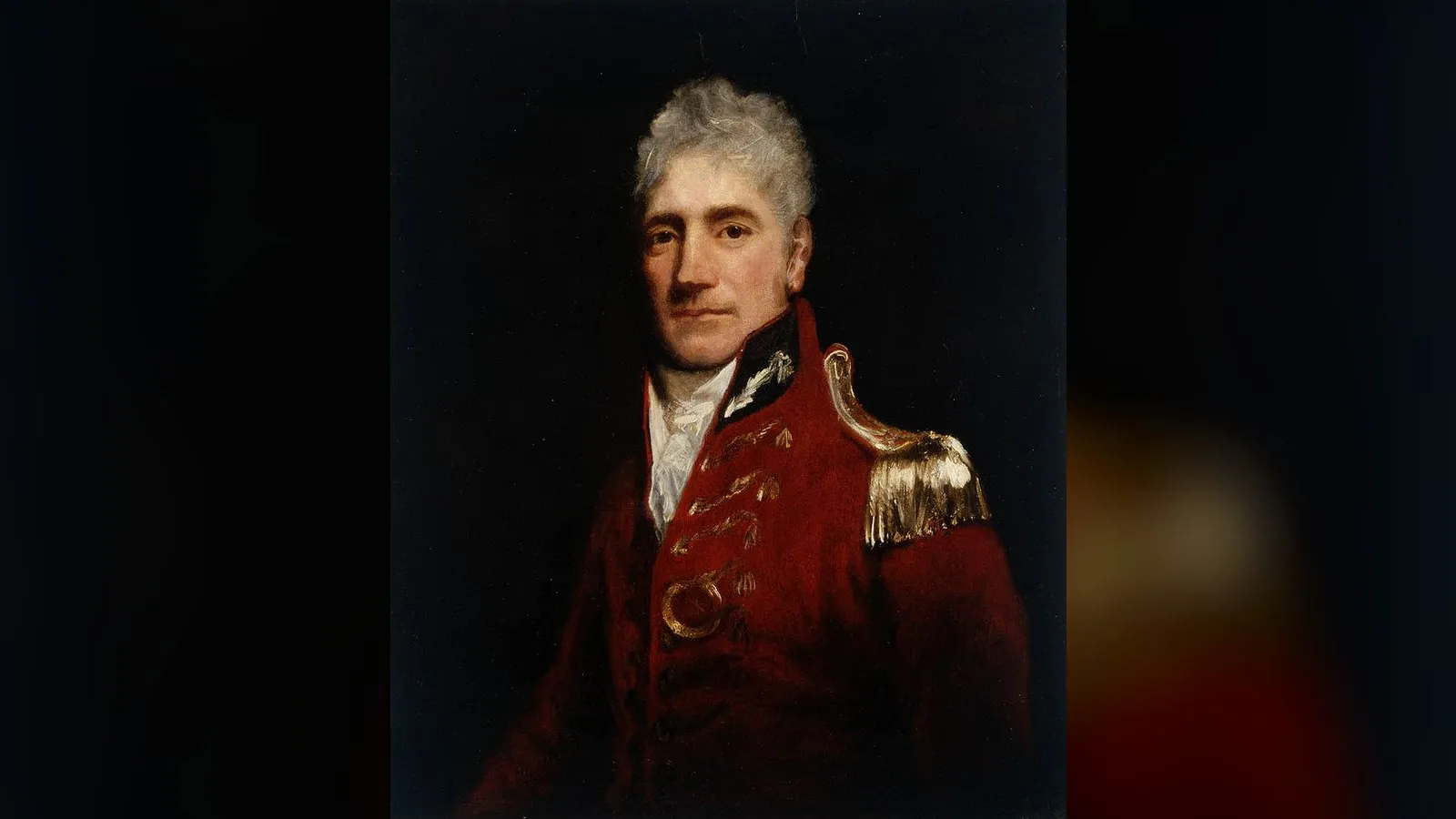

Lachlan Macquarie (1762–1824)
Contents
TL;DR
- established Born on the Isle of Ulva in Scotland's Inner Hebrides, Macquarie served as Governor of New South Wales from 1810 to 1821, overseeing major urban planning, infrastructure, and economic development that earned him the enduring epithet "Father of Australia" — he is also credited with formally proposing the name "Australia" for the continent in an 1817 official dispatch.
- established He pursued a genuinely liberal emancipist policy, appointing former convicts to significant public positions despite fierce opposition from free settlers — a progressive stance for the era that this article records as a real and distinctive part of his governorship.
- established In April 1816, Macquarie ordered military expeditions explicitly intended to clear "Hostile Natives" from the colony's frontier "by clearing the Country of them entirely"; the resulting operation, carried out by soldiers who disregarded his instructions to offer surrender, killed at least 14 Gandangara and Tharawal people in what is known as the Appin massacre, with bodies left displayed in trees. This article treats this episode as a serious, documented act of lethal state violence against Indigenous people, not a minor blemish on an otherwise unreservedly positive legacy.
- disputed Whether Macquarie's actions and broader Aboriginal policy amount to "genocide" in the modern legal sense is genuinely contested among historians; expert assessment generally supports describing the Appin massacre as mass killing for which Macquarie bore real command responsibility, while treating the formal "genocide" characterisation as anachronistic given the term's later legal definition and the absence of clear evidence of systematic intent on his part. This article reports both the serious weight of the killing and the genuine historical debate over how to categorise it.
- established His expensive public works and emancipist policies drew sustained criticism from London, culminating in a critical 1819 government inquiry that contributed to his resignation in 1820 — a political downfall this article notes alongside his achievements rather than only celebrating his building legacy.
Key Facts
- Born
- 31 January 1762, Isle of Ulva, Inner Hebrides, Scotland
- Died
- 1 July 1824, London, England, aged 62
- Known for
- Governor of New South Wales, 1810–1821; "Father of Australia"
- Military career
- British Army service in North America, India, Egypt, and Ceylon
- Spouse
- Jane Jarvis (m. 1793; d. 1796); Elizabeth Henrietta Campbell (m. 1807)
- Grave inscription
- "The Father of Australia," Isle of Mull, Scotland
Scottish Impact Index (SI Score)
- Global Influence
- 4/10
- Enduring Relevance
- 7/10
- Material Contribution
- 3/10
- Exceptional Achievement
- 4/10
- Lasting Legacy
- 5/10
- Recognition
- 2/10
25/60
Ranked =133rd of 200 in Great Scots
A Note on Claims and Evidence
Macquarie's biography, military career, and governorship are extensively documented in colonial and Scottish historical records and treated as Established. The April 1816 Appin massacre, including Macquarie's explicit written orders and the documented outcome, is Established from colonial military records and modern historical scholarship. Whether this episode and his broader Aboriginal policy meet the modern legal definition of genocide is treated here as genuinely Disputed among historians, consistent with published expert fact-checking that found strong evidentiary support for describing the Appin operation as mass killing for which Macquarie bore command responsibility, while finding the formal genocide characterisation more legally and historically complex to sustain.
Timeline
Born on the Isle of Ulva, Inner Hebrides, Scotland, to a carpenter and miller.
Volunteers for the British Army.
Serves across multiple military campaigns, including in North America during the American Revolutionary War, India under the East India Company, Egypt, and Ceylon.
Marries Jane Jarvis; she dies of tuberculosis in 1796.
Marries Elizabeth Henrietta Campbell.
Appointed Governor of New South Wales.
Formally assumes the governorship.
Introduces Australia's first official currency, the "Holey Dollar," by counter-stamping Spanish coins.
Authorises the first successful British crossing of the Blue Mountains.
Opens the Parramatta Native Institution for the education of Aboriginal children.
Settles sixteen Aboriginal men on a farm on Sydney Harbour in an attempt to make them cultivators; they soon leave.
Orders a military expedition against Aboriginal resistance on the colonial frontier; the resulting Appin massacre kills at least 14 Gandangara and Tharawal people.
Formally proposes the name "Australia" for the continent in an official dispatch; encourages the founding of the Bank of New South Wales.
The British government dispatches Commissioner John Bigge to investigate Macquarie's administration amid mounting criticism.
Resigns as governor following Bigge's critical findings.
Formally departs the colony, succeeded by Thomas Brisbane.
Dies in London while defending his record against Bigge's charges, aged 62.
Details
From the Isle of Ulva to imperial military service
Macquarie was born in 1762 on the small Isle of Ulva in Scotland's Inner Hebrides, the son of a carpenter and miller, and was educated in Edinburgh before volunteering for the British Army at fourteen. His subsequent military career was genuinely extensive, spanning service in North America during the American Revolutionary War and decades with the East India Company in India, including the Anglo-Mysore Wars, as well as service in Egypt and Ceylon — a career through which he accumulated both wealth and significant social standing before his appointment as Governor of New South Wales in 1809.
Building modern Sydney
As governor from 1810, Macquarie pursued an ambitious programme of urban planning and public works, establishing the central street layout of modern Sydney, creating Hyde Park as the colony's first public park, and developing the Macquarie Street precinct. He planned further townships including Liverpool, Windsor, and Richmond, and oversaw the establishment of Bathurst as the first inland British settlement in Australia, following the first successful British crossing of the Blue Mountains, which he authorised in 1813. He introduced Australia's first official currency in 1812 and encouraged the founding of the Bank of New South Wales in 1817, and it was in an official dispatch that same year that he is credited with formally proposing "Australia" as the name for the continent.
A genuinely liberal emancipist policy
Macquarie pursued a policy toward former convicts — known as emancipists — that was distinctly progressive for its time: he appointed capable ex-convicts to significant public roles, including the architect Francis Greenway, the surgeon William Redfern, and magistrates Andrew Thompson and Simeon Lord. This policy provoked fierce and sustained opposition from the colony's wealthier free settlers, known as "exclusives," who considered former convicts unfit for positions of authority — a genuine social conflict that shaped much of his governorship and eventually fed into the criticism that contributed to his downfall.
The Appin massacre: a serious, documented act of violence
Macquarie's record toward Aboriginal Australians combined, at different points, genuine attempts at cooperation with episodes of serious, state-ordered lethal violence, and this article gives the latter full and direct weight rather than treating it as incidental to his building and reform legacy. In 1815, he established the Parramatta Native Institution for the education of Aboriginal children, and he rewarded cooperative Aboriginal leaders with land grants and ceremonial gorgets. The historian T. M. Devine, in To the Ends of the Earth (2011), notes that every governor from Phillip in 1788 to Brisbane in 1822 had instructions from London to treat Aboriginal people well, and that Macquarie hoped to turn them from their "rambling naked state" into farmers. In 1815 he settled sixteen Aboriginal men on a smallholding on Sydney Harbour, but they soon returned to the bush. Devine stresses the gap between this official benevolence and practice on the frontier, where expanding sheep runs, disease and settler violence devastated Aboriginal communities. He cites estimates that perhaps 2,000 to 2,500 Europeans and upwards of 20,000 Aboriginal people were killed in the long frontier war, with disease, malnutrition and alcohol killing still more. But in March and April 1816, amid escalating frontier conflict, Macquarie issued explicit written orders for military detachments to be sent out "for the purpose of Punishing the Hostile Natives, by clearing the Country of them entirely." The resulting operation, led by Captain James Wallis with 33 grenadiers, attacked a sleeping camp near the Cataract River gorge on 17 April 1816; soldiers disregarded Macquarie's instructions to offer the opportunity to surrender before opening fire, and at least 14 Gandangara and Tharawal people were killed, with some bodies left displayed in trees as a deterrent, as ordered. This episode, known as the Appin massacre, is reported here plainly as a serious documented atrocity for which Macquarie bore real command responsibility — he took no disciplinary action against the soldiers who disregarded his surrender instructions, and one leading historian has characterised the operation as "mass murder in the act."
A genuinely contested historical judgment
Whether Macquarie's actions, and his wider Aboriginal policy, should be characterised as genocide in the modern legal sense is a matter of real, ongoing historical debate that this article does not resolve on its own authority. Published fact-checking drawing on expert historical assessment has found that while the evidence strongly supports describing the Appin operation as mass killing for which Macquarie bore direct command responsibility, the formal "genocide" characterisation is more legally and historically complex to sustain, given that the term was not legally defined until 1948 and clear evidence of systematic intent to destroy the Gandangara and Tharawal peoples specifically, as opposed to a punitive frontier operation, is harder to establish with confidence. Some historians prefer to describe the episode in terms of war crimes rather than genocide. This article reports this genuine scholarly disagreement directly, rather than either minimising the killing or applying a legal term without the historical consensus to support it.
Downfall and death
Macquarie's expensive public works programme and his liberal emancipist policies drew increasing criticism from both London and the colony's conservative "exclusive" faction, and in 1819 the British government dispatched Commissioner John Bigge to investigate his administration. Bigge's subsequent reports were highly critical, arguing that New South Wales should function primarily as a penal deterrent rather than a settlement opportunity, and characterising aspects of Macquarie's approach as an "act of violence" against established settler interests. Macquarie resigned in 1820 and formally left the colony in 1821, having served longer than any previous governor. He returned to Britain and died in London in 1824, still actively defending his record against Bigge's charges at the time of his death.
A legacy still actively debated
Macquarie's grave on the Isle of Mull bears the inscription "The Father of Australia," and his name is attached to numerous Australian institutions, rivers, and places, including Macquarie University and Lake Macquarie. At the same time, his legacy has become the subject of genuine, ongoing public reassessment in Australia in recent years: his Hyde Park statue, which carries an inscription praising him as "a perfect gentleman, a Christian and supreme legislator of the human heart," has been vandalised on multiple occasions, including in 2017 and again in 2023, by protesters citing his responsibility for the Appin massacre and broader frontier violence. This article presents both the genuine scale of his achievements and the serious, documented violence of his record together, consistent with its commitment to accuracy over a purely celebratory national narrative.
Did You Know?
- Macquarie is credited with formally proposing the name "Australia" for the continent in an 1817 official dispatch.
- He created Australia's first official currency by having the centres cut out of Spanish dollars.
- He appointed former convicts to senior public roles, a genuinely progressive and controversial policy for its time.
- He ordered the 1816 military operation that resulted in the Appin massacre, in which at least 14 Aboriginal people were killed.
- His Hyde Park statue in Sydney has been vandalised multiple times by protesters citing his record of frontier violence.
- He resigned as governor in 1820 following a highly critical British government inquiry into his administration.
- He established Hyde Park in Sydney as Australia's first public park.
- His grave on the Isle of Mull bears the epithet "The Father of Australia."
FAQ
1Why is Lachlan Macquarie called the "Father of Australia"?
For his extensive governorship of New South Wales (1810–1821), during which he oversaw major urban planning, infrastructure, exploration, and reform, and is credited with formally proposing the continent's name.
2What was the Appin massacre?
A military operation Macquarie ordered in April 1816 against Aboriginal resistance on the colonial frontier, which killed at least 14 Gandangara and Tharawal people after soldiers disregarded his instructions to offer surrender.
3Was Lachlan Macquarie responsible for genocide?
This is genuinely disputed among historians; most support describing the Appin massacre as mass killing for which he bore command responsibility, while treating the formal legal term "genocide" as harder to sustain given the term's later definition and questions about systematic intent.
4Did he support former convicts?
Yes — he pursued a genuinely liberal emancipist policy, appointing capable ex-convicts to significant public positions, which drew fierce opposition from the colony's free settlers.
5Why did he resign as governor?
Mounting criticism of his expensive public works and liberal policies led the British government to launch a critical inquiry in 1819, contributing to his resignation in 1820.
6Where was he born?
The Isle of Ulva, in Scotland's Inner Hebrides, in 1762.
7Is his legacy controversial in Australia today?
Yes — his statue in Sydney's Hyde Park has been vandalised multiple times by protesters citing his responsibility for the Appin massacre and frontier violence against Aboriginal people.
8Did Macquarie try to "civilise" Aboriginal people?
Yes. Besides the Parramatta Native Institution, in 1815 he tried to settle sixteen Aboriginal men as farmers on Sydney Harbour; the experiment soon failed.
9How did he die?
He died in London in 1824, aged 62, while still defending his governorship record against a critical official inquiry.
Sources and Further Reading
Primary/Institutional
Scholarly/Critical
- Fact check: Was Lachlan Macquarie a mass murderer who ordered the genocide of Indigenous people? — ABC News
- Appin massacre — Wikipedia
- T. M. Devine, To the Ends of the Earth: Scotland's Global Diaspora, 1750–2010 (Allen Lane, 2011)
General
Caveats: Myths and Disputed Claims
- Clarification: Macquarie's legacy is sometimes presented solely through his "Father of Australia" epithet and his genuine urban-planning and emancipist achievements. This article gives equal, direct weight to the Appin massacre and his explicit written orders behind it, consistent with house style's commitment to accuracy over a purely celebratory account.
- Note: The characterisation of Macquarie's actions as "genocide" is genuinely disputed among historians and is treated here as Disputed rather than settled fact, following published expert assessment that supports describing the Appin operation as mass killing with clear command responsibility, while finding the legal genocide characterisation harder to sustain given the term's later definition and questions about systematic intent.
Card 147 · Great Scots