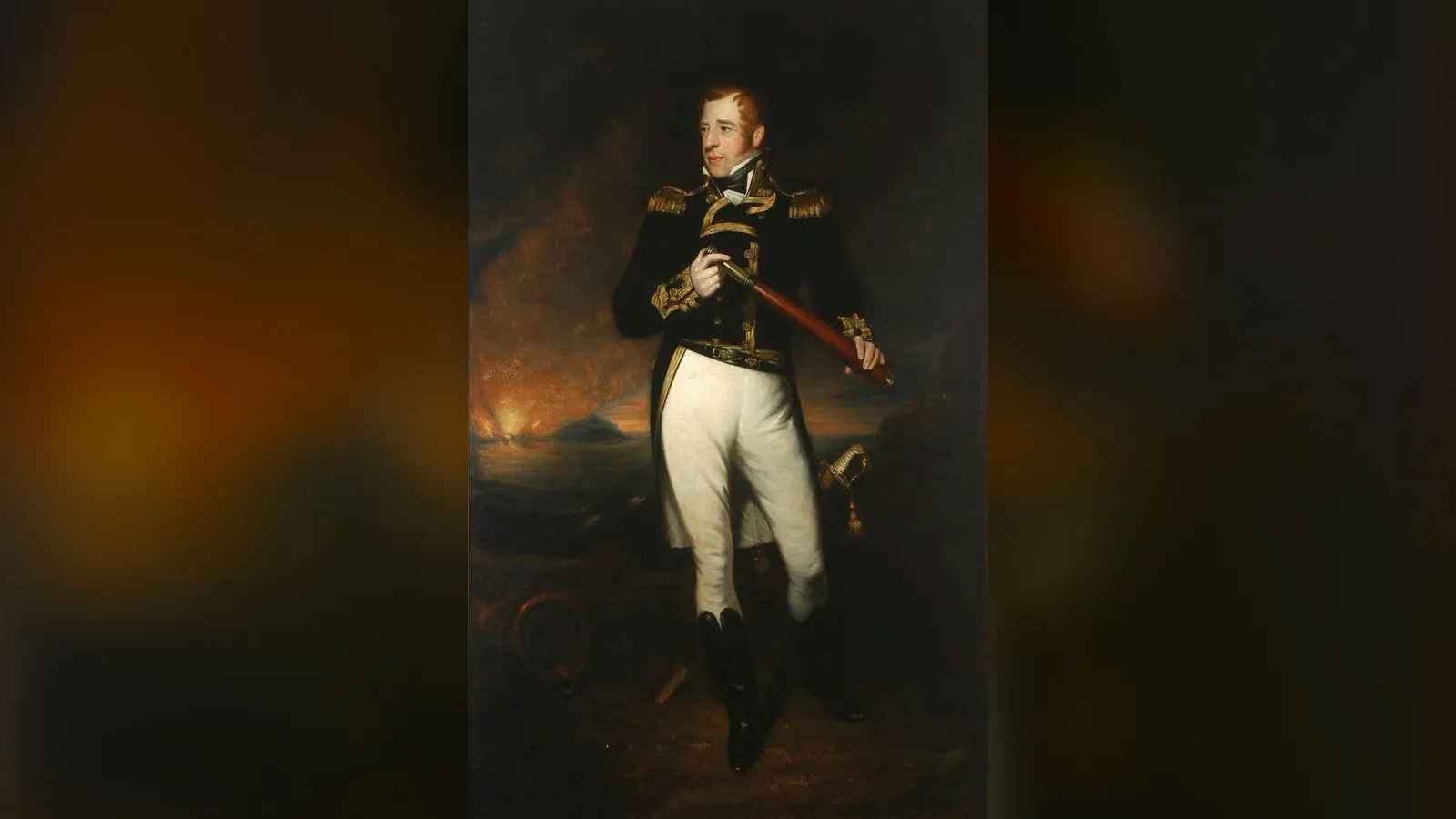

Thomas Cochrane, 10th Earl of Dundonald (1775–1860)
Contents
TL;DR
- established Born in Lanarkshire to an aristocratic family that had fallen on hard times, Cochrane became one of the most daring frigate captains of the Napoleonic Wars, most famously capturing the far larger Spanish frigate El Gamo in 1801 while commanding the tiny 14-gun HMS Speedy — an action so celebrated that Napoleon reportedly nicknamed him "le Loup des Mers," the Sea Wolf.
- established As a radical Member of Parliament, Cochrane was a genuinely committed advocate for parliamentary reform, aligning himself with prominent radicals of the day and making powerful political enemies through his outspoken criticism of naval corruption and government conduct.
- established In 1814, Cochrane was convicted of conspiracy in the Great Stock Exchange Fraud, a scandal in which false news of Napoleon's death was spread to manipulate stock prices; he was imprisoned, fined, stripped of his knighthood in a formal degradation ceremony, and expelled from both the Royal Navy and Parliament — though his Westminster constituents immediately re-elected him unopposed, and the genuine strength of the evidence against him has long been disputed by historians. This article reports the conviction as Established while noting the real, ongoing historical debate about his actual guilt.
- established Rather than accept disgrace, Cochrane went on to lead the navies of Chile, Brazil, and briefly Greece in their respective wars of independence, achieving further remarkable naval victories and becoming a key figure in South American independence history before eventually being pardoned and reinstated to the Royal Navy in 1832, with his knighthood formally restored in 1847.
- Shared/Traditional. His extraordinary life and naval exploits are widely credited as a major inspiration for the fictional naval heroes of later novelists, most notably C. S. Forester's Horatio Hornblower and Patrick O'Brian's Jack Aubrey.
Key Facts
- Born
- 14 December 1775, Annsfield, Lanarkshire, Scotland
- Died
- 31 October 1860, London, England, aged 84
- Known for
- Napoleonic Wars frigate captain; naval commander in Chilean, Brazilian, and Greek wars of independence
- Nickname
- "Le Loup des Mers" (the Sea Wolf), reportedly from Napoleon
- Scandal
- Convicted in the 1814 Great Stock Exchange Fraud; later pardoned and reinstated (1832)
- Burial
- Westminster Abbey
Scottish Impact Index (SI Score)
- Global Influence
- 4/10
- Enduring Relevance
- 7/10
- Material Contribution
- 2/10
- Exceptional Achievement
- 5/10
- Lasting Legacy
- 4/10
- Recognition
- 3/10
25/60
Ranked =133rd of 200 in Great Scots
A Note on Claims and Evidence
Cochrane's naval career, his political activity, his 1814 conviction, and his subsequent service to Chile, Brazil, and Greece are extensively documented in British naval and parliamentary records and treated as Established. The genuine strength of the evidence underlying his 1814 Stock Exchange Fraud conviction has long been disputed by historians — some regard him as having been made a political scapegoat given his outspoken radicalism and enemies within the naval establishment, while others find the evidence against him more substantial. This article reports the conviction itself as Established historical fact while noting that his actual guilt remains a genuine subject of historical debate, as reflected in his eventual pardon and full reinstatement.
Timeline
Born at Annsfield, Lanarkshire, Scotland, to an aristocratic but financially struggling family.
Joins the Royal Navy.
Commanding the small HMS Speedy, captures the far larger Spanish frigate El Gamo, one of the most celebrated single-ship actions of the age.
Elected to Parliament, representing Honiton and then Westminster as a radical reformer.
Commands British fireships at the Battle of the Basque Roads against the French fleet.
Convicted of conspiracy in the Great Stock Exchange Fraud; imprisoned, fined, stripped of his knighthood, and expelled from the Royal Navy and Parliament; immediately re-elected unopposed by his Westminster constituents.
Sails to South America to take command of the fledgling Chilean Navy, becoming a Chilean citizen and vice admiral.
Leads the celebrated capture of Valdivia with a small force, a key Chilean independence victory.
Commands the Brazilian Navy during Brazil's war of independence, earning the title Marquess of Maranhão.
Briefly commands Greek naval forces during the Greek War of Independence.
Inherits the earldom of Dundonald upon his father's death.
Formally pardoned by a new Whig government and reinstated to the Navy List as a rear admiral.
His knighthood is restored through Queen Victoria's personal intervention.
Serves as Commander-in-Chief of the North America and West Indies Station.
Reaches the rank of Admiral of the Red.
Dies in London during surgery for kidney stones, aged 84; buried in Westminster Abbey, with his ceremonially removed banner restored the day before his funeral.
Details
A brilliant, audacious frigate captain
Cochrane joined the Royal Navy in 1793 and rapidly built a reputation as one of the most daring and tactically inventive commanders of the Napoleonic era. His most celebrated action came in May 1801, commanding the tiny 14-gun brig-sloop HMS Speedy with a crew of just 54 against the Spanish frigate El Gamo, which carried 32 guns and 319 men. Through a combination of deception — flying an American flag and closing so tightly that the larger ship's guns could not be depressed enough to fire effectively on his hull — and sheer audacity, Cochrane forced the Spanish ship's surrender in one of the most lopsided and celebrated single-ship victories in naval history. He went on to further distinguished service, including commanding British fireships in the 1809 Battle of the Basque Roads against the French fleet, and earned such a formidable reputation that Napoleon himself reportedly nicknamed him "le Loup des Mers," the Sea Wolf.
A radical in Parliament
Beyond his naval career, Cochrane was elected to Parliament in 1806 and 1807, representing Honiton and then Westminster, and built a genuine reputation as a committed radical reformer, aligning himself with prominent contemporaries such as William Cobbett and Sir Francis Burdett in campaigning for parliamentary reform and against corruption. His outspoken criticism of naval mismanagement and government conduct won him real popular support but also made him significant and lasting political enemies within the naval and parliamentary establishment — enmities that some historians believe directly shaped the severity of his treatment in the scandal that followed.
Disgrace: the Great Stock Exchange Fraud
In 1814, Cochrane's career was dramatically derailed by his conviction in the Great Stock Exchange Fraud, a scheme in which false rumours of Napoleon's death were deliberately spread to inflate government stock prices, from which Cochrane was found to have profited through substantial holdings he sold during the resulting price surge. He was sentenced to twelve months' imprisonment and a £1,000 fine, formally stripped of his knighthood in a public degradation ceremony at Westminster Abbey, and expelled from both the Royal Navy and Parliament. This article reports the conviction as a matter of documented legal record while noting that the strength of the evidence against Cochrane has long been genuinely disputed by historians — his Westminster constituents immediately re-elected him unopposed despite the conviction, a public outcry prevented his additional sentence of time in the pillory from being carried out, and a number of historians have argued since that his well-earned political enemies played a significant role in both his prosecution and the severity of his punishment. His eventual full pardon in 1832 and the restoration of his knighthood in 1847 lend some institutional weight to the view that the case against him was, at minimum, seriously contestable.
A second career leading South American navies
Rather than accept the disgrace of his conviction, Cochrane left Britain in 1818 to offer his naval expertise to Chile, then fighting for independence from Spain. He became a Chilean citizen and vice admiral, reorganising the fledgling Chilean Navy and leading it to a series of striking victories, most notably the 1820 capture of the heavily fortified port of Valdivia using a dramatically smaller force than conventional tactics would have required — an operation still studied as an example of audacious naval leadership. He went on to command the Brazilian Navy from 1823 to 1825 during Brazil's own war of independence, where his tactics, including bluffing numerically superior Portuguese garrisons into surrender, played a genuine and significant role in securing Brazilian independence, earning him the title Marquess of Maranhão from the grateful Brazilian government. In 1825 he briefly took command of Greek naval forces during the Greek War of Independence, though with more limited practical impact before his eventual return to Britain.
Rehabilitation and a long final chapter
Following his father's death in 1831, Cochrane inherited the earldom of Dundonald, and in 1832 a new Whig government formally pardoned him and reinstated him to the Royal Navy's list of officers with a promotion to rear admiral — a significant institutional vindication, even though it did not amount to a formal reversal of his original conviction. His knighthood was restored in 1847 through Queen Victoria's personal intervention, and he went on to serve as Commander-in-Chief of the North America and West Indies Station from 1848 to 1851, eventually reaching the rank of Admiral of the Red in 1857. Beyond his naval career, Cochrane was also a genuine inventor, developing the tunnelling shield alongside engineer Marc Isambard Brunel, pioneering early work on the airlock and asphalt applications, and becoming an early and enthusiastic advocate for steamship technology.
Death and a lasting fictional legacy
Cochrane died in London in October 1860, aged 84, during surgery for kidney stones, and was buried with full honours in Westminster Abbey — the same institution where his knighthood had once been stripped from him in a public ceremony; his ceremonially removed banner was restored to its place there the day before his funeral, a quiet but significant symbolic reversal of his earlier disgrace. His extraordinary life and naval career have long been recognised as a major direct inspiration for the fictional naval heroes of later novelists, most notably C. S. Forester's Horatio Hornblower and Patrick O'Brian's Jack Aubrey — a lasting cultural legacy reflecting just how remarkable, and how dramatic, his real career genuinely was.
Did You Know?
- Cochrane's father, Archibald, 9th Earl of Dundonald, spent the family fortune on chemical schemes. During the American War he developed a way of making tar from coal to protect ships' bottoms, but the Admiralty chose copper sheathing instead. In 1795 he proposed moving manufacturing out of the cities into villages where every worker had a potato plot, partly as a guard against revolution (Jonsson, 2013).
- Napoleon reportedly nicknamed Cochrane "le Loup des Mers" — the Sea Wolf — for his repeated naval successes against French and Spanish forces.
- In 1801, commanding a tiny 14-gun ship with 54 men, he captured a Spanish frigate carrying 319 men and 32 guns.
- He was formally stripped of his knighthood in a degradation ceremony at Westminster Abbey in 1814 — and had it fully restored by Queen Victoria in 1847.
- His Westminster constituents re-elected him to Parliament unopposed immediately after his 1814 conviction.
- He led the navies of three different nations — Chile, Brazil, and briefly Greece — in their wars of independence.
- He is widely credited as a major real-life inspiration for the fictional characters Horatio Hornblower and Jack Aubrey.
- He co-invented an early tunnelling shield with engineer Marc Isambard Brunel.
- He is buried in Westminster Abbey, the same building where his knighthood was once publicly stripped from him.
FAQ
1What is Lord Cochrane best known for?
His daring frigate commands during the Napoleonic Wars, most famously capturing the Spanish frigate El Gamo in 1801 while commanding a vastly smaller ship, and his later leadership of the Chilean and Brazilian navies in their wars of independence.
2Was he actually guilty of the Stock Exchange Fraud?
This remains genuinely disputed by historians — he was convicted in 1814, but many scholars argue the evidence was weak and that his political enemies influenced his prosecution; he was formally pardoned in 1832.
3Did he lose his knighthood permanently?
No — it was stripped in 1814 following his conviction, but formally restored by Queen Victoria in 1847.
4What did he do after his disgrace in Britain?
He left Britain and led the navies of Chile and then Brazil during their wars of independence, becoming a celebrated figure in both nations' independence histories.
5Did he inspire any famous fictional characters?
Yes — he is widely credited as a major inspiration for C. S. Forester's Horatio Hornblower and Patrick O'Brian's Jack Aubrey.
6Where was he born?
Lanarkshire, Scotland, in 1775, to an aristocratic family experiencing financial difficulty.
7Was he reinstated to the Royal Navy?
Yes — in 1832, with a promotion to rear admiral, and he continued to rise in rank, reaching Admiral of the Red in 1857.
8Where is he buried?
Westminster Abbey — the same location where his knighthood had earlier been formally stripped from him.
Sources and Further Reading
Primary/Institutional
- Thomas Cochrane, 10th Earl of Dundonald — Wikipedia
- Thomas Cochrane, 10th earl of Dundonald — Encyclopaedia Britannica
Scholarly/Critical
- Fredrik Albritton Jonsson, Enlightenment's Frontier: The Scottish Highlands and the Origins of Environmentalism (Yale University Press, 2013)
- The Great Stock Exchange Fraud: Lord Cochrane's Napoleonic Lies? — Historic Mysteries
- Napoleon is dead! The Great Stock Exchange Fraud of 1814 — The History Press
General
Caveats: Myths and Disputed Claims
- Clarification: Cochrane's 1814 conviction for the Stock Exchange Fraud is sometimes presented as settled proof of guilt. The strength of the evidence has long been genuinely disputed by historians, many of whom view his outspoken radicalism and consequent political enemies as having significantly shaped both his prosecution and its severity — a view given some weight by his eventual full pardon and reinstatement.
- Note: His South American naval career, while genuinely remarkable, is sometimes romanticised without noting that his service to Chile, Brazil, and Greece also involved real friction with local authorities over pay and command disputes; this article presents his achievements as substantial and well-documented without claiming his tenure in each navy was entirely free of conflict.
Card 148 · Great Scots