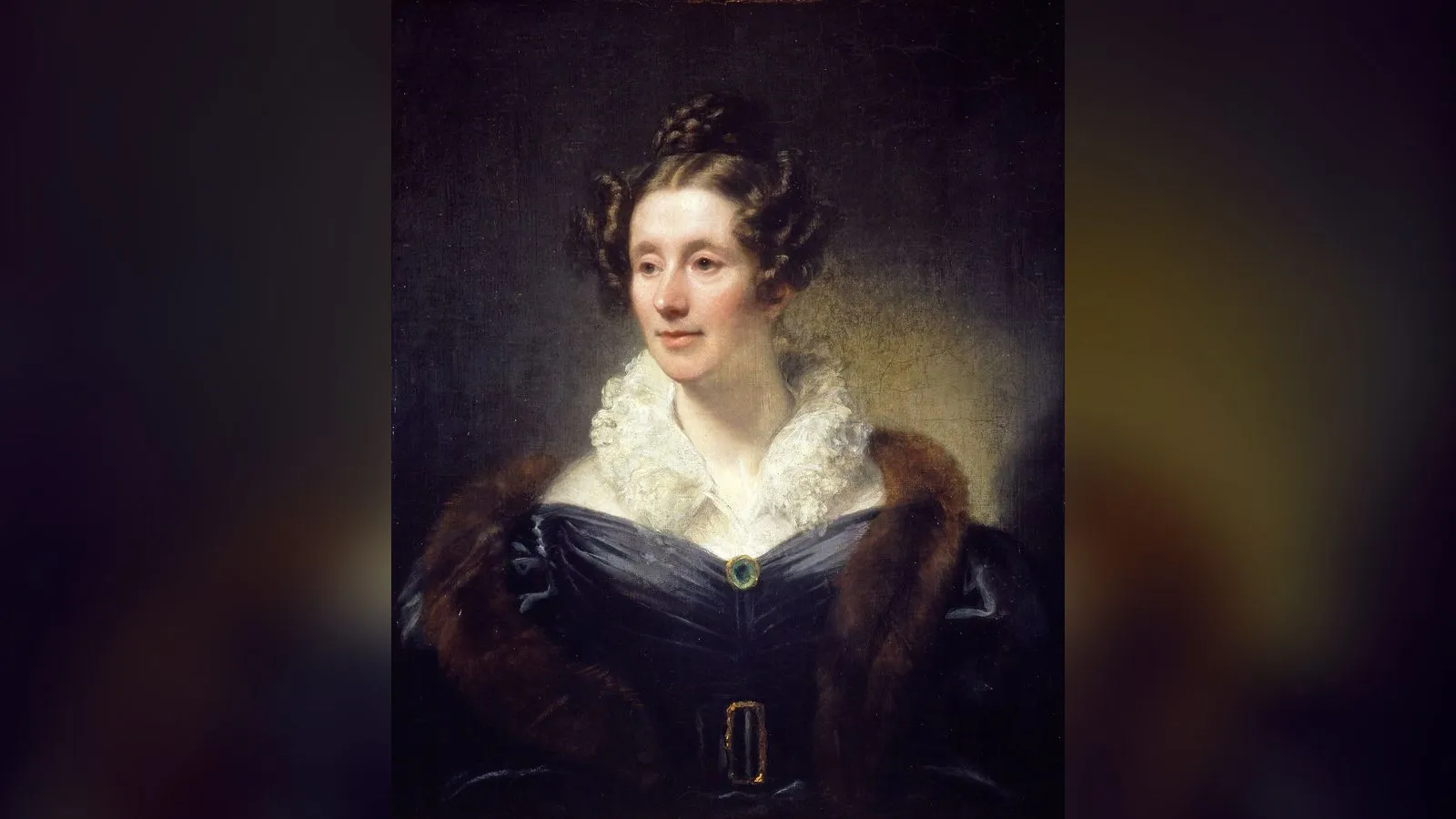

Mary Somerville (1780–1872)
Contents
TL;DR
- Established/Documented. Mary Somerville taught herself algebra and Euclidean geometry as a teenager, in secret and against her family's wishes, and went on to become one of the most widely read science writers in 19th-century Britain — without ever attending a university, which was then closed to women entirely.
- Established/Documented. Her 1834 book On the Connexion of the Physical Sciences prompted reviewer William Whewell to coin the word "scientist" in print, because the existing term "man of science" no longer fit — a genuinely documented origin for a word now used worldwide.
- Established/Documented. She and Caroline Herschel became, in 1835, the first women elected as Honorary Members of the Royal Astronomical Society — a real breakthrough, though it's worth being precise that this was an honorary category, not full membership on equal terms with men.
- Shared/Traditional, worth precision. She is often credited with "predicting Neptune." The more accurate version: a speculative passage in her 1834 book about irregularities in Uranus's orbit is documented as a direct inspiration for John Couch Adams's own calculations, which contributed to Neptune's discovery in 1846 — a real and remarkable connection, but a step removed from "she predicted it."
- Disputed/underdocumented in places. Some popular claims about her — including that she was literally the first signature on the 1866 women's suffrage petition — circulate widely but are harder to pin down with full certainty from the sources checked for this article, and are flagged rather than stated flatly.
Key Facts
- Born
- 26 December 1780, Jedburgh, Scotland
- Died
- 29 November 1872, Naples, Italy (aged 91)
- Raised
- Burntisland, Fife
- Education
- Almost entirely self-taught in mathematics and astronomy; some limited formal schooling as a child
- Marriages
- Samuel Greig (1804, d. 1807); William Somerville (1812)
- Major works
- The Mechanism of the Heavens (1831); On the Connexion of the Physical Sciences (1834); Physical Geography (1848); On Molecular and Microscopic Science (1869)
- Honours
- First female Honorary Member, Royal Astronomical Society (1835, with Caroline Herschel); Victoria Gold Medal, Royal Geographical Society (1869)
- Legacy
- Somerville College, Oxford, named in her honour (1879); depicted on the Royal Bank of Scotland £10 note
Scottish Impact Index (SI Score)
- Global Influence
- 7/10
- Enduring Relevance
- 9/10
- Material Contribution
- 3/10
- Exceptional Achievement
- 9/10
- Lasting Legacy
- 7/10
- Recognition
- 5/10
40/60
Ranked =39th of 200 in Great Scots
How This Article Handles the Evidence
Somerville's life comes to us substantially through one heavily used source: her own memoir, Personal Recollections, from Early Life to Old Age, compiled and published in 1873 by her daughter Martha after her death. This is an invaluable primary source, but it is also, inevitably, a version of events told from the vantage point of an old woman looking back on — and to some extent shaping — the story of her own extraordinary self-education. Where this article draws on well-corroborated external facts (her publications, her RAS honour, the Whewell/"scientist" episode, the Adams/Neptune connection), it states them plainly. Where a claim rests mainly on the memoir's own narrative of family opposition and secret candlelit study, it is flagged as the well-established core of her own account rather than independently verified in every particular.
Timeline
Born in Jedburgh; raised mainly in Burntisland, Fife, in a household with limited interest in her formal education.
Receives only about a year of conventional schooling; is largely self-taught thereafter, including reading widely and, as a teenager, teaching herself algebra after encountering algebraic notation in a fashion-magazine puzzle page.
Marries Samuel Greig, Russian consul in London; the marriage does little to support her intellectual interests. They have two sons; one, Woronzow Greig, survives to adulthood.
Greig dies; Somerville, now a financially independent widow, resumes and deepens her mathematical and scientific study.
Marries William Somerville, a naval surgeon and her cousin, who actively encourages and supports her scientific work throughout their marriage.
The Somervilles move to London, giving Mary access to the capital's scientific circles.
Her first scientific paper, on the magnetising power of sunlight, is read before the Royal Society.
Publishes The Mechanism of the Heavens, a translation and substantial elaboration of Laplace's Mécanique Céleste, commissioned by Henry Brougham for the Society for the Diffusion of Useful Knowledge; it becomes a standard advanced textbook, notably at Cambridge, for decades.
Publishes On the Connexion of the Physical Sciences, a bestseller across multiple editions; William Whewell's review of it in the Quarterly Review coins the word "scientist."
Elected, alongside Caroline Herschel, as one of the first two female Honorary Members of the Royal Astronomical Society.
The Somervilles relocate to Italy for William's declining health; Mary spends most of the rest of her life there, chiefly in Florence and later Naples.
Neptune is discovered; John Couch Adams is documented as citing Somerville's 1834 speculation about Uranus's orbital irregularities as an inspiration for the calculations that contributed to the discovery.
Publishes Physical Geography, which becomes a widely used textbook, including at Oxford, for much of the rest of the century.
Signs the petition for women's suffrage organised by John Stuart Mill and presented to Parliament.
Publishes On Molecular and Microscopic Science at age 89; awarded the Victoria Gold Medal of the Royal Geographical Society.
Dies in Naples, aged 91, reportedly having worked on a mathematical paper the day before her death.
Personal Recollections, from Early Life to Old Age of Mary Somerville, compiled by her daughter Martha, is published posthumously.
Somerville College, Oxford, is founded and named in her honour.
Details
A largely self-taught education
Somerville's own account, recorded in her memoir, describes a childhood with almost no formal schooling — roughly a single year at a boarding school as a girl — and a family, particularly her father, largely indifferent or actively opposed to educating her beyond the basic literacy and domestic skills thought appropriate for a girl of her class. The well-known story of her mathematical awakening holds that, as a teenager, she came across algebraic symbols used to illustrate a puzzle in a ladies' fashion magazine, was intrigued by notation she didn't understand, and began teaching herself algebra and then Euclidean geometry from borrowed books, often reading late into the night. Shared/Traditional: the detail that she was restricted from candles or discouraged from studying is part of her own well-known recollection of this period; this article treats it as her documented account of her own life rather than independently verified from outside sources.
Her first marriage, in 1804, to Samuel Greig did nothing to support this self-education — by most accounts he showed little interest in or regard for his wife's intellectual pursuits. His death in 1807 left her a financially independent widow, and it was only afterward that she was able to pursue mathematics and astronomy more seriously. Her second marriage in 1812, to naval surgeon William Somerville, was a turning point in the opposite direction: he actively encouraged, supported, and took evident pride in her scientific work for the rest of their lives together, and the move to London in 1816 opened access to the era's leading scientific circles.
From translator to major scientific author
Somerville's public scientific career effectively began with an 1826 paper on the magnetising power of the sun's rays, read before the Royal Society. Her major breakthrough came in 1831 with The Mechanism of the Heavens — commissioned by the reformer Henry Brougham for the Society for the Diffusion of Useful Knowledge as an accessible English rendering of Pierre-Simon Laplace's monumental Mécanique Céleste. Somerville did far more than translate: she reworked and substantially clarified the mathematics for an English-reading audience, and the resulting book became, notably, a standard advanced mathematics text at Cambridge University for years afterward — an extraordinary outcome for a work by someone who had never been permitted to study at a university herself.
On the Connexion of the Physical Sciences (1834) followed and became a genuine bestseller, running through multiple editions over the following decades. It attempted something ambitious for its time: a synthesis of the interrelationships across the physical sciences — astronomy, physics, chemistry — for a broad educated readership, at a moment when scientific specialisation was only beginning to harden into separate disciplines.
The word "scientist"
Established/Documented, and one of the more remarkable footnotes in the history of the English language: reviewing On the Connexion of the Physical Sciences for the Quarterly Review in 1834, the polymath William Whewell coined the word "scientist" in print. The existing term, "man of science," plainly did not fit a woman producing work of this calibre, and Whewell's review is the documented origin of the modern word — coined, in effect, because Mary Somerville's achievement had outgrown the available vocabulary.
The Neptune connection — precisely stated
Somerville's 1834 book included a speculative passage suggesting that observed irregularities in the orbit of Uranus might be explained by the gravitational pull of a then-undiscovered planet. Established/Documented: the young mathematician John Couch Adams is himself recorded as citing this passage as a direct spur to the calculations he undertook, which — alongside independent work by France's Urbain Le Verrier — contributed to the discovery of Neptune in 1846. This is a genuine and well-attested intellectual influence. It should not, however, be inflated into a claim that Somerville herself predicted or calculated the existence of Neptune; her role was as an inspiring populariser and synthesiser of the physics involved, not as the discoverer or the source of the orbital calculations that actually located the planet. This article states the connection precisely rather than in the looser, more impressive-sounding form it sometimes takes in popular retellings.
Standing among scientific contemporaries
Somerville corresponded and worked within a circle that included Charles Babbage, John Herschel, and other leading figures of British science, at a time when formal scientific institutions — universities, most learned societies — remained closed to women. Her 1835 election, jointly with Caroline Herschel, as one of the first two female Honorary Members of the Royal Astronomical Society, was a genuine milestone, though it's worth being precise that "Honorary Member" was a distinct category from ordinary Fellowship, reflecting the formal limits still placed on women's participation even as individual achievement was being publicly recognised.
Her relationship with Ada Lovelace is well documented through their surviving correspondence and is generally characterised as one of genuine friendship and informal mentorship: Somerville, decades older and established, encouraged Lovelace's mathematical interests and helped connect her into scientific circles, including her association with Charles Babbage's work. Describing Somerville as a mentor to Lovelace is a reasonable characterisation of the documented relationship, though — as with much of the Somerville/Lovelace correspondence — the exact texture and extent of the mentorship is drawn primarily from surviving letters rather than a formalised teaching relationship.
Physical Geography and later scientific writing
Physical Geography (1848) became one of Somerville's most widely used works, adopted as a standard textbook, including at Oxford, and remaining in print through numerous editions for much of the 19th century — a work of real and lasting pedagogical influence. She published her final major work, On Molecular and Microscopic Science, in 1869 at the age of 89, and by her own daughter's account she was working on mathematical papers up to the day before her death — a genuinely remarkable span of continuous scientific productivity into extreme old age.
Advocacy for women's education and suffrage
Somerville was a committed, active supporter of expanded education and rights for women throughout her later life. Shared/Traditional, treated with appropriate caution here: she is very widely and popularly described as having been the first person to sign John Stuart Mill's 1866 petition for women's suffrage presented to Parliament. This claim circulates extremely widely in popular sources; this article notes it as a commonly repeated claim about her rather than asserting it as independently and precisely confirmed, since the exact ordering and mechanics of a mass petition's signature list is the kind of specific factual detail that benefits from direct archival verification this article was not able to complete. What is solidly established is that she was among the petition's signatories and a genuine, public supporter of the suffrage cause. Her legacy in women's education is most concretely embodied in Somerville College, Oxford, founded in 1879 — after her death, in her honour — as one of the first women's colleges at Oxford, explicitly invoking her as a model of what women could achieve in scholarship when given the chance she herself had been denied.
Final years and legacy
The Somervilles moved to Italy in 1838 for William's health, and Mary spent most of the remainder of her long life there, chiefly in Florence and later Naples, continuing to write and correspond with the scientific community back in Britain. She died in Naples on 29 November 1872, aged 91. Her daughter Martha compiled and published her memoir, Personal Recollections, from Early Life to Old Age, the following year — the single most important primary source for the details of Somerville's own account of her life, and the source of much of the "self-taught against family opposition" narrative that has shaped her popular reputation since.
Her modern legacy includes Somerville College, Oxford; Somerville Island in the Canadian Arctic; and her appearance on the Royal Bank of Scotland's £10 note — a genuinely fitting honour for a woman whose entire career was built on teaching herself what no institution of her day would teach her.
Did You Know
- Mary Somerville first encountered algebra as a teenager through a puzzle in a ladies' fashion magazine — and taught herself the subject from there.
- The word "scientist" was coined in a review of one of her own books, because reviewer William Whewell decided the existing term "man of science" no longer fit.
- Her textbook The Mechanism of the Heavens became standard advanced reading at Cambridge University — an institution that would not have admitted her as a student.
- A speculative passage in one of her books is documented as a direct inspiration for the calculations that helped lead to the discovery of Neptune.
- She published her final major scientific work at age 89, and reportedly worked on mathematics the day before she died at 91.
- She and Caroline Herschel were the first two women ever elected Honorary Members of the Royal Astronomical Society.
- Somerville College, Oxford, was named after her, founded seven years after her death.
- She appears today on the Royal Bank of Scotland £10 note.
Frequently Asked Questions
1Was Mary Somerville formally educated as a scientist?
No — she had only about a year of conventional schooling and was almost entirely self-taught in mathematics and astronomy, largely because universities did not admit women in her era.
2Did Mary Somerville discover Neptune?
No, and this article is careful not to overstate the connection. She wrote a speculative passage about unexplained irregularities in Uranus's orbit, which John Couch Adams later credited as a direct inspiration for the calculations he undertook — calculations that, alongside independent French work, contributed to Neptune's discovery. That's a real and documented influence, but she did not calculate or predict the planet's position herself.
3Is it true the word "scientist" was invented for her?
Essentially, yes. Reviewer William Whewell coined the term in his 1834 review of her book On the Connexion of the Physical Sciences, reasoning that "man of science" no longer described what she was doing.
4What was her relationship with Ada Lovelace?
A genuine friendship and informal mentorship, documented through their surviving correspondence — Somerville, older and established, encouraged Lovelace's mathematical interests and helped connect her into scientific circles including Charles Babbage's.
5Was she the first person to sign the 1866 women's suffrage petition?
This is a widely repeated claim, but this article treats it with some caution rather than stating it as certain — what's solidly established is that she was a genuine signatory and public supporter of the suffrage campaign.
6Why is Somerville College, Oxford, named after her?
It was founded in 1879, seven years after her death, explicitly in her honour, as one of the first women's colleges at Oxford — a direct answer to the educational opportunities she herself had been denied throughout her life.
7How reliable is what we know about her early life and self-education?
Much of it comes from her own memoir, Personal Recollections, compiled by her daughter and published after her death — an invaluable but inherently personal, retrospective source, and this article treats especially vivid anecdotal details (like being denied candles to study by) as her own well-known account rather than independently corroborated fact.
8Did she work in science her whole life?
Remarkably, yes — she published her last major scientific work at 89 and was reportedly still working on mathematics the day before her death at 91.
Sources and Further Reading
Primary/Institutional
- Martha Somerville (ed.), Personal Recollections, from Early Life to Old Age, of Mary Somerville (1873) — Project Gutenberg edition
- Mary Somerville — Somerville College, Oxford
- Somerville and Suffrage — Somerville College, Oxford
Scholarly
- Mary Somerville — MacTutor History of Mathematics, University of St Andrews
- On the Connexion of the Physical Sciences — overview
- Mary Somerville's vision of science — Physics Today
General
Caveats: Myths and Disputed Claims
- "Somerville predicted Neptune." Overstated; corrected in detail above. She inspired part of the calculation chain, but did not compute or predict the planet's location herself.
- The precise circumstances of her being denied candles/books as a girl rest chiefly on her own memoir rather than independent corroboration; treated here as her documented personal account.
- "First signature on the 1866 suffrage petition" is a widely repeated claim this article treats cautiously rather than as settled fact, given the limits of the sourcing available for this piece.
- Her Royal Astronomical Society honour should be understood precisely as an Honorary Membership, a distinct and more limited category than ordinary Fellowship at the time, not full equal membership.
- Sourcing note: this article was researched primarily via web search rather than the full research pipeline, after both the dedicated research tool and deep-fetch access were temporarily unavailable; it should be read as somewhat lower-confidence on granular archival detail than articles built with full source verification, and would benefit from a follow-up pass.
Card 034 · Great Scots