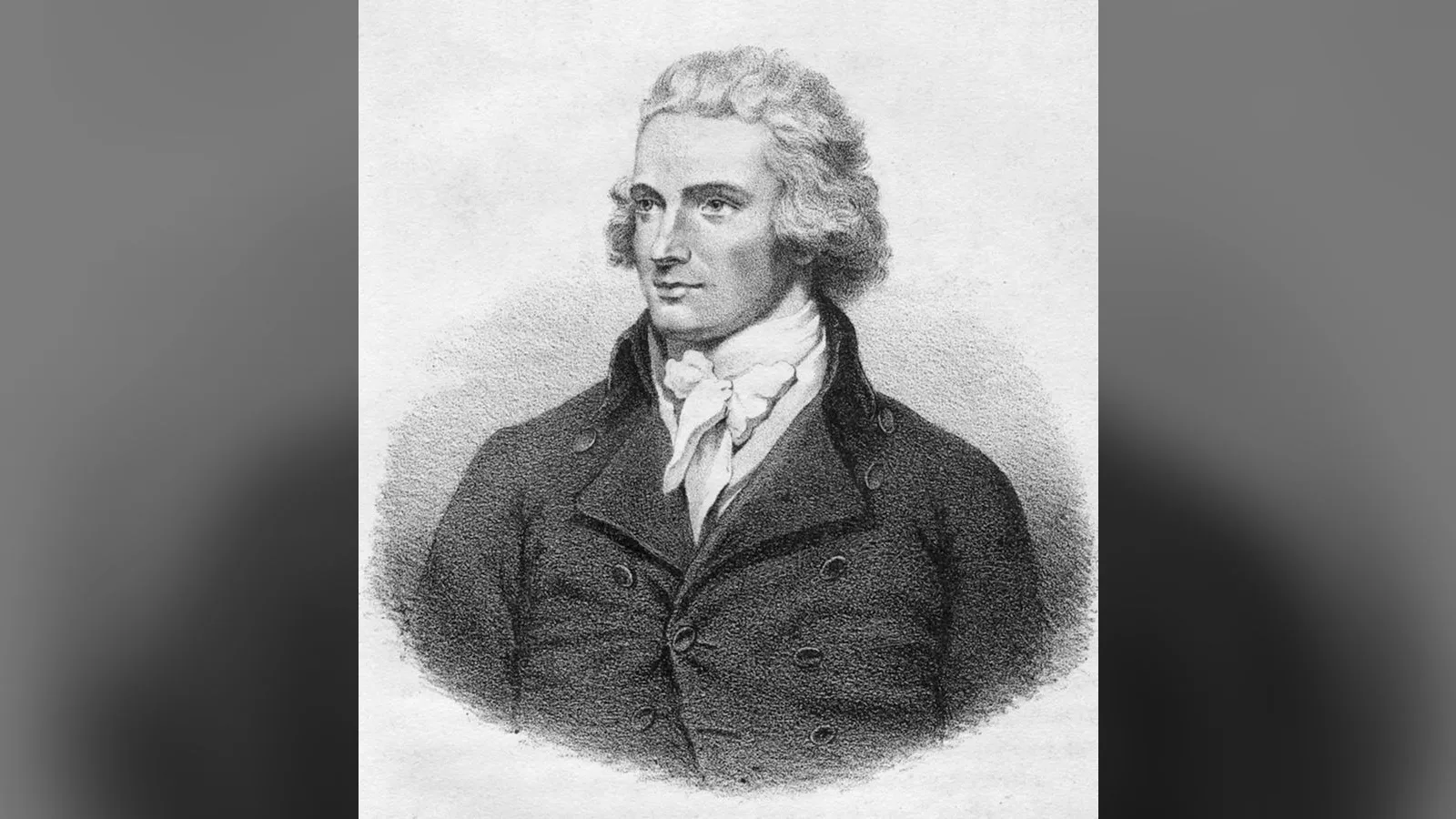

Mungo Park (1771–1806): The Surgeon Who Traced the Niger, and the Violence of His Second Journey
Contents
TL;DR
- Established/Documented: Mungo Park, a Selkirkshire surgeon, became the first European recorded to reach the Niger River on his 1795–97 expedition, surviving four months' captivity by a Moorish chief before escaping with only a horse and a pocket compass, and his resulting 1799 book, Travels in the Interior Districts of Africa, was a genuine literary and commercial success that shaped European understanding of West Africa for a generation.
- Established/Documented: Park's first expedition narrative contained unusually sympathetic and explicit statements of common humanity across racial lines for its time, including his written conviction that there was "none" essential difference "in the genuine sympathies and characteristic feelings of our common nature" between Europeans and the African peoples he encountered.
- Established/Documented: His second expedition (1805–06), a formally commissioned government mission with a substantial armed party, was a catastrophe from the outset: disease killed all but eleven of roughly 40 Europeans before the group even reached the Niger, and Park's own conduct during the river journey that followed changed markedly, involving a documented policy of avoiding contact and firing on approaching canoes, in some cases killing significant numbers of local people with superior European firepower.
- Established/Documented: Park died at the Bussa rapids in present-day Nigeria in early 1806 after his boat became stuck and was attacked by local people responding to his party's earlier conduct on the river; he and his remaining companions drowned attempting to escape, and his journal from the final months of the expedition was never recovered.
- Disputed/Shared: Park's historical reputation has shifted substantially since his own lifetime, from the unqualified "great explorer" of Victorian memory toward a more openly contradictory assessment — a man capable of both genuine written empathy and documented lethal violence against the people whose territory he was passing through, a tension this article treats directly rather than resolving toward either extreme.
Key Facts
- Born
- 10 September 1771, Yarrow, Selkirkshire, Scotland
- Died
- c. January 1806, Bussa rapids, Niger River (present-day Nigeria) (aged 34)
- Occupation
- Surgeon, explorer
- Known for
- First European recorded to reach the Niger River (1796); author of Travels in the Interior Districts of Africa (1799)
- Key achievement
- Establishing, through direct observation, that the Niger flowed eastward rather than westward as many Europeans had previously assumed
- Notable relationships
- Wife Allison Anderson Park; brother-in-law and second-in-command Alexander Anderson (died during the second expedition); patron Sir Joseph Banks; friend Sir Walter Scott
- Honours
- The Royal Scottish Geographical Society's annual Mungo Park Medal; a statue erected in Selkirk (1851)
- Legacy
- A genuinely significant figure in the European "age of African exploration," whose documented second-expedition conduct has prompted substantial historical reassessment in recent decades
Scottish Impact Index (SI Score)
- Global Influence
- 5/10
- Enduring Relevance
- 8/10
- Material Contribution
- 2/10
- Exceptional Achievement
- 6/10
- Lasting Legacy
- 5/10
- Recognition
- 3/10
29/60
Ranked =105th of 200 in Great Scots
A Note on Claims and Evidence
This article tiers claims by evidential strength. Established/Documented claims rest on multiple independent, well-corroborated sources, including Park's own published writing, the testimony of his expedition's surviving guide (Amadi Fatouma), and later verification by the explorers Hugh Clapperton and Richard Lander. Disputed/Shared claims involve genuine differences in historical interpretation. Mungo Park's story presents an unusually direct and well-documented example of the gap that can open between an explorer's earlier, more reflective writing and his later, more violent conduct under pressure — and this article gives full weight to both halves rather than allowing either his genuinely progressive first-expedition observations or his second expedition's lethal violence to stand alone as the complete picture.
Timeline
Born 10 September in Yarrow, Selkirkshire, the seventh of thirteen children of a relatively prosperous tenant farmer.
Apprenticed at age fourteen to the Selkirk surgeon Thomas Anderson, where he meets his future wife, Anderson's daughter Allison.
Enrols at the University of Edinburgh to study medicine and botany.
Completes his studies; obtains a position as a ship's surgeon's mate aboard the East India Company vessel Worcester, sailing to Sumatra, with the support of the naturalist Sir Joseph Banks.
Presents findings on Sumatran fish species to the Linnean Society; offers his services to the African Association to attempt to trace the course of the Niger River, following the death of a previous expedition leader in the Sahara.
Departs Portsmouth for the Gambia River to begin his first expedition.
Begins his inland journey from the trading post of Pisania.
Held captive for roughly four months by Ali, a Moorish ruler of Ludamar.
Escapes captivity with only his horse and a pocket compass.
Becomes the first European recorded to reach the Niger River, at Ségou, establishing that it flows eastward.
Returns to Pisania after a further difficult journey, including a seven-month illness-enforced stay at Kamalia.
Returns to Britain via a slave ship bound for Charleston, on which he serves as doctor to enslaved people aboard, "many of whom died en route," before eventually reaching Britain on 22 December 1797.
Publishes Travels in the Interior Districts of Africa, a commercial and literary success that shapes European understanding of West Africa.
Marries Allison Anderson, his former master's daughter.
Settles into medical practice in Peebles, which he finds professionally unfulfilling.
Invited by the British government to lead a second, much larger Niger expedition.
Departs Portsmouth for West Africa with a formal government commission, his brother-in-law Alexander Anderson as second-in-command, and a substantial party ultimately including around 40 Europeans after reinforcement at Gorée.
Reaches the Niger with only eleven Europeans still alive, the rest having died of fever and dysentery during the expedition's late, rainy-season start.
Alexander Anderson dies at Sansanding, a severe loss to the expedition's leadership.
Departs downriver from Sansanding aboard a converted 40-foot canoe, "H.M. schooner Joliba," with a small surviving party including Lieutenant Martyn, three European soldiers, a guide, and three enslaved people.
Conducts a documented policy of avoiding shore contact and firing on approaching canoes throughout the river journey, in several instances killing substantial numbers of local people; becomes widely known among downriver communities as a dangerous, hostile party.
Dies at the Bussa rapids after his boat becomes stuck and is attacked from the shore; Park, Lieutenant Martyn, and two remaining soldiers drown attempting to escape by swimming; one enslaved member of the party survives.
The British government dispatches the guide Isaaco to determine Park's fate, who locates Amadi Fatouma, the expedition's downriver guide, whose account of the final events is later verified by explorers Hugh Clapperton and Richard Lander.
Park's son Thomas dies of fever in West Africa while attempting to determine whether his father might still be alive in captivity near Bussa.
Richard Lander and his brother John become the first Europeans to trace the complete course of the Niger from source to ocean, finally resolving the geographical question Park had died pursuing, 24 years after his death.
A statue of Park is erected on Selkirk's High Street.
Details
A Selkirkshire Surgeon in the Making
Mungo Park's origins were solidly, if not spectacularly, prosperous rather than dramatically humble — a useful point of contrast with several other figures in this series. Born in 1771 to a tenant farmer renting land from the Duke of Buccleuch, Park was the seventh of thirteen children in a family whose relative financial comfort (his father's estate was valued at roughly £3,000, a substantial sum) allowed for a genuine formal education. Apprenticed to a Selkirk surgeon at fourteen, he went on to study medicine and botany at the University of Edinburgh before securing, through the naturalist Sir Joseph Banks's patronage, a position as a ship's surgeon's mate on an East India Company voyage to Sumatra — early evidence of both genuine scientific ability and the kind of well-connected patronage that would later secure him the African Association's commission.
First Contact with the Niger
In 1795, following the death of a previous African Association expedition leader in the Sahara, Park volunteered to attempt to trace the course of the Niger River — a genuinely significant open geographical question of the period, since Europeans did not yet reliably know whether the river flowed east or west. His journey inland from the Gambia River was gruelling and dangerous in ways that are well documented independent of Park's own later embellishment: he was held captive for roughly four months by Ali, a Moorish ruler of Ludamar, before escaping in July 1796 with nothing but his horse and a pocket compass. Weeks later, on 21 July 1796, he became the first European recorded to reach the Niger at Ségou, establishing — correctly, and against prevailing assumption — that the river flowed eastward. He traced its course for some distance before illness and dwindling resources forced his return, a journey during which he was sheltered for seven months by a benefactor at Kamalia while recovering from illness.
A Genuinely Unusual Voice for Its Time
Park's resulting 1799 book, Travels in the Interior Districts of Africa, deserves credit this article gives directly rather than in passing: it was, by the documented standards of contemporary European travel writing about Africa, unusually humane and specific in its portrayal of the people and societies he encountered. Park wrote explicitly that "whatever difference there is between the negro and European, in the conformation of the nose, and the colour of the skin, there is none in the genuine sympathies and characteristic feelings of our common nature" — a direct, unambiguous statement of common humanity that stood in real contrast to much contemporary travel and scientific writing of the period. He recorded with apparent sympathy the terror felt by enslaved people he encountered being marched toward the coast, who had been told, and believed, that Europeans intended to eat them. This was a genuinely significant contribution to European understanding of West African societies as complex and human, rather than as an undifferentiated "other" — even as, this article notes without contradiction, that same detailed documentation went on, as with several other explorers in this series, to substantially assist the colonial ambitions that followed.
It is also worth recording a detail that complicates any simple reading of Park's relationship to the slave trade: unable to secure direct passage back to Britain, Park returned home aboard a slave ship bound for Charleston, on which he served, using the Mandinka language he had learned during his travels, as doctor to the enslaved people aboard — many of whom, he recorded, died during the crossing regardless of his medical attention. This was not activism against the slave trade, nor participation in organising it, but direct, documented proximity to its machinery in a medical capacity, a detail this article includes rather than omits.
A Changed Man on a Different Expedition
Everything that makes Park's second expedition (1805–06) historically significant is inseparable from the fact that it went badly wrong from its earliest stages, and this article treats that failure and what followed from it as the central, necessary subject of this part of his career rather than a footnote to an otherwise triumphant return to Africa. Commissioned by the British government with a substantial armed party — ultimately numbering around 40 Europeans after reinforcement — the expedition set out too late in the year, arriving in West Africa as the rainy season began. Disease devastated the party with brutal speed: by the time the survivors reached the Niger in mid-August 1805, only eleven Europeans remained alive out of the roughly 40 who had set out. Park's own brother-in-law and second-in-command, Alexander Anderson, died at Sansanding on 28 October, a significant blow to an already decimated and demoralised expedition.
What followed, once the surviving party set off downriver in a converted canoe on 19 November 1805, represents the most serious and direct departure from the humane voice of Park's first-expedition writing, and this article states it plainly rather than allowing the earlier, more sympathetic Park to stand in for the whole man. Facing hostility from Muslim traders who correctly viewed him as a potential threat to their trading position and who lobbied local rulers against his party, Park adopted a documented and deliberate policy: staying toward the middle of the two-to-three-mile-wide river, avoiding all contact with the shore, refusing to pay customary tolls, and firing on canoes that approached his party. The surviving historical record describes this in direct terms — a "shoot first" approach that, in multiple documented instances, resulted in what one assessment describes as "slaughtering significant numbers of natives using superior firepower." His party, we know from the detailed later account of the guide Amadi Fatouma — verified by the subsequent explorers Hugh Clapperton and Richard Lander — travelled with each man carrying "15 musquets apiece, well loaded and always ready for action," and used them repeatedly against local canoes that approached, in communities that themselves lacked firearms. This is not a matter of inference or later reinterpretation; it is the documented, verified account of Park's own expedition's conduct, recorded by his own surviving guide.
The consequence of this conduct was that Park's party became, in the words of one modern assessment, "something of a pariah" among the river communities he passed, with warnings of the approaching "dangerous interloper" being relayed downstream ahead of him — a direct and predictable consequence of his own documented actions, not an inexplicable or unprovoked hostility encountered at the journey's end.
Death at Bussa
It was against this background that Park's expedition met its end. At the Bussa rapids, his boat became stuck fast on a rock. Local people — almost certainly responding, at least in part, to the reputation Park's party had by then earned along the river — gathered on the banks and attacked with bows, arrows, and spears. Facing an untenable position, Park, Lieutenant Martyn, and the two remaining European soldiers threw themselves into the river and drowned attempting to escape. Only one member of the party, an enslaved person travelling with the expedition, survived to give an eyewitness account of the final moments, an account obtained only after Amadi Fatouma — who had disembarked upriver at Yauri before the final confrontation — was himself held captive for three months before being released and able to relay what he had learned. Park's journal from the expedition's final months was never recovered, meaning his own account of the reasoning behind his conduct during these final weeks does not survive, leaving historians dependent on external testimony for this part of the record.
An Unresolved Question, and a Family's Further Loss
The geographical question Park died attempting to resolve — the Niger's ultimate course and outlet — remained unsettled for a further 24 years, until Richard Lander and his brother John finally traced the river's complete course to the sea in 1830. Park's own theory, published in his first book, that the Niger and Congo were the same river, proved incorrect, though it remained a commonly held view for some years after his death. The human cost of Park's expeditions extended beyond his own death: his son Thomas, convinced his father might still be held captive near Bussa, travelled to West Africa in 1827 to investigate and died of fever after penetrating inland — a second generation of the Park family lost to the same stretch of the Niger.
A Reputation Reassessed
Park's contemporaries regarded him, without significant qualification, as one of the greatest explorers of his age, and this uncomplicated heroic framing persisted through Victorian and into 20th-century popular memory — reflected in the 1851 Selkirk statue and the continuing Royal Scottish Geographical Society medal named for him. More recent historical assessment has moved toward a considerably more complicated picture, one this article endorses as the more accurate reading of the documented record: a figure, in the words of one mid-20th-century reassessment, "cool but impassioned, cowardly but courageous" — and, this article adds directly, a man whose own written words about common humanity across racial lines sit in genuine, documented tension with his later, verified conduct of lethal violence against African communities during his second, fatal expedition. Some recent scholarship has also credited Park with genuine loyalty to his own companions in the expedition's final collapse, offering care to dying members of his party even as the mission fell apart around him — a detail this article includes as part of the fuller picture, without allowing it to outweigh the documented harm his party caused to the communities along the Niger's banks.
Did You Know?
- Mungo Park escaped four months of captivity by a Moorish ruler in 1796 with nothing but his horse and a pocket compass, and went on to become the first European recorded to reach the Niger River weeks later.
- His 1799 book included an explicit written statement that there was no essential difference "in the genuine sympathies and characteristic feelings of our common nature" between Europeans and the African peoples he encountered — an unusually direct statement of common humanity for its time.
- Unable to secure direct passage home after his first expedition, Park returned to Britain aboard a slave ship, on which he served as doctor to the enslaved people aboard, many of whom died during the crossing despite his care.
- Park's second expedition lost nearly three-quarters of its European members to disease before it even reached the Niger River.
- During his final river journey, Park's party adopted a documented policy of firing on approaching canoes and avoiding all shore contact, in several instances killing significant numbers of local people who lacked firearms of their own.
- The guide who later reconstructed the account of Park's final weeks and death, Amadi Fatouma, was himself held captive for three months before he could relay what he had learned.
- Park's journal from the final months of his fatal second expedition was never recovered, meaning his own account of his conduct and reasoning during that period does not survive.
- Park's son Thomas died of fever in West Africa in 1827 while trying to determine whether his father might still be alive, held captive near the site of his death.
- The mystery of the Niger's course that Park died trying to resolve was not finally solved until 1830, when explorers Richard and John Lander traced the river's full course to the sea — 24 years after Park's death.
Frequently Asked Questions
1Was Mungo Park the first European to see the Niger River?
He is generally credited as the first European recorded to reach the river, in July 1796, establishing that it flowed eastward rather than westward as many Europeans had previously assumed — a genuinely significant geographical finding at the time.
2Did Mungo Park hold progressive views on race for his era?
His first-expedition writing included unusually direct and explicit statements of common humanity across racial lines, which stood out from much contemporary European travel writing about Africa. This article presents this as a genuine and documented aspect of his first book, while noting it sits in tension with his later, very different conduct during his second expedition.
3Is it true that Mungo Park's second expedition killed African people during its final journey?
Yes, and this is well documented rather than a matter of later speculation. Park's party adopted a deliberate policy of avoiding shore contact and firing on approaching canoes during the final river journey, and the historical record, including the account of his own surviving guide, describes several instances in which significant numbers of local people were killed using superior European firepower.
4How did Mungo Park die?
His boat became stuck on a rock at the Bussa rapids in present-day Nigeria, and local people, responding at least in part to the hostile reputation his party had earned during the preceding weeks of the journey, attacked from the shore. Park and his remaining European companions drowned attempting to escape by swimming.
5Why did Park's second expedition go so badly?
It began too late in the year, arriving in West Africa as the rainy season set in, and disease killed nearly three-quarters of the roughly 40 Europeans in the party before it even reached the Niger. The surviving core group then faced serious political hostility from traders who viewed Park as a threat to their trading position.
6What happened to Mungo Park's journal from his second expedition?
It was never recovered. As a result, his own account of his reasoning and conduct during the final months of the expedition does not survive, and historians rely instead on the reconstructed testimony of his surviving guide, Amadi Fatouma, later verified by the explorers Hugh Clapperton and Richard Lander.
7Did anyone else in Park's family die in West Africa?
Yes. His son Thomas died of fever in 1827 while attempting to travel to Bussa to determine whether his father might still be alive in captivity there, more than two decades after Park's actual death.
8How is Mungo Park remembered today?
His historical reputation has shifted from the largely uncomplicated heroic image of his own era toward a more openly contradictory assessment that gives weight to both his genuine geographical and literary achievements and the documented violence of his second expedition's conduct. He is commemorated by a statue in Selkirk and the Royal Scottish Geographical Society's Mungo Park Medal.
9When was the mystery of the Niger's course finally solved?
In 1830, by explorers Richard and John Lander, who traced the river's complete course from source to sea — 24 years after Park's death in the same pursuit.
10Was Mungo Park an opponent of slavery?
The evidence does not support describing him as an abolitionist activist. He served as doctor to enslaved people aboard a slave ship on his return voyage from his first expedition and recorded sympathetic observations of enslaved people's fear and suffering, but there is no substantial record of organised anti-slavery advocacy comparable to contemporaries such as David Livingstone.
Sources and Further Reading
Primary / Institutional
- Mungo Park, Travels in the Interior Districts of Africa (1799)
- Amadi Fatouma's account of Park's final expedition, as later verified by Hugh Clapperton and Richard Lander
- African Association records and correspondence, including Sir Joseph Banks's sponsorship materials
Scholarly / Reference
- Wikipedia: "Mungo Park (explorer)"
- Britannica: "Mungo Park"
- EBSCO Research Starters: "Mungo Park"
- Linda Hall Library: "Mungo Park, Scottish Surgeon and Explorer" (Scientist of the Day)
- H. P. Tait, "Mungo Park — Surgeon and Explorer," Cambridge Core
General / Popular
Caveats: Myths and Disputed Claims
- "Mungo Park was an unambiguous hero whose death was an unprovoked tragedy." This was the essentially unquestioned Victorian-era framing, but the documented record — including the account of Park's own surviving guide — shows that his party's own conduct during the final weeks of his second expedition, including firing on approaching canoes and killing significant numbers of local people, directly contributed to the hostile reception that ultimately led to his death at Bussa.
- "Park's sympathetic first-expedition writing means he held consistently humane views throughout his career." His 1799 book contains genuinely unusual and direct statements of common humanity, but this article does not allow that earlier record to stand in for, or excuse, the substantially different and violent conduct documented during his second expedition six years later.
- "Mungo Park was first to establish the Niger's full course and outlet." He was the first European recorded to reach the river and correctly determined its eastward flow, but the river's complete course and outlet to the sea remained unresolved until Richard and John Lander's 1830 expedition, 24 years after Park's death.
- "Park's theory that the Niger and Congo were the same river was correct." It was not; this was a genuine error in his otherwise significant geographical contribution, later corrected by other researchers and explorers.
Card 079 · Great Scots