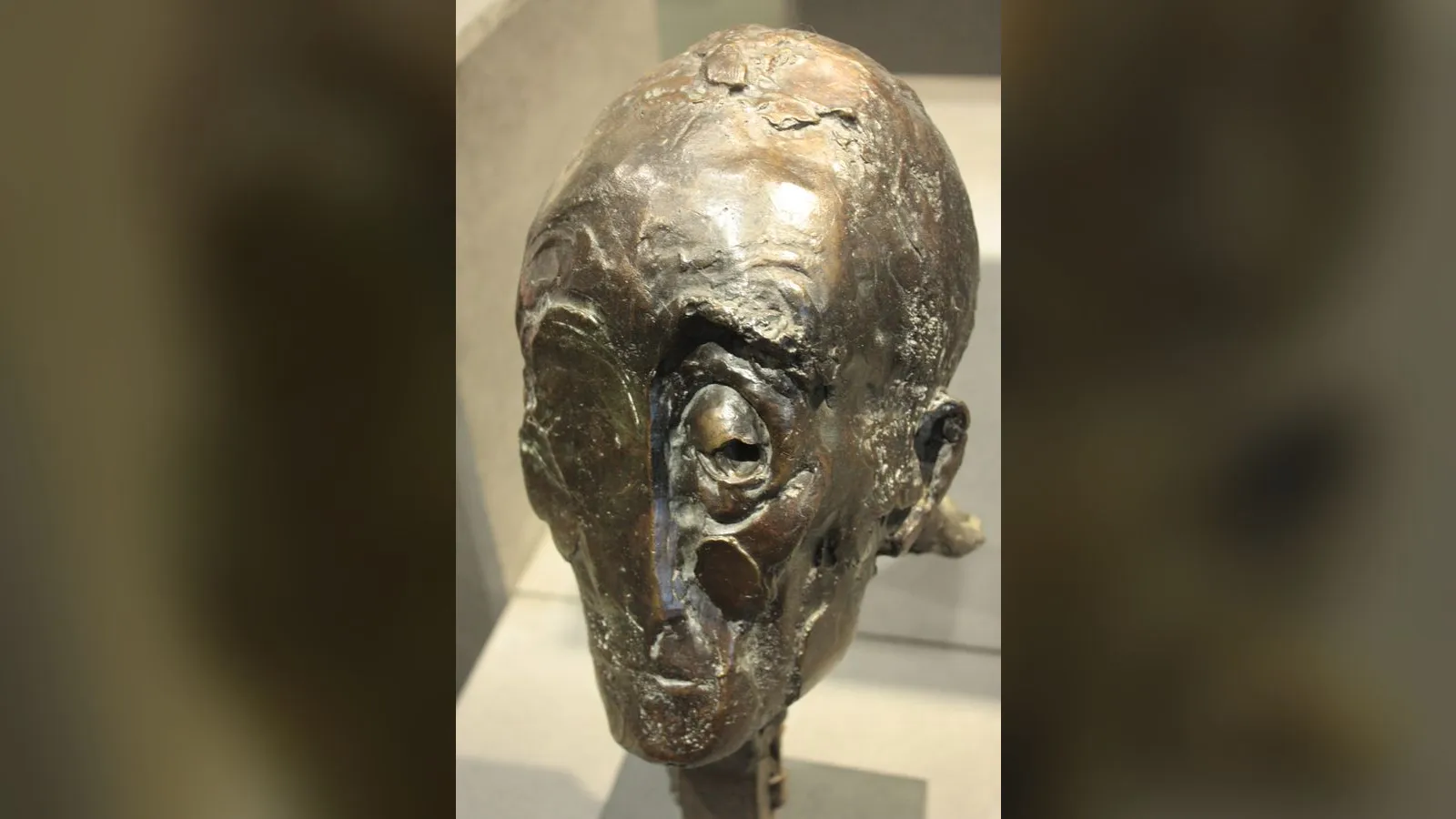

Norman MacCaig (1910–1996)
Contents
TL;DR
- established Norman MacCaig was an Edinburgh-born poet widely regarded as one of the finest Scottish poets of the 20th century, celebrated for combining precise, often witty observation of landscape, people, and animals with a clarity of language that set him apart from his more obscure contemporaries.
- established He was a committed pacifist and registered conscientious objector during the Second World War, a stance that led to real professional consequences, including a period of imprisonment — not merely social disapproval.
- established His early poetry belonged to the obscure, image-heavy "New Apocalypse" movement of the 1930s–40s, which he later disowned outright, dismissing those poems as "obscure and meaningless" before reinventing himself with the strictly formal, lucid verse of Riding Lights (1955).
- established He maintained a lifelong dual attachment to Edinburgh, where he lived and worked, and Assynt in the northwest Highlands, his mother's ancestral country, which supplied much of the landscape and subject matter of his mature poetry.
- established He was widely admired by major contemporaries and successors, with Seamus Heaney describing his mature work as "an ongoing education in the marvellous possibilities of lyric poetry" and Ted Hughes praising its "undated freshness."
Key Facts
- Born
- 14 November 1910, Edinburgh
- Died
- 23 January 1996 (aged 85), Edinburgh
- Category
- Culture / Literature (Poetry)
- Known for
- Precise, lucid lyric poetry rooted in Edinburgh and Assynt landscapes
- Key collections
- Riding Lights (1955), The Sinai Sort (1957), A Common Grace (1960), Surroundings (1966), The White Bird (1973)
- Education
- University of Edinburgh (Classics, graduated 1932)
- Honours
- OBE (1979); Queen's Gold Medal for Poetry (1986); Cholmondeley Award (1975)
Scottish Impact Index (SI Score)
- Global Influence
- 3/10
- Enduring Relevance
- 6/10
- Material Contribution
- 1/10
- Exceptional Achievement
- 6/10
- Lasting Legacy
- 3/10
- Recognition
- 2/10
21/60
Ranked =165th of 200 in Great Scots
A Note on Claims and Evidence
MacCaig's biography, wartime conscientious objection, teaching career, and bibliography are well documented through institutional records, contemporary accounts, and his own published statements, and are treated here as established. The precise extent to which his pacifism damaged his career, as argued by critic Douglas Dunn, is noted as his assessment rather than a settled historical consensus, since the underlying evidence for a direct causal link is necessarily circumstantial.
Timeline
Born in Edinburgh to a Dumfriesshire chemist father and a mother from Scalpay in the Outer Hebrides.
Studies Classics at the University of Edinburgh, graduating in 1932.
Works as a primary school teacher in Edinburgh.
Registers as a conscientious objector during the Second World War and is imprisoned as a result.
Marries Isabel Robina Munro.
Publishes his first poetry collection, Far Cry, in the obscure "New Apocalypse" style.
Publishes Riding Lights, a decisive stylistic break toward formal, lucid verse, marking his critical breakthrough.
Publishes The Sinai Sort.
Publishes A Common Grace.
Publishes Measures.
Publishes Surroundings, marking his shift toward free verse while retaining clarity.
Appointed Edinburgh University's first Fellow/Writer in Residence in Creative Writing.
Becomes Reader in Poetry at the University of Stirling.
Publishes The White Bird.
Receives the Cholmondeley Award.
Retires from Stirling University.
Appointed Officer of the Order of the British Empire (OBE).
Awarded the Queen's Gold Medal for Poetry.
Publishes Voice Over.
His wife, Isabel, dies; his later poetry grows more elegiac in response.
Dies in Edinburgh, aged 85.
Details
An Edinburgh childhood with Highland roots
Norman Alexander MacCaig was born in 1910 at 15 East London Street in Edinburgh, the fourth child and only son of Robert McCaig, a chemist from Dumfriesshire, and Joan MacLeod, who came from the island of Scalpay in the Outer Hebrides. This dual heritage — lowland professional respectability on his father's side, Gaelic island ancestry on his mother's — shaped a lifelong duality in MacCaig's own life and work: a poet who lived and worked in Edinburgh for virtually his entire career, while returning, summer after summer, to the landscape of Assynt in the northwest Highlands that his mother's family connection gave him a deep, personal claim to. He was educated at the Royal High School in Edinburgh before studying Classics at the University of Edinburgh, graduating in 1932 — a classical education that scholars have connected directly to the precision and clarity that would eventually become the hallmark of his mature poetic style.
Conscientious objection and its real cost
During the Second World War, MacCaig registered as a conscientious objector, refusing military service on grounds of pacifist conviction at a time when that stance carried serious social and legal risk. This was not a token gesture: he was imprisoned as a result of his refusal, a genuine legal and personal consequence rather than mere public disapproval. The critic Douglas Dunn later argued that MacCaig's career suffered lasting professional damage because of his outspoken pacifism — a claim that remains a matter of scholarly interpretation rather than settled fact, given how difficult it is to isolate the effect of one factor on a literary reputation built over decades, but one worth reporting as a serious critical assessment rather than omitting. What is not in dispute is that MacCaig held to his pacifist convictions at real personal cost during the war, then returned to ordinary civilian life afterward, working as a primary school teacher in Edinburgh through the 1930s and into the postwar years.
A false start and a dramatic reinvention
MacCaig's literary career began inauspiciously, at least by the standards his later reputation would set. His first collection, Far Cry (1943), was written in the style of the "New Apocalypse" movement then current among younger British poets — a mode characterised by dense, surreal imagery and often genuinely obscure meaning, reacting against the perceived coldness of 1930s political poetry. MacCaig later disowned this early work entirely and without sentimentality, dismissing the poems as "obscure and meaningless" — a strikingly severe self-assessment from a poet looking back on his own debut.
The turning point came with Riding Lights (1955), which represented a complete reversal of style: strictly formal, metrical, rhyming, and — in deliberate contrast to his apprentice work — utterly lucid. This was the collection that established MacCaig's mature reputation and set the template, precise observation rendered in clear, often wry language, that would define the rest of his career. Though this lucid, formally disciplined style aligned him thematically with The Movement, the loose grouping of largely English poets (including Philip Larkin and Kingsley Amis) who dominated 1950s British poetry with their own reaction against obscurity, MacCaig remained a notably independent figure within that broader current, distinguished in part by his firmly Scottish identity and subject matter at a time when Movement poetry was overwhelmingly English in both authorship and outlook.
From strict form to clear free verse
MacCaig's style continued to evolve without ever abandoning the core commitment to clarity that Riding Lights had established. Collections including The Sinai Sort (1957), A Common Grace (1960), and Measures (1965) consolidated his reputation for precise, often playful observation of landscape, animals, and people. With Surroundings (1966) he moved decisively toward free verse, relaxing the strict rhyme and metre of his earlier mature work while, in his own practice and by the consistent judgment of his critics, never losing the lucidity that had become his signature. He went on to publish prolifically across the following decades, including The White Bird (1973) and Voice Over (1989), and a substantial body of previously unpublished poems surfaced from his archive after his death, underscoring just how productive his later decades were.
MacCaig identified strongly with the metaphysical poetic tradition, naming John Donne as a significant influence, and also admired the Northern Irish poet Louis MacNeice. His reputation among his peers and successors was considerable: Seamus Heaney described MacCaig's mature work as "an ongoing education in the marvellous possibilities of lyric poetry," and Ted Hughes praised the enduring quality of his verse, writing that "whenever I meet his poems, I'm always struck by their undated freshness, everything about them is alive, as new and essential, as ever." He maintained close and lasting friendships with major contemporaries, including Hugh MacDiarmid and, later, the poet Douglas Dunn.
Teaching, Assynt, and public life
Beyond his early years as a primary school teacher, MacCaig's later career moved into higher education and public literary life. In 1967 he was appointed Edinburgh University's first Fellow (sometimes described as Writer) in Creative Writing, and in 1970 he became Reader in Poetry at the University of Stirling, a post he held until retiring in 1978. He became known throughout Edinburgh and beyond for lively, popular public poetry readings, introducing many audiences to contemporary Scottish poetry directly through performance rather than the page alone. Through all of this, he maintained his summer returns to Assynt — particularly Achmelvich and Inverkirkaig near Lochinver — the landscape that supplied the recurring images of mountains, water, and wildlife running through so much of his work, and that he described, with characteristic directness, as his mother's ancestral country rather than merely a scenic retreat.
"Zen Calvinism," grief, and a late flowering
MacCaig married Isabel Robina Munro in 1940, and the couple had two children. He described his own spiritual outlook with characteristic wit as "Zen Calvinism" — a half-humorous, half-serious formulation that captured both his Scottish Presbyterian inheritance and a more contemplative, Eastern-inflected openness to uncertainty and paradox. Isabel's death in 1990 marked a genuine turning point in his late poetry, which grew noticeably more elegiac and grief-filled in its final years, though — notably, and consistently with the clear-eyed quality that had defined his work since Riding Lights — his late poems are generally described by critics as avoiding simple pessimism even as they confronted loss directly.
Honours, death, and lasting place in Scottish culture
MacCaig's honours reflected a literary reputation that grew steadily across his career rather than arriving in one sudden burst: the Cholmondeley Award in 1975, appointment as an Officer of the Order of the British Empire in 1979, and the Queen's Gold Medal for Poetry in 1986, one of the most significant honours available to a poet writing in English. He died on 23 January 1996 in Edinburgh, the city where his life had begun 85 years earlier. His poems — including widely studied pieces such as "Aunt Julia," "Basking Shark," and "Hotel Room, 12th Floor" — remain set texts in Scottish secondary education at National 5 and Higher level, ensuring his continued presence in the reading lives of generations of Scottish schoolchildren. A bust commemorating him stands at Edinburgh Park.
Did You Know?
- MacCaig disowned his own first poetry collection, calling the poems "obscure and meaningless," and spent the rest of his career writing in a completely different style.
- He was imprisoned during the Second World War as a result of his registration as a conscientious objector.
- He described his own spiritual outlook as "Zen Calvinism."
- Seamus Heaney called his mature poetry "an ongoing education in the marvellous possibilities of lyric poetry."
- He spent his summers for decades in Assynt in the Highlands, his mother's ancestral country, which supplied much of his poetry's imagery.
- He became Edinburgh University's first Fellow in Creative Writing in 1967.
- His poems remain set texts in Scottish schools today, decades after his death.
- A substantial archive of previously unpublished poems surfaced only after his death in 1996.
FAQ
1What is Norman MacCaig best known for?
Precise, often witty lyric poetry rooted in the landscapes and people of Edinburgh and Assynt in the Highlands, and for his decisive stylistic reinvention with Riding Lights (1955).
2Was Norman MacCaig imprisoned during World War II?
Yes — he registered as a conscientious objector and was imprisoned as a direct result of his pacifist refusal to serve.
3What was the "New Apocalypse" movement MacCaig started in?
A 1930s–40s British poetic movement characterised by dense, surreal, often obscure imagery, which MacCaig wrote in for his 1943 debut collection before later disowning that work entirely.
4Did Norman MacCaig's pacifism hurt his career?
This is a matter of scholarly debate. Critic Douglas Dunn has argued it caused lasting professional damage, though the evidence for a direct causal effect remains circumstantial rather than definitively proven.
5What does "Zen Calvinism" mean, as MacCaig used the phrase?
His own half-humorous description of his personal spiritual outlook, blending his Scottish Presbyterian background with a more contemplative, paradox-embracing sensibility.
6Where is Assynt and why did it matter to MacCaig?
A remote area of the northwest Highlands that was his mother's ancestral country; he spent decades of summers there, and its landscape supplies much of the imagery in his mature poetry.
7What honours did Norman MacCaig receive?
An OBE (1979), the Cholmondeley Award (1975), and the Queen's Gold Medal for Poetry (1986), among other recognitions.
8Are Norman MacCaig's poems still studied in schools?
Yes — poems including "Aunt Julia," "Basking Shark," and "Hotel Room, 12th Floor" remain set texts for Scottish National 5 and Higher examinations.
9How did Norman MacCaig's poetry change after his wife's death?
His later work, following Isabel's death in 1990, grew more elegiac and grief-centred, though critics note it generally avoided simple pessimism even in confronting loss.
Sources and Further Reading
Institutional
- University of Edinburgh, Centre for Research Collections, "About Norman MacCaig"
- Scottish Poetry Library, biography and poet profile
- Queen's Gold Medal for Poetry, official citation records (1986)
Scholarly / Critical
- Douglas Dunn, critical assessment of MacCaig's career and the effect of his wartime pacifism
- Seamus Heaney and Ted Hughes, published critical appreciations of MacCaig's work
General
- Wikipedia, "Norman MacCaig" (overview, cross-checked against institutional sources above)
- Britannica, "Norman MacCaig"
- Candlestick Press, biographical notes on Norman MacCaig
Caveats: Myths and Disputed Claims
- disputed Whether MacCaig's wartime conscientious objection directly and substantially damaged his literary career, as Douglas Dunn has argued, is a critical interpretation rather than a conclusively documented fact.
- Clarify: MacCaig's early "New Apocalypse" poetry and his mature, lucid style are sometimes treated as a smooth development; in fact MacCaig himself characterised the shift as a sharp rejection of his earlier work, not a gradual refinement of it.
- Myth: MacCaig was simply a nature or landscape poet. Reality: While landscape, particularly Assynt, is central to his work, critics consistently emphasise his precision, wit, and metaphysical interests (notably his debt to John Donne) as equally defining features.
Card 104 · Great Scots