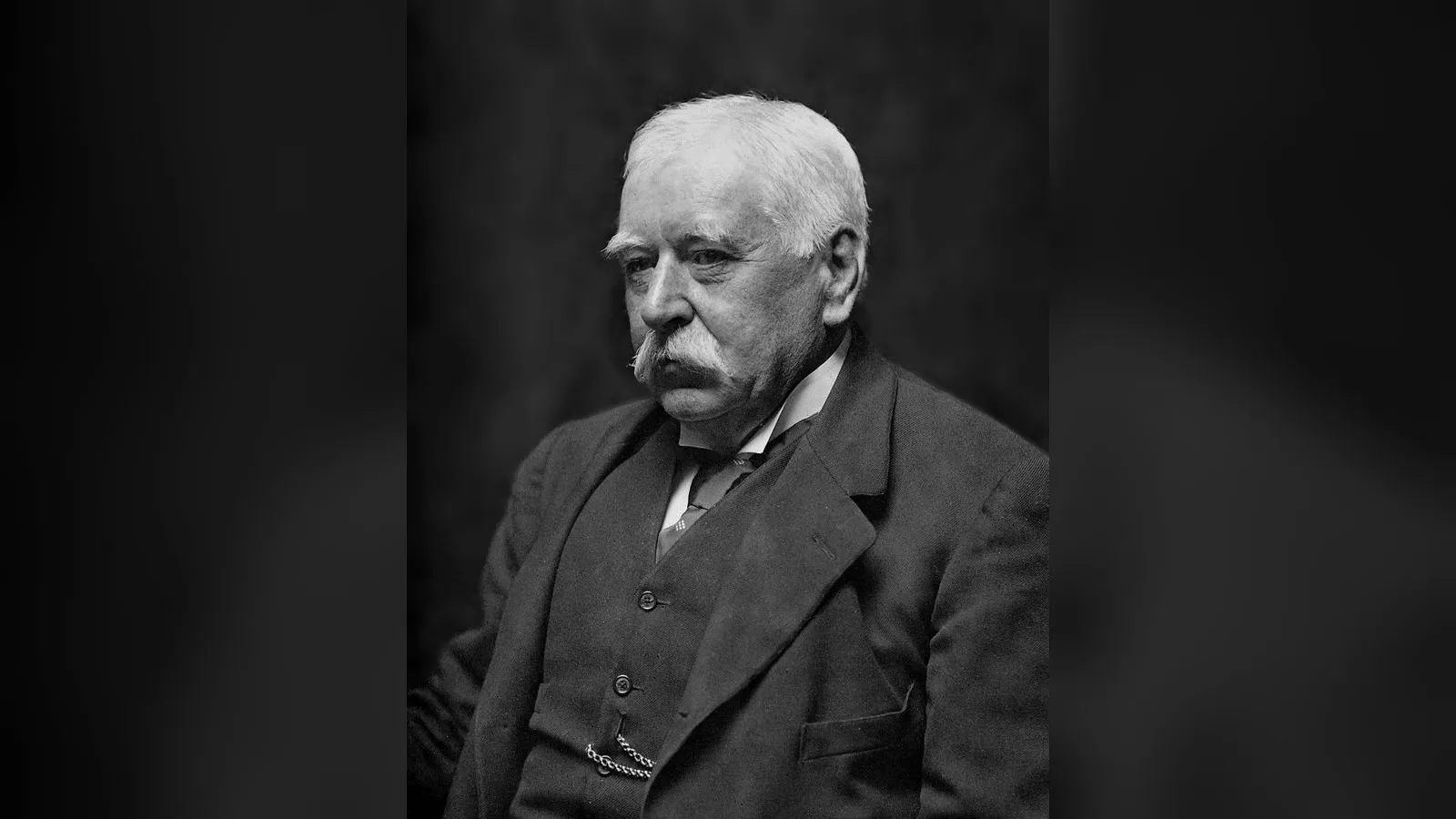

Sir Patrick Manson (1844–1922)
Contents
TL;DR
- Established/Documented: Manson is widely known as "the father of tropical medicine" — he was the first person to prove that an insect could transmit a parasitic disease to humans, demonstrating in 1877–78 that mosquitoes carry the filarial worms that cause elephantiasis, a discovery that founded an entirely new field of medical science.
- Established/Documented: Manson's 1877–78 filariasis experiments were conducted on his own gardener, Hin Lo, a man already infected with the parasite, who Manson used as a source of infected blood on which to feed mosquitoes before dissecting them — this card states plainly that the experiment was performed on another named human being without anything resembling modern informed consent, in the deeply unequal colonial medical context of nineteenth-century China.
- Established/Documented: Manson theorised in 1894 that malaria, like filariasis, might be transmitted by mosquitoes, and personally mentored and directed Ronald Ross — then a comparatively junior military physician in India — toward the experimental work that confirmed the theory in 1897–98; Ross alone received the 1902 Nobel Prize in Physiology or Medicine for this work, and his Nobel address notably did not credit Manson as his primary scientific mentor, creating a real and documented rift between the two men.
- Established/Documented: Manson founded the London School of Tropical Medicine in 1899, institutionalising tropical medicine as a formal academic discipline for the first time, and later served as the first president of the Royal Society of Tropical Medicine and Hygiene.
- Shared/Traditional: His connection to China extended well beyond his medical research — he founded the Hong Kong College of Medicine for Chinese, whose students included Sun Yat-sen, later the first president of the Republic of China, and Manson personally used his diplomatic contacts to help secure Sun's release after he was kidnapped by Chinese officials in London in 1896.
Key Facts
- Born
- 3 October 1844, Oldmeldrum, Aberdeenshire, Scotland
- Died
- 9 April 1922, London, England (aged 77)
- Education
- University of Aberdeen, MB (1865); MD, ChM, LLD (1866)
- Known for
- First demonstration of insect-borne disease transmission (filariasis, 1877–78); mentoring Ronald Ross toward the mosquito-malaria discovery; founding the London School of Tropical Medicine (1899)
- Key positions
- Medical officer, Chinese Imperial Maritime Customs, Formosa and Amoy (1866–1883); physician, Hong Kong (1883–89); Chief Medical Officer, Colonial Office (1897–1912)
- Honours
- FRS (1900); Cameron Prize (1900); Fothergill Medal (1902); KCMG (1903); GCMG (1912); Jenner Medal (1912)
- Medical eponyms
- Schistosoma mansoni; the filarial roundworm genus Mansonella; the mosquito genus Mansonia
Scottish Impact Index (SI Score)
- Global Influence
- 7/10
- Enduring Relevance
- 8/10
- Material Contribution
- 5/10
- Exceptional Achievement
- 8/10
- Lasting Legacy
- 7/10
- Recognition
- 3/10
38/60
Ranked =44th of 200 in Great Scots
Claim-Status and Evidence Note
Claims below are evidence-tiered as Established/Documented (settled by primary sources, published research, or broad scholarly consensus), Shared/Traditional (widely told and broadly accurate, if simplified), disputed, or Legend/Myth (unsupported and actively corrected here). Manson's story combines a genuinely field-founding scientific achievement with two matters requiring direct, unminimised treatment: the ethically troubling circumstances of his own foundational experiment, and a real, documented professional rift with the student whose more famous, Nobel-winning work he made possible.
Timeline
Born in Oldmeldrum, Aberdeenshire, to Alexander Manson and Elizabeth Livingstone Blaikie (a distant relative of missionary explorer David Livingstone).
Begins medical training at the University of Aberdeen, following an interruption caused by contracting Pott's disease (spinal tuberculosis) during an earlier ironworks apprenticeship.
Completes his medical degree at the University of Aberdeen, aged just nineteen.
Earns his Master of Surgery, Doctor of Medicine, and Doctor of Law degrees; joins the Chinese Imperial Maritime Customs as a medical officer and is posted to Formosa (Taiwan).
Transfers to Amoy (Xiamen) on the Chinese mainland, where he works at the Baptist Missionary Society's Hospital for thirteen years.
Discovers that mosquitoes (Culex fatigans, now Culex quinquefasciatus) transmit the filarial worms (Wuchereria bancrofti) that cause elephantiasis, through experiments involving his gardener Hin Lo; publishes findings in the China Customs Medical Report, later relayed to London's Linnean Society by Spencer Cobbold.
Discovers sparganosis, caused by the Spirometra tapeworm.
Practises in Hong Kong; imports cattle from Scotland in 1885, founding what becomes the Dairy Farm company; founds the Hong Kong College of Medicine for Chinese, whose early students include Sun Yat-sen.
Returns to London, settling at 21 Queen Anne Street; qualifies as a Member of the Royal College of Physicians in 1890.
Appointed physician at the Seamen's Hospital Society; begins lecturing on tropical diseases at St George's Hospital.
Publishes his theory in the British Medical Journal that mosquitoes may similarly transmit malaria, and calls for experimental confirmation in the tropics, since "the necessary experiments cannot for obvious reasons be carried out in England."
Personally mentors Ronald Ross, then serving in the Indian Medical Service, directing his research toward testing the mosquito-malaria hypothesis.
Uses his Foreign Office contacts to help secure the release of his former Hong Kong student Sun Yat-sen after Chinese officials kidnapped him in London.
Appointed Chief Medical Officer to the Colonial Office, a position he uses to advocate for formal tropical medicine education.
Ross demonstrates the complete life cycle of avian malaria parasite within the female mosquito, confirming Manson's theory.
The London School of Tropical Medicine opens, established largely through Manson's influence and advocacy.
Elected Fellow of the Royal Society; awarded the Cameron Prize; receives the CMG honour, invested by Queen Victoria at Windsor Castle.
Ross is awarded the Nobel Prize in Physiology or Medicine for the malaria transmission discovery; his acceptance address does not credit Manson as his primary mentor, creating a lasting, documented rift between the two men; Manson receives the Fothergill Medal.
Knighted, KCMG.
Serves as first president of the newly established Royal Society of Tropical Medicine and Hygiene.
Retires from the Colonial Office; advanced to GCMG; awarded the Jenner Medal.
Dies in London of a heart attack, aged 77; memorial service held at St Paul's Cathedral; buried at Allenvale Cemetery, Aberdeen.
Details
From an Aberdeenshire ironworks to the China coast
Patrick Manson was born in 1844 in Oldmeldrum, Aberdeenshire — notably, his family's own grandfather and great-uncle had founded the Glen Garioch whisky distillery in the same town in 1797, still operating today. His path into medicine was neither smooth nor predetermined: an early apprenticeship with local ironmasters was interrupted when he contracted Pott's disease, a form of spinal tuberculosis, forcing a period of recovery before he could begin formal medical training at the University of Aberdeen in 1860. He proved an unusually fast student, completing his medical degree in 1865 at just nineteen years old, and earned his Master of Surgery, Doctor of Medicine, and Doctor of Law degrees the following year.
Inspired by his elder brother David's medical work already underway in Shanghai, Manson joined the Chinese Imperial Maritime Customs Service in 1866 as a medical officer, taking up a post in Formosa (present-day Taiwan). His official duties were relatively mundane — inspecting ships and keeping meteorological records — but it was through treating Chinese patients at local missionary hospitals, largely unsupervised and equipped with little more than a hand lens and his own careful record-keeping, that Manson built the deep, practical expertise in tropical disease that would define the rest of his career. After five years in Formosa, political tensions prompted his transfer in 1871 to Amoy on the Chinese mainland, where he would remain for thirteen years and where his most significant scientific discovery would take place.
The filariasis breakthrough — and the human cost behind it
Working at the Baptist Missionary Society's Hospital in Amoy, Manson turned his attention to filariasis, a parasitic disease that causes the grotesque swelling known as elephantiasis. Through careful clinical observation he noticed something genuinely puzzling: the microscopic filarial worms appeared in a patient's blood only at night, vanishing during daylight hours — a pattern that pointed toward some external agent whose own activity cycle matched this nocturnal appearance. To test the hypothesis that a blood-feeding insect was responsible, Manson conducted a series of experiments using his own gardener, a man named Hin Lo, who was already infected with the parasite. Manson allowed mosquitoes to feed on Hin Lo's blood while he slept, then dissected the insects to examine what had happened to the parasites inside them. His own contemporary account of the finding captures the moment plainly: "I was gratified to find that, so far from killing the Filaria, the digestive juices of the mosquito seemed to have stimulated it to fresh activity." By 1877–78, Manson had established that the mosquito served as the intermediate host required for the parasite's life cycle — the first documented proof, anywhere, that an insect could transmit a disease-causing organism to a human being.
This card treats the scientific achievement and its human cost as inseparable rather than presenting one without the other. Hin Lo was a named, real individual, in Manson's direct employment, used repeatedly as a living source of infected blood for an experimental purpose he had not consented to in any sense meaningful by modern standards — a stark illustration of the profoundly unequal colonial medical relationships that made a great deal of nineteenth-century tropical medicine research possible in the first place. The discovery itself was genuinely transformative, founding an entirely new branch of medical science; the fact that it rested on the unconsenting body of a specific, named employee working under a British colonial medical officer in China is part of an honest account of how that science was actually produced, not a separate footnote to it.
Hong Kong, cattle, and a future president of China
From 1883 to 1889, Manson worked in Hong Kong, where his activities extended well beyond medical research in ways that left their own lasting mark. In 1885 he became the first person to import cattle from his native Scotland to Hong Kong, establishing a dairy farm at Pok Fu Lam that eventually developed into the Dairy Farm company, still a major retail name in Hong Kong today. Of more lasting historical significance, Manson founded the Hong Kong College of Medicine for Chinese, an institution that later became part of the University of Hong Kong in 1911. Among its early students was a young Sun Yat-sen, who would go on to become the first president of the Republic of China. The connection between the two men did not end with Sun's studies: in 1896, when Chinese officials kidnapped Sun Yat-sen in London, Manson personally used his Foreign Office contacts to help secure his former student's release — a striking direct intersection between a figure of this series and a major turning point in modern Chinese political history.
A theory Manson could not test himself — and the student who did
Returning to London in 1889 and building a substantial medical career there — qualifying as a Member of the Royal College of Physicians, taking a post at the Seamen's Hospital Society, and lecturing on tropical diseases at St George's Hospital — Manson continued developing the broader implications of his filariasis discovery. In 1894, he proposed in the British Medical Journal that if mosquitoes could transmit the filarial parasite, a similar blood-feeding insect might also be the agent transmitting malaria — a disease whose cause (a single-celled parasite, not a bacterium or virus) had only recently been identified, with its mode of transmission still entirely unknown. Manson was explicit that he himself could not conduct the necessary confirming experiments in London, noting plainly that "the necessary experiments cannot for obvious reasons be carried out in England," since malaria was not endemic there.
The physician who took up this challenge was Ronald Ross, then a comparatively junior officer in the Indian Medical Service. Manson did not merely publish a theory and leave others to discover it independently — he personally and directly mentored Ross over several years, corresponding with him, directing his experimental approach, and sustaining his motivation through repeated setbacks in India. Ross's eventual success, demonstrating in 1898 the complete life cycle of the avian malaria parasite within the female mosquito, confirmed Manson's theory and represented one of the most consequential discoveries in the history of tropical medicine, directly enabling the mosquito-control strategies that would later save millions of lives.
A prize, a silence, and a rift that never fully healed
Ross alone received the 1902 Nobel Prize in Physiology or Medicine for this work — Nobel rules at the time restricted the prize for this discovery to a single recipient, and the Committee's choice fell on Ross as the scientist who had performed the confirming experimental work. What makes this a genuine and documented controversy, rather than simply an unavoidable feature of the prize's rules, is Ross's own conduct afterward: his Nobel acceptance address notably did not credit Manson as his primary scientific mentor and guide, an omission that created a real and lasting rift between the two men, whose professional relationship had been close and genuinely collaborative throughout the years of research leading up to Ross's breakthrough. This card treats the episode honestly: Manson's theoretical insight and sustained personal mentorship were directly essential to Ross's eventual success, and the credit dynamics that followed — an unacknowledged mentor watching a single Nobel Prize go to the student he had guided — reflect a genuine, personally painful example of a broader pattern in the history of science, where formal prizes recognise a single decisive experimental step while obscuring the collaborative theoretical groundwork that made it possible.
Founding an entire academic discipline
Manson's most enduring institutional legacy was his role in establishing tropical medicine as a formal academic field in its own right, rather than a loose collection of practical colonial medical experience. In 1897 he was appointed Chief Medical Officer to the Colonial Office, a position he used deliberately and effectively to advocate for structured medical education specifically addressing tropical disease. This advocacy culminated in the opening of the London School of Tropical Medicine on 2 October 1899 — an institution that formalised, for the first time, tropical medicine as a subject with its own dedicated teaching, research, and professional standing, rather than knowledge scattered across individual colonial doctors' personal experience, much as Manson's own earlier career in China and Hong Kong had necessarily been. He went on to serve as the first president of the Royal Society of Tropical Medicine and Hygiene when it was established in 1907, and his textbook, Manson's Tropical Diseases: A Manual of the Diseases of Warm Climates (first published 1898), remained a standard reference work for decades, reaching a seventh edition by 1921.
Further parasitological discoveries and a lasting scientific vocabulary
Beyond filariasis and the malaria theory, Manson made additional significant contributions to parasitology, including identifying a new species of blood fluke in 1902, now formally named Schistosoma mansoni in his honour, and discovering sparganosis (caused by the Spirometra tapeworm) in 1882. His name persists directly in the scientific nomenclature of the field he founded: the mosquito genus Mansonia and the filarial roundworm genus Mansonella both carry his name, a form of lasting recognition embedded in the working vocabulary of tropical medicine and parasitology still used by researchers today.
Family, death, and a legacy carried forward by his own descendants
Manson married Henrietta Isabella Thurburn in 1876, and the couple had three sons and one daughter. His daughter Edith married Philip Henry Bahr, one of Manson's own tropical medicine pupils; their son, Sir Philip Manson-Bahr, went on to become a leading figure in tropical medicine in his own right, and a further generation of the family — grandson Clinton Manson-Bahr — continued in the field as a tropical medicine consultant and professor, winning the Manson Medal himself in 1995, a genuinely unusual multi-generational continuity within a single medical discipline that Manson himself had effectively founded.
Manson died of a heart attack in London on 9 April 1922, aged 77. Following a memorial service at St Paul's Cathedral, he was buried at Allenvale Cemetery in Aberdeen, not far from where his medical career had begun over sixty years earlier. The town of Oldmeldrum, his birthplace, later named Manson Road in his memory. The Manson Medal, awarded triennially by the Royal Society of Tropical Medicine and Hygiene, remains the discipline's highest distinction — a fitting form of ongoing recognition for a man widely and accurately remembered as the father of tropical medicine as a formal academic field.
Did You Know
- Manson's foundational 1877–78 discovery that mosquitoes transmit filariasis was based on repeated experiments using his own gardener, Hin Lo — a named individual whose blood was used to feed infected mosquitoes without anything resembling informed consent by modern standards.
- Manson personally mentored Ronald Ross toward the discovery that won Ross the 1902 Nobel Prize — but Ross's Nobel acceptance address failed to credit Manson as his mentor, creating a real, lasting rift between the two men.
- Manson founded the Hong Kong College of Medicine for Chinese, whose early students included Sun Yat-sen, later the first president of the Republic of China — and in 1896 Manson personally used his diplomatic contacts to help secure Sun's release after he was kidnapped by Chinese officials in London.
- Manson was the first person to import cattle from Scotland to Hong Kong, founding a dairy farm that evolved into the still-operating Dairy Farm company.
- Manson's own family had founded the Glen Garioch whisky distillery in his birthplace of Oldmeldrum in 1797 — a distillery still producing whisky today.
- He explicitly could not test his own malaria-mosquito theory in England, since malaria was not endemic there, and said so plainly in his 1894 publication — a rare and honest acknowledgment of the limits of his own research setting.
- A blood fluke species, Schistosoma mansoni, still carries Manson's name today, alongside the mosquito genus Mansonia and the roundworm genus Mansonella.
- Three generations of Manson's own descendants — his son-in-law, grandson, and great-grandson — went on to distinguished careers in tropical medicine themselves.
FAQ
1Why is Patrick Manson called "the father of tropical medicine"?
Because he was the first person to demonstrate, through his 1877–78 filariasis research, that an insect could transmit a disease-causing parasite to a human being — founding the entire concept of insect-borne disease transmission that underlies the modern field of tropical medicine — and because he went on to found the first institution (the London School of Tropical Medicine, 1899) dedicated specifically to teaching and researching it as a formal academic discipline.
2How were Manson's original filariasis experiments conducted?
He used his own gardener, Hin Lo, who was already infected with the filarial parasite, allowing mosquitoes to feed on Hin Lo's blood and then dissecting the insects to study what happened to the parasite inside them — an experiment conducted on a specific named individual without anything resembling informed consent by today's standards.
3Did Manson discover that mosquitoes cause malaria?
He theorised it, in 1894, but could not test the hypothesis himself in England, where malaria was not present. He personally directed and mentored Ronald Ross, working in India, toward the experimental confirmation Ross achieved in 1898.
4Why didn't Manson share in Ross's Nobel Prize?
Nobel rules at the time limited the prize for a given discovery to a single recipient, and the Committee recognised Ross for the decisive experimental confirmation. However, Ross's own failure to credit Manson as his mentor in his Nobel acceptance address went beyond the prize rules themselves and created a genuine, documented personal rift between the two men.
5What was Manson's connection to Sun Yat-sen?
Sun Yat-sen was an early student at the Hong Kong College of Medicine for Chinese, which Manson founded. When Sun was kidnapped by Chinese officials in London in 1896, Manson used his own diplomatic contacts to help secure his release.
6What is Manson's most lasting institutional legacy?
The London School of Tropical Medicine, which he established in 1899 — now part of the London School of Hygiene & Tropical Medicine, one of the world's leading institutions in the field he founded.
7Are there diseases or organisms named after Manson?
Yes — the blood fluke Schistosoma mansoni, the mosquito genus Mansonia, and the filarial roundworm genus Mansonella all carry his name, reflecting his broad and lasting impact on tropical medicine and parasitology.
8What other diseases did Manson research besides filariasis and malaria?
He discovered sparganosis (caused by a tapeworm) in 1882 and identified a new species of blood fluke that was later named Schistosoma mansoni in his honour.
9Where is Patrick Manson buried?
At Allenvale Cemetery in Aberdeen, following a memorial service at St Paul's Cathedral in London.
10Did Manson's family continue in medicine after his death?
Yes, notably — his son-in-law, grandson, and great-grandson all pursued careers in tropical medicine, with several generations continuing in the specific field Manson himself had founded.
Sources and Further Reading
Primary/Institutional
- Museum and Heritage Archive, Med-Chi (Medical and Chirurgical Society), "Sir Patrick Manson"
- Royal Society of Tropical Medicine and Hygiene — institutional history and Manson Medal records
- London School of Hygiene & Tropical Medicine — institutional founding history
Scholarly
- PMC (PubMed Central), biographical and scientific retrospectives on Patrick Manson's filariasis and malaria research
- Journal of the American Mosquito Control Association, "Patrick Manson and the Discovery Age of Filariasis"
- The Lancet, "Experimenting with Fire: Giving Malaria" — on the experimental history of mosquito-malaria transmission research
General
- Encyclopaedia Britannica, "Sir Patrick Manson"
- Undiscovered Scotland, biography of Sir Patrick Manson
- South African History Online, "Sir Patrick Manson, Scottish Doctor and Founder of Tropical Medicine, is Born"
Caveats: Myths and Disputed Claims
This card treats two aspects of Manson's story with deliberate, unminimised weight rather than smoothing them into an uncomplicated success narrative. First, his foundational filariasis experiment was conducted on a specific named individual, his own employee Hin Lo, without informed consent as understood today — a fact this card states directly rather than describing only in the abstract language of "early research methods." Second, the Ross–Manson relationship is presented honestly as containing genuine, documented personal tension: Manson's mentorship was essential to Ross's Nobel Prize–winning discovery, and Ross's failure to credit him in his own Nobel address created a real and lasting rift, not merely an unfortunate but unavoidable side effect of the prize's single-recipient rules. Readers should understand both points as established parts of the historical record, not speculation or retrospective moral judgment imposed from outside the period.
Card 056 · Great Scots